


China Aerospace Science and Technology Corporation’s (CASC) Ninth Academy has completed the maiden flight of a groundbreaking modular eVTOL aircraft that seamlessly transitions between air and ground travel, marking a significant milestone in the aerospace industry’s push toward versatile low-altitude mobility solutions.
The test flight occurred on February 6 at Yongchuan Da’an Airport in Chongqing, southwest China, where the aircraft completed all performance verifications. This hybrid vehicle represents an innovative approach to urban and regional transportation by combining aerospace engineering with automotive design principles, addressing a critical gap in the eVTOL market where most competitors focus exclusively on airborne operations.
A Split-Type Design for Dual-Mode Transportation
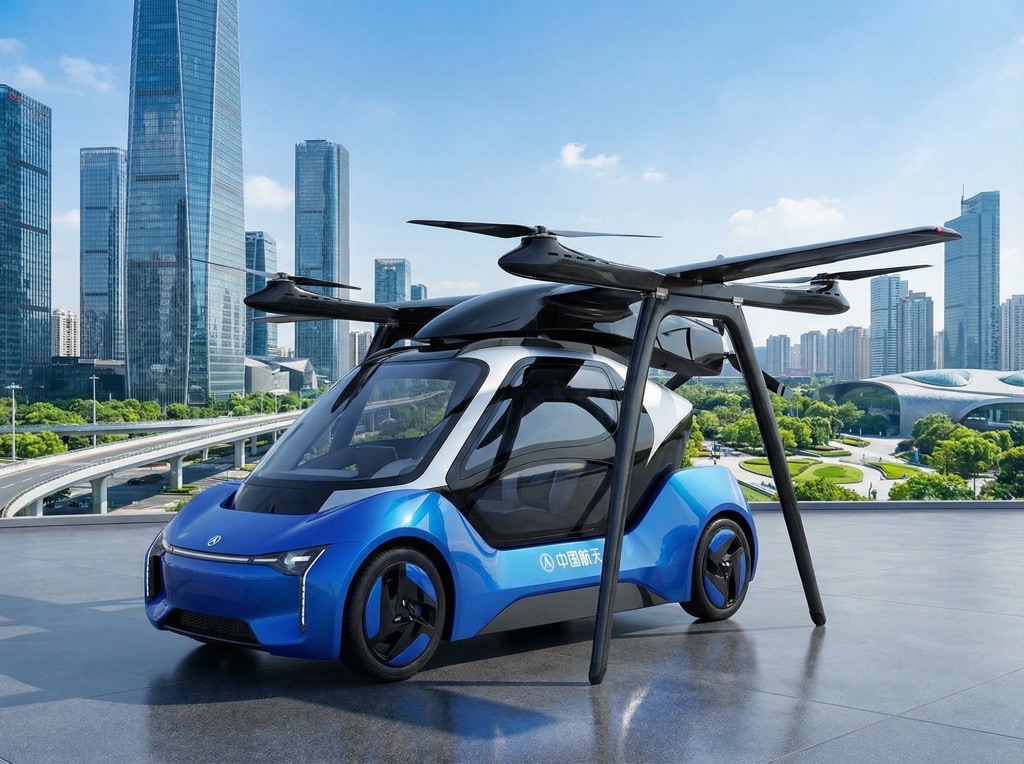
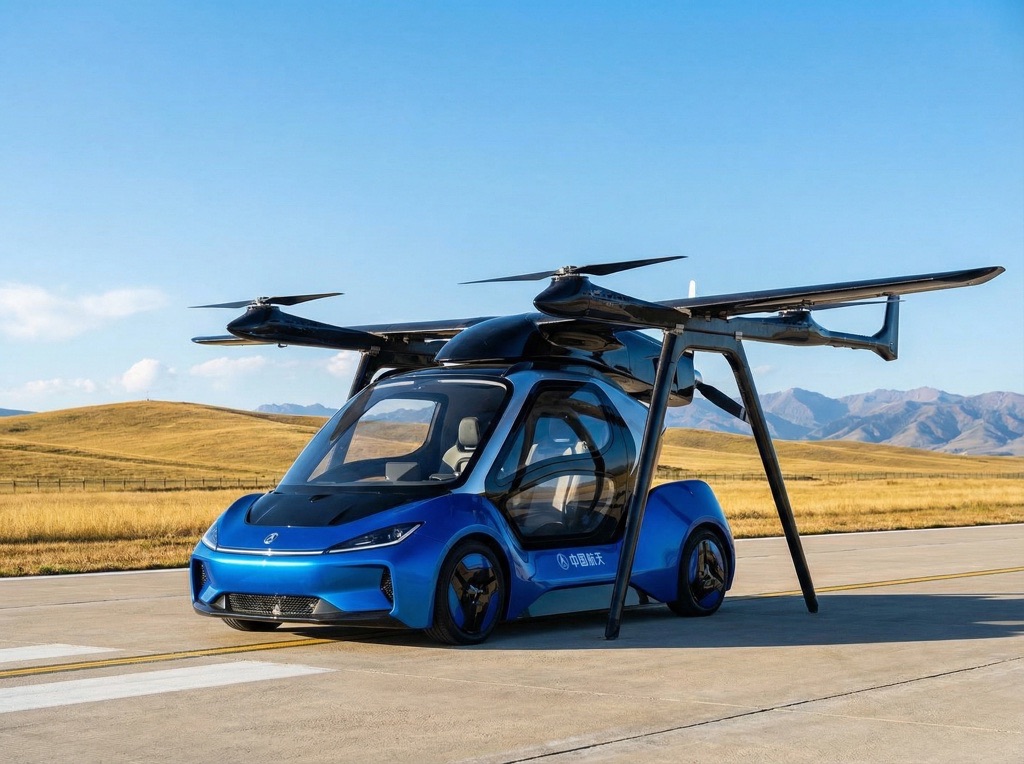
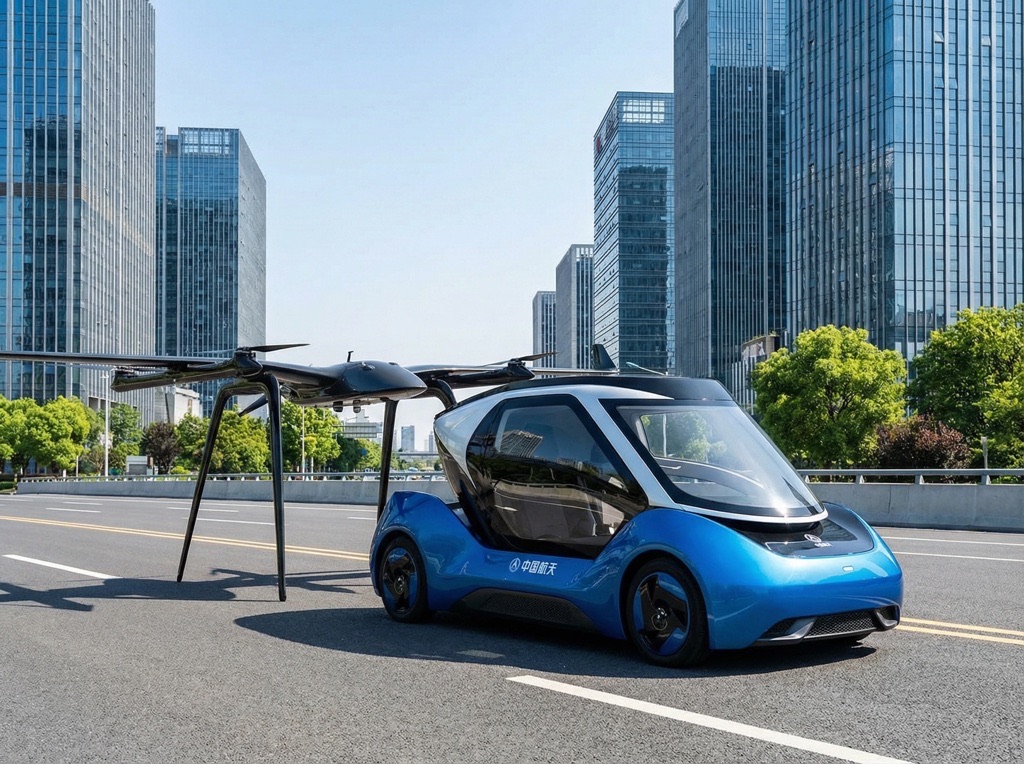
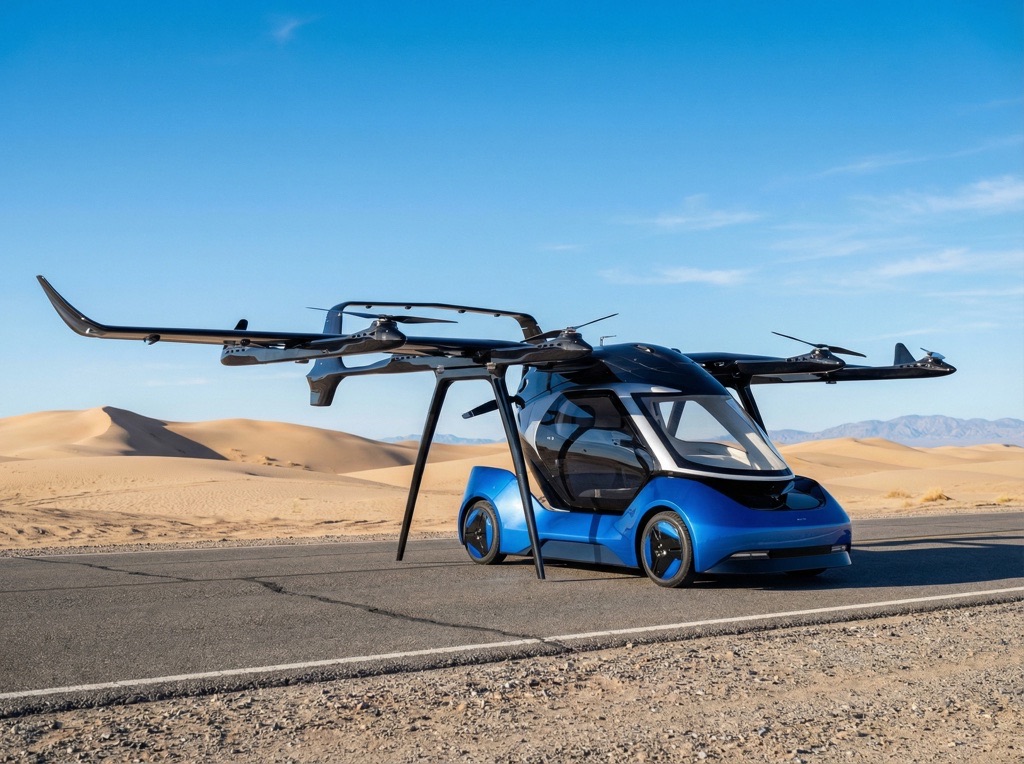
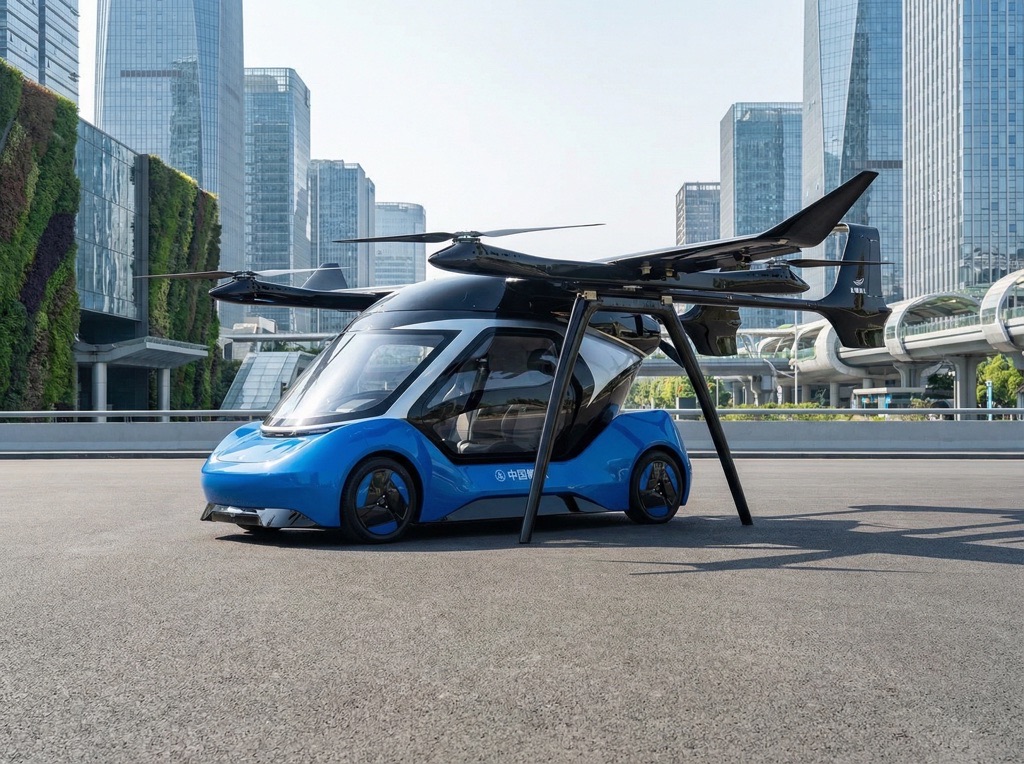
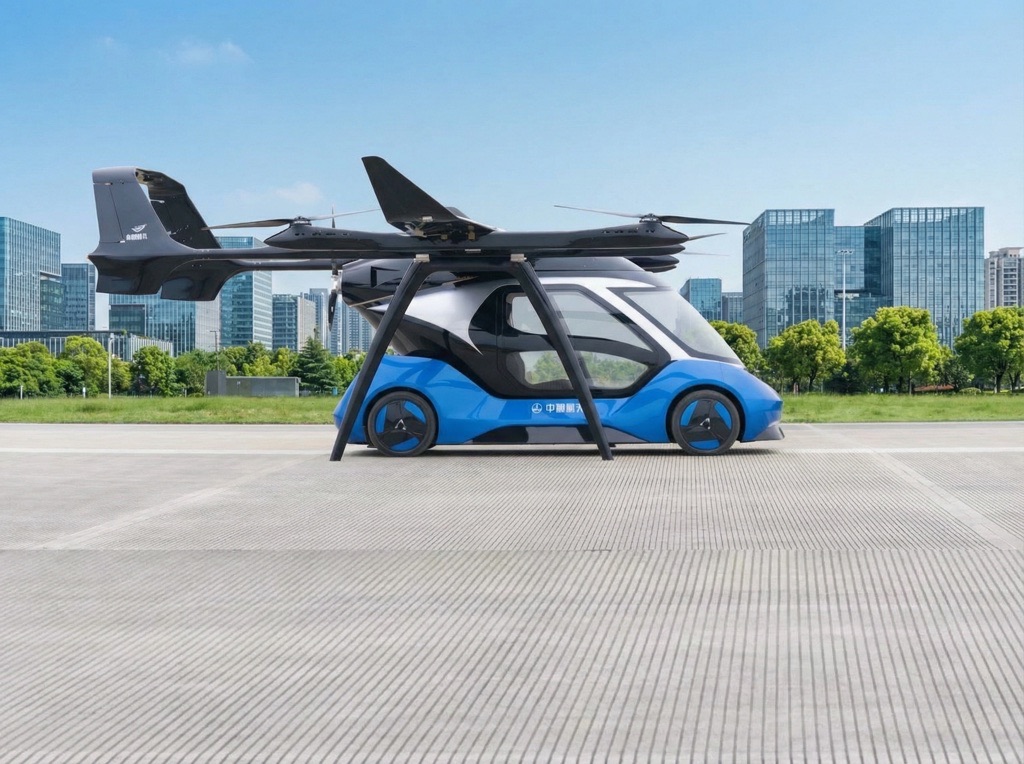
The aircraft’s defining feature is its modular, split-type architecture consisting of three primary components: wings, a cabin, and a chassis. This design enables the vehicle to operate as both an aircraft and a ground vehicle through a self-developed automatic alignment and breakaway coupling system that allows modules to connect and detach independently under programmed control.
The airborne module is capable of carrying two passengers at speeds of up to 150 km per hour at altitudes below 3,000 meters. The ground-based module features a fully electric, intelligent by-wire chassis with an operational range exceeding 300 kilometers—a substantial advantage over traditional eVTOL aircraft that typically offer limited ground mobility.
CASC emphasizes that the aircraft was developed in accordance with strict airworthiness standards and integrates industrial capabilities from leading automakers. The modular design allows for customized cabins and multiple chassis and wing configurations to be swapped depending on mission requirements, enhancing scenario adaptability and operational flexibility.
| Specification | Details |
|---|---|
| Passenger Capacity | 2 passengers |
| Maximum Airspeed | 150 km/h |
| Operating Altitude | Below 3,000 meters |
| Ground Range (Electric) | 300+ kilometers |
| Core Architecture | Modular split-type design (flying + ground modules) |
| Key Technologies | Tiltrotor control, intelligent flight/driving systems, automatic coupling |
| Intended Applications | Transportation, logistics, emergency response |
Five Core Technologies Enable Aerospace-Grade Assembly
The aircraft incorporates five core technologies, including tiltrotor control and intelligent flight and driving systems that enable modular “aerospace-grade” assembly. This engineering approach suggests CASC has prioritized reliability and manufacturing consistency—critical factors for commercial deployment in transportation, logistics, and emergency response sectors.
The integration of automotive-grade engineering standards with aerospace requirements represents a deliberate strategy to accelerate certification and operational deployment. By leveraging established automotive manufacturing practices and supply chains, CASC aims to create a highly reliable product base capable of rapid scaling.
China’s Accelerating eVTOL Regulatory Environment
CASC’s successful test flight arrives amid accelerating regulatory progress in China’s eVTOL sector. The Civil Aviation Authority of China (CAAC) has already certified multiple eVTOL models for commercial operations, including AutoFlight’s CarryAll cargo aircraft and Ehang’s EH216-S autonomous passenger model. This regulatory momentum contrasts sharply with the United States, where American eVTOL developers like Joby Aviation, Archer Aviation, and Boeing’s Wisk Aero remain in testing phases without operational privileges.
The CAAC certified the first four-seat electric aircraft for commercial operations in 2025, according to operator Volar Air Mobility, demonstrating China’s willingness to approve diverse eVTOL configurations. CASC’s modular platform may benefit from this regulatory openness, particularly given the aircraft’s compliance with airworthiness standards and its integration of proven automotive technologies.
Comparison with Competing eVTOL Platforms
CASC’s modular eVTOL occupies a unique market position compared to existing competitors. AutoFlight’s Matrix, another Chinese eVTOL unveiled in February 2026, is significantly larger—approximately 56 feet long with a 65-foot wingspan—and targets heavier payloads with a maximum takeoff weight exceeding 12,500 pounds. The Matrix offers an all-electric range of about 155 miles, extending to 932 miles with hybrid propulsion, but lacks the ground-based autonomous driving capability of CASC’s design.
Ehang’s EH216-S is an autonomous passenger eVTOL that has received type, production, and airworthiness approvals, but similarly lacks integrated ground transportation functionality. CASC’s approach of combining air and ground modules represents a differentiated strategy that could appeal to operators seeking versatile, multi-modal transportation solutions without requiring separate vehicles for ground and air segments.
Unanswered Questions and Market Readiness
While the successful test flight validates CASC’s core technologies, several critical details remain unconfirmed. The timeline for commercial deployment has not been announced, nor has pricing, production capacity, or regulatory certification status beyond the initial test flight. The aircraft’s energy consumption rates, battery specifications, and charging infrastructure requirements are also not yet disclosed.
Additionally, the practical utility of the modular coupling system under real-world conditions—including coupling/decoupling time, reliability in adverse weather, and passenger comfort during mode transitions—requires further demonstration. The aircraft’s noise profile, which is crucial for urban operations, has not been publicly addressed.
Verdict
CASC’s modular eVTOL represents a genuinely innovative approach to low-altitude mobility by solving a problem most competitors ignore: the need for integrated air-ground transportation. The successful maiden flight validates the core engineering concept, and the aircraft’s compliance with airworthiness standards suggests serious commercial intent. However, the transition from prototype to operational service remains uncertain. This platform is most relevant for logistics operators, emergency response agencies, and regional transportation authorities in China and Asia-Pacific markets willing to adopt early-stage technology. For Western markets, regulatory approval timelines and competitive positioning against established eVTOL developers will determine long-term viability. The modular design’s true value will only become apparent once real-world operational data emerges from commercial deployments.