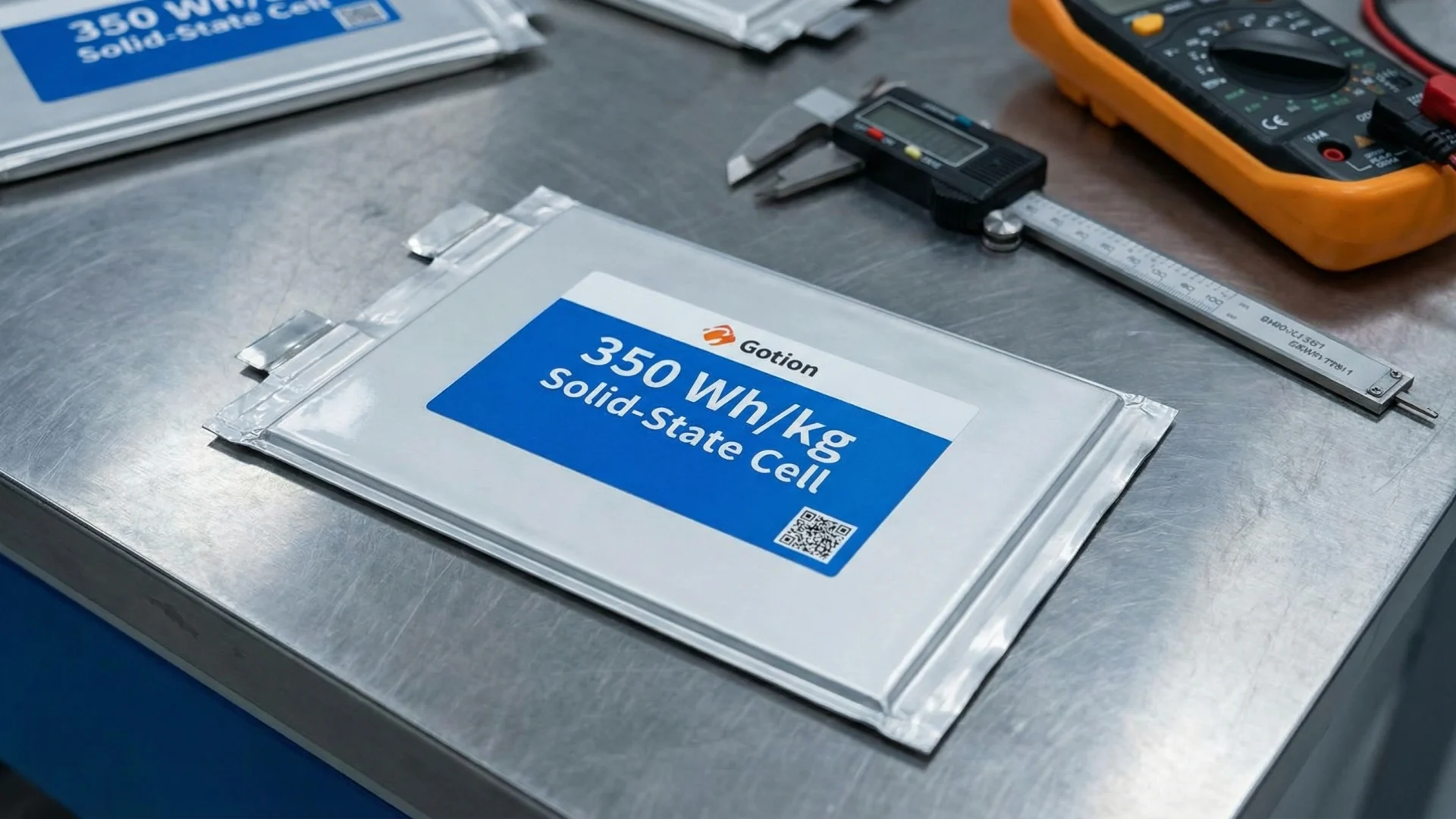
Gotion High-Tech has completed design work on its first 2GWh all-solid-state battery production line, achieving a cell energy density of 350 Wh/kg with its Jinshi technology. This sulphide-based battery promises 1,000 km range and superior safety, positioning Gotion ahead of rivals like CATL for early EV integration by late 2026. EV makers and investors should note this as it accelerates solid-state commercialization amid Volkswagen’s 25% stake.
Background: Gotion’s Rise in the Global Battery Market
Gotion High-Tech, backed by a 25% stake from Volkswagen, has climbed to fifth place globally in power battery installations for 2025 with 53.5 GWh deployed, capturing a 4.5% market share—an 82.5% year-over-year increase. In China, it held a 5% domestic share in 2024. The company’s momentum builds on partnerships like its unified cell production for Volkswagen, where a 20 GWh Hefei plant began delivering LFP and other chemistries in November 2025 for supply through 2032.
Gotion’s battery portfbridges liquid and solid-state tech tech. It launched the G-Yuan semi-solid-state battery in 2025 at 300 Wh/kg with 12 GWh planned capacity, setting the stage for full solid-state Jinshi rollout. Jinshi development spanned eight years, unveiled in May 2024, featuring micronized electrolytes, ultra-thin coated cathodes, and 3D mesoporous silicon anodes. The 0.2 GWh pilot line hit 90% yield using 100% domestic equipment and in-house architecture.
Key Specifications
| Specification | Details |
|---|---|
| Cell Energy Density | 350 Wh/kg (40% above ternary Li-ion) |
| Pack Energy Density | 280 Wh/kg |
| Range per Charge | 1,000 km |
| Temperature Range | -40°C to 80°C (cell); -20°C to 85°C (pack) |
| Cycles/Lifespan | >3,000 cycles; 1 million km projected |
| Safety Tests | 200°C thermal chamber, 3mm needle penetration (no fire/explosion) |
| Pilot Line Yield | 90% (0.2 GWh) |
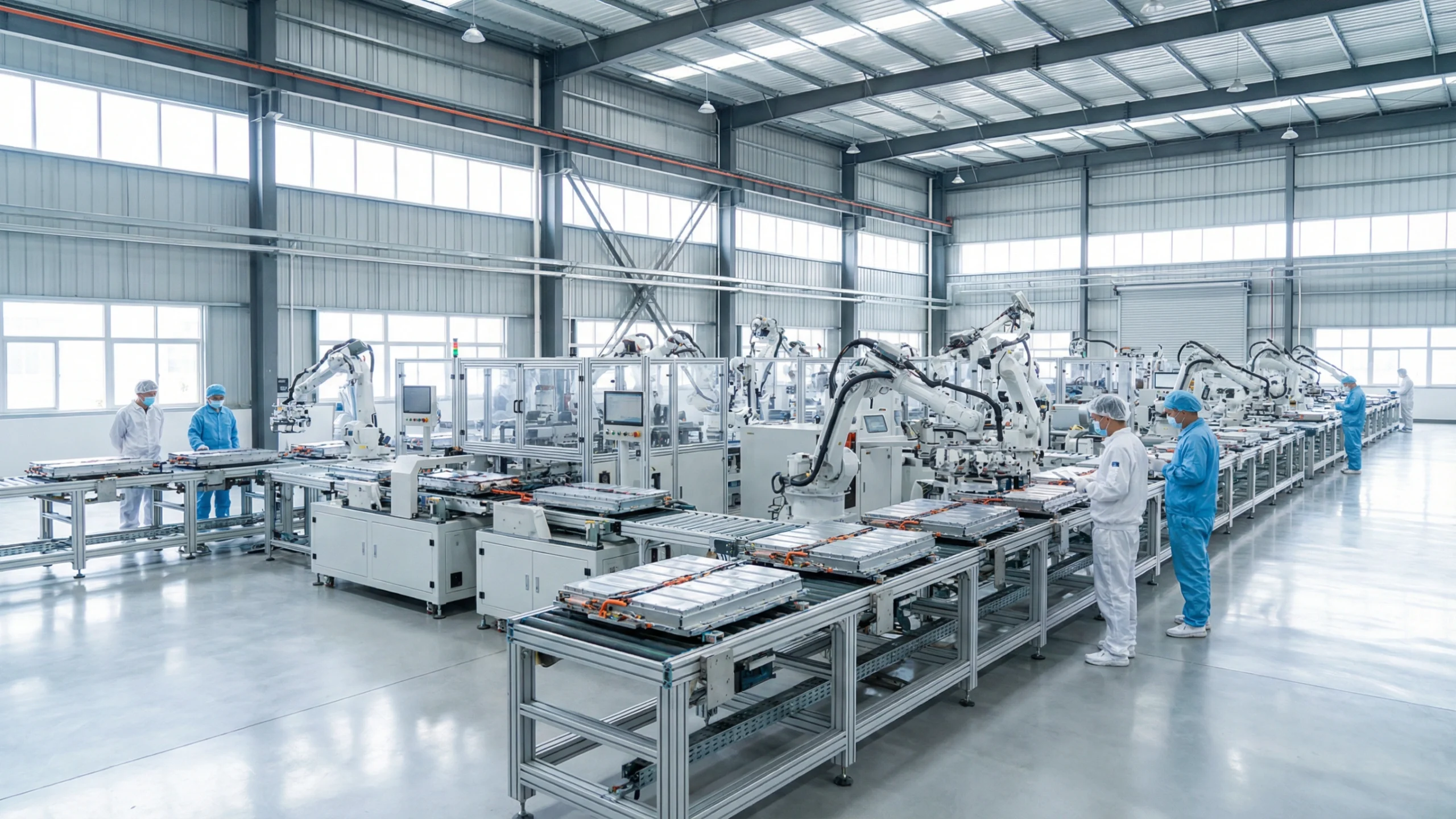
| Production Line | 2 GWh (design complete); full mass production 2030 |
| Investment Estimate | 3-4 billion yuan ($414-552 million) |
Technical Analysis: Jinshi Battery Breakthroughs
The Jinshi all-solid-state battery relies on sulphide-based solid electrolytes, boosting ionic conductivity by 60% and slashing cell preload pressure by 90% for consistent manufacturing. After a year of endurance testing, cell capacity rose 150% from prototypes. Prototype vehicles logged over 10,000 km in real-world tests, validating the 1,000 km range claim at the pack level.
 News
News
2026 Mustang Mach-E GT California Special Delivers 480 HP and 280-Mile Range with Retro Styling
The 2026 Ford Mustang Mach-E GT California Special introduces a nostalgic design package inspired by the 1968 Mustang, paired with...
 Cars
Cars
Lucid Stock Surges 15% on Cantor Fitzgerald’s 116% Upside Call, Saudi PIF Commitment Eases Funding Fears
Lucid Motors Rebounds on Saudi Backing and Autonomous Vehicle Momentum Lucid Motors shares jumped more than 15% on Wednesday following...
 Cars
Cars
Mercedes-Benz CLA Earns 94% Adult Protection Score to Claim Euro NCAP’s 2025 Best Performer Title
The all-new electric Mercedes-Benz CLA has been crowned Euro NCAP’s Best Performer of 2025, achieving a five-star rating with top...
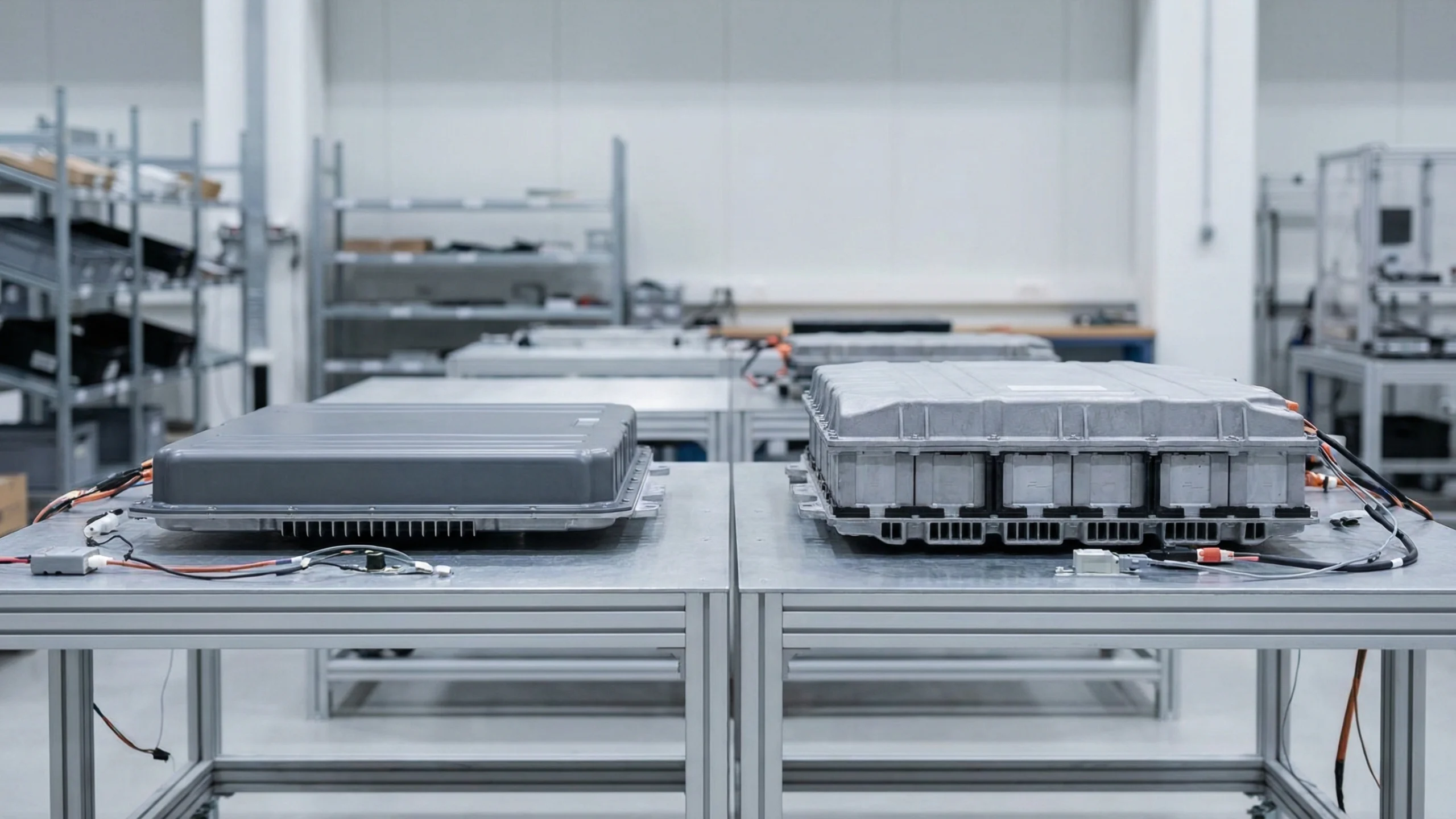
Safety stands out: cells withstood 200°C heat, needle penetration, and crush tests without ignition. This addresses liquid electrolyte fire risks, a key EV adoption barrier. Gotion’s vertical integration—100% in-house line design—minimizes supply chain vulnerabilities, especially with domestic sourcing amid global trade tensions.
Production and Market Strategy
The 2 GWh line design completion shifts Gotion from pilot (0.2 GWh) to industrial scale, with small-batch EV integration eyed for end-2026 and mass production in 2030. Investment is pegged at 3-4 billion yuan, aligning with industry benchmarks of 1.5-2 billion yuan per GWh. Volkswagen and Audi have issued letters of intent for supply, leveraging Gotion’s Hefei prowess.
Gotion’s global expansion includes over 100 GWh overseas capacity in Europe, North America, and Southeast Asia. This VW tie-in extends beyond solid-state, as seen in unified cells for multiple VW platforms, reinforcing Gotion’s role in VW’s ‘make-and-buy’ strategy.
Competitor Comparison
| Company | Tech | Energy Density (Wh/kg) | Timeline | Notes |
|---|---|---|---|---|
| Gotion (Jinshi) | All-solid-state | 350 (cell) | 2026 small-batch | 90% pilot yield; VW LOIs |
| CATL | All-solid-state | Not specified | 2027 small-scale | Market leader; later start |
| Gotion (G-Yuan) | Semi-solid | 300 | 2025 launched | 12 GWh bridge capacity |
| VW PowerCo | NCM Unified Cells | Not specified | 2025 (Germany) | Complements Gotion LFP |
Verdict
Gotion’s 2 GWh solid-state milestone delivers concrete progress with 350 Wh/kg density and proven safety, outpacing CATL’s 2027 target and enabling 2026 EV pilots—ideal for premium models from VW and Audi seeking range and reliability edges. Fleet operators and OEMs chasing 1,000 km range will watch closely, though pack-level scaling, cost under $100/kWh, and 2030 mass viability remain unconfirmed. This cements Gotion as a VW battery powerhouse, but real-world fleet data post-2026 will prove longevity claims.