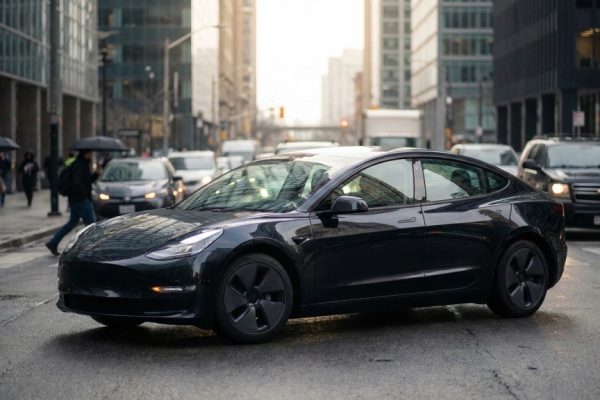

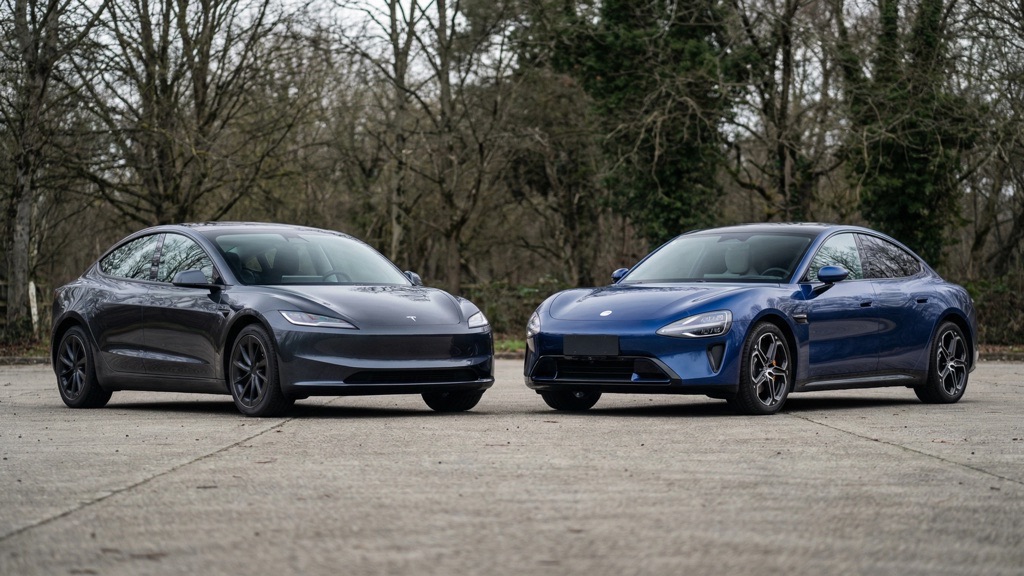
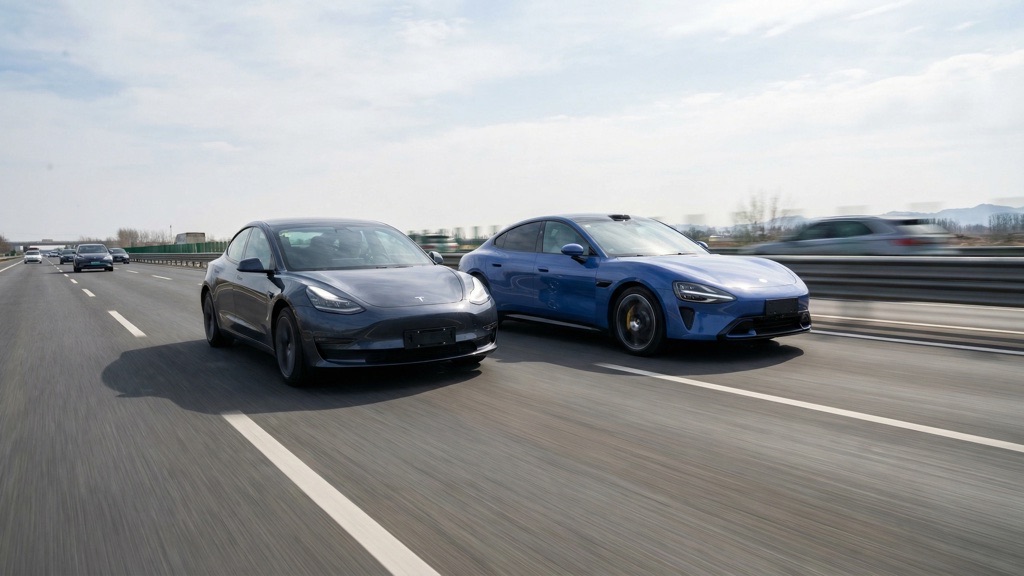
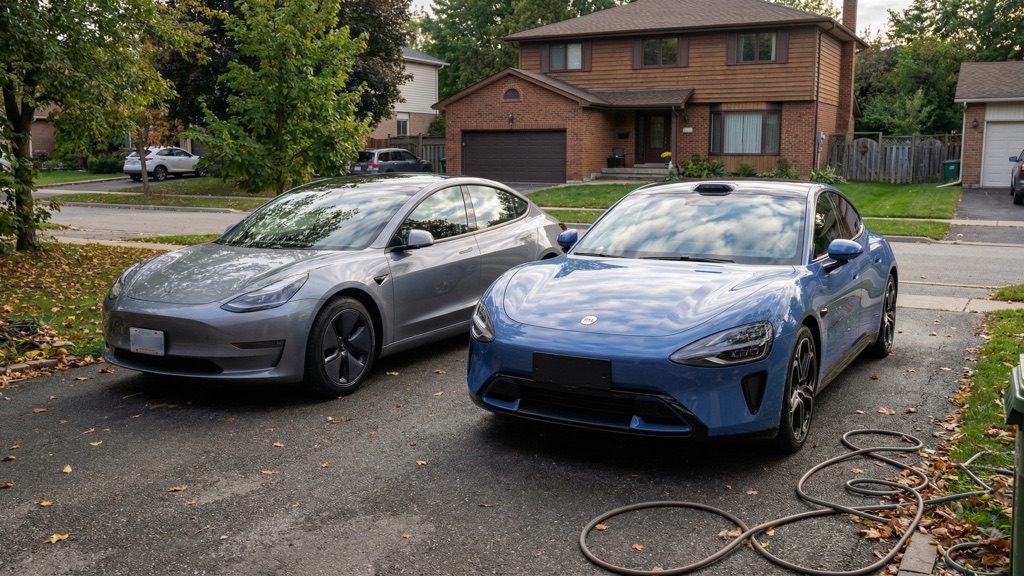
The electric sedan market in 2025 isn’t just evolving — it’s fragmenting. On one side stands the updated Tesla Model 3, arguably the most complete EV ownership package in the US and Europe. On the other is the ambitious Xiaomi SU7, a tech-driven disruptor redefining performance-per-dollar in China.
This comparison matters even if you can’t buy the SU7 in the US today. Why? Because it shows where Chinese EV engineering is heading — and what pressure Tesla now faces globally.
If you want a proven ecosystem with predictable ownership costs, Tesla remains the rational choice.
If you want cutting-edge hardware, dramatic performance, and aggressive pricing (in China), Xiaomi is impossible to ignore.
Let’s break this down properly — beyond spec-sheet hype.
⚡ QUICK VERDICT
Best for:
• Long-term EV buyers prioritizing infrastructure aPerformance-focused tech enthusiasts in Chinach enthusiasts in China (SU7)
Not recommended for:
• Buyers needing established US/EU service support (SU7)
• Drivers who dislike ultra-minimalist interiors (Model 3)
Real-world highway range (70–75 mph expert estimate):
• Model 3 Long Range: 300–315 miles
• SU7 RWD (73.6 kWh): 260–290 miles
• SU7 Max (101 kWh): 310–330 miles
Biggest advantage:
• Model 3: Efficiency + charging ecosystem
• SU7: Performance + hardware value
Main drawback:
• Model 3: Minimalist interior & rising price
• SU7: Global availability & long-term ownership unknowns
Overall rating (US/EU buyer perspective):
• Tesla Model 3: 9/10
• Xiaomi SU7: 8.7/10
📊 KEY SPECIFICATIONS
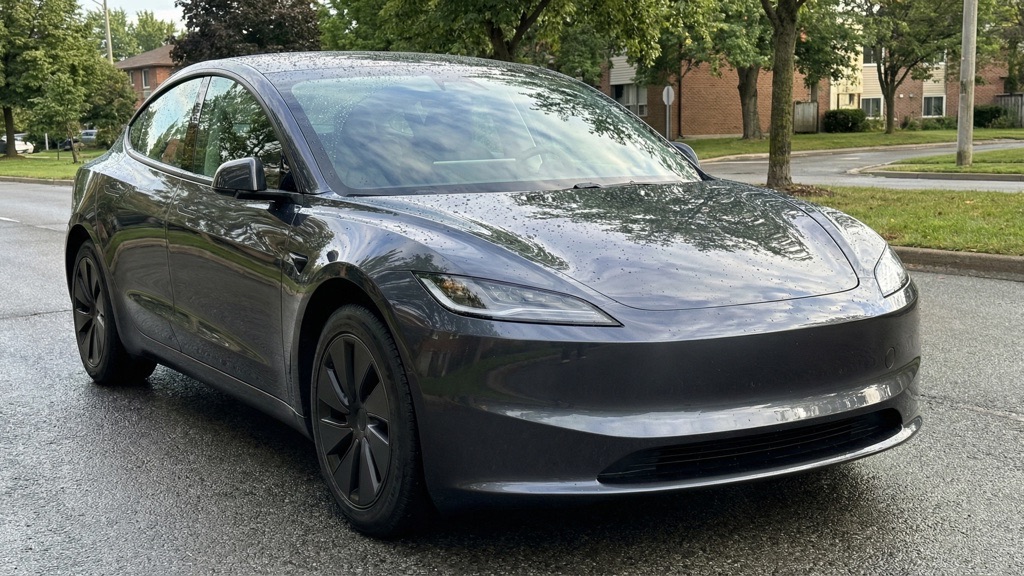
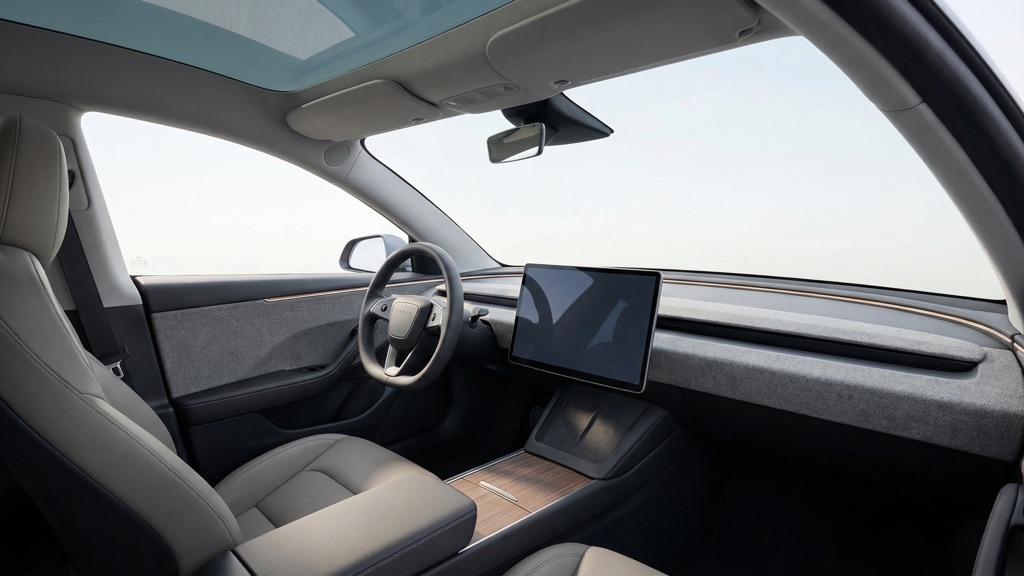
The refresh addressed earlier complaints: better insulation, improved ride compliance, and a more premium cabin feel.
 Reviews
2024 Tesla Cybertruck Beast Tested: Space Truckin
An Out-of-this-World Electric Pickup Truck Experience Questioning reality in the quickest pickup on the planet. Is that real? That’s the...
 Cars
Cars
Best Electric Cars 2026: Real Range Tests, True Costs & Final Verdict
TL;DR In 2026, choosing an electric car based on official range figures alone is the fastest way to overpay. Real-world...
 Cars
Cars
Tesla Model 3 Review (2026): Real Range, Charging & Verdict
TL;DR ✅ Buy Tesla Model 3 if you want: maximum real-world range, best charging ecosystem, top software & OTA updates...
Where Tesla still dominates is efficiency. At steady highway speeds, expect 240–260 Wh/mile. That translates into fewer charging stops and more predictable road trips.
Acceleration is immediate but controlled. It feels engineered rather than dramatic — fast without theatrics.
Tesla’s navigation-linked battery preconditioning and Supercharger routing remain unmatched in real-world usability across the US and much of Europe.
Xiaomi SU7
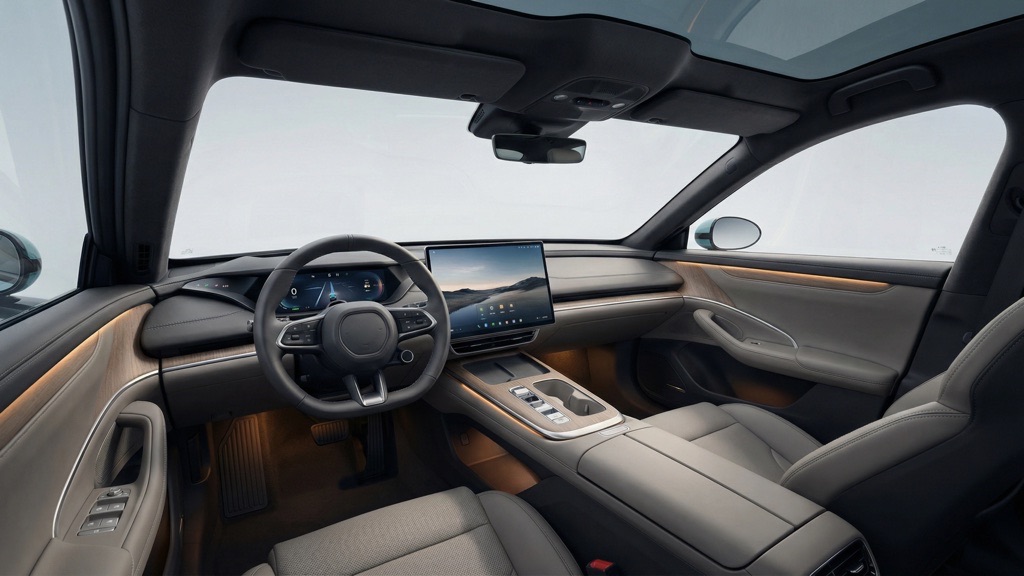
The SU7 feels like a tech flagship product on wheels. Large displays, high-resolution driver screens, strong material quality — it doesn’t feel like a first attempt.
Performance in the Max version is genuinely extreme. Sub-3-second acceleration puts it into sports car territory.
But mass matters. At over 2,200 kg in Max form, efficiency reflects that weight. Expect roughly 280–320 Wh/mile at highway speeds, depending on the version.
Charging Reality
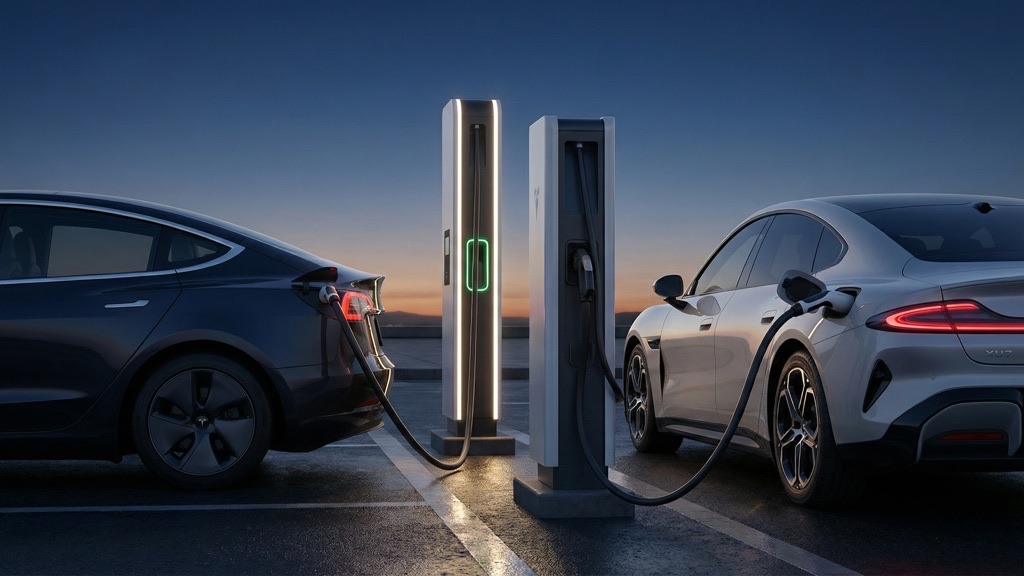
The SU7 Max supports up to ~390 kW peak charging thanks to its 800V architecture. That number is impressive — but peak figures don’t equal sustained curves. Outside China, compatible infrastructure and real-world charging consistency remain uncertain.
Tesla’s 250 kW peak may look lower, but its charging curve is predictable and widely supported in US/EU markets. In practice, predictability often matters more than peak numbers.
👍 PROS & 👎 CONS
Tesla Model 3
👍 Pros
- Class-leading highway efficiency
- Deep charging network integration
- Strong resale performance historically
- Mature OTA software ecosystem
👎 Cons
- A minimalist cabin may feel too sparse
- No traditional instrument cluster
- Higher price than Chinese rivals
- Ride is still slightly firm compared to luxury sedans
Xiaomi SU7
👍 Pros
- Exceptional performance-per-dollar (China pricing)
- Advanced cabin tech and hardware
- 800V charging capability
- Strong visual presence
👎 Cons
- Not officially available in the US
- Service network is limited outside China
- Heavier weight impacts efficiency
- Long-term global resale is uncertain
⚖️ COMPETITOR COMPARISON
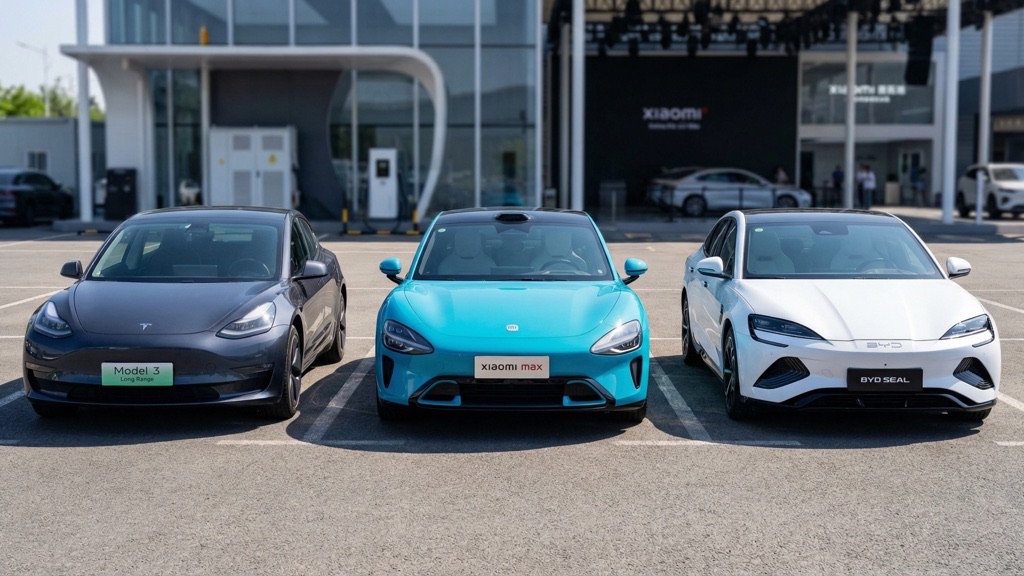
| Model | Real Range | Charging | Price | Key Difference |
|---|---|---|---|---|
| Tesla Model 3 LR | 300–315 mi | 250 kW | ~$40k US | Best ownership ecosystem |
| Xiaomi SU7 Max | 310–330 mi | ~390 kW peak | ~$41k equiv (CN) | Extreme performance focus |
| BYD Seal | 280–300 mi | ~150 kW | ~$35k | Balanced global contender |
The BYD Seal represents a middle ground: less extreme than Xiaomi, less ecosystem-driven than Tesla.
💰 OWNERSHIP & RUNNING COSTS
Charging Costs (US avg $0.15/kWh)
- Model 3 full charge: ~$11–13
- SU7 Max full charge: ~$15
Supercharging (~$0.30–0.45/kWh) increases costs, but Tesla’s routing integration minimizes inefficiency.
Maintenance
Both vehicles require minimal scheduled maintenance compared to ICE cars.
Tesla benefits from established service infrastructure in US/EU markets. Xiaomi’s long-term support outside China remains an open question.
Battery Degradation
Public fleet data suggests Tesla batteries typically show around 8–12% degradation after roughly 150,000–200,000 miles.
The SU7 is too new for equivalent long-term global data.
🧠 FINAL EXPERT VERDICT
🔹 SHORT VERDICT
US / Europe → Buy the Tesla Model 3.
China → The Xiaomi SU7 is a serious value-performance contender.
Outside China, choosing the SU7 today means accepting higher ownership uncertainty.
🔹 DETAILED VERDICT
After analyzing dozens of EV sedans over recent years, one pattern is clear: the best long-term EV is rarely the one with the most dramatic specs.
The Tesla Model 3 wins because it minimizes friction over five years of ownership. Efficiency reduces charging frequency. Integrated routing reduces uncertainty. Proven resale history reduces financial risk.
The Xiaomi SU7 is an impressive engineering achievement. In China, where infrastructure alignment and pricing strategy support it, it makes strong sense — especially in Max form.
But in US and European markets, ownership stability matters more than acceleration bragging rights.
If you are a rational buyer planning to keep your car 4–6 years, the Model 3 remains the smarter decision today.
Tesla is the safer long-term investment.
Xiaomi is the more exciting technological statement.
Choose based on your risk tolerance — not on peak charging headlines.
TL;DR
Tesla Model 3 = ecosystem, efficiency, predictable ownership.
Xiaomi SU7 = performance, tech hardware, aggressive pricing (China).
For US/EU buyers in 2025, Tesla remains the more logical choice.
FAQ
Is the Xiaomi SU7 faster than the Tesla Model 3?
Yes, especially the Max version.
Which is more efficient at highway speeds?
Tesla Model 3.
Is Xiaomi SU7 available in the US?
No official launch as of 2025.
Which car is safer financially in the long term?
In the US/EU markets, Tesla currently offers lower ownership risk.