

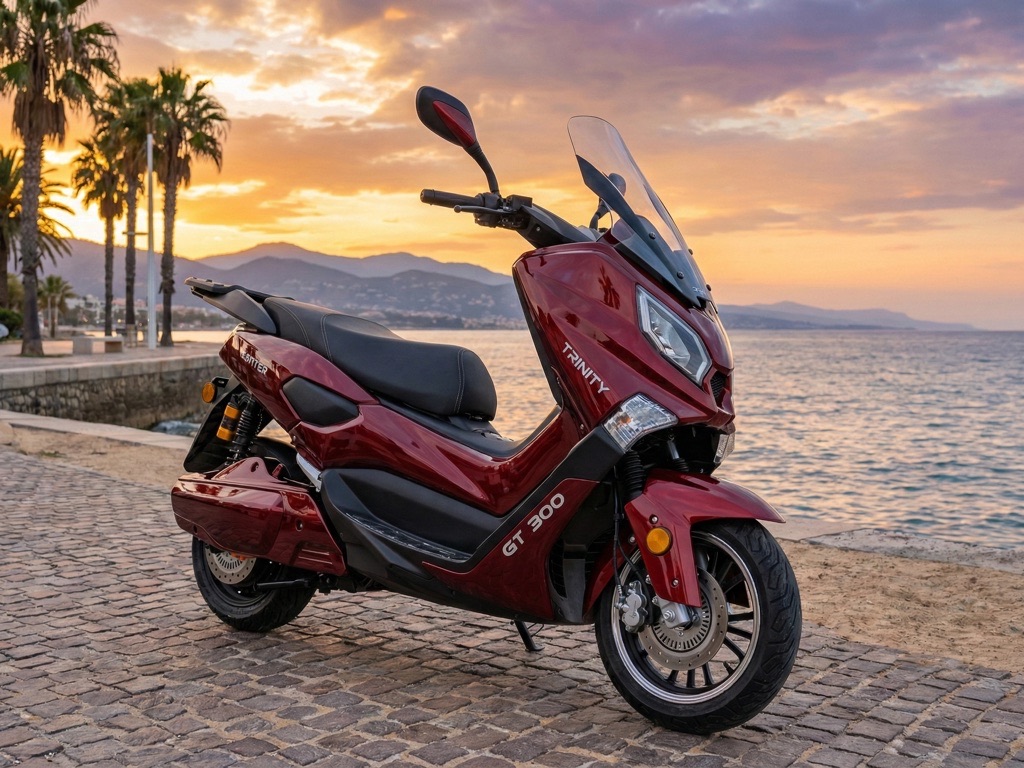
Trinity Jupiter GT Delivers 300 km Range and 17 kW Power in New 2026 Update
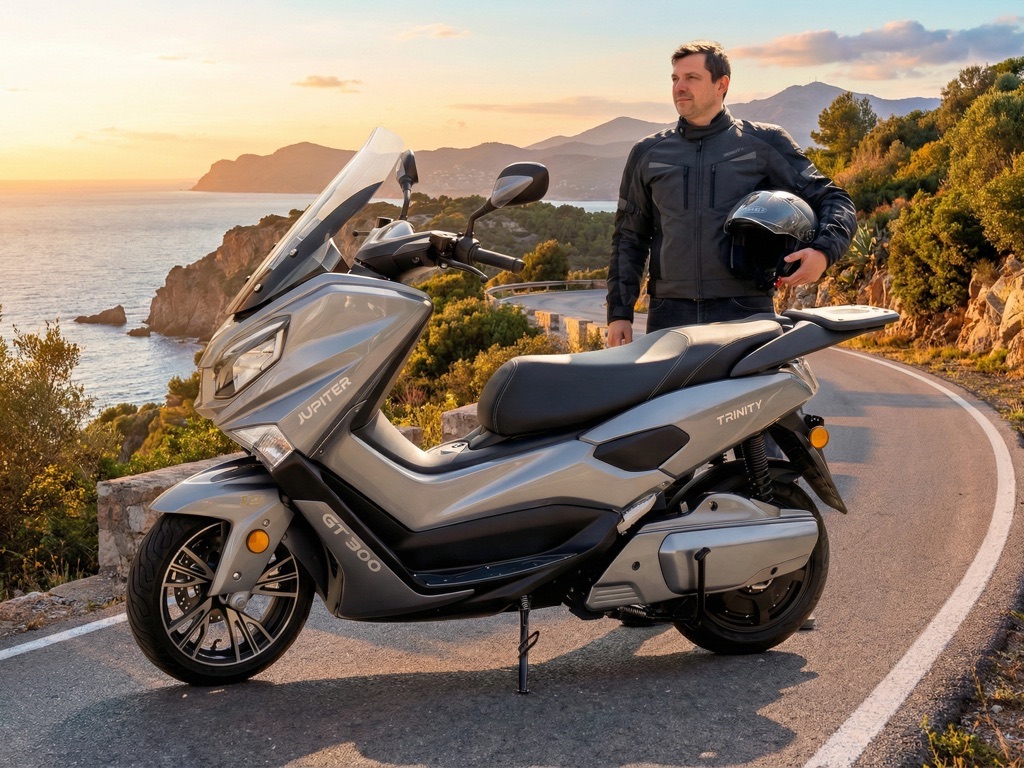
Trinity, the German electric vehicle manufacturer, has launched the 2026 Jupiter GT e-scooter, a maxi-class vehicle that combines a claimed 300 km range with 17 kW peak power and a top speed of 120 km/h in standard trim, or 125 km/h in the Performance Line variant. The scooter represents a significant step forward from the previous Jupiter S model, introducing advanced safety systems and extended battery capacity that position it asone of the longest-range electric scooterss currently available.
Specifications and Key Features
| Specification | Details |
|---|---|
| Peak Motor Power | 17 kW (23 PS) |
| Continuous Motor Power | 7 kW |
| Top Speed (Standard) | 120 km/h |
| Top Speed (Performance Line) | 125 km/h |
| Range | Up to 300 km |
| Battery | 72 V / 156 Ah (11.2 kWh) |
| Charging Time | 7-12 hours |
| Battery Cycles | Up to 1,300 charge cycles |
| Weight (with battery) | 183 kg |
| Wheels | 13-inch Michelin tires |
| Maximum Payload | 200 kg |
| Price (MSRP) | €7,999 |

Safety and Control Systems Set New Standards
The Jupiter GT introduces a comprehensive safety package that elevates it beyond typical city-focused e-scooters. The vehicle features ABS on the front brake, a traction control system (TCS/ASR), and regenerative braking to extend range during deceleration. The new traction control system ensures stable acceleration on wet or dirty road surfaces, addressing a critical gap in e-scooter safety technology.
The scooter’s 183 kg curb weight provides stability at highway speeds, while the 13-inch Michelin tires offer improved grip and ride comfort compared to smaller-wheeled competitors. For riders seeking additional comfort, Trinity offers optional gas-pressure shock absorbers with adjustable compression and preload settings.

Smart Technology and User Experience
The Jupiter GT’s cockpit features a modern touchscreen TFT display with integration for Apple CarPlay and Android Auto, allowing riders to access navigation and vehicle controls without removing their hands from the bars. The scooter also includes keyless go functionality, enabling push-button start, and an integrated alarm system for theft protection.
Battery safety has been enhanced with an aerosol fire suppression system integrated into the 2026 model’s power pack. The hub motor design has been refined to allow separation from the rim, simplifying rear tire changes—a practical improvement for long-distance riders.
 Motocycles
Ola Electric Roadster Series: The Complete Guide to India’s Game-Changing Electric Motorcycles
In a bold move that’s shaking up the electric motorcycle market, Ola Electric has unveiled its highly anticipated Roadster lineup....
 Motocycles
Ola Supersport Bike Revolutionary Move: Unveiling Their First Electric Motorcycles by 2026
In an electrifying announcement that’s set to transform the Indian two-wheeler market, Ola Electric has revealed plans to launch its...
 Motocycles
Maeving Secures £11M Series A to Drive 40% US Sales Growth
Maeving, the Coventry-based electric motorcycle maker, has raised £11 million in Series A funding to scale its US operations, where...
Range and Charging Flexibility
The Jupiter GT’s 11.2 kWh battery delivers the headline 300 km range under optimal urban riding conditions, though real-world mileage will vary based on speed, terrain, and rider weight. Trinity also offers a 200 km variant for riders with lower range requirements. The battery supports up to 1,300 charge cycles, suggesting a lifespan of 5-7 years under typical use.
Charging relies on AC power rather than rapid DC charging, requiring 7-12 hours for a full charge. However, Trinity’s optional TYPE 2 charging cable enables charging at public AC stations, making the scooter viable for riders without dedicated home charging infrastructure. This flexibility addresses a significant barrier to e-scooter adoption in urban environments.



Operating Costs and Sustainability
Trinity claims electricity costs of just €1.30 per 100 km under normal riding conditions, dropping to €0.00 per 100 km for owners with solar power generation. Compared to a 125cc petrol scooter, the Jupiter GT owner saves approximately €500 annually in fuel costs and €300 in maintenance, totaling €4,000 in savings over five years. These figures assume 6,000 km annual mileage and reflect the elimination of oil changes, spark plugs, and other consumables required by combustion engines.
Market Positioning and Licensing
The Jupiter GT qualifies for the A1/B196 driving license category in Europe, making it accessible to riders aged 16-18 with appropriate training. This regulatory positioning places it in direct competition with 125cc petrol scooters, a market segment where electric alternatives have historically struggled to match performance and range. The Jupiter GT’s 300 km capability and 120+ km/h top speed directly challenge the practical advantages of traditional combustion-powered maxi-scooters.
Comparison with Competitors
The Jupiter GT’s 300 km range significantly exceeds most electric scooters currently on the market. While specific competitor models are not detailed in available sources, the combination of 17 kW power, 300 km range, and highway-capable speed (120-125 km/h) positions the Jupiter GT as a premium offering in the maxi-scooter category. The €7,999 price point reflects this positioning, placing it above entry-level e-scooters but competitive with high-end petrol scooters when total cost of ownership is considered.
Availability and Delivery Timeline
The Jupiter GT became available for order from Trinity directly and through authorized dealers beginning in late October 2025, with deliveries commencing at that time. The 2026 model year designation indicates this is the current production version as of February 2026.
Verdict
The Trinity Jupiter GT represents a mature approach to electric maxi-scooter design, prioritizing real-world usability over marketing hyperbole. The 300 km range and 120+ km/h performance genuinely address the practical limitations that have confined e-scooters to urban commuting. Safety systems including ABS and traction control are now standard rather than optional, and the touchscreen interface with smartphone integration reflects modern user expectations. At €7,999, the Jupiter GT targets experienced riders and commuters who value range and highway capability over lightweight portability. The scooter is best suited for riders in metropolitan areas with access to AC charging, those covering 100+ km weekly, and anyone seeking to eliminate fuel costs and maintenance complexity. Questions remain about real-world range under highway conditions and long-term battery durability, but the 1,300-cycle rating suggests reasonable longevity for typical users.