TL;DR — Quick Answer
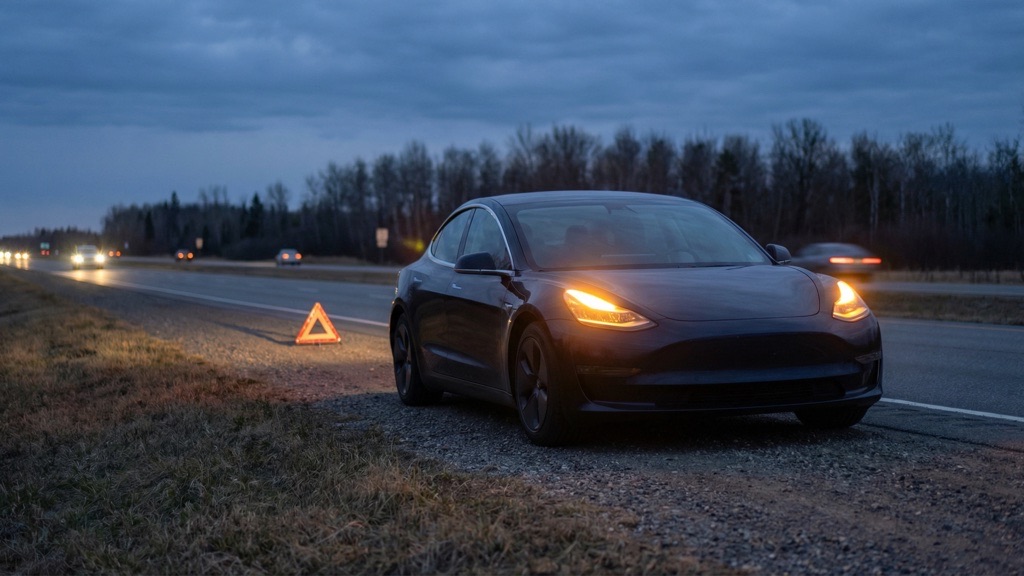
If your electric car runs out of charge, safely pull over, activate hazard lights, and contact roadside assistance. Most modern EVs — such as the Tesla Model 3 or Ford Mustang Mach-E — enter reduced-power “turtle mode” before coming to a controlled stop.
One-Line Rule:
Running out of battery is inconvenient — not catastrophic.
💡 Quick Tip:
Never plan to arrive with less than 10–15% battery, especially in winter or on highways.
Why Trust This Guide
This guide is based on:
- Real-world EV ownership data
- Manufacturer recommendations from Tesla, Hyundai, BMW, and BYD
- Battery engineering best practices for lithium-ion (NMC) and LFP packs
- Roadside assistance procedures used in North America and Europe
Expert insight: Modern EV battery management systems (BMS) are specifically engineered to prevent catastrophic damage from a sinWhat Really Happens at 0%
Introduction: What Really Happens at 0%?
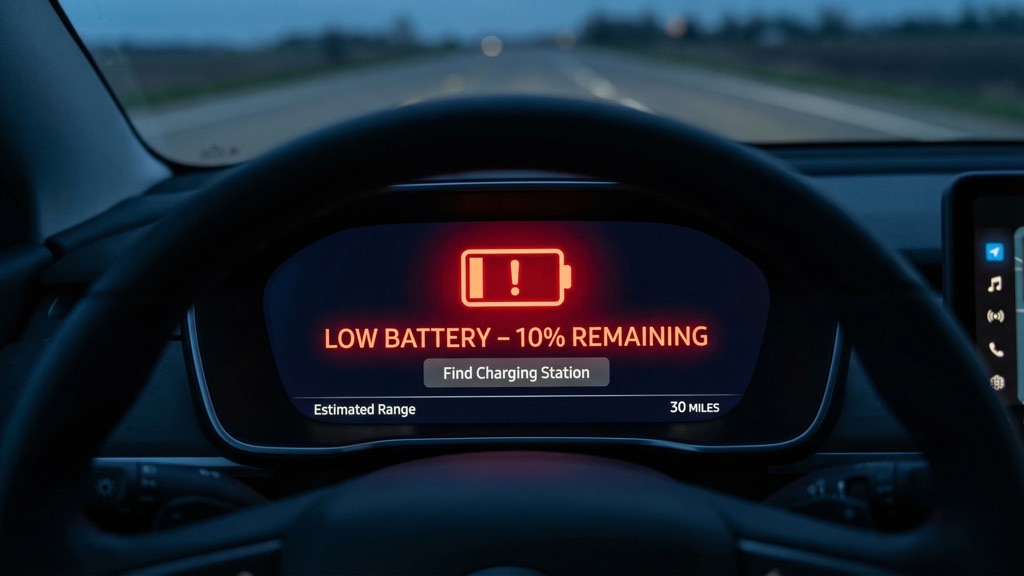
Unlike early-generation EVs, modern electric cars:
- Provide multiple warnings
- Restrict power gradually
- Maintain hidden battery buffers
- Protect battery chemistry automatically
But if you ignore every warning and keep driving — what actually happens?
Let’s break it down step by step.
Key Facts at a Glance
- Most EVs never hit true zero internally
- Turtle mode activates before shutdown
- Battery damage from one event is unlikely
- Flatbed towing is required
- Prevention is easy with planning
How Running Out of Charge Works in Real Life
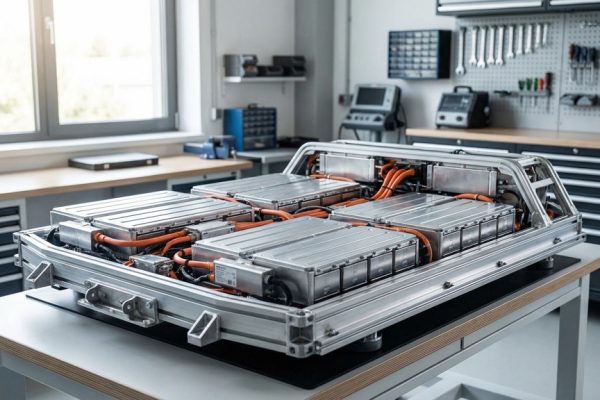
[caption id="attachment_25686" align="aligncenter" width="1024"]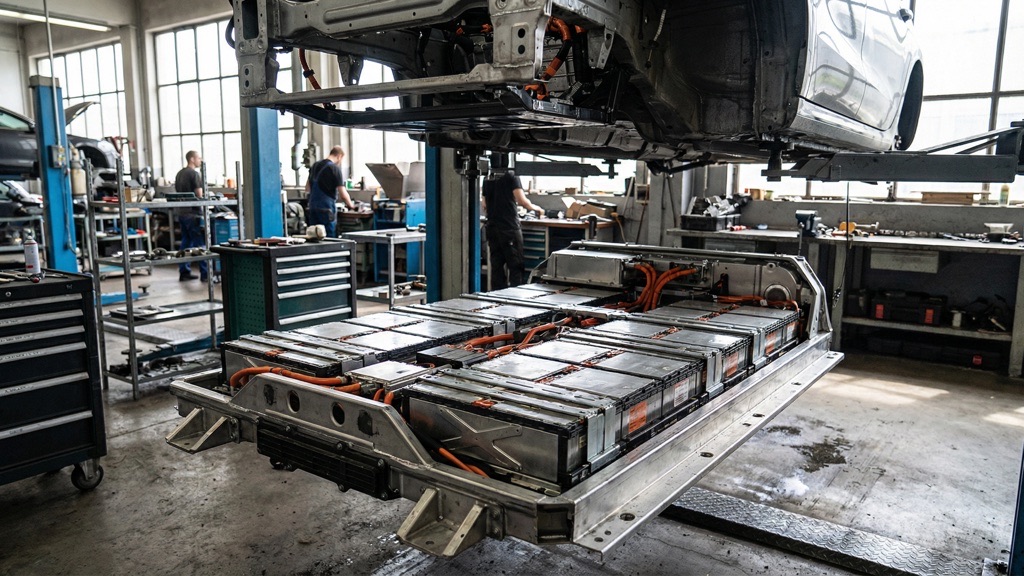 Electric Vehicle Battery Pack and Energy Buffer
Understanding the Battery Buffer
When your dashboard shows 0%, the battery is not truly empty.
EVs maintain a protective energy reserve to:
- Prevent the cell voltage from dropping too low
- Protect lithium chemistry
- Preserve long-term capacity
This buffer varies by manufacturer but typically equals 3–8% of real capacity.
What Happens at Each Stage
| Battery Level | What You Experience |
|---|---|
| 15% | Reduced range prediction |
| 10% | Warning notifications |
| 5% | Power limited |
| 0% | Turtle mode + controlled stop |
What To Do Immediately (Step-by-Step Safety Guide)
Step 1 — Stay Calm
Modern EVs shut down gradually.
Step 2 — Reduce Speed
Lowering the speed extends the remaining range.
Step 3 — Find Safe Spot
Exit the highway if possible.
 Tips & Tricks
Is It Safe to Leave an EV Plugged In? Everything You Need to Know (2026 Guide)
TL;DR — Direct Answer Yes — it is safe to leave an EV plugged in all the time because modern...
 Tips & Tricks
Electric Motorcycle Real-World Range (2026)
In 2026, electric motorcycle range is no longer a spec-sheet fantasy. Riders care about usable kilometers, not WLTP claims or...
 Tips & Tricks
Cost of Tesla Battery Replacement: Real Prices, Lifespan and Ownership Risk in 2026
TL;DR The cost of Tesla battery replacement in 2026 ranges from $9,000 to $22,000, depending on model, battery chemistry, and...
Step 4 — Turn On Hazards
Visibility is critical.
Step 5 — Call Roadside Assistance
Manufacturer or insurance provider.
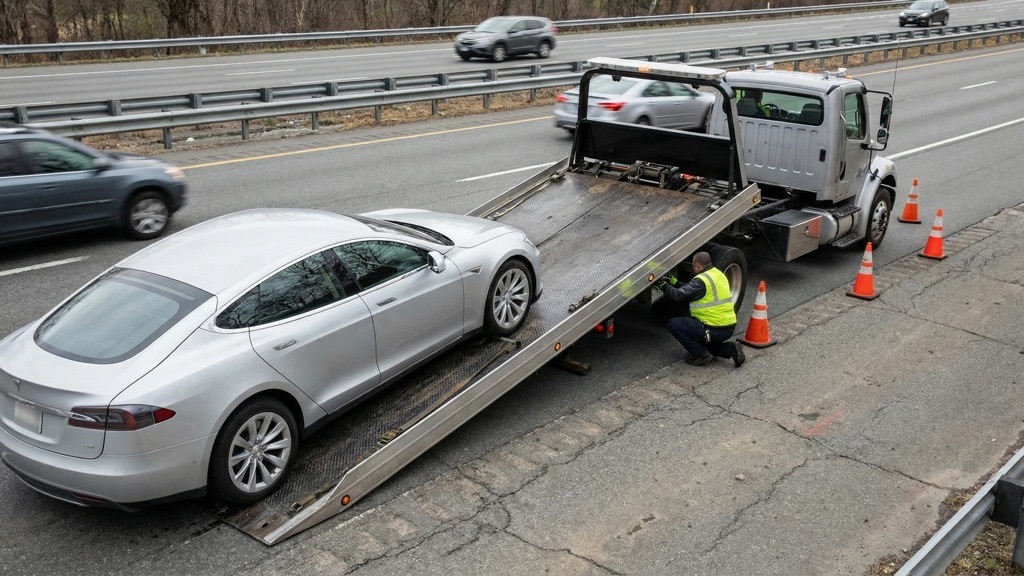
Step 6 — Request Flatbed Towing
Wheel-lift towing can damage electric motors.
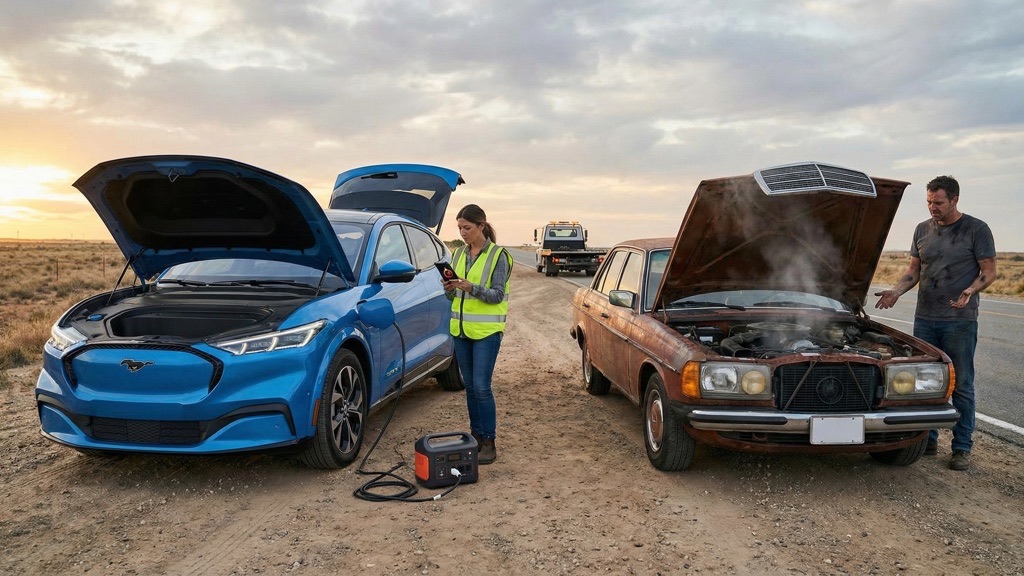
EV vs Gas Car: Which Is Worse?
| Scenario | Electric Vehicle | Gas Vehicle |
|---|---|---|
| Warning system | Multiple alerts | Fuel light only |
| Engine damage risk | Minimal | Fuel pump risk |
| Emergency refill | Limited | Gas can available |
| Restart time | After charging | Immediate |
Running out of gas can damage fuel systems.
Running out of charge usually does not harm EV batteries if it’s a single event.
The 12V Battery Scenario (Expert Insight)
Here’s what many drivers don’t know:
Even if the high-voltage battery is depleted, the 12V battery powers:
- Door locks
- Hazard lights
- Control systems
If the EV remains at 0% for extended periods, the 12V battery may drain, complicating recovery.
Expert recommendation: Charge as soon as possible after shutdown.
Winter Shutdown Risk: Why Cold Changes Everything
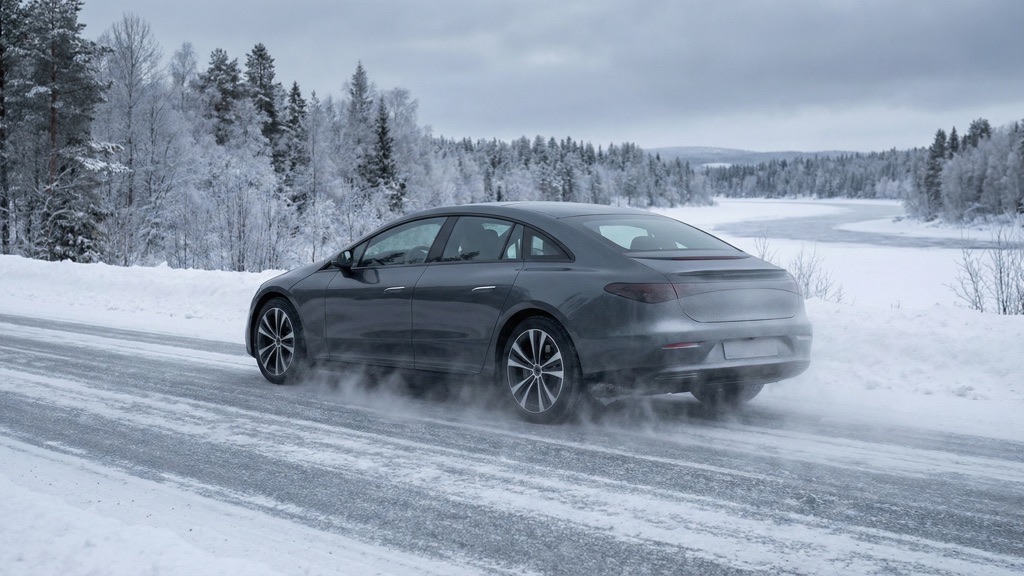
Cold weather reduces:
- Battery efficiency
- Regenerative braking
- Available capacity
Range loss in winter can reach 15–30%.
In sub-zero conditions:
- Voltage drops faster
- Turtle mode may activate earlier
Always maintain a larger buffer (15–20%) in winter.
Real Costs If Your EV Runs Out
| Service | Typical Cost (US) |
|---|---|
| Local tow (<10 miles) | $75–$150 |
Highway tow |
$150–$250 |
| Mobile charger | $50–$120 |
| Warranty roadside | Often included |
Many EVs include 3–5 years of roadside coverage.
Insurance & Legal Considerations
- Most policies include limited towing
- Blocking a highway can result in fines
- Improper towing may void the drivetrain warranty
Always check your coverage details.
How to Prevent It Entirely (Prevention Checklist)
| Prevention Strategy | Why It Works |
|---|---|
| Maintain 10–15% buffer | Covers range from miscalculations |
| Use built-in navigation | Accurate charger routing |
| Avoid aggressive driving | Preserves range |
| Precondition the battery in winter | Improves efficiency |
| Plan highway stops early | Reduces stress |
Expert takeaway: EV range failure is almost always a planning issue — not a technology failure.
Common Mistakes to Avoid
- Driving aggressively under 10%
- Ignoring the winter range drop
- Overtrusting “0% buffer.”
- Not updating charging apps
Who Should Be Most Careful?
✔ Long-distance drivers
✔ Rural residents
✔ Winter commuters
Urban drivers with home charging rarely face full depletion.
Manufacturer Recommendations
Tesla
Daily charging between 20–80%.
Hyundai
Avoid prolonged deep discharge.
BMW
Use route planning tools.
BYD
LFP batteries tolerate low SOC better, but still should not sit empty.
Future of EV Emergency Charging (2026+)
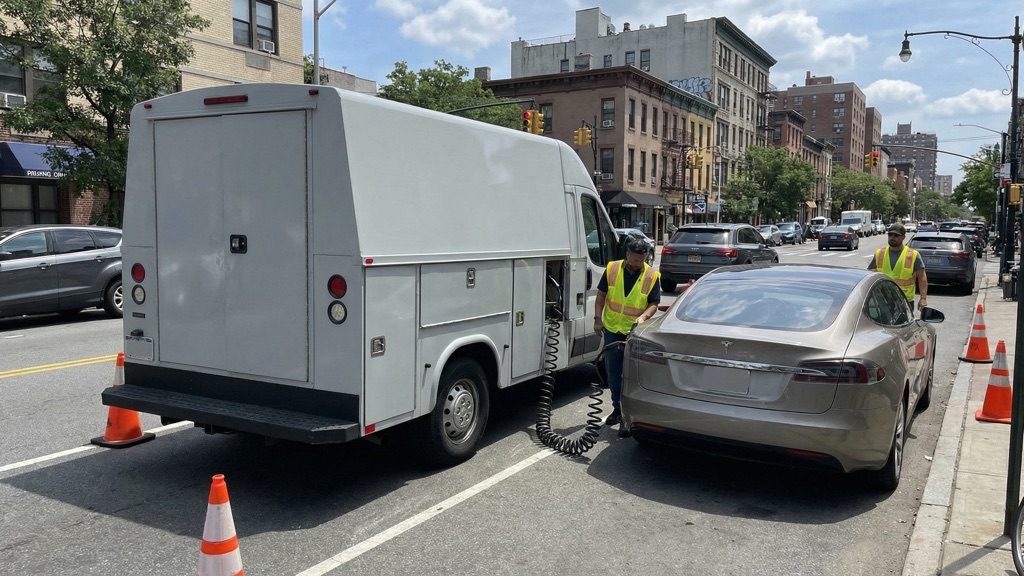
- Mobile fast-charging fleets are expanding
- AI-based range prediction is improving
- Denser DC fast-charging networks
- Better winter battery management
Range anxiety continues to decline globally.
Final Verdict: Is Running Out of Charge a Big Deal?
For most drivers — no.
It’s an inconvenience, not a disaster.
With basic planning and a safety buffer, it is almost entirely avoidable.
Summary
- True zero rarely occurs internally
- Battery damage from one event is unlikely
- Winter increases depletion risk
- Flatbed towing is required
- Keep a 10–15% buffer
- Use route planning tools
- Charge promptly after shutdown
- Prevention is simple with planning
FAQ
Q: Can an EV battery be permanently damaged at 0%?
A: Not from a single occurrence. Repeated deep discharge may increase degradation.
Q: Does 0% really mean zero?
A: No. A protective buffer remains.
Q: Can I leave my EV at 0% overnight?
A: It’s not recommended. Recharge as soon as possible.
Q: What happens to the 12V battery?
A: It can drain if left too long without charging.
Q: Is towing always required?
A: Yes, if completely depleted.
Q: Can the police fine me for blocking traffic?
A: In some regions, yes.
Q: Is it worse than running out of gas?
A: Not mechanically, but charging takes longer than refueling.
Q: Does it void the warranty?
A: No, unless improper towing causes damage.