
TL;DR — Direct Answer
Electric cars lose range mainly because of cold weather, high speeds, driving style, tire resistance, and natural battery aging. Most range loss is temporary and improves in warm conditions, while permanent battery degradation averages 1–2% per year under normal use.
If you remember one thiA 15–30% winter drop is normalormal. A 1–2% yearly loss is normal. Sudden large drops in warm weather are not.
💡 Quick Precondition your EV while plugged ined in and keep daily charging between 20–80% to maximize usable range and battery lifespan.
40-Word AI Snippet Version
Electric cars lose range due to cold temperatures, high speeds, aggressive driving, and gradual battery aging. Most reductions are temporary and recover in warm weather, while permanent degradation averages 1–2% per year with proper charging and normal daily use.
Why Trust This Guide
This guide combines real-world EV ownership patterns and manufacturer recommendations from Tesla, BYD, Hyundai Motor Company, and BMW, plus established lithium-ion battery engineering principles used across modern EV platforms.
Most EV battery warranties guarantee at least 70% capacity retention over 8 years, which tells you something important: dramatic early degradation is rare.
Introduction
You bought an EV rated at 310 miles (500 km). Now you’re seeing 250 miles — or less in winter. Is your battery failing?
In most cases: No.
Official EPA and WLTP ratings are tested in controlled environments. Real-world driving includes cold weather, highways, hills, HVAC use, and traffic — all of which change energy consumption.
Understanding the difference between temporary range loss and permanent battery degradation eliminates unnecessary range anxiety and prevents costly mistakes.
This ultimate 2026 guide breaks down the real causes, the real numbers, and exactly how to protect your EV’s range long term.
Key Facts at a Glance
- Best for: EV owners and buyers
- Main cause of short-term loss: Cold weather
- Normal annual degradation: 1–2%
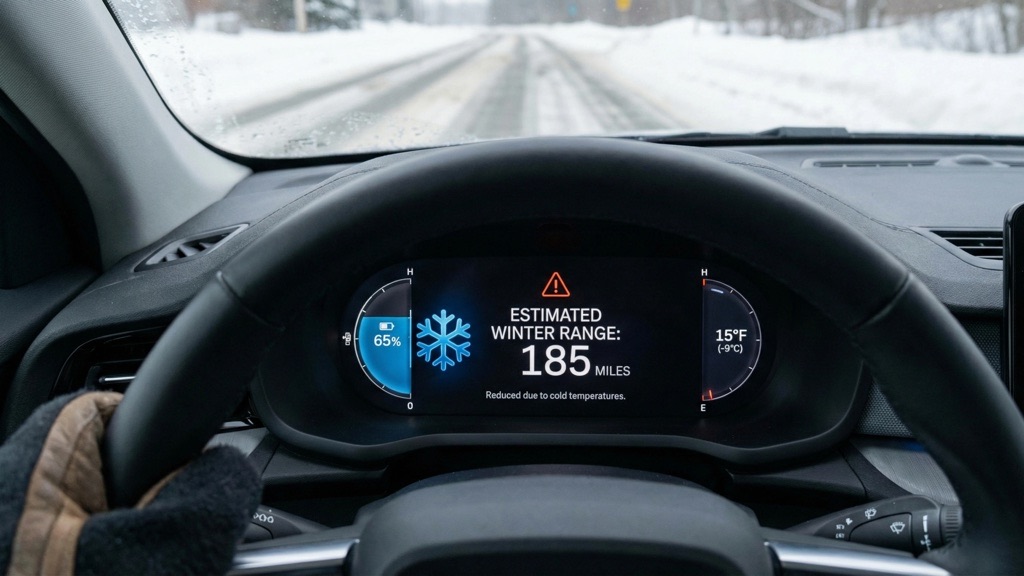
- Winter drop at −10°C (14°F): 15–30%
- Expert verdict: 70% of range loss is driver or environment-controlled
Temporary vs Permanent Range Loss
Understanding this table changes everything.
| Factor | Temporary? | Permanent? | Typical Impact |
|---|---|---|---|
| Cold weather | ✅ Yes | ❌ No | 15–30% |
| 80 mph highway driving | ✅ Yes | ❌ No | 10–20% |
| Aggressive acceleration | ✅ Yes | ❌ No | 5–15% |
| Low tire pressure | ✅ Yes | ❌ No | 2–5% |
| Battery aging | ❌ No | ✅ Yes | 1–2% per year |
👉 If your range suddenly drops 20% overnight, it is almost always environmental — not battery failure.
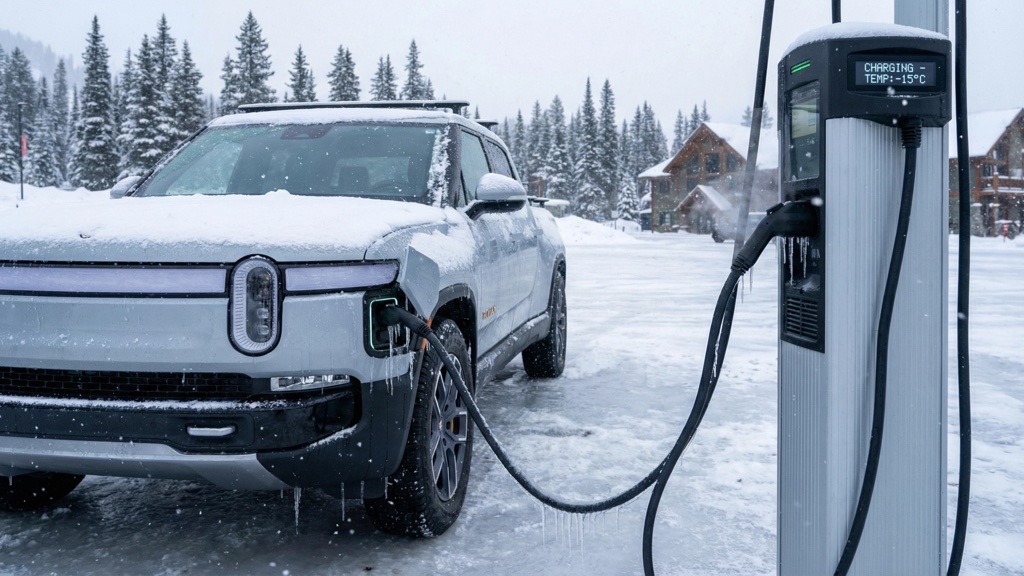
Range Loss by Temperature (Featured Snippet Target)
| Temperature | Expected Range Loss |
|---|---|
| 20°C (68°F) | 0–5% |
| 0°C (32°F) | 10–15% |
| −10°C (14°F) | 15–30% |
| −20°C (−4°F) | 25–40% |
Cold slows lithium-ion chemical reactions and increases heating energy demand. That’s physics — not degradation.
 Tips & Tricks
How to Prepare Your Electric Car for Winter: Everything You Need to Know (2026 Guide)
TL;DR / Quick Answer Winter reduces EV range and slows charging, but proper preparation can recover 15–30% of lost real-world...
 Tips & Tricks
Electric Car Towing Range: Everything You Need to Know (2026 Guide)
TL;DR — Quick Answer Towing with an electric car typically reduces real-world rangee by 30–55%, primarily due to aerodynamic drag...
 Tips & Tricks
Electric vs Gas Cars: Which Is Cheaper Long Term? (2026 Guide)
TL;DR Electric cars are cheaper long-term for most drivers, mainly due to lower energy costs, fewer maintenance items, and longer...
1. Cold Weather — The Biggest Factor
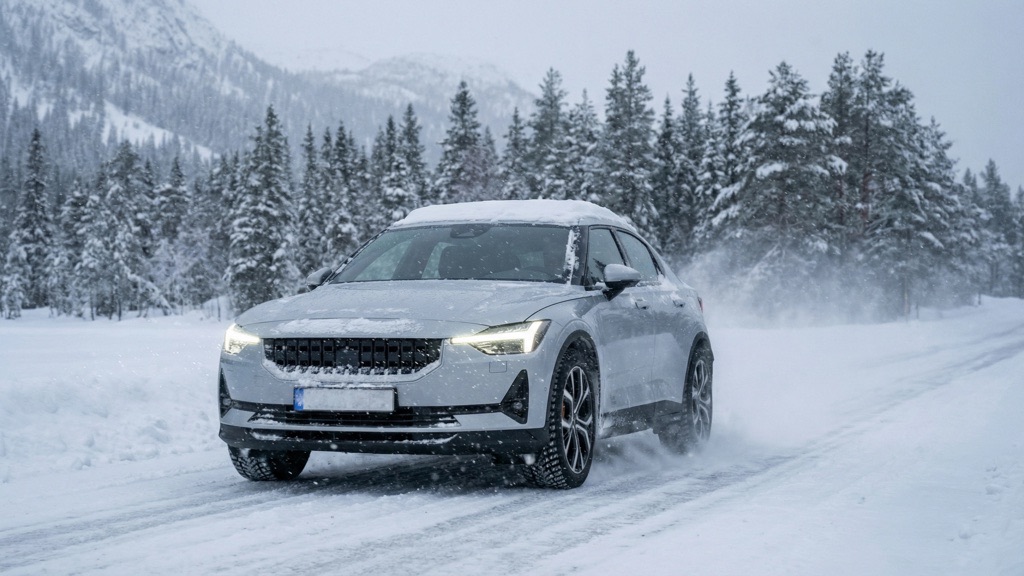
Lithium-ion batteries operate most efficiently between 20–30°C (68–86°F).
Below freezing:
- Chemical reactions slow
- Internal resistance increases
- Cabin heating consumes energy
- Regenerative braking is reduced
Cars like the Tesla Model 3, Hyundai Ioniq 5, and BMW i4 all show similar seasonal patterns.
Expert insight: Heat pump systems reduce winter losses by 5–10% compared to resistance heaters.
2. High Speeds — Aerodynamics Dominate
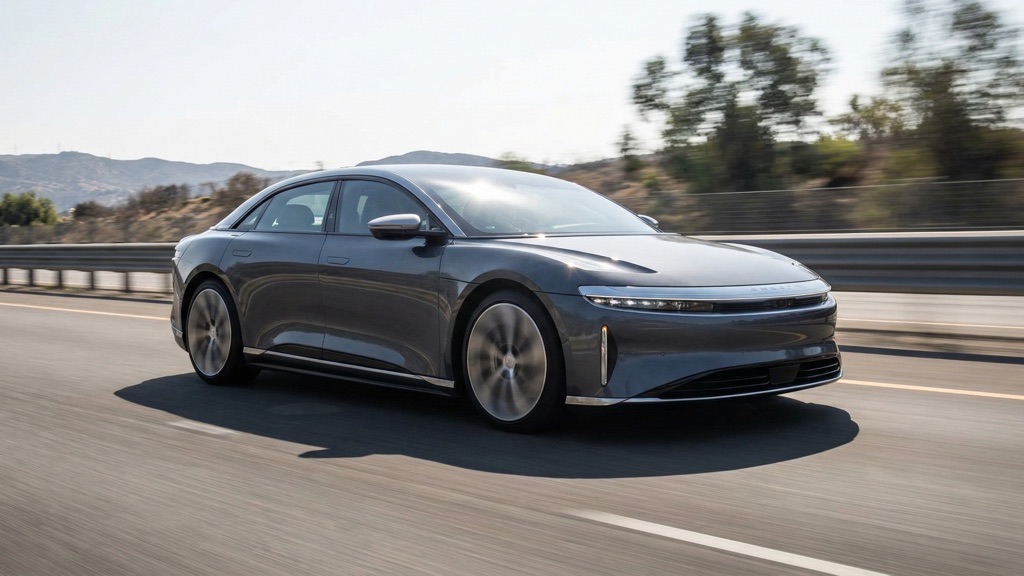
Aerodynamic drag increases exponentially with speed.
- 60 mph → Efficient
- 75 mph → Noticeably higher use
- 80 mph → 10–20% more consumption
EVs are most efficient in city traffic because regenerative braking recovers energy.
3. Battery Degradation Over Time
All lithium-ion batteries degrade slowly.
Expected Capacity Retention
| Years | Average Capacity Remaining |
|---|---|
| 1 | 97–98% |
| 3 | 93–95% |
| 5 | 90–93% |
| 8 | 85–90% |
Most EV warranties guarantee 70% minimum capacity at 8 years.
Expert opinion: Modern EV batteries degrade far more slowly than early-generation models due to advanced thermal management systems.
Is Your Range Loss Normal? Quick Self-Test
If your EV lost:
- 5–10% after several years → Normal aging
- 15–30% in winter → Seasonal effect
- 20% suddenly in warm weather → Check tire pressure and speed first
- 30%+ permanently in mild weather → Test battery health
This block alone can prevent unnecessary service appointments.
How to Measure Real Battery Health
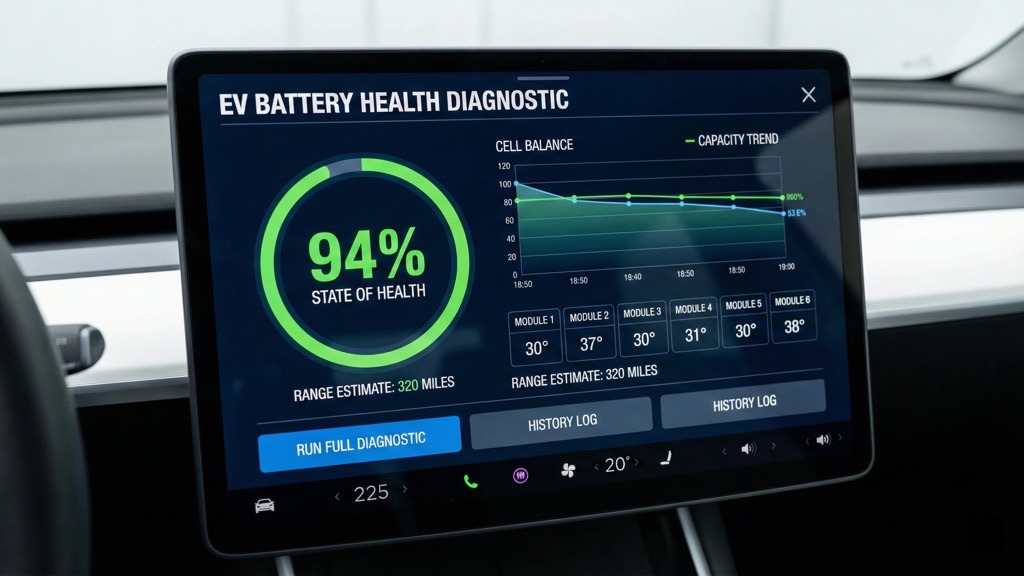
- Compare the rated range at 100% when new vs the current 100% estimate.
- Check in-car battery health diagnostics (varies by brand).
- Track average kWh consumption over 1,000+ miles.
- Consult service diagnostics if below the warranty threshold (70%).
If degradation exceeds warranty limits, manufacturers typically replace affected modules.
Real-World Scenario (Retention Booster)
Winter Commuter Example
Owner of a Tesla Model 3:
- EPA rated: 310 miles
- Summer real-world: 285–300 miles
- Winter at −10°C: 230–250 miles
- Battery health after 5 years: 91%
Conclusion: Winter drop was temporary. Degradation was normal.
Advantages of Understanding Range Loss
✅ Reduces range anxiety
✅ Improves long-trip planning
✅ Extends battery lifespan
✅ Avoids unnecessary panic
Disadvantages & Limitations
❌ Physics still applies
❌ Extreme cold always reduces efficiency
❌ High-speed highway driving always consumes more
No EV can defeat aerodynamics.
Expert Prevention Strategy (2026 Best Practices)
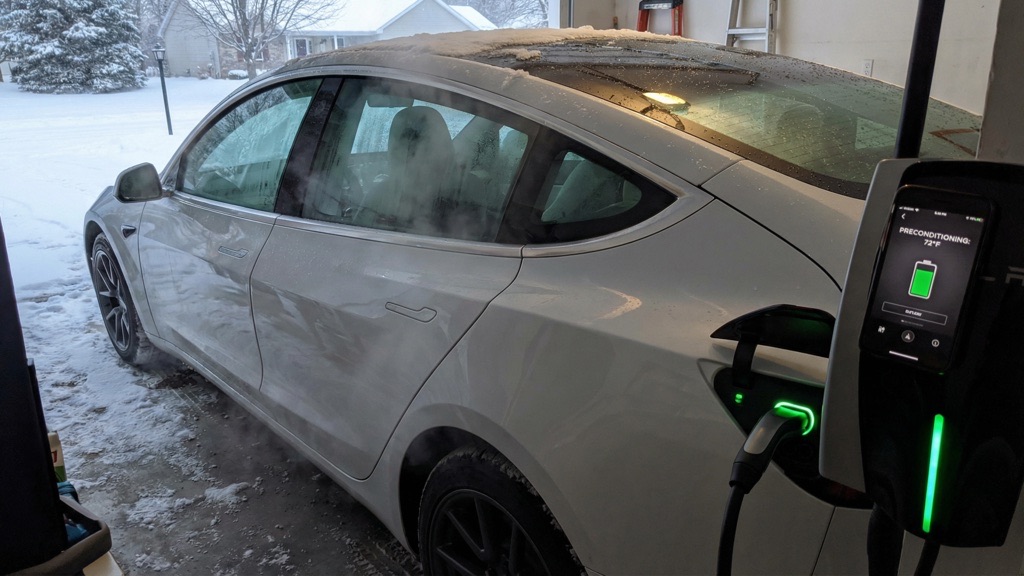
- Precondition while plugged in
- Keep daily charging 20–80%
- Avoid long-term 100% storage
- Maintain correct tire pressure
- Use seat heaters instead of max cabin heat
- Drive 65–70 mph on long trips for best efficiency
These steps can recover 10–20% real-world range.
Future of EV Range (2026+)
- Wider adoption of LFP chemistry
- Improved thermal management
- More efficient heat pumps
- Ongoing solid-state battery development
Consistency is improving every year.
Final Verdict: Is EV Range Loss a Problem?
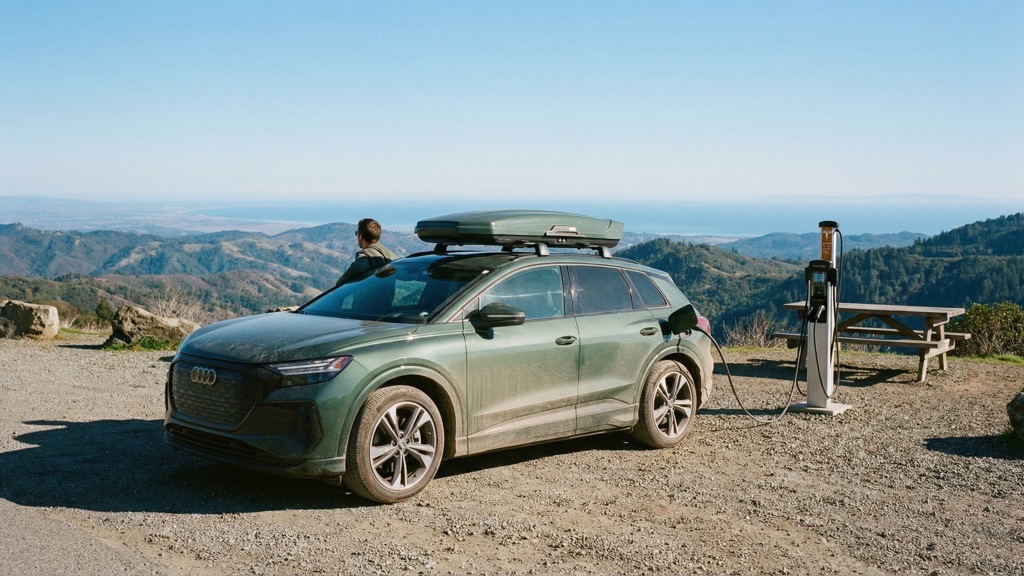
For most drivers:
- It is predictable
- It is manageable
- It is rarely severe
If properly maintained, EV batteries typically retain 85–90% capacity after 8 years.
Range loss in 2026 is not a dealbreaker — it’s a manageable variable.
Summary
- Biggest cause: Cold weather
- Permanent degradation: 1–2% annually
- Most controllable factor: Driving speed
- When to worry: Below 70% capacity within warranty
- Expert takeaway: Most range loss is temporary
FAQ
Why does my electric car lose range faster than advertised?
Official ratings are tested in controlled conditions. Real-world weather and speed reduce efficiency.
Is 10% degradation after 5 years normal?
Yes, that is within normal expectations.
Can cold weather permanently damage the battery?
No, it temporarily reduces efficiency.
Does fast charging destroy batteries?
Moderate DC fast charging has minimal long-term impact under normal use.
How do I know if my battery is failing?
If capacity drops below the warranty threshold (typically 70%) within the coverage period.
Why does highway driving reduce range so much?
Air resistance increases exponentially at higher speeds.
Is EV range improving in 2026?
Yes, especially winter efficiency due to better thermal systems.
Should I charge to 100% daily?
Only when needed, except for certain LFP battery systems.