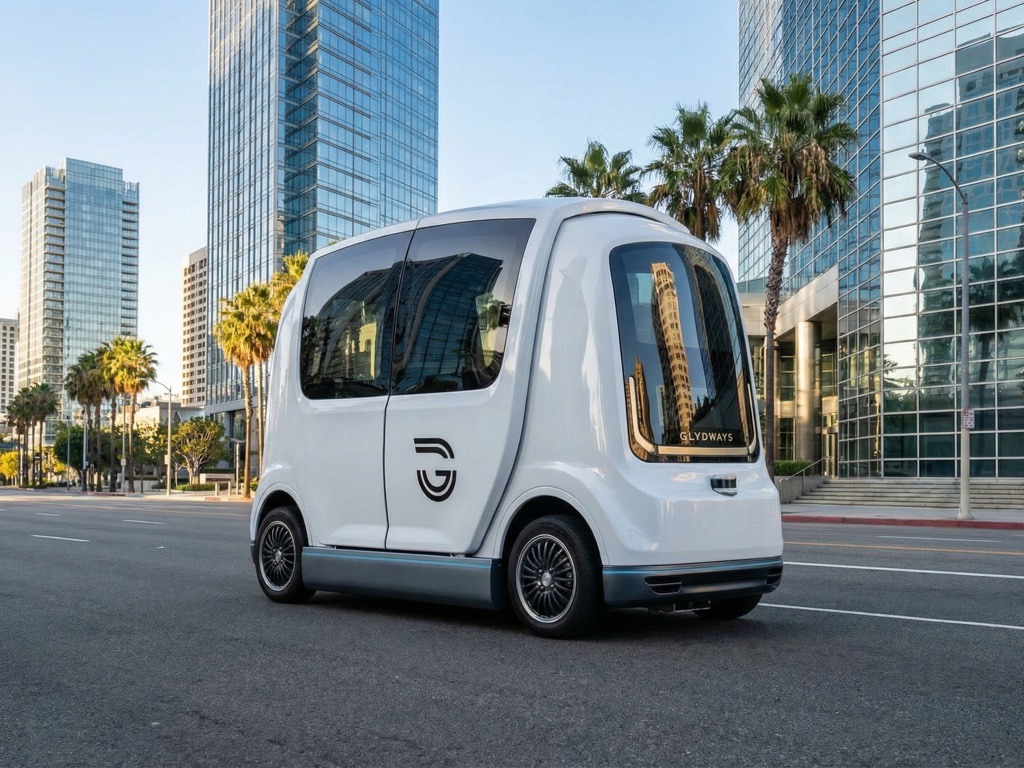
Atlanta has broken ground on what could be a transformative approach to urban transit: a network of autonomous electric pods that promise light-rail capacity at a fraction of traditional rail costs. Glydways’ pilot system, launching in December 2026, will initially connect the Georgia International Convention Center to Gateway Center Arena along a dedicated 0.5-mile guideway—but the real question is whether this $20 million experiment can scale into the regional connector network the company envisions.
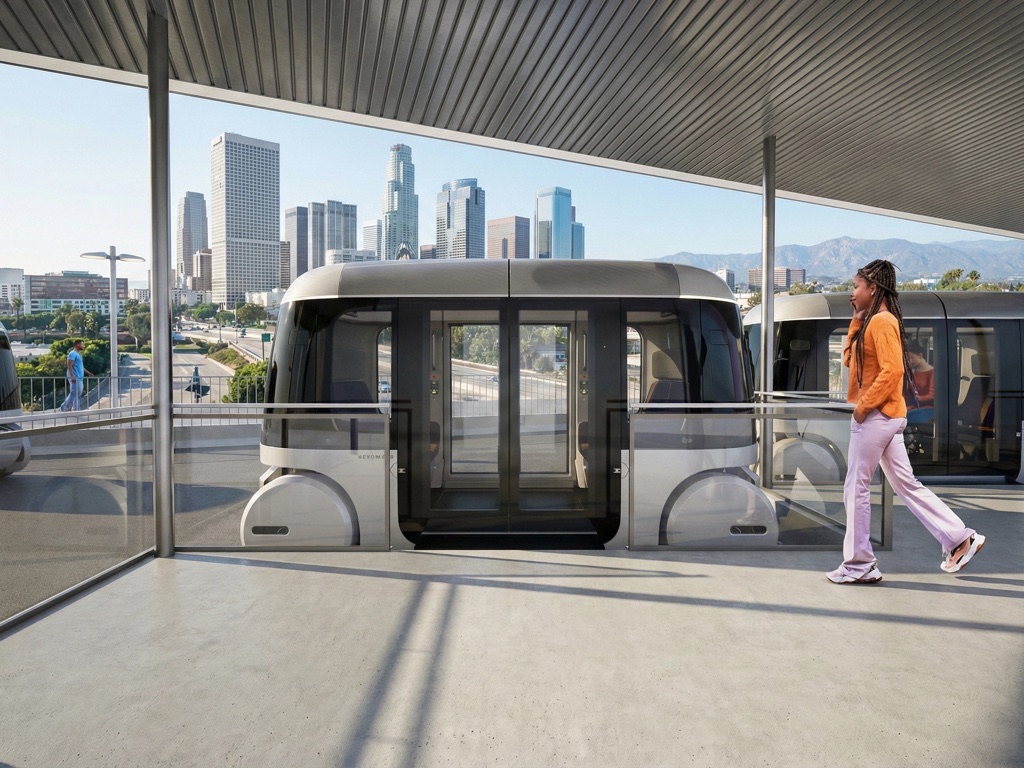
The concept challenges decades of transit orthodoxy. Instead of massive infrastructure projects costing billions and taking years to build, Glydways proposes a lightweight alternative: small, four-passenger electric pods running on a guideway just 6.6 feet wide—roughly the width of a bicycle path. The system operates on-demand via mobile app, with AI-coordinated vehicles running 24/7 in tight platoons on dedicated lanes, eliminating the scheduling constraints and intermediate stops that plague traditional transit.

The Technology Behind the Pods
Each Glydcar is powered by a 45-kilowatt-hour battery and reaches a maximum speed of 31 miles per hour. While this sounds modest, it’s designed for urban environments where average traffic speeds in Atlanta are often near zero. The pods use 20 high-resolution LiDAR sensors, radar, and HD cameras to maintain safe spacing and operate in coordinated platoons. Because they run on a dedicated, controlled guideway with no mixed traffic, autonomous operation becomes genuinely practical—a significant advantage over self-driving cars attempting to navigate unpredictable street environments.
The system’s claimed capacity is ambitious: Glydways states it can move 10,000 people per hour through a guideway just 2 meters wide, matching light-rail throughput. For context, traditional light rail systems can cost $2 billion per mile to build, while Glydways claims construction costs of approximately $20 million per mile. The company hasn’t disclosed specific construction costs for the Atlanta pilot, but the $20 million total investment for the 0.5-mile demonstration suggests the economics could work at scale.

The Business Model: Subsidy-Free Transit?
Glydways co-CEO Mark Seeger has claimed the system can operate profitably without government subsidies, citing the elimination of driver labor and minimal maintenance requirements. Post-pilot fares are promised to be competitive with bus tickets. This represents a fundamental departure from traditional transit, which typically requires ongoing public funding.
The Atlanta pilot is funded through the Airport CID’s self-taxing structure, leveraging private commercial dollars for public infrastructure—a model that could be replicated elsewhere. If the pilot demonstrates financial viability, it could reshape how cities approach transit funding. However, the claim of subsidy-free operation remains unproven; the pilot’s two-year operational window will be critical for validating these projections.
 Cars
Cars
The Iconic MOKE Returns as a $50,000 Electric Beach Cruiser for Adults
California has a new toy — one that’s equal parts nostalgia, lifestyle, and wonderfully impractical engineering. The legendary MOKE, a...
 Cars
Cars
Polestar Launches Biggest Model Offensive in History: Four New EVs by 2028
Polestar is executing its most ambitious product expansion ever, with four new premium electric vehicles confirmed to launch globally by...
 Cars
Cars
Volkswagen ID.Polo Revealed: Affordable Electric Hatchback Launching in 2026
Volkswagen has officially confirmed the return of one of its most iconic nameplates — but this time, it comes with...
International interest suggests confidence in the model. Dubai and Abu Dhabi have already signed agreements to deploy Glydways systems, providing some validation of the technology’s commercial viability.

The Pilot and Path Forward
Construction began in February 2026, with passenger service targeted for December 2026. The initial phase will be free to the public, allowing Glydways to gather ridership data and refine operations before implementing fares. The pilot is expected to run for two years, providing sufficient time to assess reliability, rider adoption, and integration with existing transit systems like MARTA and the ATL SkyTrain.
Success could unlock significant expansion. Glydways and local officials have discussed a potential 13-to-20-mile regional connector system surrounding Hartsfield-Jackson Atlanta International Airport, potentially serving Delta parking lots, the College Park MARTA Station, and other regional hubs. Gerald McDowell, executive director of the ATL Airport CID, stated the goal is to “make the determination if these innovative mobility solutions will be viable for our communities” within two to four years.
Comparison with Competing Solutions
| System | Capacity | Cost per Mile | Infrastructure | Status |
|---|---|---|---|---|
| <strong>Glydways ATN</strong> | 10,000/hour | ~$20M | 6.6-ft guideway | Pilot Dec 2026 |
| <strong>Traditional Light Rail</strong> | 10,000/hour | $2B+ | Full-width track | Established |
| <strong>Bus Rapid Transit</strong> | 5,000-8,000/hour | $10-50M | Dedicated lanes | Deployed widely |
| <strong>Autonomous Shuttles</strong> | 100-500/hour | $500K-$2M | Standard roads | Limited pilots |
Glydways occupies a unique position: it matches light-rail capacity at a fraction of the cost, but with smaller vehicles and more flexible routing than traditional rail. It offers higher capacity than autonomous shuttles while maintaining on-demand service. The trade-off is that it requires dedicated infrastructure, limiting its ability to serve arbitrary origin-destination pairs without a comprehensive guideway network.
The Critical Questions
Despite the compelling economics, significant uncertainties remain. The 10,000-people-per-hour capacity claim assumes optimal conditions—tight platoons, high utilization, and consistent demand. Real-world ridership patterns may differ substantially, particularly during off-peak hours. The system’s reliance on dedicated guideways means it cannot serve areas without infrastructure investment, limiting flexibility compared to bus systems.
Maintenance claims of “minimal” require validation. While autonomous pods eliminate driver labor, guideway maintenance, battery replacement, and sensor recalibration will incur costs. The two-year pilot will be crucial for establishing realistic operational expense projections.
Finally, the “subsidy-free” claim deserves scrutiny. The $20 million pilot is publicly funded through the Airport CID; ongoing operations may require public support for maintenance, infrastructure upgrades, or demand-side subsidies to achieve target ridership levels.

Verdict
Glydways’ Atlanta pilot represents a genuine innovation in urban transit—not revolutionary technology, but a pragmatic recombination of existing autonomous systems with dedicated infrastructure to solve real problems: cost, construction time, and operational efficiency. The 0.5-mile demonstration is appropriately scaled for proof-of-concept, and the December 2026 launch timeline is realistic given the February 2026 groundbreaking. Success depends on three factors: achieving claimed capacity utilization, maintaining operational costs below projections, and demonstrating reliable autonomous operation in a real-world environment. For transit planners frustrated by billion-dollar rail projects and cities seeking cost-effective alternatives to traditional transit, this pilot deserves close attention. For skeptics, the next two years will provide definitive answers about whether this is transformative infrastructure or an expensive novelty for convention-goers.