


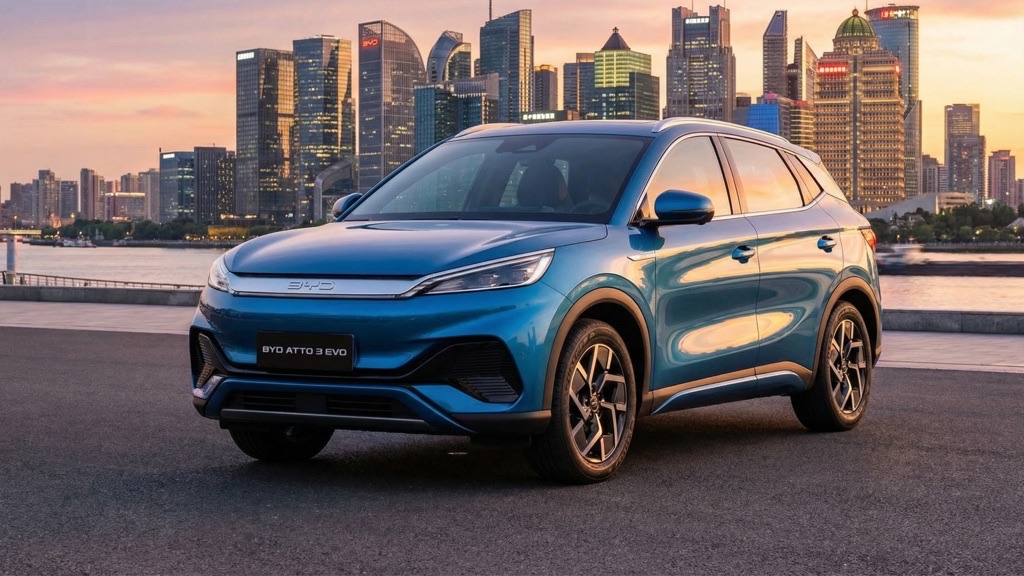
BYD’s 2026 Atto 3 Evo Delivers Supercar Acceleration in a Family SUV
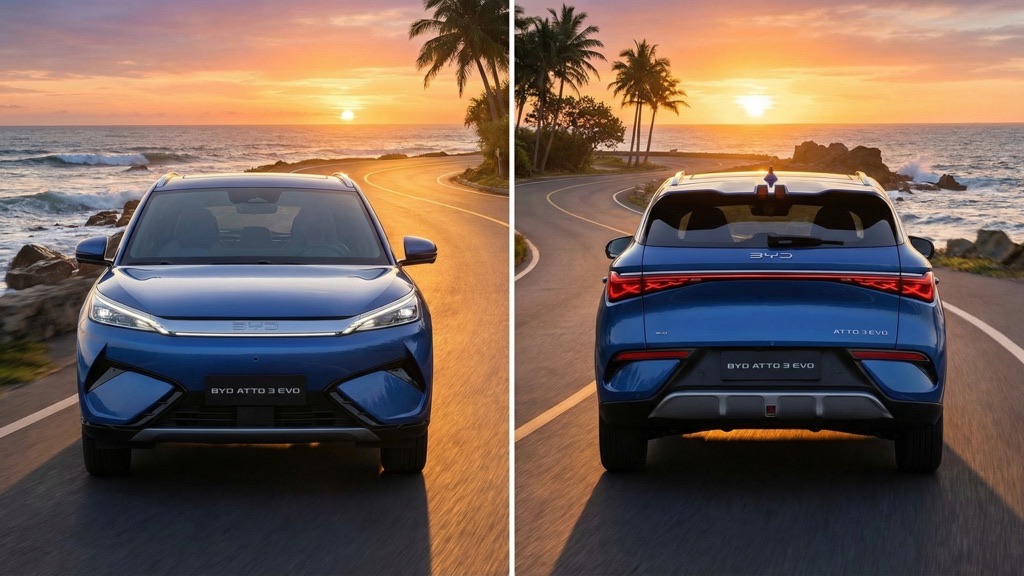
The 2026 BYD Atto 3 Evo represents a significant performance leap for the Chinese automaker’s popular compact crossover, combining 443 horsepower in its dual-motor variant with a 75 kWh battery and 510 km (317 miles) WLTP range—all while maintainingcompetitive pricingg that starts around €42,000 in Europe.
This isn’t merely an incremental refresh. BYD has fundamentally reimagined the Atto 3 by abandoning its front-wheel-drive architecture in favor of rear-wheel-drive as standard, with all-wheel-drive available on higher trims. The shift unlocks not just performance gains but also practical improvements that reshape how the vehicle functions as daily transportation.
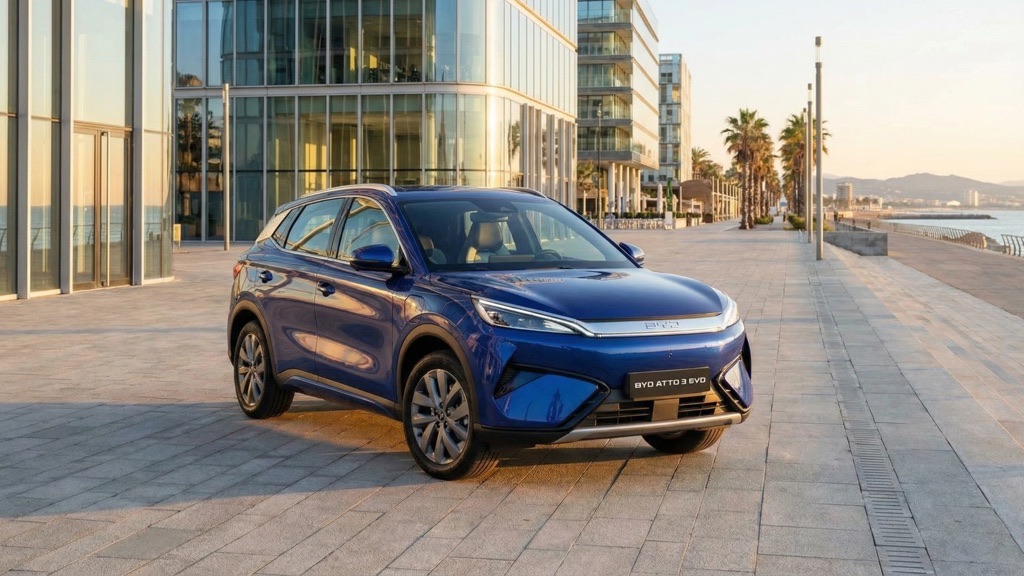
Architecture Overhaul: From FWD Softness to RWD Aggression
The previous generation Atto 3 relied on a single front-mounted motor producing 150 kW and 310 Nm of torque. The 2026 Evo abandons this layout entirely. The base Design trim features a rear-mounted motor producing 230 kW (308 hp) and 380 Nm of torque, enabling 0-100 km/h acceleration in 5.5 seconds. For those seeking genuine performance, the Excellence trim adds a front motor, combining both units for 330 kW (443 hp) and 560 Nm of torque, achieving 0-100 km/h in just 3.9 seconds.
To manage this power delivery, BYD redesigned the suspension architecture. The previous four-link rear suspension has been replaced with a five-link design, improving both handling balance and ride quality. This mechanical foundation proves essential—accelerating a two-ton family SUV from standstill to 62 mph in 3.9 seconds demands more than raw motor output.
The drivetrain shift also enabled a practicalBYD engineers reclaimed 50 liters of boot spaces of boot space by relocating the battery pack and motor architecture. The trunk now offers 490 liters of cargo space (expandable to 1,360 liters with rear seats folded), compared to the previous generation’s 440 liters. Additionally, the switch to RWD allowed BYD to add a 101-liter frunk—a feature absent from the original Atto 3.
Battery and Charging: The 800V Advantage
The Atto 3 Evo’s battery capacity increases from 60 kWh to 74.8 kWh, representing a 25% jump in energy storage. Despite this larger capacity, BYD continues using LFP (lithium iron phosphate) chemistry rather than NMC, leveraging its proprietary Cell-to-Body integration technology to maximize space efficiency.
The real charging breakthrough comes from the new 800-volt e-Platform 3.0 architecture. This electrical foundation enables 220 kW DC fast charging, allowing the battery to move from 10% to 80% state of charge in approximately 25 minutes under optimal conditions. For context, the previous generation required significantly longer charging times at lower power levels.
 Cars
Cars
Mazda Unveils Vision X-Coupe 2035: Rotary Comeback With Algae Power
Mazda’s Vision X-Coupe Brings Back the Legendary Rotary Engine — Now Running on Algae Mazda has officially revealed its futuristic...
 News
News
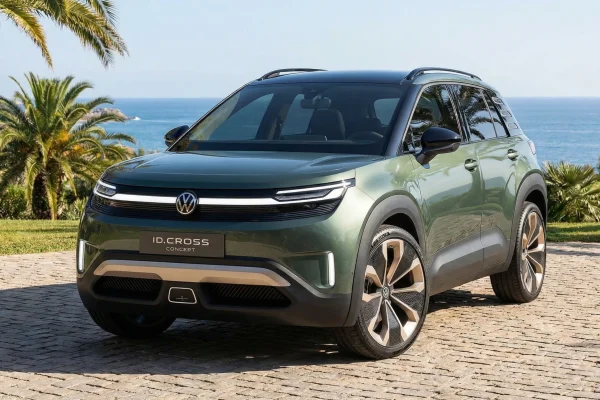
Volkswagen ID. Cross: 208 HP Affordable Electric SUV Launches Summer 2026 Under €35,000
Volkswagen ID. Cross: 208 HP Affordable Electric SUV Launches Summer 2026 Under €35,000 Volkswagen is returning to its core mission...
 Cars
Cars
Ford Unveils 2026 Mustang Mach-E GT California Special: Price, Specs, and Release Date
Ford’s Electric Pony Gets a 60s-Inspired Makeover Ford has officially revealed the 2026 Mustang Mach-E GT California Special, a nostalgic,...
Range figures reflect both the larger battery and improved efficiency. The rear-wheel-drive variant achieves 510 km (317 miles) WLTP range, compared to 420 km in the previous generation. The all-wheel-drive version trades some range for performance, delivering 470 km (292 miles) WLTP—still a respectable figure for a dual-motor performance variant.
Interior and Technology Refinements
Inside, the Atto 3 Evo receives meaningful updates beyond raw specifications. The centerpiece remains a 15.6-inch rotatable touchscreen running BYD’s latest infotainment system with Google Maps integration and voice assistant functionality. However, BYD relocated the gear selector from the center console to the steering column, freeing up interior space and allowing the wireless charging pad to be repositioned lengthwise rather than sideways.
The instrument cluster transitions from a trapezoidal 8.8-inch display to a rectangular design, while a new steering wheel and updated interior trim materials contribute to a more contemporary cabin atmosphere. Heated rear seats, multi-color ambient lighting, and flexible storage pockets address practical comfort requirements for family use.
Safety systems include adaptive cruise control, lane-centering assist, front and rear cross-traffic alert, blind-spot monitoring, lane-keep assist, and traffic sign recognition. A heat-pump climate control system comes standard, reducing energy consumption during heating and cooling cycles to preserve driving range in cold weather.
Competitive Positioning and Value Proposition
| Specification | Atto 3 Evo RWD | Atto 3 Evo AWD | Previous Gen (FWD) |
|---|---|---|---|
| Motor Power | 230 kW (308 hp) | 330 kW (443 hp) | 150 kW (201 hp) |
| Torque | 380 Nm | 560 Nm | 310 Nm |
| 0-100 km/h | 5.5 seconds | 3.9 seconds | 7.3 seconds |
| Battery Capacity | 74.8 kWh | 74.8 kWh | 60 kWh |
| WLTP Range | 510 km (317 mi) | 470 km (292 mi) | 420 km (261 mi) |
| DC Fast Charging (10-80%) | ~25 minutes | ~25 minutes | Significantly longer |
| Cargo Space (trunk) | 490 L (17.3 cu ft) | 490 L (17.3 cu ft) | 440 L |
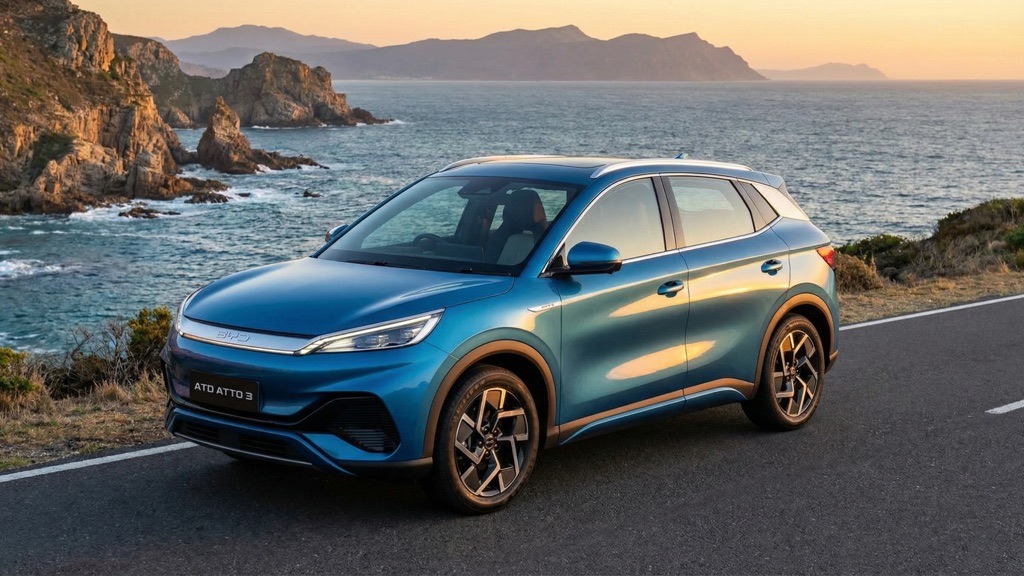
BYD’s pricing strategy positions the Atto 3 Evo as a value proposition in the premium compact SUV segment. European pricing begins around €42,000 for the Design trim, with the company maintaining that the Evo variant will preserve this competitive positioning despite substantial technical upgrades. This represents approximately 20% more power than the previous generation at comparable or lower pricing—a claim that warrants verification as official European pricing becomes available.
The warranty package reinforces this value positioning: six years on the vehicle and eight years (or 155,000 miles) on the battery pack provide meaningful peace of mind for early adopters.
Unanswered Questions and Market Context
While the Atto 3 Evo’s specifications are compelling, several details remain unclear. Official European pricing has not been universally confirmed across all markets, and availability timelines vary by region. Additionally, real-world range figures under various driving conditions and temperatures have not yet been independently verified by automotive testing organizations.
The dual-motor AWD variant’s 470 km range represents a 40 km reduction compared to the RWD model—a trade-off that reflects the efficiency penalty of driving four wheels rather than two. Potential buyers should consider whether the 3.9-second acceleration justifies this range compromise for their use case.
BYD’s claim that the Atto 3 Evo maintains pricing parity with the previous generation despite doubling power output also requires scrutiny. If confirmed, this would represent exceptional value; if pricing has increased substantially, the narrative shifts considerably.



Verdict: A Meaningful Step Forward for Practical Performance
The 2026 BYD Atto 3 Evo successfully addresses the previous generation’s primary weakness—underwhelming performance—while simultaneously improving range, charging speed, and interior space. The shift to rear-wheel drive as standard represents a philosophical commitment to handling dynamics that the original front-wheel-drive layout could not deliver. For buyers prioritizing practical family transportation with genuine performance capability, the Evo variant offers a compelling package. The dual-motor AWD version delivers supercar-level acceleration in a vehicle designed for school runs and weekend trips, though the range penalty may concern those planning frequent long-distance travel. The real-world value proposition depends entirely on whether BYD delivers on its pricing claims—a detail that will determine whether this is a genuine breakthrough or simply another well-equipped vehicle at premium pricing.


A really good blog and me back again.