


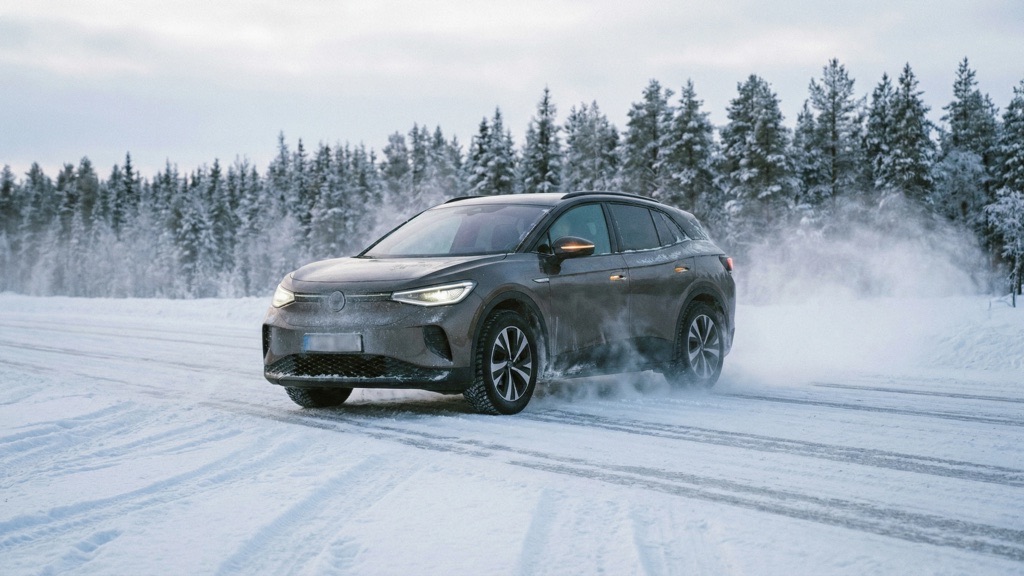
If you’ve never owned an EV in −15°C (5°F), here’s the uncomfortable truth:
Your 330-mile EV becomes a 220–250-mile car.
Fast charging can drop below 70 kW without preconditioning.
Cabin heat can consume 4–6 kW continuously.
Snow tires add another 5–10% energy loss.
Winter doesn’t “slightly reduce” range. It exposes weak thermal engineering immediately.
This guide is written for buyers in the US Midwest, Northeast, Canada, Scandinavia, Germany, Alpine Europe — people who actually drive in real winter.
If you live in Florida or southern Spain, this article isn’t critical for you.
⚡ READ THIS FIRST (Winter Buyer Snapshot)
- Expect a 20–35% range loss at −10°C
- Expect 30–40% loss at −20°C in average EVs
- Heat pump ≠ guaranteed winter performance
- Preconditioning before DC charging is essential
- Big battery ≠ efficiency, but it reduces anxiety
Safest all-around winter choice: Tesla Model Y Long Range
Fastest charging in deep cold: Hyundai Ioniq 5 AWD
Most comfortable commuter: Volkswagen ID.4 AWD
Best extreme-climate workhorse: Ford F-150 Lightning ER
Now let’s go deeper.
What Actually Happens to an EV at −20°C?
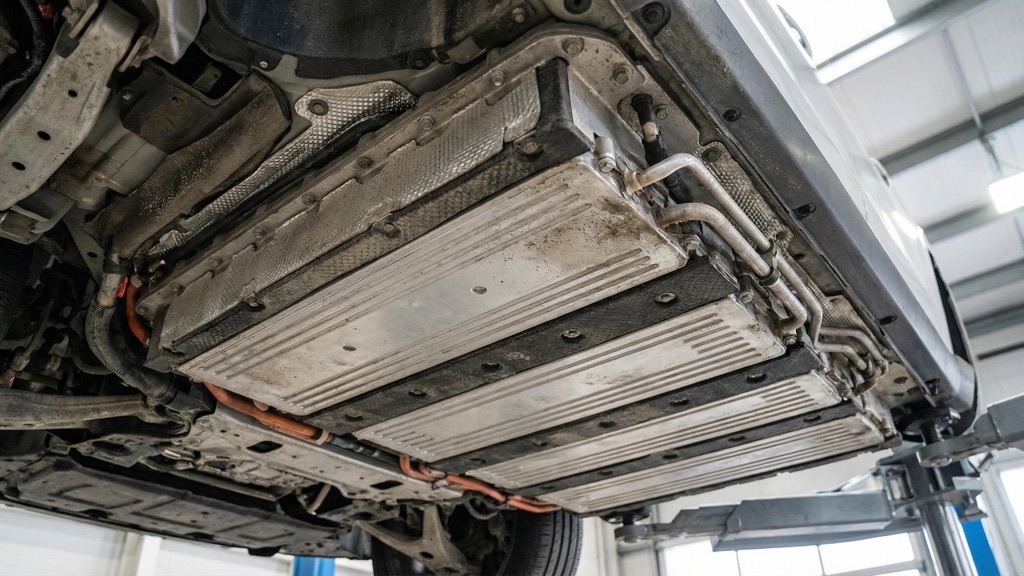
Cold air is dense.
Battery chemistry slows down.
Internal resistance increases.
Regeneration is limited.
Heating load spikes.
Without proper thermal management:
- Charging slows dramatically
- Efficiency collapses
- Trip planning becomes unpredictable
The difference between a “winter-capable” EV and a frustrating one is software + thermal integration.
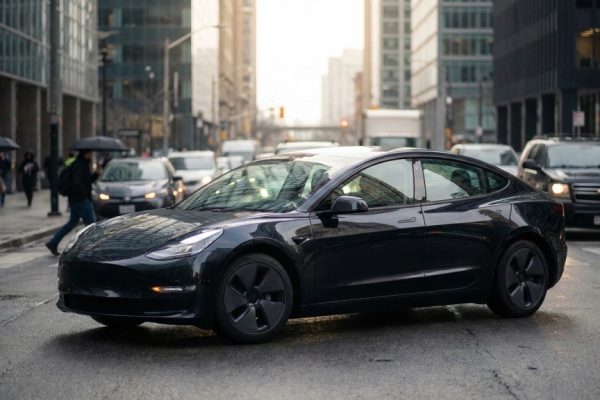
1️⃣ Tesla Model Y Long Range (2026)
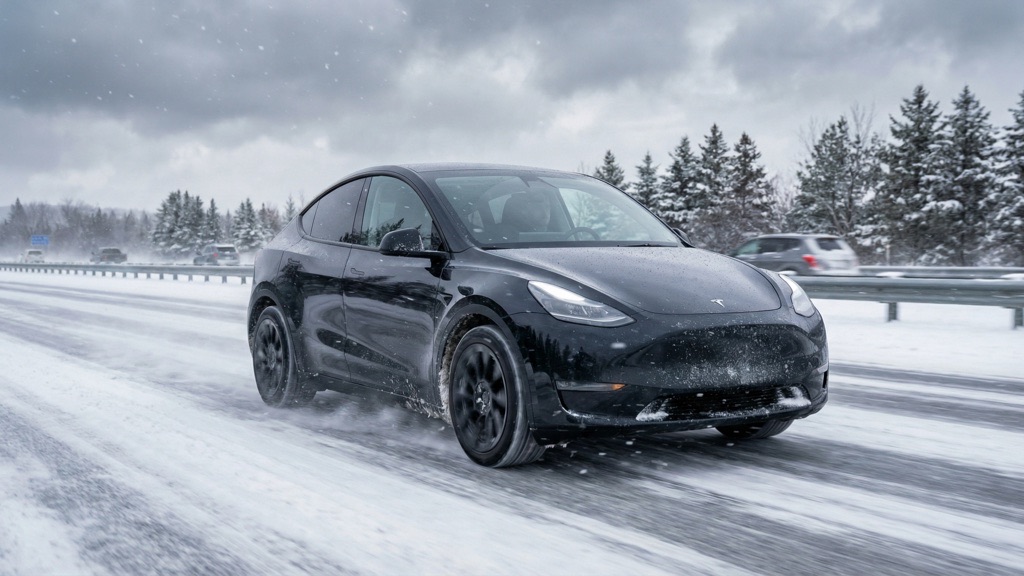
The benchmark winter EV in North America — and increasingly Europe.
📊 Key Specifications
| Specification | Value |
|---|---|
| Battery capacity | ~75 kWh usable |
| Real winter range (−10°C) | 240–270 miles (385–435 km) |
| Real winter range (−20°C) | 220–240 miles |
| EPA range | ~330 miles |
| DC fast charging | Up to 250 kW |
| Drivetrain | Dual-motor AWD |
| Starting price | ~$48,000 US / €52,000 EU |
Real Winter Analysis
At −10°C, the range drops roughly 22–25%.
At −20°C, closer to 30%.
The key advantage isn’t just the heat pump — it’s the integration:
- Navigation-linked battery preconditioning
- Highly efficient Octovalve thermal system
- Dense Supercharger network
Charging in freezing conditions often remains above 150 kW when properly preheated.
Expert Comment
Many EVs have heat pumps.
Few integrate battery conditioning and charging infrastructure as effectively as Tesla.
 Cars
Cars
XPeng Next P7 Review (2026): Real Range, Charging & Final Verdict
TL;DR ✅ Buy XPeng Next P7 if you want: One of the most technologically advanced electric sedans of 2026 Strong real-world...
 Reviews
2026 XPeng P7+ Interior, Design and Features Review
2026 XPeng P7+ Interior, Design, and Features Review When the XPeng P7+ entered the market, it immediately signaled a turning...
 Cars
Cars
Tesla Model 3 vs Polestar 2 (2026): Range, Charging, Price & Verdict
TL;DR Choose the Tesla Model 3 if you want maximum acceleration, the largest charging network, and the lowest starting price....
👍 Pros
- Best winter charging ecosystem
- Predictable efficiency curve
- Strong AWD calibration
- Excellent route planning in cold
👎 Cons
- Ride can feel firm on broken winter asphalt
- Real range still drops heavily below −20°C
- Insurance costs in the US can be high
- Interior materials are not premium-tier
2️⃣ Hyundai Ioniq 5 AWD (2026)
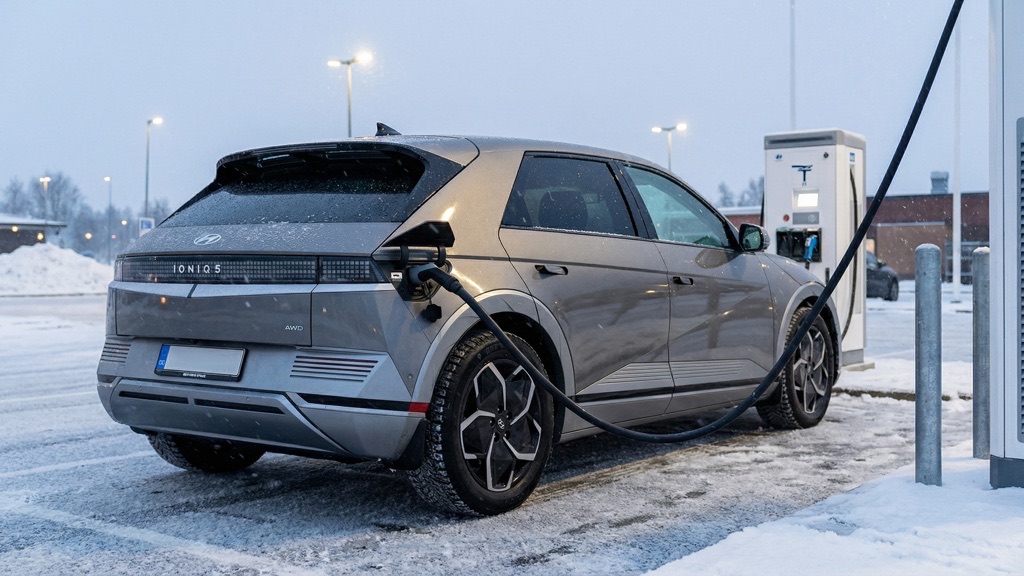
The hardware star — but requires more owner awareness.
📊 Key Specifications
| Specification | Value |
|---|---|
| Battery capacity | 77.4 kWh |
| Real winter range (−10°C) | 210–240 miles |
| Real winter range (−20°C) | 190–210 miles |
| EPA range | ~266 miles |
| DC fast charging | Up to 235 kW |
| Drivetrain | Dual-motor AWD |
| Starting price | ~$50,000 US / €51,000 EU |
Winter Reality
The 800V system allows very high charging peaks.
But preconditioning is not always as seamless as Tesla’s system.
Without warming the battery, charging speeds can drop significantly in deep cold.
Expert Comment
When everything is set up correctly, it charges extremely fast.
But winter ownership demands more involvement.
👍 Pros
- Very fast DC charging when preheated
- Comfortable ride on rough winter roads
- Efficient updated heat pump
- Spacious interior
👎 Cons
- Winter range loss around 30–35%
- Preconditioning UX is not as intuitive
- Charging network consistency varies
- Cargo space is smaller than that of the Model Y
3️⃣ Volkswagen ID.4 AWD (2026)
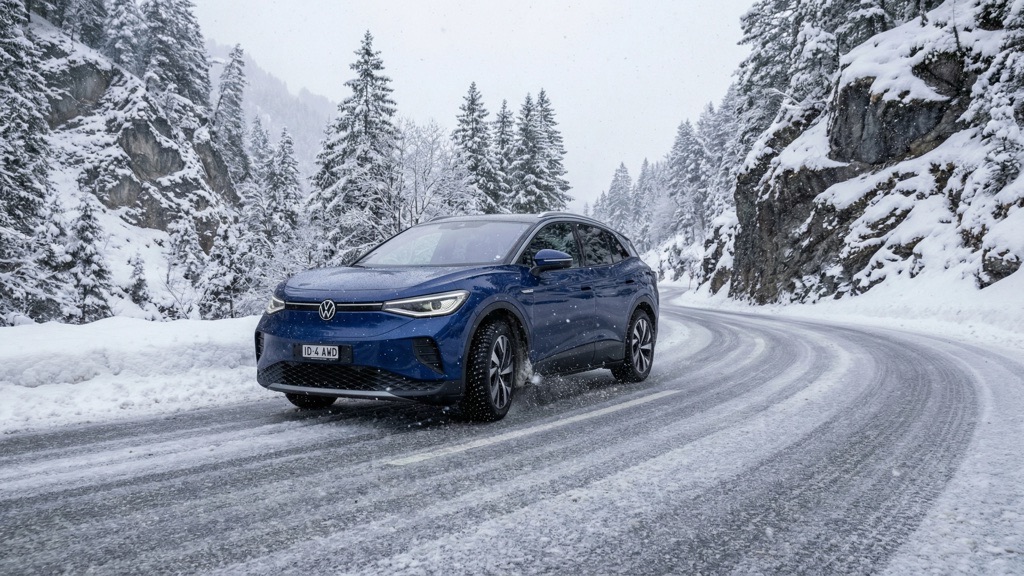
Comfortable, stable — but not winter-efficient leader.
📊 Key Specifications
| Specification | Value |
|---|---|
| Battery capacity | 77 kWh |
| Real winter range (−10°C) | 200–230 miles |
| Real winter range (−20°C) | 180–200 miles |
| EPA range | ~255 miles |
| DC fast charging | Up to 175 kW |
| Drivetrain | Dual-motor AWD |
| Starting price | ~$46,000 US / €49,000 EU |
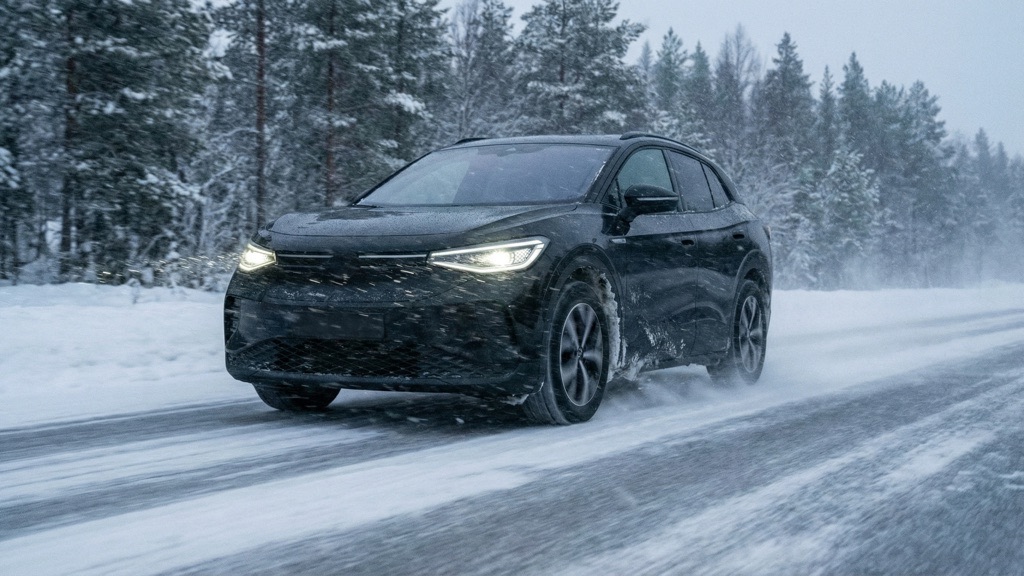
Winter Behavior
Expect around a 30–35% range reduction at −10°C.
Charging slows more noticeably below −15°C.
Ride comfort is excellent, which matters on icy, broken pavement.
Expert Comment
A solid urban winter EV.
Not ideal for repeated long freezing highway trips.
👍 Pros
- Comfortable suspension
- Competitive pricing
- Stable AWD traction
- Simple controls
👎 Cons
- Slower cold charging curve
- Software still average
- Efficiency lags behind Tesla
- More aerodynamic drag than rivals
4️⃣ Ford F-150 Lightning Extended Range (2026)
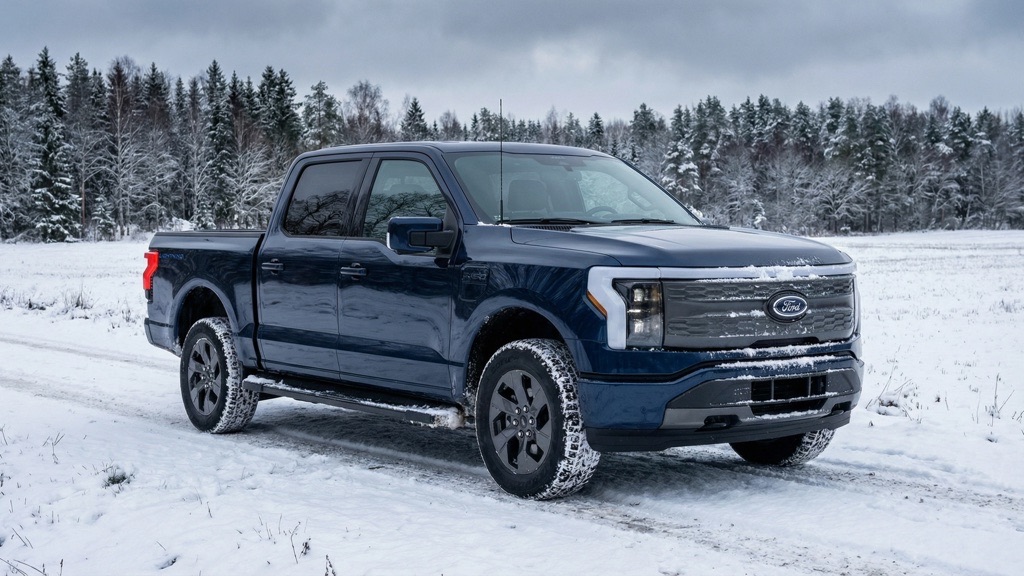
Heavy. Stable. Energy hungry.
📊 Key Specifications
| Specification | Value |
|---|---|
| Battery capacity | 131 kWh (gross) |
| Real winter range (−10°C) | 250–290 miles |
| Real winter range (−20°C) | 230–250 miles |
| EPA range | ~320 miles |
| DC fast charging | Up to 155 kW |
| Drivetrain | Dual-motor AWD |
| Starting price | ~$69,000 US |
Winter Reality
Consumption can reach 500–600 Wh/mile in deep cold.
But the massive battery buffer keeps range anxiety manageable.
Expert Comment
If you live in rural, tow, or face severe winters, capacity matters more than efficiency.
👍 Pros
- Huge battery reserve
- Excellent stability in snow
- Practical for harsh climates
- High ground clearance
👎 Cons
- Very high winter energy consumption
- Expensive purchase price
- Slower charging vs Tesla
- Limited availability in Europe
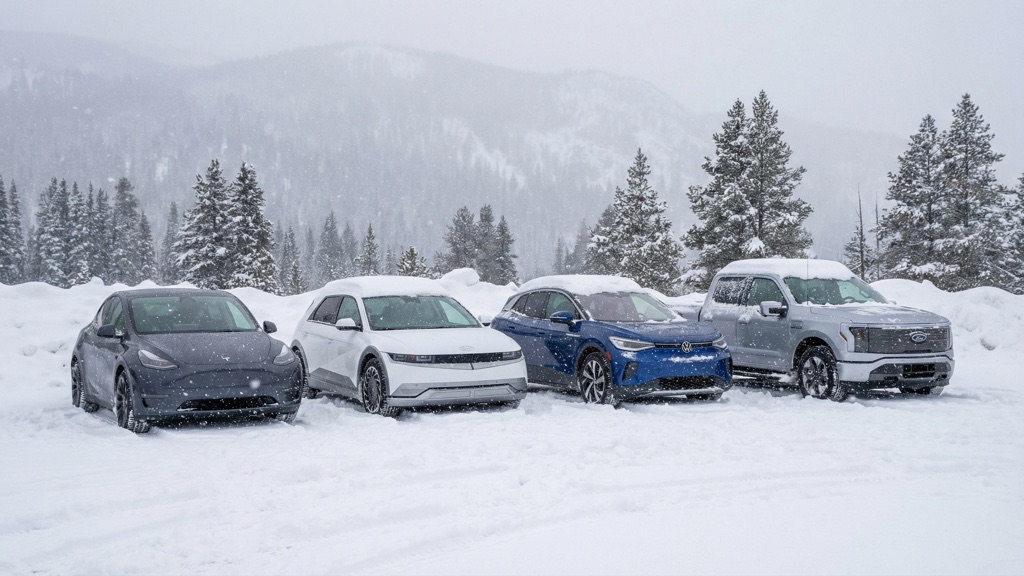
📊 Winter Comparison Table (−10°C Benchmark)
| Model | Range Loss | Charging at −15°C | Heat Pump | Winter Rating |
|---|---|---|---|---|
| Tesla Model Y LR | 22–25% | Excellent (150–200 kW preheated) | Yes | 9.5/10 |
| Hyundai Ioniq 5 AWD | 25–30% | Very Fast (if preheated) | Yes | 9/10 |
| VW ID.4 AWD | 30–35% | Moderate | Yes | 7.8/10 |
| Ford F-150 Lightning ER | 20–25% | Moderate | Yes | 8.7/10 |
💰 Real Winter Running Costs
Example (15,000 miles/year in the Midwest US):
Winter adds ~700 kWh extra consumption.
At $0.15/kWh:
~$105 additional annual winter energy cost.
Europe (€0.30/kWh):
~€210 extra per winter.
Cold increases tire wear and energy use — but does not accelerate long-term battery degradation like heat does.
🧠 FINAL EXPERT VERDICT
🔹 Short Verdict
If winter reliability is your priority:
👉 Buy Tesla Model Y Long Range.
If you prioritize charging speed and don’t mind managing settings:
👉 Hyundai Ioniq 5 AWD is strong.
If comfort matters more than ultimate efficiency:
👉 VW ID.4 is acceptable.
If you need a winter-capable electric truck:
👉 F-150 Lightning is powerful but costly to run.
🔹 Detailed Expert Assessment
Winter EV ownership is about integration:
- Thermal system
- Software intelligence
- Charging network reliability
- Battery buffer
Tesla currently integrates these elements most effectively.
Hyundai offers impressive hardware but requires more user involvement.
Volkswagen prioritizes comfort over efficiency.
Ford compensates inefficiency with battery size.
If your winters regularly drop below −15°C, choose engineering — not brochure range numbers.
TL;DR
- Expect 20–35% winter range loss
- Preconditioning is essential
- Tesla Model Y is the safest winter bet
- 800V helps, but software integration matters more
- Big batteries reduce anxiety, not energy use
FAQ
Do EVs struggle in snow traction-wise?
No. AWD electric systems are extremely effective.
Is a heat pump mandatory?
For cold climates — yes.
Will cold permanently damage my battery?
No. Long-term heat exposure is far more harmful.
A really good blog and me back again.