
TL;DR — Quick Answer
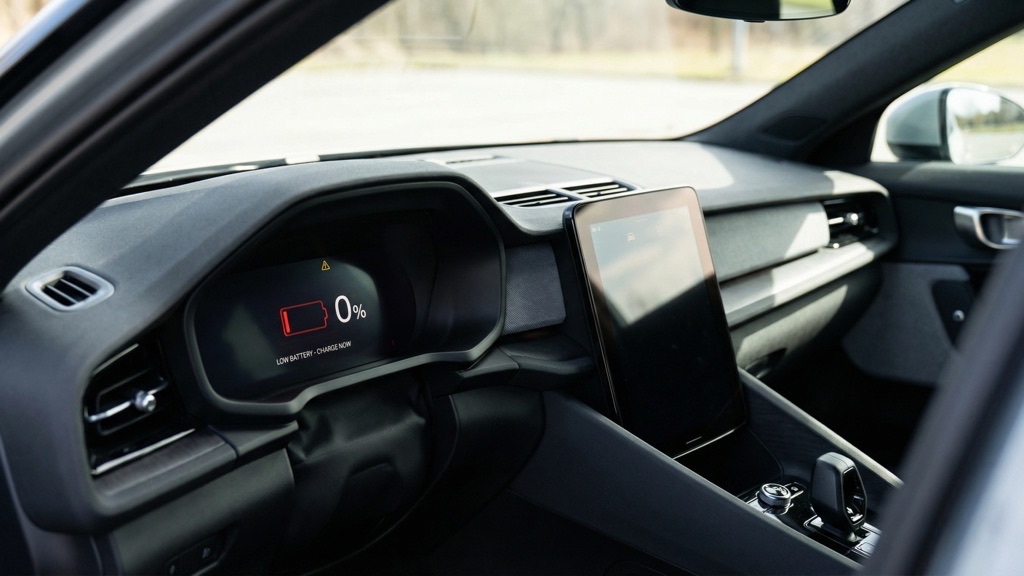
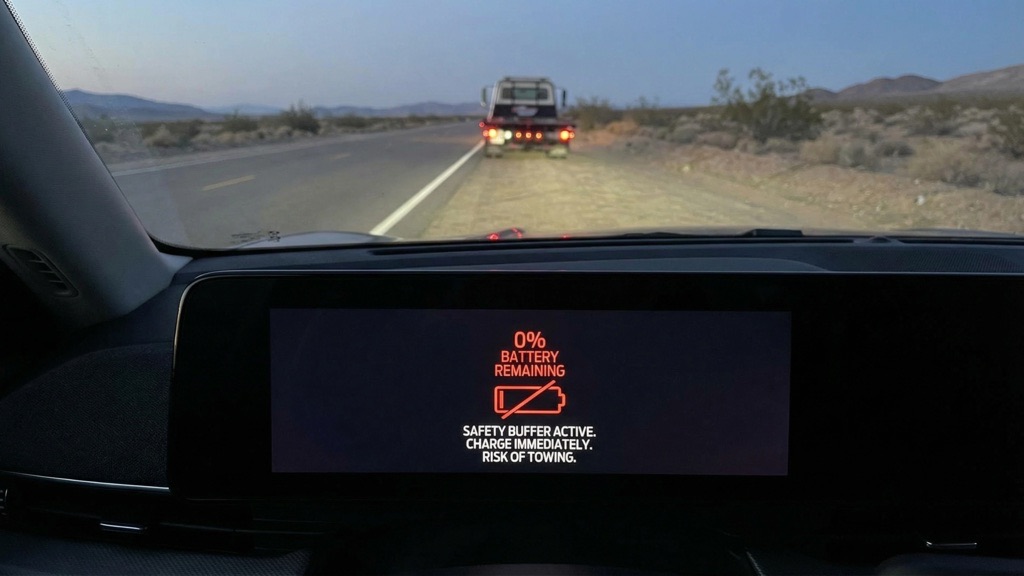
When your electric car shows 0% battery, it is not empty. Most EVs keep a hidden safety buffer to protect the lithium-ion cells. However, driving past 0% or letting the vehicle sit fully discharged can increase battery stress and may require towing.
If you remember one thing:
Treat 10% as your real “empty,” not 0%.
💡 Quick Tip: Below 5%, reduce speed, turn off climate control, and head to the nearest charger immediately.
Why Trust This Guide
This guide is based on real-world EV ownership data and manufacturer recommendations from Tesla, BYD, Hyundai, and BMW, along with lithium-ion battery engineering best practices used in modern electric vehicles.
Introduction
Range anxiety remains one of the biggest psychological barriers to EV adoption in 2026. Even though modern electric vehicles offer 300–500 km of range, drivers still fear the moment when the display hits 0%.
Does the car shut off instantly?
Does it damage the battery?
Is it worse in winter?
Understanding what 0% actually means — technically and practically — helps prevent panic and long-term battery damage. This guide explains how EV battery management systems work, what risks are real, and how to handle the situation like an experienced EV owner.
Key Facts at a Glance
-
Best for: New and long-distance EV drivers
-
Main advantage: Built-in battery protection buffer
-
Biggest drawback: Deep discharge stress if repeated
-
Cost impact: Possible towing ($100–$250 typical roadside)
-
Expert verdict: Avoid reaching 0% unless unavoidable
How 0% Battery Works in Real Life
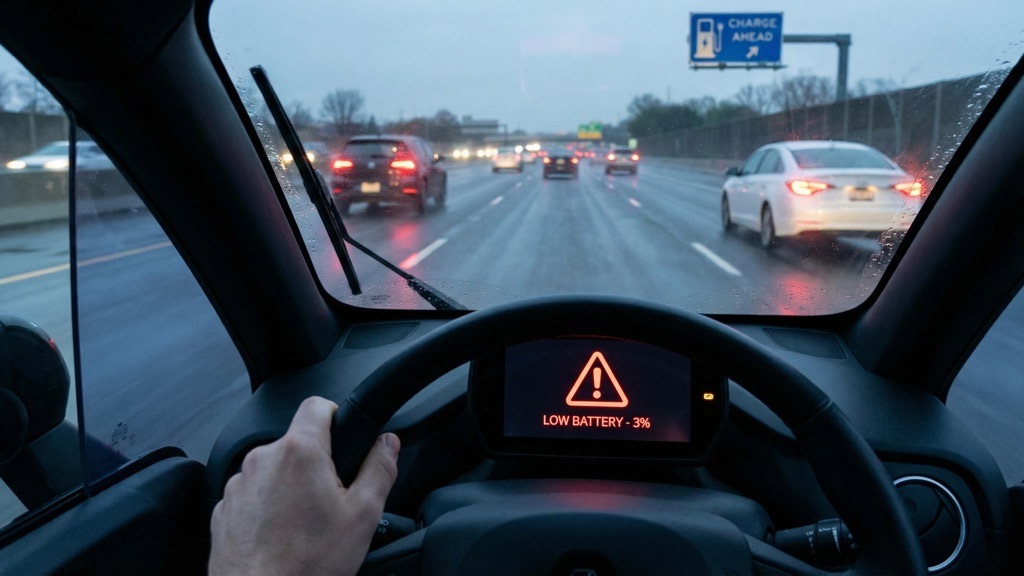
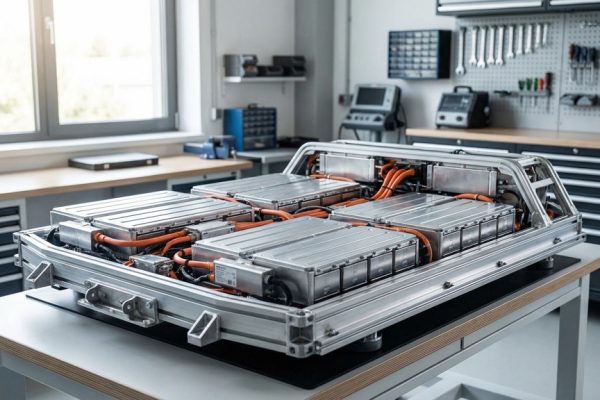
Modern EVs use a Battery Management System (BMS) — advanced software that monitors voltage, temperature, and charge state to prevent cell damage.
When your dashboard shows 0%, it usually means:
-
The usable battery portion is depleted
-
A hidden buffer (typically 2–5%) remains
-
Power output may be restricted
Micro-Definition
Deep discharge: When lithium-ion cells drop below safe voltage levels, accelerating chemical wear.
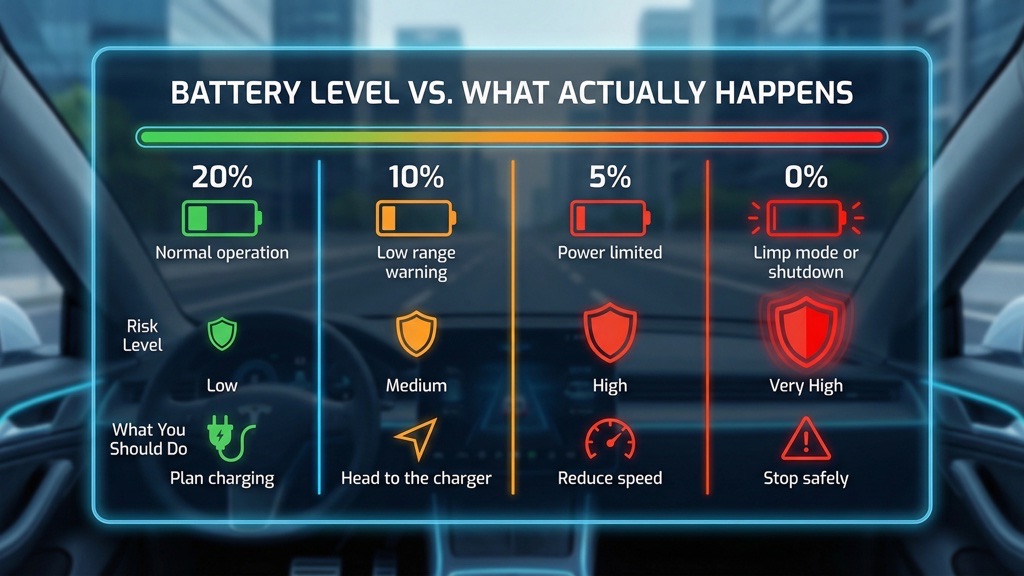
Battery Level vs What Actually Happens
| Battery Level | What Happens | Risk Level | What You Should Do |
|---|---|---|---|
| 20% | Normal operation | Low | Plan charging |
| 10% | Low range warning | Medium | Head to the charger |
| 5% | Power limited | High | Reduce speed |
| 0% | Limp mode or shutdown | Very High | Stop safely |
Some vehicles, like the Tesla Model 3 or Hyundai Ioniq 5, gradually limit power before full shutdown.
Advantages of Built-In Protection
✅ Hidden safety buffer → Prevents irreversible cell damage
✅ Gradual power reduction → Safer than sudden engine stall
✅ Smart navigation prediction → Estimates charger reach
 Tips & Tricks
Fast Charging vs Slow Charging: Everything You Need to Know (2026 Guide)
TL;DR — The Real Answer Fast charging does not destroy your EV battery. But heavy, daily DC fast charging can...
 Tips & Tricks
How to Calculate the True Cost of Owning an Electric Car (2026 Guide)
TL;DR The true cost of owning an electric car includes purchase price, charging costs, maintenance, insurance, depreciation, and incentives, not...
 Tips & Tricks
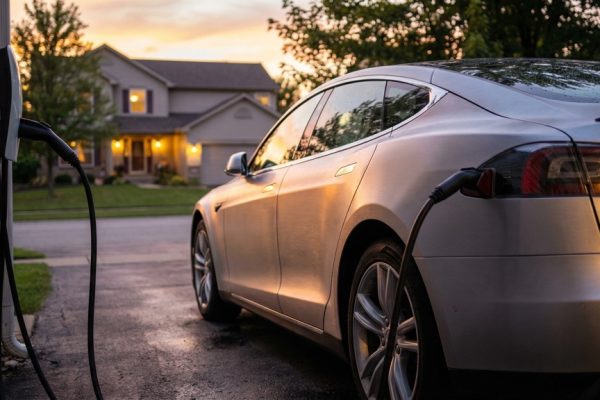
Is It Safe to Charge an Electric Car Every Day? Everything You Need to Know (2026 Guide)
TL;DR — The Direct Answer Yes — it is safe to charge an electric car every day. Modern EV batteries...
EVs are engineered to avoid catastrophic failure at 0%.
Disadvantages & Limitations
❌ Battery stress if repeated → Accelerates degradation
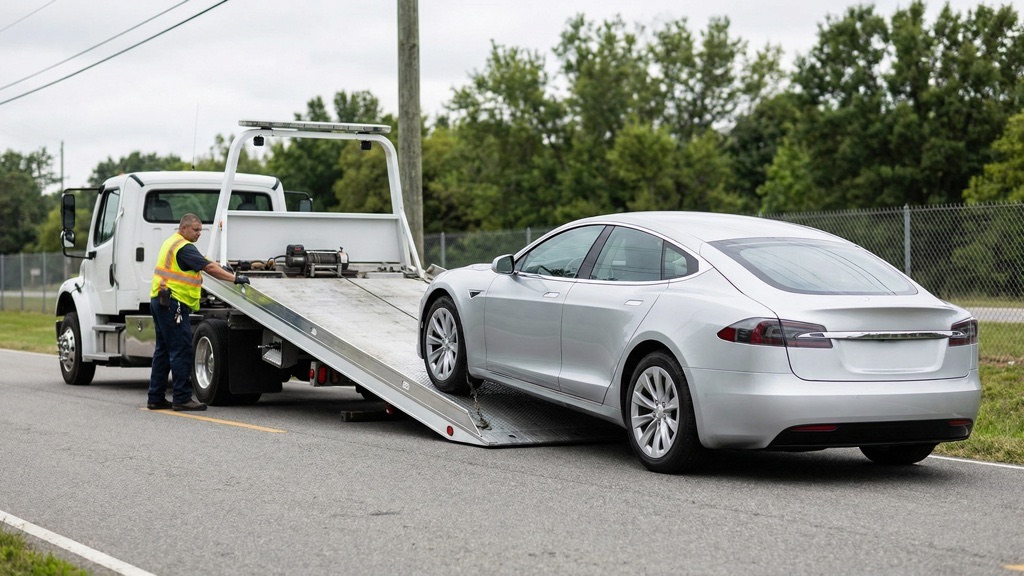
❌ Possible total shutdown → Requires towing
❌ 12V battery risk → Extended deep discharge can disable electronics
One-Time 0% vs Repeated Deep Discharge
| Scenario | Battery Impact | Long-Term Effect |
|---|---|---|
| One-time 0% event | Minimal | Negligible |
| Monthly deep discharge | Moderate stress | Faster degradation |
| Frequent 0% driving | High stress | Noticeable capacity loss (3–5% faster over the years) |
Occasional events are survivable. Repeated abuse reduces lifespan.
Real-World Use Cases
City Driving
Lower speeds may allow a few extra kilometers.
Highway Driving
High energy consumption drains the final reserve quickly.
Winter Conditions
Cold weather can reduce usable capacity by 15–30%.
Vehicles like the BMW i4 or BYD Seal may show a rapid percentage drop in freezing temperatures.
How Popular EVs Handle 0%
| Model | Hidden Buffer | Power Limiting | Behavior at 0% |
|---|---|---|---|
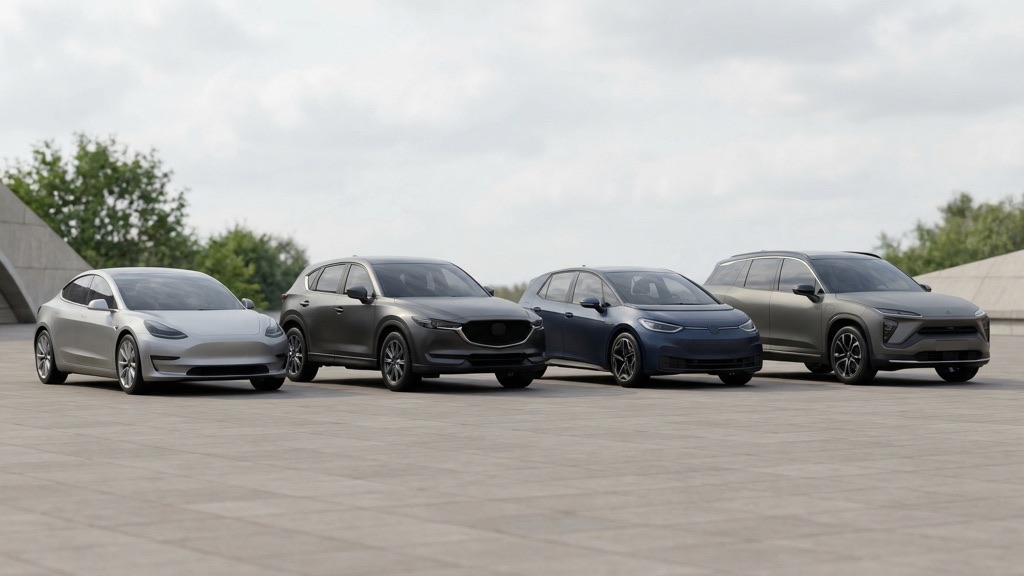
| Tesla Model 3 | Yes | Yes | Gradual shutdown |
| Hyundai Ioniq 5 | Yes | Yes | Reduced power |
| BMW i4 | Yes | Yes | Limp mode |
| BYD Seal | Yes | Yes | Limited range |
Behavior varies — never assume extra range.
What to Do If You Hit 0%
-
Reduce speed immediately
-
Turn off climate control
-
Activate hazard lights if needed
-
Navigate to the nearest charger
-
Contact roadside assistance if stopped
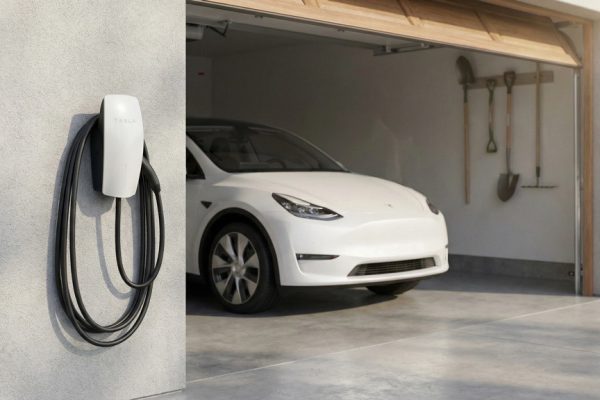
Some brands, like Tesla, provide mobile charging or towing support.
What To Do vs What NOT To Do
| Do This | Avoid This |
|---|---|
| Slow down | Maintain highway speed |
| Turn off heating/AC | Max climate use |
| Charge immediately | Leave the car overnight |
| Call roadside early | Wait until full shutdown |
0% vs 10% Battery: Which Is Safer?
| Factor | 10% Battery | 0% Battery |
|---|---|---|
| Battery stress | Low | High |
| Risk of shutdown | Minimal | Significant |
| Driver stress | Manageable | High |
| Long-term impact | Safe | Risk if repeated |
Conclusion: 10% is strategically safe. 0% is emergency territory.
Who Should Be Most Careful
✔ Long highway commuters
✔ Cold-climate drivers
✔ First-time EV owners
❌ Daily home chargers with short commutes face minimal risk.
Manufacturer Recommendations
Tesla
Daily charging between 20–80% recommended.
BYD (LFP Batteries)
LFP chemistry tolerates deeper cycles but still avoids sitting at 0%.
Hyundai & BMW
Avoid frequent deep discharge for longevity.
Common Mistakes to Avoid
-
“Testing” how far 0% goes
-
Ignoring winter efficiency loss
-
Letting the car sit discharged overnight
-
Confusing 12V failure with main battery failure
Myth vs Reality
Myth: 0% instantly destroys the battery.
Reality: Repeated deep discharge causes measurable wear — not one event.
Myth: Every EV has a 10 km reserve.
Reality: Some shut down almost immediately.
Future of EV Battery Protection (2026+)
-
AI-based predictive range
-
Improved thermal management
-
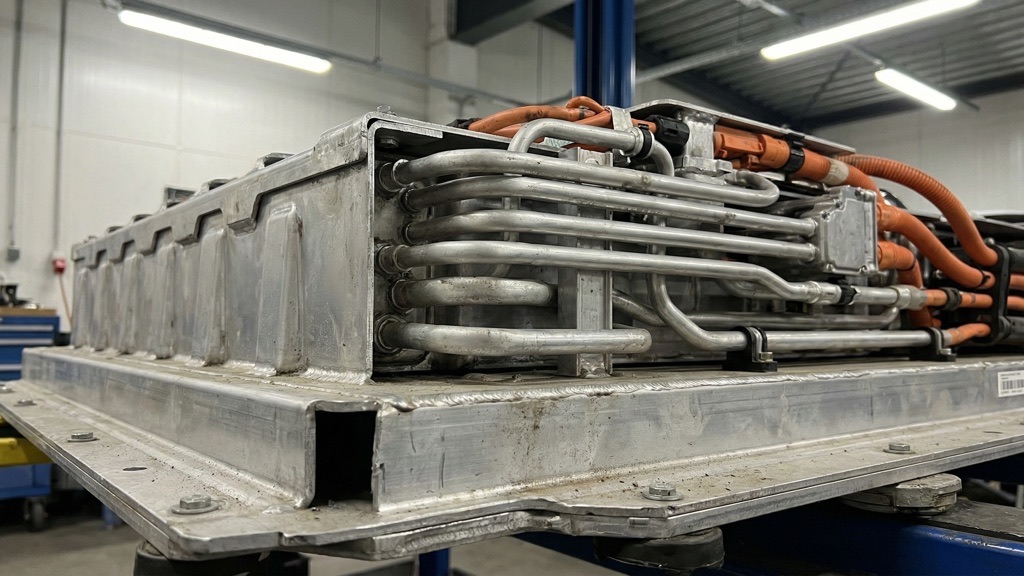
Solid-state battery tolerance improvements
-
Smarter BMS reserve calibration
Future EVs will reduce range anxiety even further.
Final Verdict: Is 0% a Big Problem?
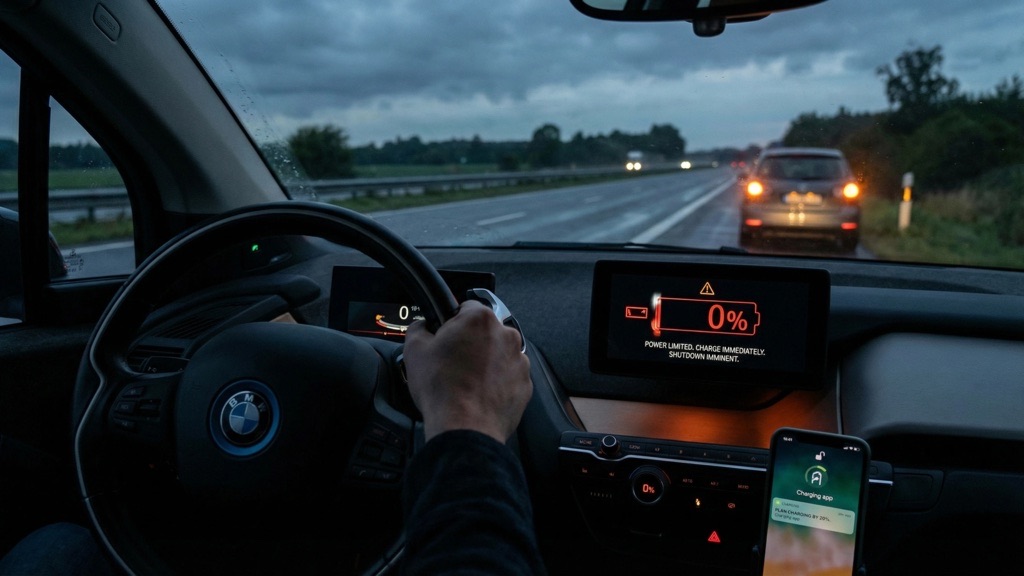
Occasional 0% events are not catastrophic.
But:
-
It increases stress
-
It risks a shutdown
-
It accelerates degradation if repeated
Best practice: Plan charging at 15–20%.
Summary
-
Best approach: Charge before 10%
-
Biggest risk: Repeated deep discharge
-
Safest strategy: Keep battery between 20–80%
-
Expert takeaway: 0% is survivable — but avoidable
FAQ
Does 0% mean empty?
No. A small protected buffer remains.
Can hitting 0% void warranty?
No, but abuse patterns may affect battery health.
How far can I drive at 0%?
Varies — sometimes 0–5 km, sometimes none.
Is 0% worse in winter?
Yes. Cold reduces usable capacity significantly.
Should I fast charge after 0%?
Yes, occasional fast charging is safe.
Can an EV battery die permanently at 0%?
Only if left deeply discharged for an extended time.