
Honda’s Patent Reveals Ultra-Affordable Electric Motorcycle Built on Proven Shine 100 Platform
Honda has filed a patent for an ultra-low-cost electric motorcycle designed to democratize e-mobility in price-sensitive markets, leveraging the proven chassis of its best-selling Shine 100 commuter bike. The design prioritises manufacturability and affordability over performance, targeting a price point likely well below the $5,000 threshold that has historically limited mass-market EV adoption.
This isn’t a concept bike or a halo project. The patent’s level of detail suggests Honda is preparing a production-ready design that could fundamentally shift how the world’s largest motorcycle manufacturer approaches electrification in developing regions. Unlike Honda’s existing electric offerings—the premium-positioned EM1 e: and Activa e: scooters—this motorcycle targets utility buyers in markets where two wheels are workhorses, not lifestyle statements.
How Honda Is Cutting Costs Without Cutting Corners
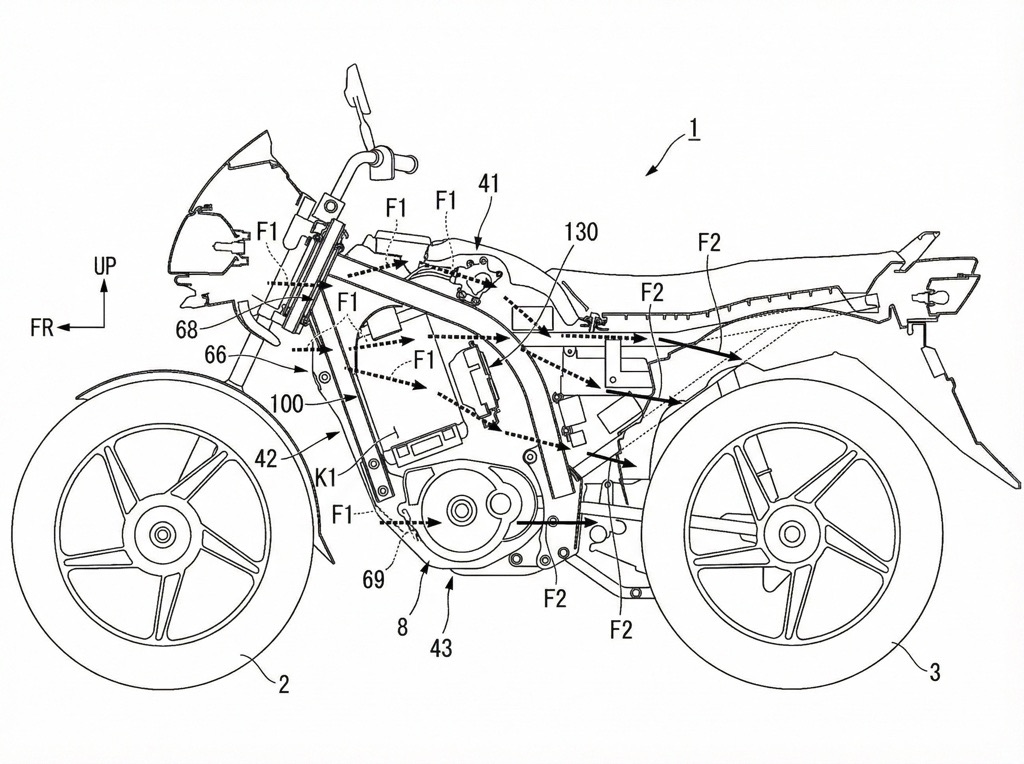
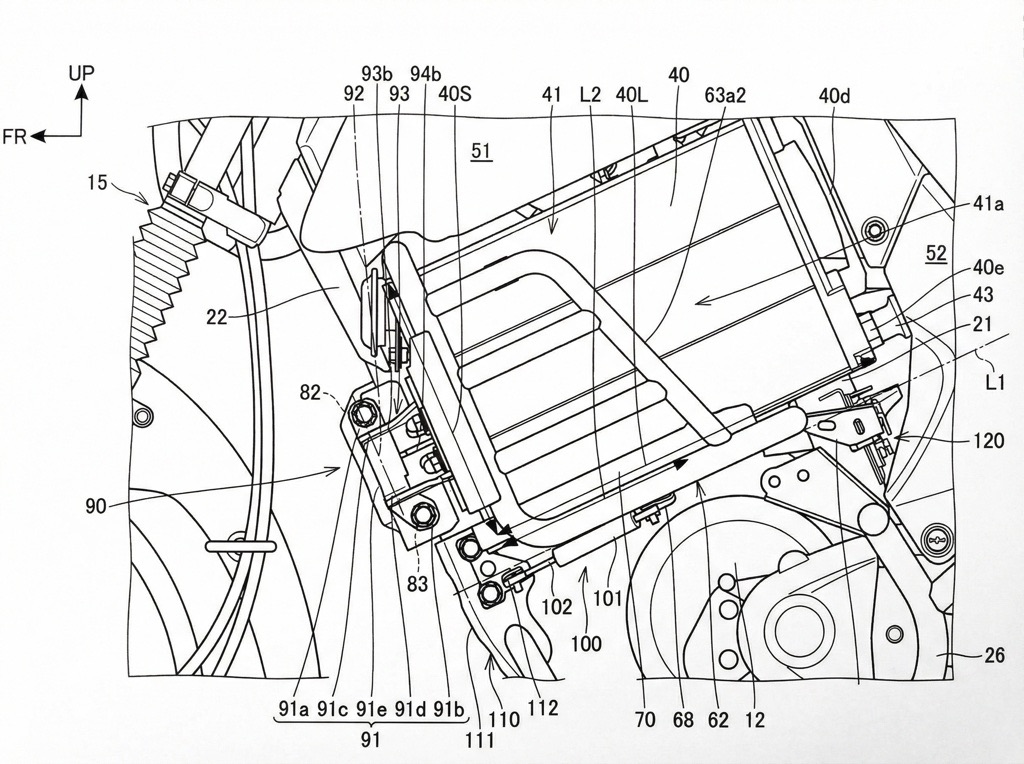
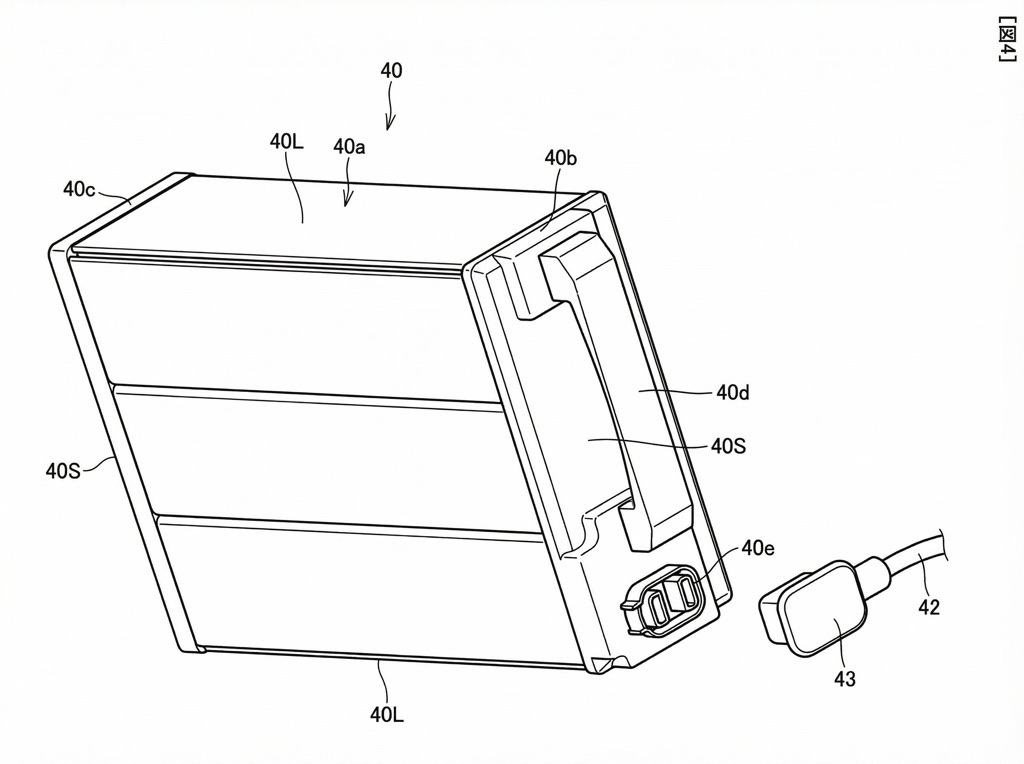
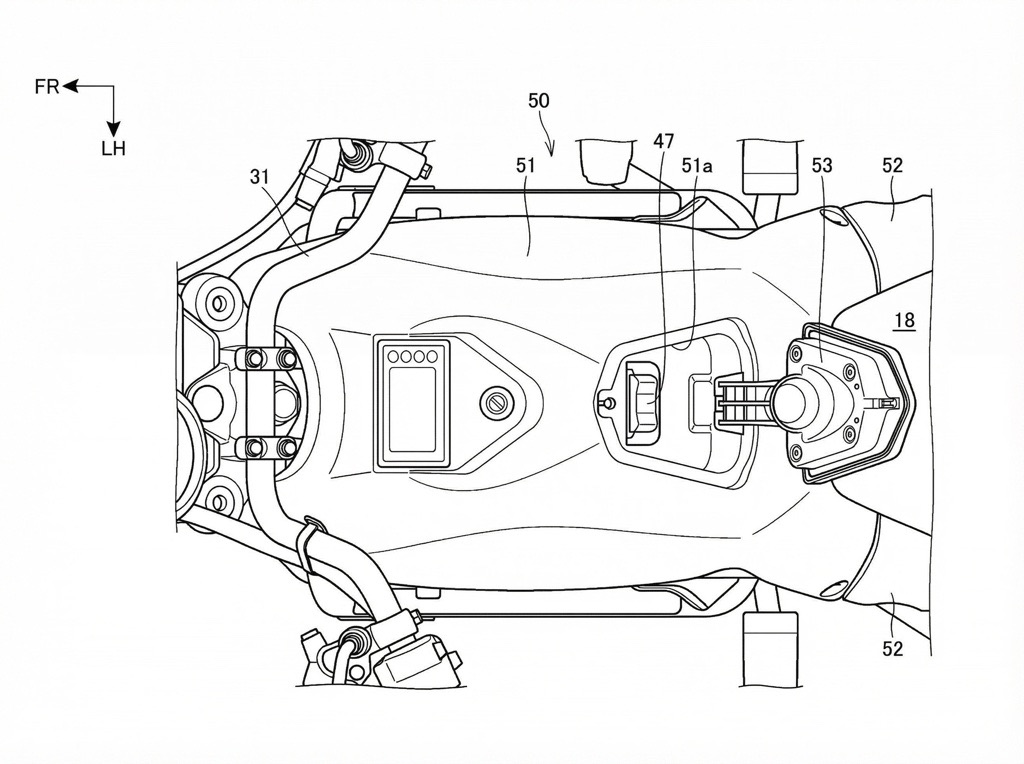
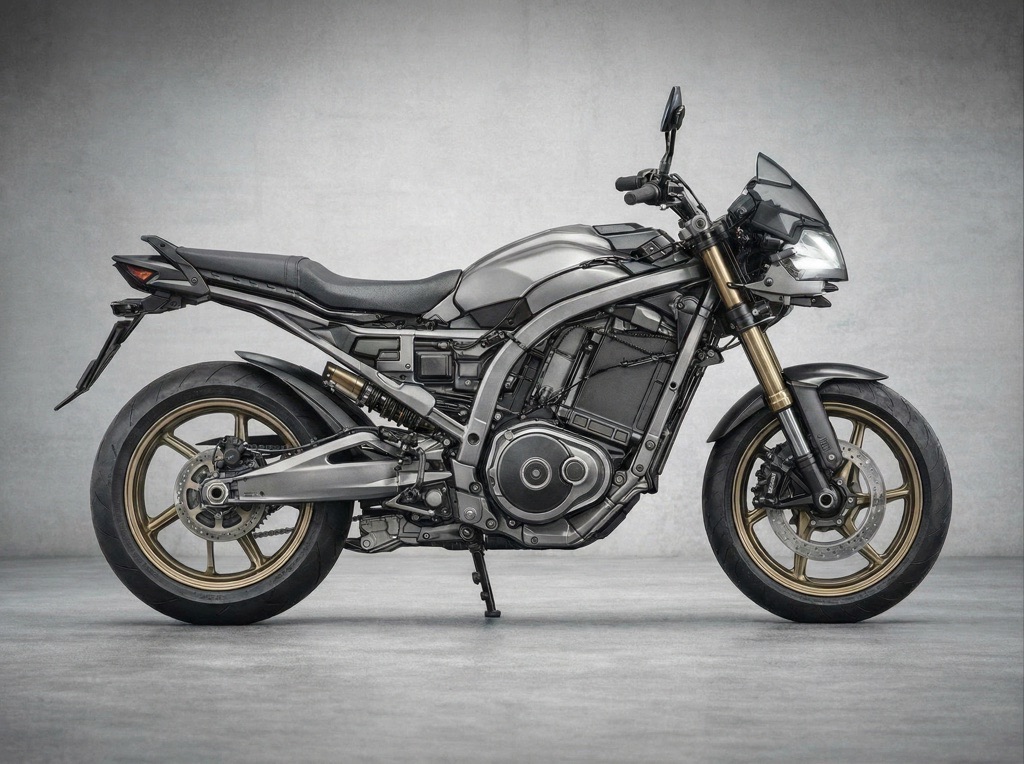
Rather than engineering an electric motorcycle from scratch, Honda is repurposing the Shine 100 platform, a best-seller in India and across South Asia. This approach dramatically reduces development costs, manufacturing complexity, and time to market. According to the patent filings, a mid-mounted electric motor replaces the traditional 99cc engine, while two lithium-ion battery packs occupy the space where a fuel tank once sat, angled forward on either side of the spine frame.
The drivetrain is stripped to essentials: a single-speed reduction gear and chain drive to the rear wheel, mirroring the simplicity of the original gasoline commuter. There’s no on-board charger and no complicated battery connection mechanism—riders simply plug in flexible cables and remove the batteries for home charging. This modular battery design allows commuters to charge indoors overnight, a critical advantage in regions with limited public charging infrastructure.
Thermal management is equally pragmatic. The patent describes passive cooling created by a channel formed between the two battery packs, directing airflow to the speed controller without drawing extra power. This eliminates the complexity and cost of active cooling systems, a significant advantage in cost-sensitive manufacturing.
| Specification | Details |
|---|---|
| Platform | Honda Shine 100 chassis |
| Powertrain | Mid-mounted electric motor, single-speed reduction gear |
| Battery | Two removable lithium-ion packs (modular design) |
| Estimated Top Speed | 50–55 mph (80–85 km/h) |
| Cooling | Passive ducted cooling (no active system) |
| Charging | Removable batteries, home charging via flexible cables |
| Target Price | Likely below $5,000 |
| Target Markets | India, Africa, Southeast Asia, South Asia |
Why This Matters: The Real Race for Electric Adoption
Honda’s existing electric portfolio—the EM1 e: and Activa e: scooters—represents a controlled, premium-focused rollout aimed at easing traditional Honda customers into electric ownership. Those products are well-finished, conservative, and priced accordingly. This patent signals a strategic shift: Honda is acknowledging that scooters alone won’t drive electric adoption everywhere, and that a simple, affordable motorcycle fills a critical gap in emerging markets.
 Motocycles
Beachman 64 Street Spec: The Electric Café Racer That’s More Than Just a Style Icon
The electric motorcycle world has no shortage of quirky designs, but few manage to blend nostalgia and modern tech as...
 News
News
Rezon Motorcycles Launches Flagship Model Bohemia and Addresses Alrendo’s Failure
Introduction Rezon Motorcycles, a Czech Republic-based team, has officially launched its new flagship model, the Rezon Bohemia. This marks the...
 News
News
Olivier Motor Co, a Swiss Manufacturer, Has Introduced Two Groundbreaking Electric Motorcycles: The S222 Supermot And Moto Cross
These motorcycles offer unique features that set them apart from other electric bikes on the market. The S222 Supermot is...
The target audience is explicit: commuters, delivery riders, small business owners, and riders in lower-income regions where fuel prices, maintenance costs, and reliability matter far more than acceleration figures. In India and Africa, electric motorcycle adoption is already accelerating, driven by cost pressures and government support rather than lifestyle branding. For these buyers, electric isn’t about “the future”—it’s about survival economics. Lower running costs, fewer moving parts, easier servicing, and reduced dependence on volatile fuel prices.
If Honda can deliver an electric motorcycle that undercuts internal combustion engine ownership over the long term, the scale potential is enormous. These aren’t niche markets; they’re regions where motorcycles are primary transportation for hundreds of millions of people. Once infrastructure catches up, that momentum compounds.
Comparison: How This Stacks Against Competitors
Zero Motorcycles and Harley-Davidson’s LiveWire have both rushed to develop lower-cost electric models, but neither has yet achieved the sub-$5,000 price point that would truly democratise the market. Zero’s entry-level offerings still command premium pricing, while LiveWire’s strategy remains focused on brand heritage and performance rather than affordability at scale.
Chinese manufacturers like Yadea and NIU have dominated the affordable electric two-wheeler space with scooters and mopeds, selling by the millions in Asia. However, few have successfully scaled to motorcycles with the engineering credibility and manufacturing reach that Honda brings. This patent suggests Honda is preparing to compete directly in that volume game—not with a premium product, but with a mass-market workhorse.
The key differentiator is platform leverage. By building on the Shine 100’s proven architecture, Honda avoids the development costs and market risks that have kept other major OEMs from pursuing true budget electric motorcycles. That efficiency advantage could translate to pricing that undercuts both premium brands and emerging competitors.
What Remains Unanswered
Honda has not confirmed production timelines, final specifications, or pricing. The patent reveals intent and engineering direction, but real-world range, battery capacity, and charge times remain unconfirmed. The estimated 50–55 mph top speed is based on the Shine 100’s performance profile, but actual motor output and battery size could vary.
Additionally, it’s unclear whether this design will be adapted for European or North American markets, where safety regulations and consumer expectations differ significantly from those in India or Africa. Honda could easily modify the platform for compliance, but that would add cost and complexity—potentially undermining the affordability advantage.
Verdict: A Quiet Revolution in Electric Mobility
This patent isn’t flashy. It won’t dominate tech headlines or attract premium buyers. But it represents something far more significant: Honda’s recognition that the future of electric motorcycles will be won in emerging markets where affordability, reliability, and practicality trump performance specs. If Honda brings this design to production—and the patent’s detail level suggests serious intent—it could normalise electric motorcycles in regions where two wheels are essential transportation, not weekend toys. This is how revolutions actually happen: not with fanfare, but with inevitability. The real question isn’t whether this bike will succeed; it’s how quickly Honda can scale production to meet demand in markets where millions of riders are waiting for exactly this product.