
BYD Pushes Beyond 1,000 kW with Rumored 1,500 kW Charging System
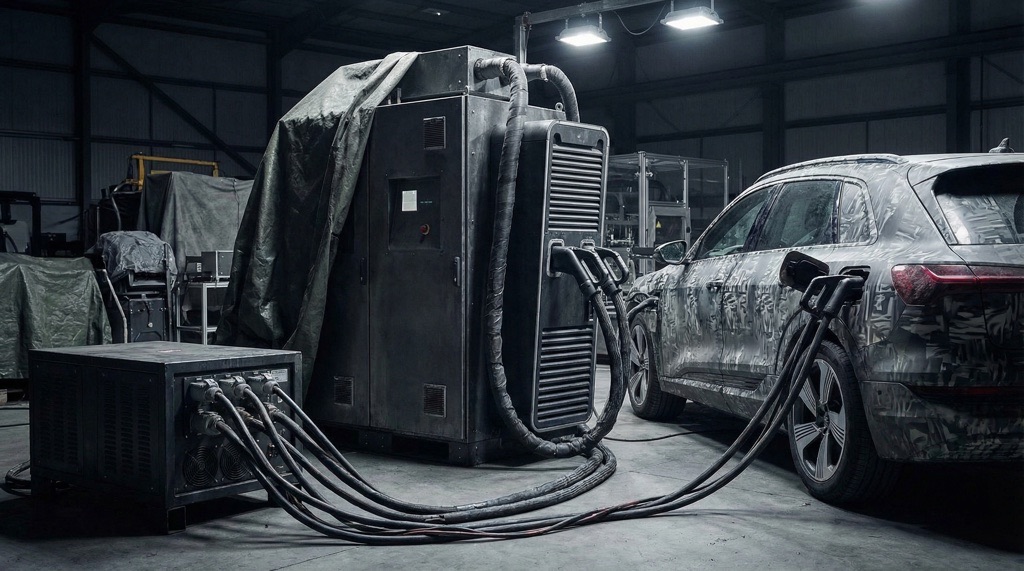
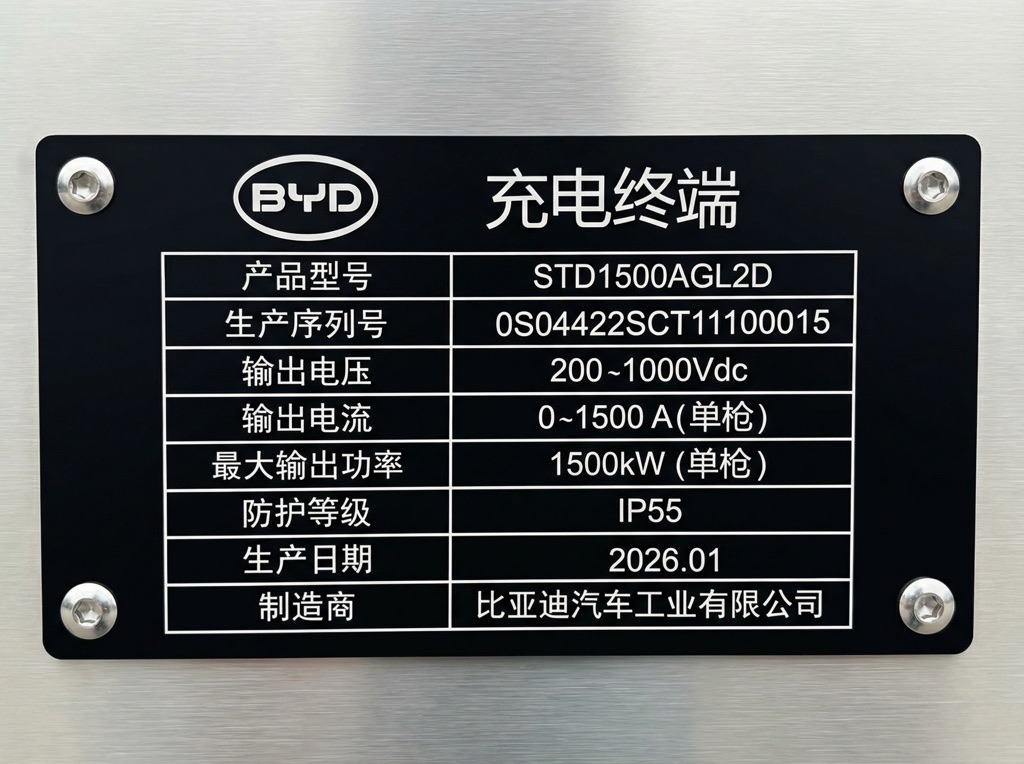
Unofficial reports suggest BYD is developing a next-generation megawatt charger capable of delivering up to 1,500 kW of power with 1,500 A current output, marking a significant leap beyond the company’s current 1,000 kW Flash Charging system launched in March 2025. While details remain unconfirmed, the leaked specifications hint at BYD’s aggressive roadmap to further compress charging times and eliminate range anxiety in mass-market electric vehicles.
The timing of these leaks—just months after BYD’s official announcement of its Super e-Platform and 1,360 kW Megawatt Flash Charging terminal—suggests the company is already planning the next evolution of its ultra-fast charging infrastructure. If verified, a 1,500 kW system would represent a 50% increase over current capabilities and position BYD further ahead of competitors in the global EV charging race.
Current BYD Flash Charging: The Baseline
To understand the significance of the leaked 1,500 kW charger, it’s important to review BYD’s existing technology. In March 2025, BYD unveiled its Super e-Platform featuring the Flash Charging Battery and Megawatt Flash Charging system, achieving 1,000 kW (1 megawatt) charging power with a 1,000 A charging current. This system enables vehicles like the Han L to gain 400 kilometers of range in just 5 minutes—matching the refueling speed of traditional gasoline vehicles.
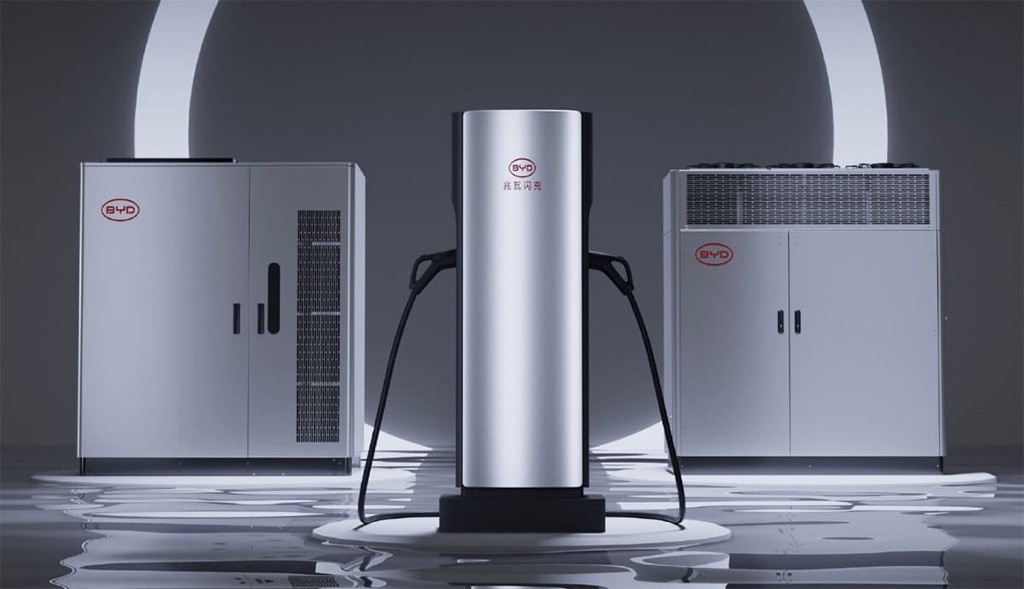
The infrastructure supporting this technology includes BYD’s all-liquid-cooled Megawatt Flash Charging terminal, which BYD officially rated at a maximum output capacity of 1,360 kW. The terminal uses a single CCS2 connector and features dual-gun charging technology that can upgrade existing supercharging stations. The system operates on a 1,000-volt architecture across the battery, motor, power supply, and auxiliary systems.
Specifications Table: Current vs. Rumored Next-Gen
| Specification | Current (1,000 kW) | Rumored Next-Gen (1,500 kW) |
|---|---|---|
| Peak Power Output | 1,000 kW | 1,500 kW |
| Output Current | 1,000 A | 1,500 A |
| Charging Rate | 10C | 10C+ |
| Range Gain (5 min) | 400 km | Details not yet confirmed |
| Terminal Rating | 1,360 kW | Details not yet confirmed |
| Voltage Architecture | 1,000V | Details not yet confirmed |
| Cooling System | All-liquid-cooled | Details not yet confirmed |
Technical Challenges and Unknowns
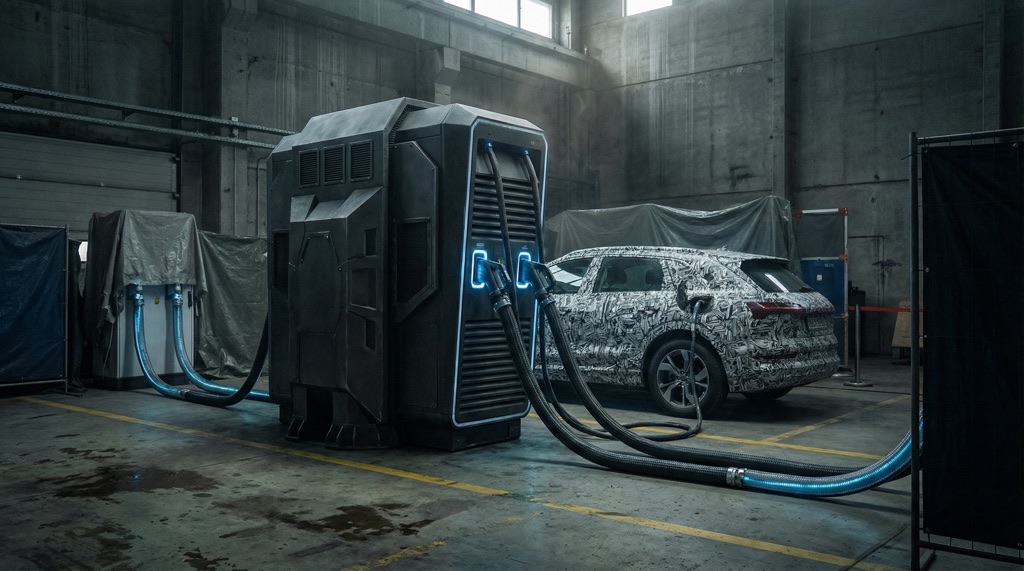
Scaling from 1,000 kW to 1,500 kW introduces significant engineering challenges. The current system already requires sophisticated thermal management—the charging posts feature liquid cooling for cables to handle 1,000 A sessions. A 1,500 A system would demand even more aggressive cooling solutions to prevent cable degradation and energy losses.
The power architecture also raises questions. BYD’s current Gen I Megawatt charger combines grid power (200-280 kW) with battery energy storage system (BESS) output (800 kW) to achieve 1,000 kW total. The Gen II system uses dual BESS units (400 kWh total) with grid power (500 kW) to theoretically reach 2,100 kW. For a 1,500 kW system, BYD would need to clarify whether this represents:
 Cars
Cars
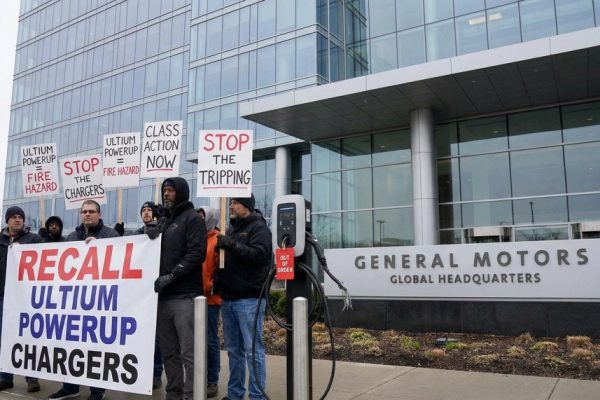
GM Seeks Dismissal of Ultium PowerUP Charger Class Action Over Alleged Tripping and Overheating Defects
General Motors has filed a motion to dismiss a proposed class action lawsuit accusing its Ultium PowerUP Level 2 home...
 Cars
Cars
Kia EV5 WKNDR Concept Revealed: Rugged Adventure EV with Off-Road Upgrades
Kia Unveils an Off-Road-Ready EV5 Variant at the Guangzhou Auto Show Adventure-focused EVs are becoming one of the fastest-growing segments...
 News
News
Pininfarina B95 Gotham New “Batman” Electric Hypercars Are the Stuff of Billionaire Dreams
Eyes on the prize, folks! Pininfarina, the legendary Italian design house, has just unveiled two new ultra-exclusive electric hypercars inspired by...
- A single-unit configuration with enhanced BESS capacity or grid connection
- A dual-unit architecture similar to Gen II
- Improved power module efficiency or higher-capacity modules
- A combination of these approaches
Vehicle-side compatibility is another critical unknown. BYD’s Flash Charging Battery achieves a 10C charging rate with 50% reduced internal resistance. A 1,500 kW system would require either vehicles with larger battery packs or batteries capable of accepting even higher charge rates—potentially 10C+ as the leaked reports suggest. This would demand new cell chemistry innovations or structural improvements.
Market Context and Competitive Pressure
BYD’s aggressive charging roadmap reflects intensifying competition in the ultra-fast charging space. The company has already established itself as a leader with the world’s first mass-produced 1,000V architecture and 1,000 kW charging capability. However, other manufacturers and charging networks are pursuing similar goals. A 1,500 kW system would extend BYD’s technological lead and reinforce its position as the charging innovation leader.
The leaked specifications also align with BYD’s stated ambition to build over 4,000 Megawatt Flash Charging stations in China. As this infrastructure expands, offering higher power outputs would maximize utilization and provide a compelling reason for fleet operators and individual buyers to choose BYD vehicles.
What Remains Unconfirmed
The current leak lacks critical details that would validate the 1,500 kW specification. Unconfirmed aspects include:
- Official BYD announcement or confirmation of the 1,500 kW system
- Actual charging time for 400 km range (the leaked report mentions “estimated five-minute range gain” without specifics)
- Vehicle compatibility and battery specifications
- Grid power requirements and BESS configuration
- Thermal management innovations required for 1,500 A current
- Timeline for deployment and market availability
- Pricing and infrastructure rollout plans
Until BYD officially announces this technology, these specifications should be treated as preliminary and subject to change.
Comparison with Competing Technologies
| System | Power Output | Current | Status | Notes |
|---|---|---|---|---|
| BYD Flash Charging (Current) | 1,000 kW | 1,000 A | Deployed (March 2025) | 5 min for 400 km range |
| BYD Next-Gen (Rumored) | 1,500 kW | 1,500 A | Leaked/Unconfirmed | Details not yet confirmed |
| Porsche 900V (Planned) | 350+ kW | Details not confirmed | Development | Limited to the current infrastructure |
| Lucid/Tesla Supercharging | 250-350 kW | Details not confirmed | Deployed | Significantly lower than BYD |
BYD’s current 1,000 kW system already outpaces most competitors by a significant margin. A 1,500 kW system would further widen this gap, particularly against traditional automakers still developing 350-400 kW solutions.
Verdict: Impressive Ambition, Awaiting Confirmation
The leaked 1,500 kW charger represents BYD’s continued commitment to solving range anxiety through ultra-fast charging rather than larger batteries. If verified, this technology would be a genuine breakthrough—enabling even faster charging cycles and potentially reducing five-minute range gains to under 400 km or accelerating to 400+ km in the same timeframe. However, the leak raises as many questions as it answers: vehicle compatibility, grid requirements, thermal management, and deployment timeline all remain unclear. For now, this should be viewed as an ambitious engineering target rather than a confirmed specification. BYD’s track record of delivering on charging innovations (the 1,000 kW system launched as promised) suggests the company has the technical capability to pursue 1,500 kW, but official confirmation is essential before drawing firm conclusions about its real-world viability and market impact.