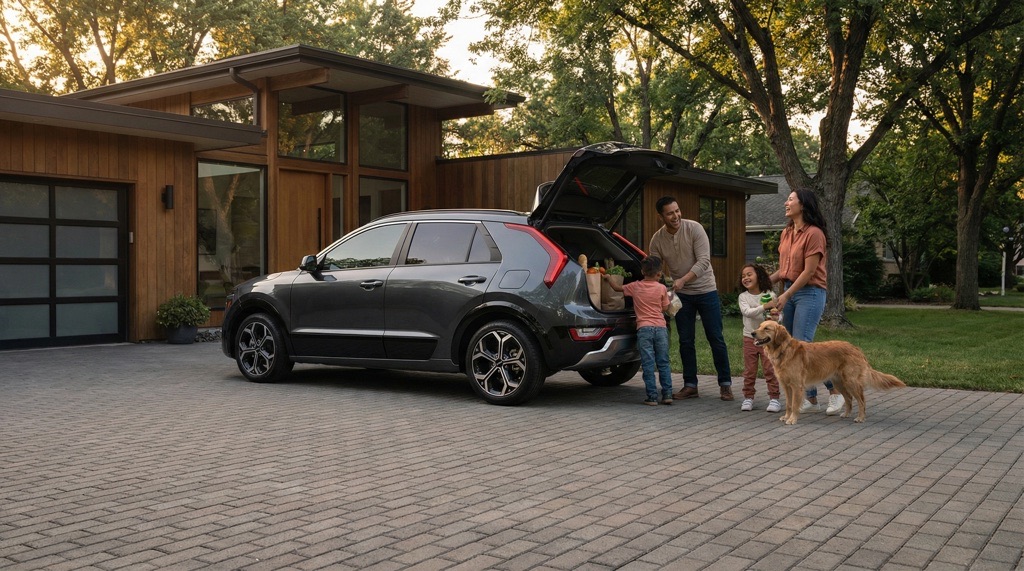
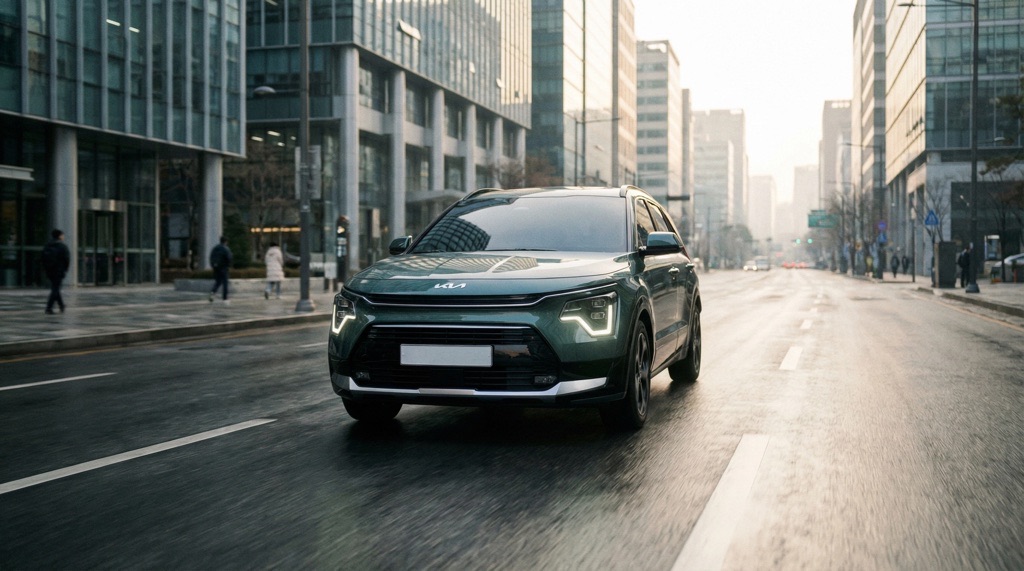
The 2026 Kia Niro facelift introduces refined “Opposites United” styling and a panoramic dual 12.3-inch digital cockpit, spotted testing in South Korea just weeks after Kia’s teaser images. This update aligns the popular crossover—available as hybrid, plug-in hybrid, or EV—with newer models like the EV3 and EV5, ensuring it remains competitive amid Kia’s EV push. Buyers gain a more premium look and tech without waiting for full electrification, with full specs due in March.
Background: Kia’s Niro Legacy and Market Role
The Kia Niro launched in 2016 as one of the first mass-market eco-friendly crossovers, offering hybrid, plug-in hybrid (PHEV), and battery electric vehicle (BEV) variants. The second-generation model arrived in 2022, earning awards like World Women’s Car of the Year, UK Car of the Year, Car and Driver Editors’ Choice, and Golden Steering Wheel. It has built a global reputation for practicality and efficiency, appealing to buyers transitioning from gas cars.
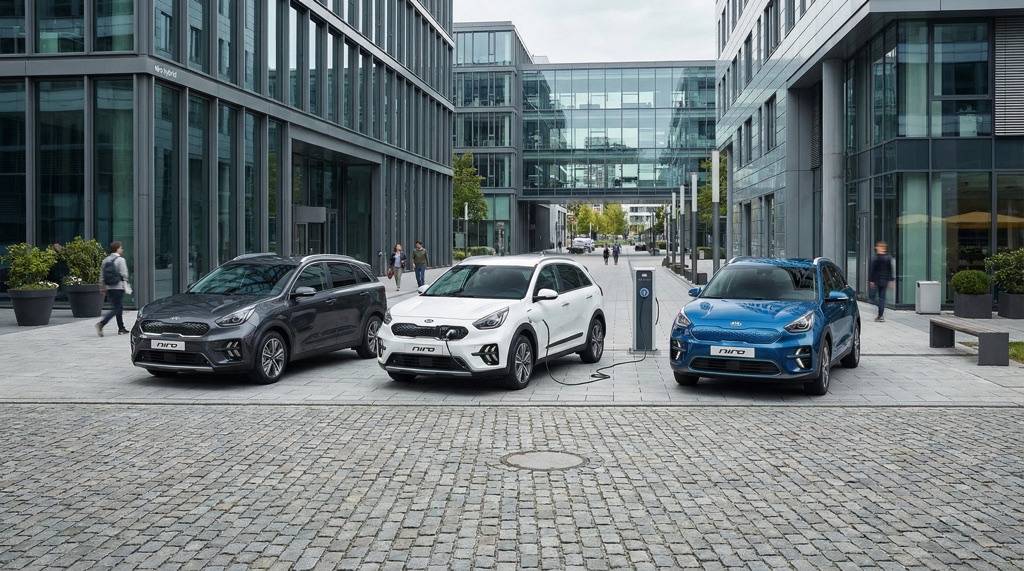
Now four years into its cycle, Kia unveiled the facelift on January 20, 2026, in South Korea, with real-world prototypes spotted shortly after. This refresh supports Kia’s shift toward EVs like the EV3, EV4, EV5, EV6, and EV9, while keeping the Niro’s versatile powertrains. A Kia representative noted it combines ‘outstanding practicality with modern design trends’ for high customer satisfaction. South Korea launch is set for March 2026, with global rollout to follow—likely 2027 in markets like the US.
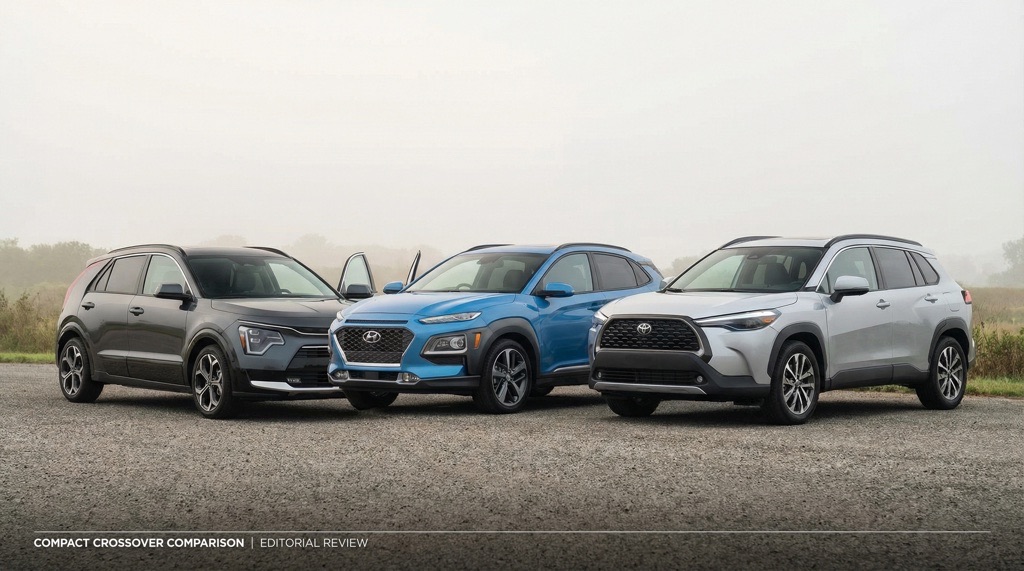
In the compact eco-crossover segment, the Niro competes against the Toyota Corolla Cross Hybrid, the Hyundai Kona Hybrid/EV, and the MG ZS EV. Its multi-powertrain flexibility has driven sales, but rivals are closing the gap with improved ranges and pricing.
Key Specifications
| Feature | Details |
|---|---|
| Powertrains | Hybrid, Plug-in Hybrid, Battery EV (carryover expected: 1.6L hybrid engine, 64.8 kWh EV battery) |
| Displays | Dual 12.3-inch screens (instrument cluster + infotainment) in panoramic curved setup |
| Wheels | New 18-inch alloy wheels with a futuristic design |
| Exterior | “Opposites United” theme; Star Map Signature Lighting DRLs; wheel arch cladding; lower door garnishes; restyled front/rear bumpers |
| Interior | Physical buttons/knobs for climate/volume; matte gray console materials; flattened steering wheel; horizontal dashboard |
| US 2026 Niro EV Pricing (pre-facelift reference) | Starts at $39,700; up to 253 miles EPA range |
| Launch Timeline | South Korea: March 2026; Global: Likely 2027 |
Note: Full powertrain specs, efficiency figures, and pricing remain unconfirmed until the March reveal.
Analysis: Exterior Refinements Align with EV Family
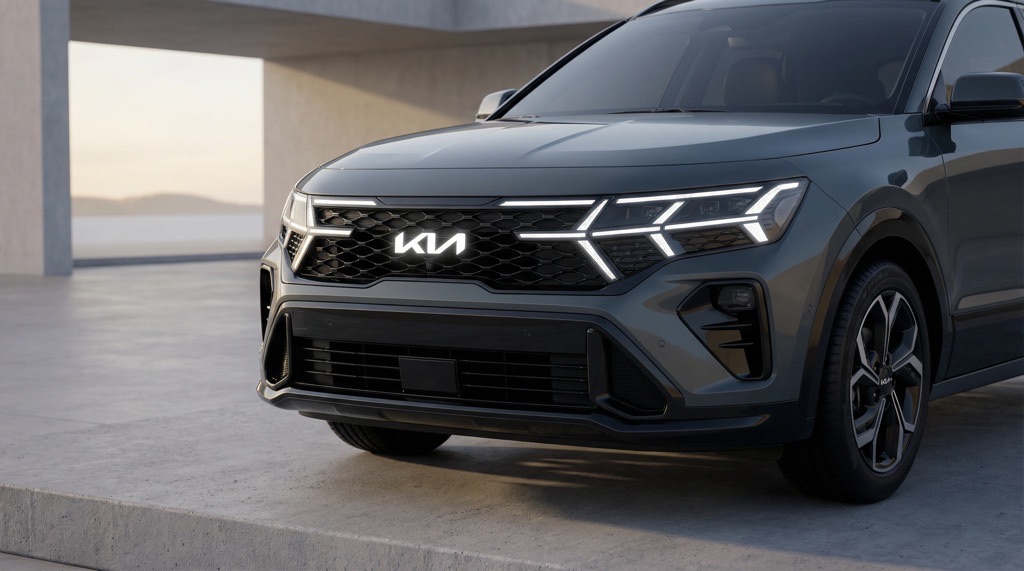
The facelift adopts Kia’s “Opposites United” philosophy, blending angular and fluid elements for a ‘grown-up’ appearance. Front changes include compact Star Map Signature LED daytime running lights (DRLs) with strong horizontal/vertical lines, a sharper “Tiger Face” grille, and glossy black fender flares replacing matte plastics. Rear gains seamless LED taillamps, a wide skid plate, and aerodynamic bumper tweaks for a stable, premium stance.
 Cars
Cars
Ford’s F-150 Lightning SuperTruck: Electrifying Pikes Peak with Unmatched Power
Introduction: A New Era of Electric Performance In the world of automotive racing, few events capture the imagination quite like...
 Cars
Cars
Volkswagen Cancels the 2026 ID. Buzz for the US Market
The electric revival of the legendary VW bus has hit an unexpected pause. Volkswagen has confirmed that it will skip...
 Cars
Cars
BYD Seal 08 and Sealion 08 Teased as Ocean Series Flagships Launching Q1 2026
BYD has teased the Seal 08 sedan and Sealion 08 SUV as its new flagship models for the Ocean series,...
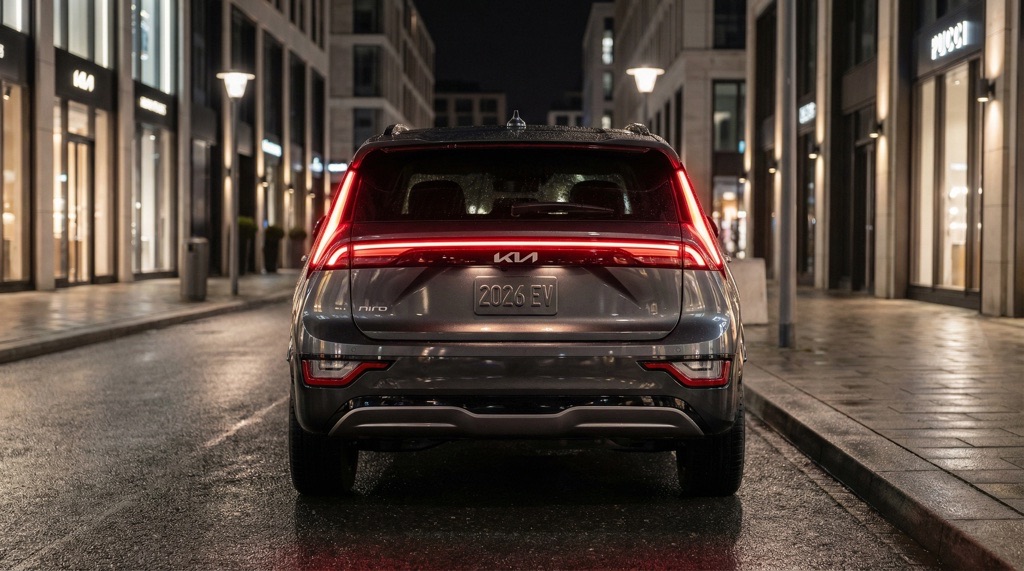
Side profile updates feature rugged wheel-arch cladding, lower door garnishes, and exclusive 18-inch wheels that enhance the SUV character without altering the familiar subcompact footprint (around 174 inches long). These make the Niro visually cohesive with larger EVs like EV5, ditching quirky plastics for smoother surfaces. Real-world spy shots from Shorts Car confirm the changes look sharper in person.
Analysis: Interior Tech Boost with Practical Touches
Cabin upgrades emphasize “Refined Boldness,” with sharp lines, precise proportions, and a slim horizontal dashboard flowing into the beltline for openness. The star is the panoramic curved display merging dual 12.3-inch screens—one for driver info, one for infotainment (music/maps)—creating a ‘futuristic driving environment.’ Kia retains physical knobs/buttons for climate and volume, prioritizing usability over full touchscreens.
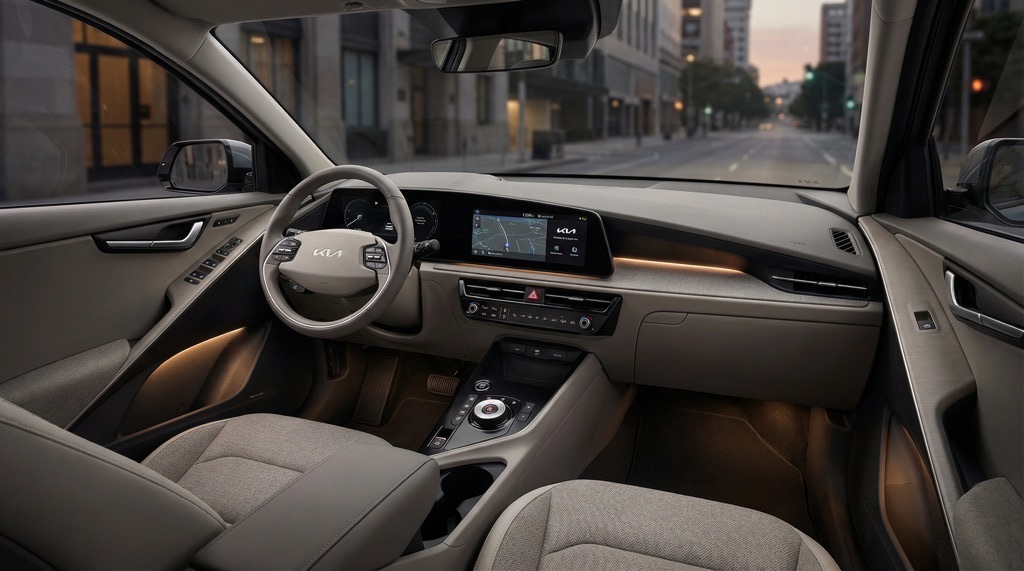
Other enhancements: fingerprint-resistant matte gray console (replacing piano black), a flattened steering wheel for better grip. These address common critiques of screen-heavy rivals, balancing tech with ergonomics. Space remains family-friendly, though exact cargo/legroom figures await confirmation.
Analysis: Powertrains and Unanswered Questions
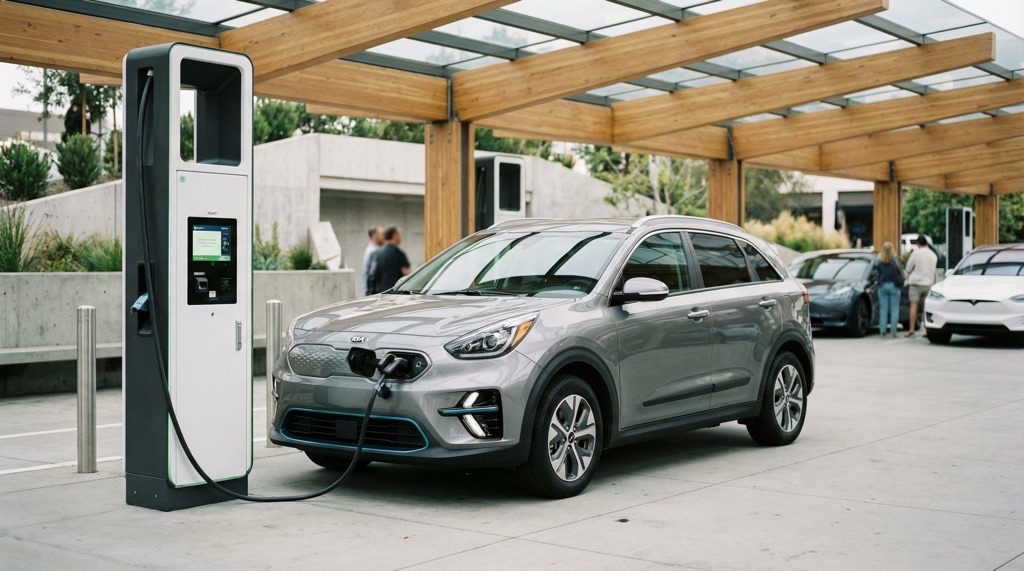
The Niro’s strength is its choice: hybrid (gas + electric synergy), PHEV (short electric-only range + gas backup), and BEV (full electric). Sources expect carryover mechanics—like 1.6L hybrid engine and 64.8 kWh EV battery—with software tweaks for better efficiency/range. US 2026 Niro EV pricing holds at $39,700 base (pre-facelift), with 253 miles EPA, but facelift details are pending.
Unresolved: Exact output (e.g., hybrid ~139 hp combined?), charging speeds, new features like ADAS upgrades, or battery size changes. Will it match EV3’s efficiency? Global pricing/taxes could vary; Romania context hints at strong hybrid demand. Kia’s March reveal is critical for clarity.
Comparison: Niro vs. Key Rivals
| Model | Powertrains | Base Price (est. US) | EV Range (est.) | Key Edge |
|---|---|---|---|---|
| 2026 Kia Niro | Hybrid/PHEV/BEV | $27,000 Hybrid / $39,700 EV (prior) | 253 miles (prior EV) | Versatile options + dual screens |
| Hyundai Kona Hybrid/EV (2025) | Hybrid/PHEV/BEV | $26,000 Hybrid / $32,925 EV | 261 miles EV | Lower EV price, similar tech |
| Toyota Corolla Cross Hybrid (2026) | Hybrid only | $29,000 | N/A (50 mpg) | Proven reliability, no EV yet |
| MG ZS EV (2025) | BEV only | $30,000 (global est.) | 273 miles WLTP | Cheaper BEV alternative |
The Niro stands out for powertrain variety versus EV-only MG or hybrid-only Toyota. Hyundai Kona edges on EV pricing/range, but Niro’s interior tech and design unity may tip scales.
Verdict
The 2026 Kia Niro facelift smartly evolves without reinvention, delivering premium styling, practical tech, and multi-powertrain appeal for eco-conscious families not ready for full EVs. It’s ideal for hybrid/PHEV shoppers wanting modern looks akin to Kia’s EVs, or budget BEV buyers eyeing 250+ mile range. Hold for March specs if power/efficiency details matter; otherwise, it reinforces Niro’s award-winning case in a crowded field. Critical gaps like confirmed ranges leave room for rivals to challenge.