
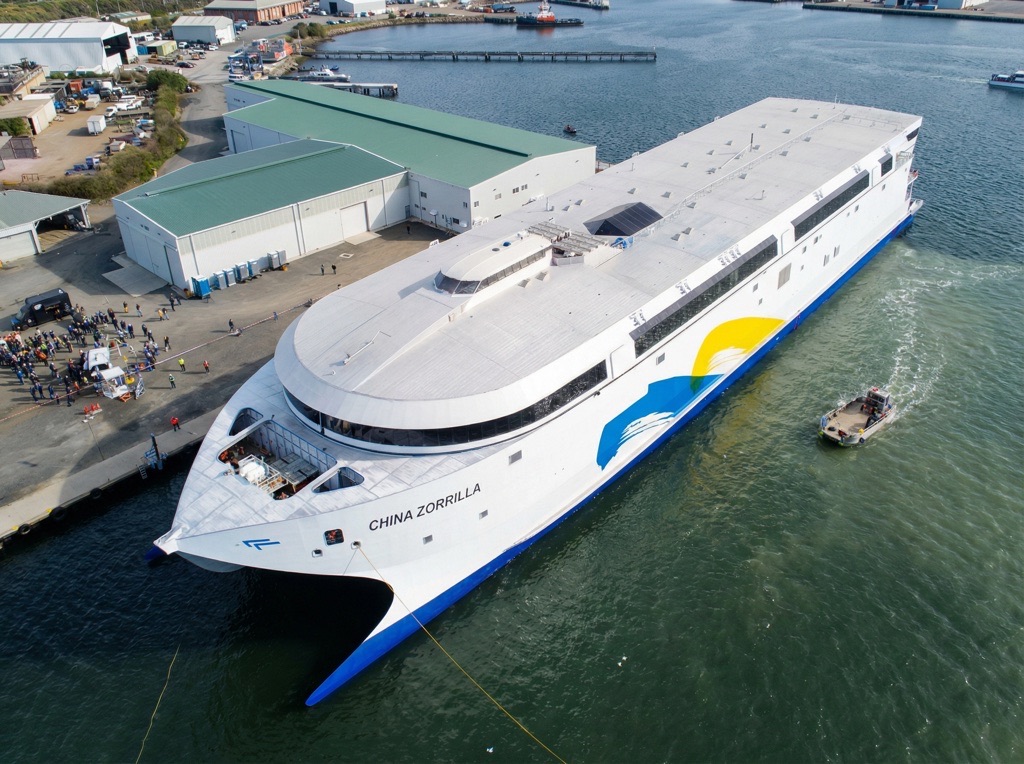
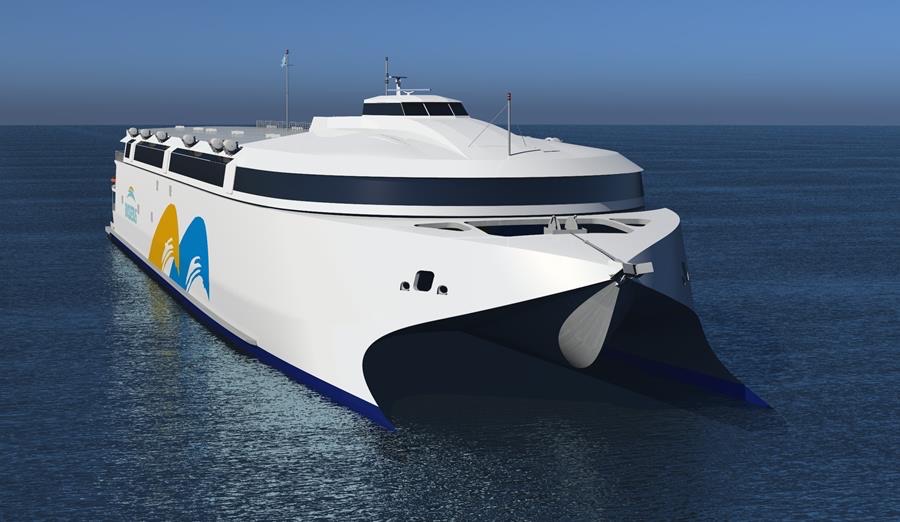
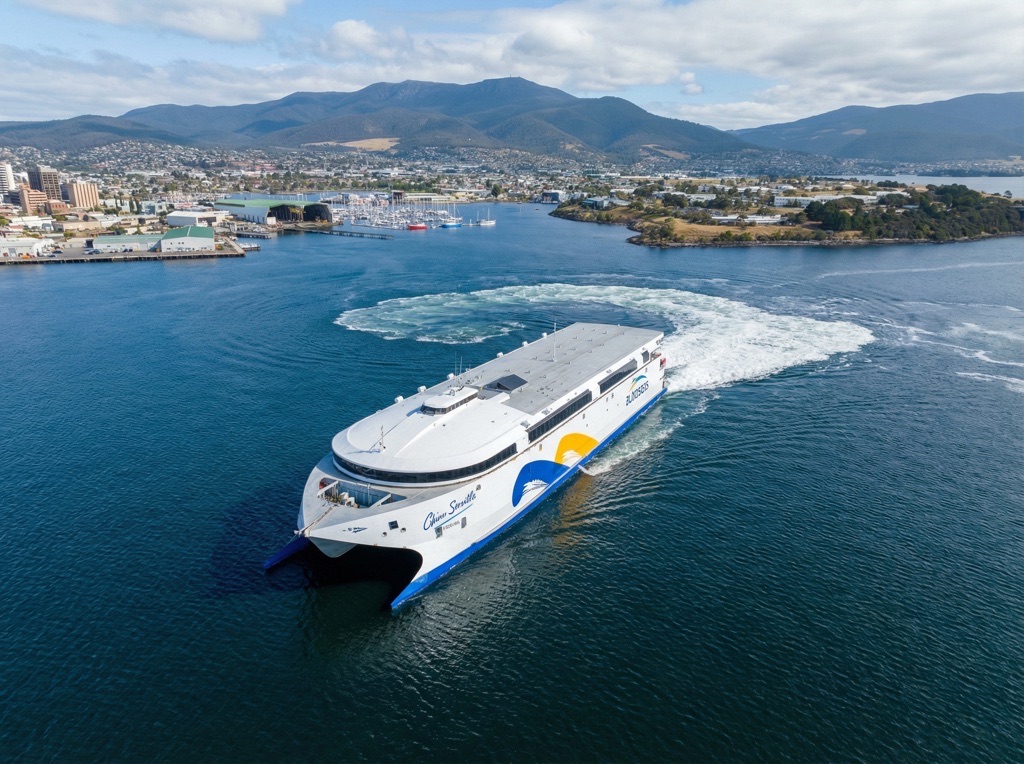
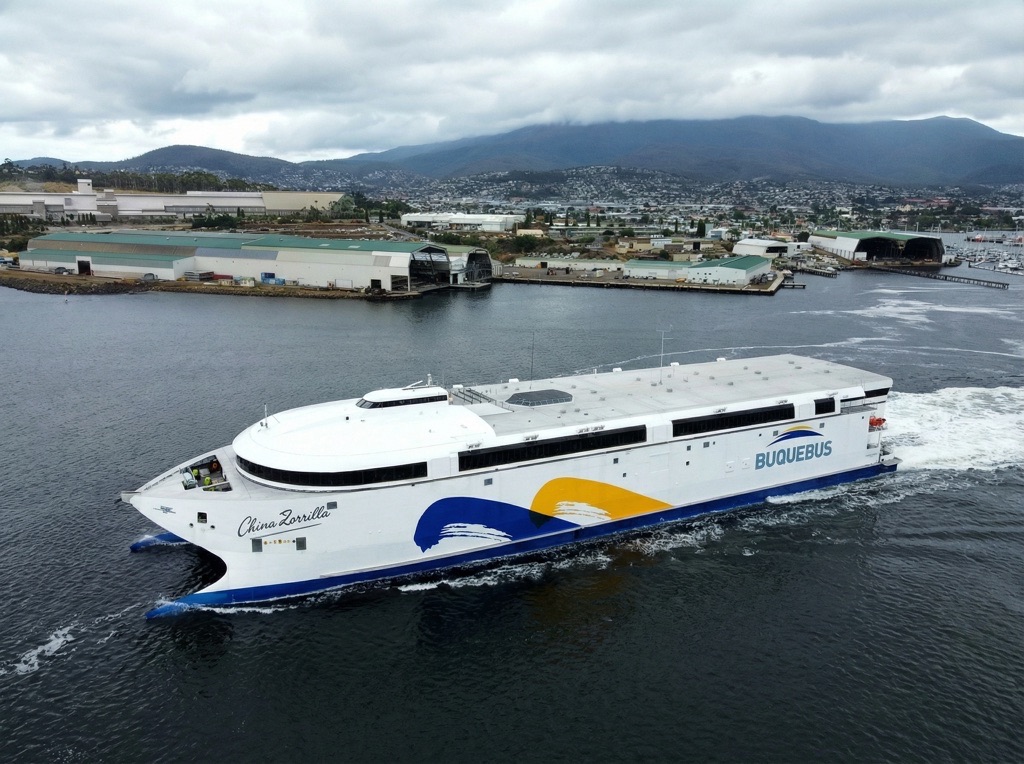
Incat Tasmania’s Hull 096, measuring 130 meters long with over 40 MWh battery capacity, has completed its first harbor trials under full electric power on Hobart’s River Derwent. This marks it as the world’s largest battery-electric ship, designed for Buquebus to ferry 2,100 passengers and 220 cars between Argentina and Uruguay. For EV enthusiasts and maritime observers, it demonstrates scalable battery tech for short-sea routes, challenging diesel dominance without the noise or emissions.
Background: Incat’s Evolution in High-Speed Ferries
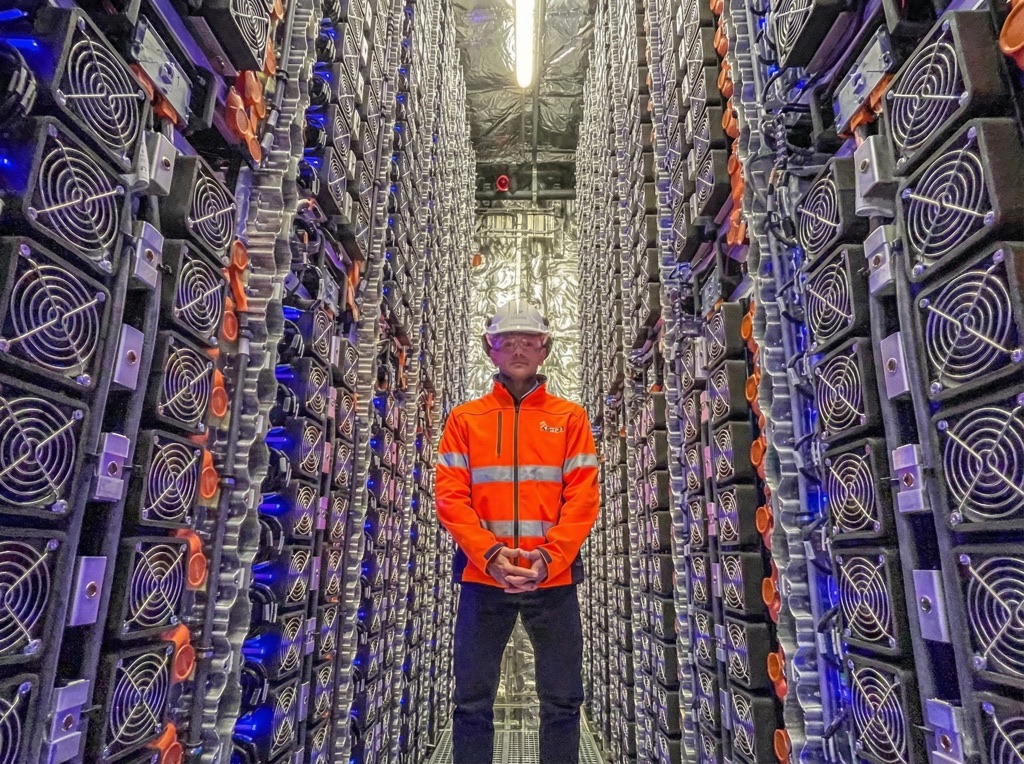
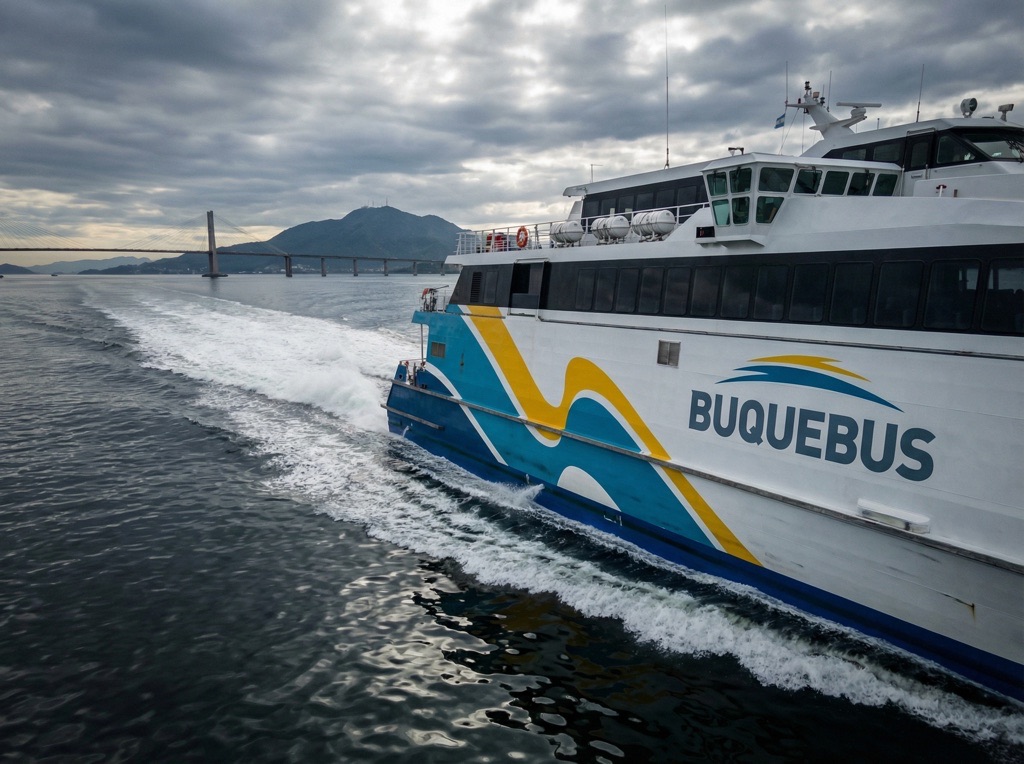
Incat Tasmania, based in Hobart, Australia, specializes in aluminum high-speed catamaran ferries. The company has built over 100 vessels, many for global operators, known for wave-piercing designs that enable speeds up to 40+ knots. Hull 096 originated as an LNG-powered project for South American ferry operator Buquebus in response to rising fuel costs and emissions regulations. By 2023, Incat pivoted to full battery-electric due to falling battery prices and advancing tech, installing 250 metric tonnes of batteries—equivalent to 660 Tesla Model 3 packs.
Chairman Robert Clifford described it as a leap forward. Originally planned with LNG for the Buenos Aires-Montevideo route (about 200 km), the switch aligns with global decarbonization pushes in shipping. Incat’s track record includes the 2013-built Francisco, a 99m Incat ferry still operating for Buquebus, but Hull 096 quadruples prior maritime battery records at over 40 MWh.
Key Specifications
| Specification | Details |
|---|---|
| Length | 130 meters (426 feet) |
| Passenger Capacity | 2,100 |
| Vehicle Capacity | Over 220 cars |
| Battery Capacity | Over 40 MWh |
| Battery Weight | 250 metric tonnes (275 US tons) |
| Propulsion | 8 electric waterjets |
| Hull Material | Aluminum catamaran |
| Builder | Incat Tasmania (Hull 096) |
| Operator | Buquebus (South America) |
| Status | Harbor trials completed January 2026 |
Trials and Technical Breakthroughs
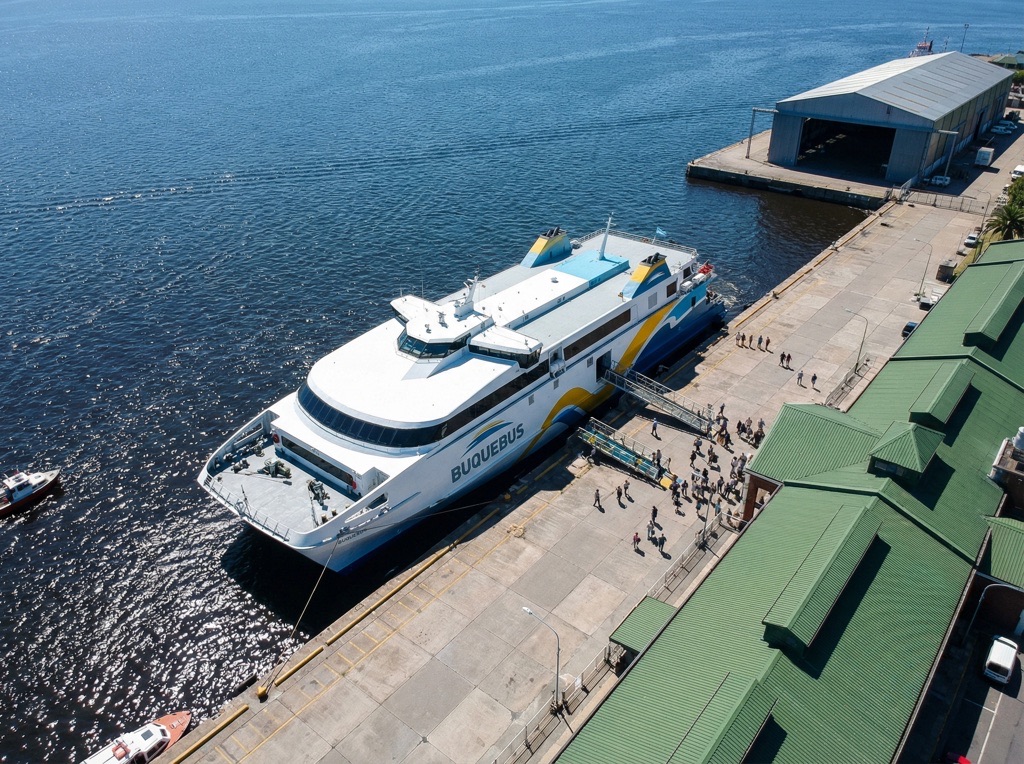
Hull 096 departed the pier silently during early January 2026 trials—the first under its own electric power. Prior testing until December 2025 was stationary, validating systems without movement. The vessel uses electric motors for instant torque across eight waterjets, enabling precise maneuverability on the River Derwent. No exhaust, no rumble: just a quiet hum, contrasting traditional diesel ferries’ frothy wakes.
The 40+ MWh system, four times larger than any previous maritime install, supports the short Buenos Aires-Montevideo crossing. Recharging details not yet confirmed, but infrastructure for such capacity exists in Uruguay’s grid. Buoyancy holds despite 250-tonne batteries, thanks to Incat’s lightweight aluminum design. Speed and range figures pending sea trials; harbor tests focused on control systems.
 Boats
Boats
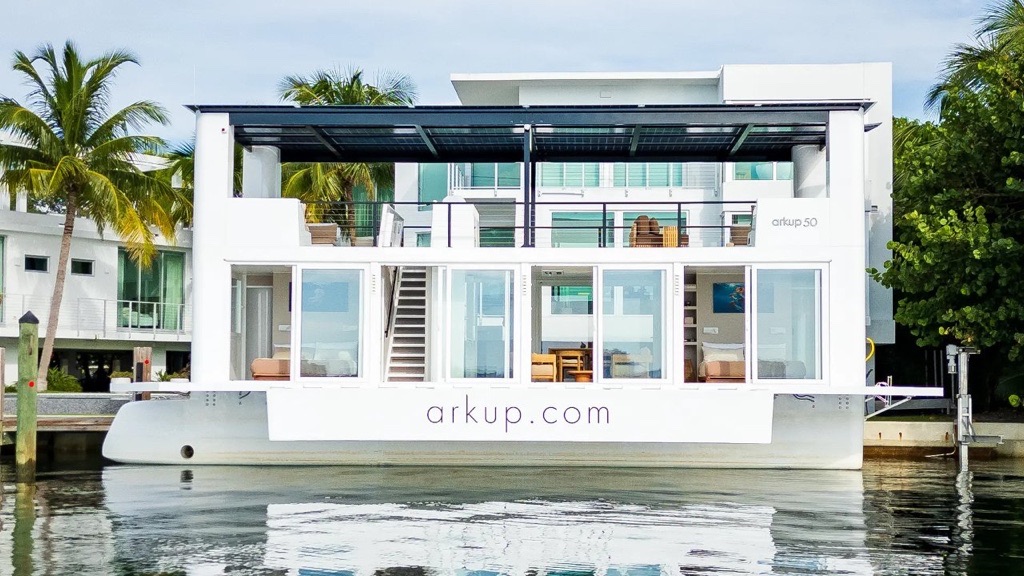
Living on Water: The Arkup 50 Floating House Revolution
Introduction: Redefining Home Sweet Home Imagine waking up to panoramic water views, with the gentle lapping of waves as your...
 Boats
Boats
World’s Largest Electric Vehicle Takes to the Water: Australia Tests a 427-Foot Battery-Powered Ferry
Australia has just redefined what an electric vehicle can be. Shipbuilder Incat Tasmania has successfully powered up and tested Hull...
 Boats
Boats
Flying Ferries: How Candela’s Electric Hydrofoils Are Revolutionizing Marine Transportation in NEOM
The Future of Water Travel Takes Flight Imagine a ferry that doesn’t just float, but flies. Saudi Arabia’s ambitious NEOM...
Shift from LNG: Market and Tech Drivers
Buquebus sought efficiency for high-frequency routes plagued by diesel costs. LNG was the initial plan, but battery prices dropped, making pure electric feasible. This mirrors EV trends: lithium-ion packs are now viable at scale for ferries with under 4 hours of runtime. Incat’s integration avoids hybrids, betting on zero-emission purity. Cost undisclosed, but comparable LNG ferries exceed $200 million; batteries likely push higher.
Challenges remain: battery degradation in marine humidity/salt, thermal management at sea, and charging times versus refueling. Incat reports no issues in initial tests. Globally, electric ferries like Norway’s Ampere (hybrid, 1 MWh) paved the way, but Hull 096 scales unprecedentedly.
Comparison with Competitors
| Vessel | Length | Battery Capacity | Capacity | Status |
|---|---|---|---|---|
| Incat Hull 096 | 130m | >40 MWh | 2,100 pax / 220 cars | Trials 2026 |
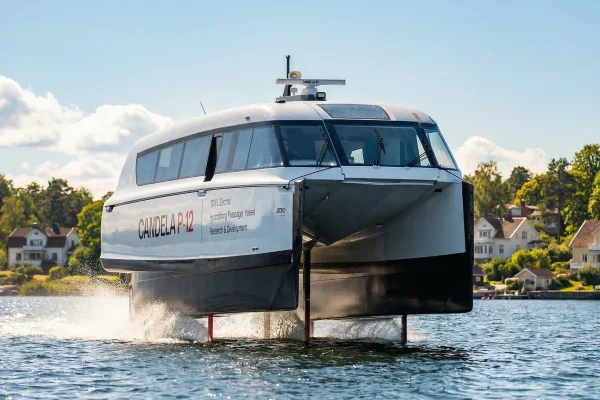
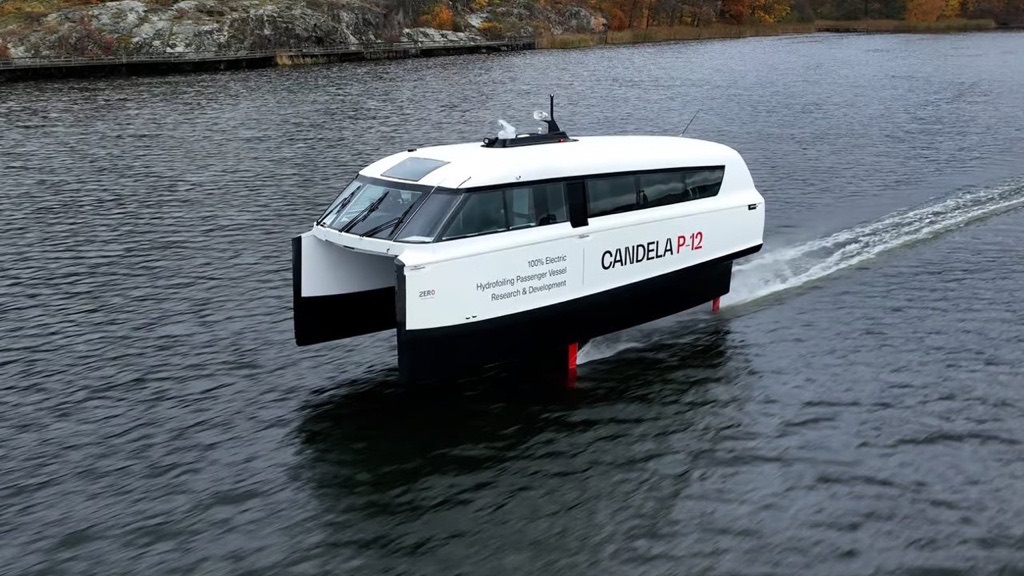
| Candela P-12 (waterfoil) | 12m | ~0.5 MWh | 30 pax | Operational |
| Norled Ampere | 80m | 1 MWh (hybrid) | 120 cars | Operational since 2015 |
| Arcadia’s Freedom (concept) | 102m | ~20 MWh (est.) | 1,000 pax | In development |
Hull 096 dwarfs small electric ferries like Candela’s foils, which prioritize efficiency over capacity. Versus Ampere, it’s a pure battery at 40x scale. Arcadia’s yacht-like design lags in trials.
Verdict
Incat Hull 096 succeeds as proof-of-concept for large battery-electric ferries on short routes, delivering 2,100-passenger capacity silently and emission-free. Ideal for operators like Buquebus facing urban port regulations and fuel volatility. Skeptics note unanswered questions: full-range tests, lifecycle costs, battery recycling. For EV maritime shift, it’s a benchmark—quiet progress over roaring diesel, but scalability to longer routes needs proof.