Mitsubishi Partners With Foxconn’s Foxtron for First Mass-Market EV in 15 Years
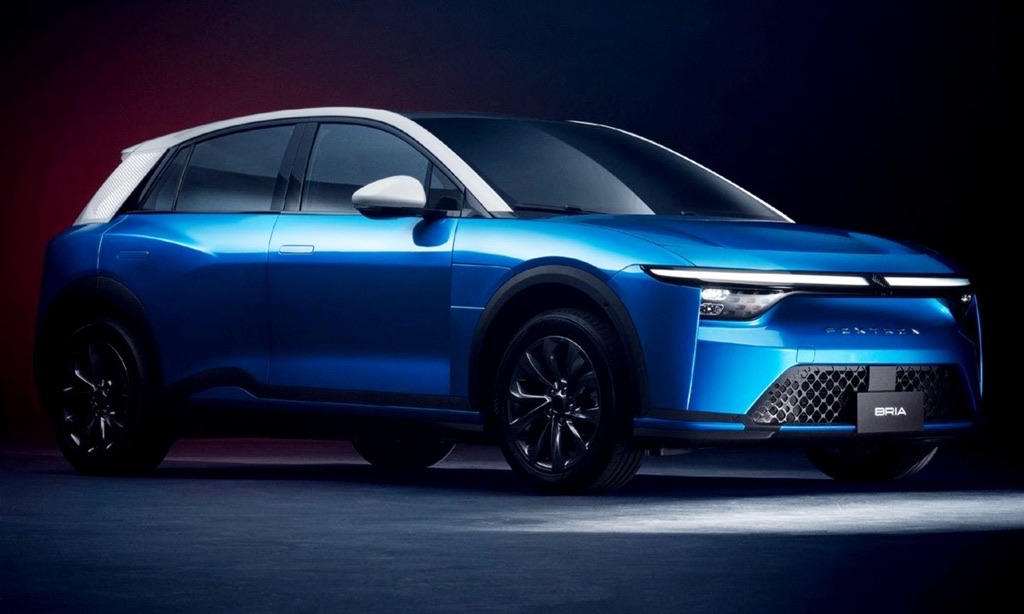
Mitsubishi is preparing to launch its first mass-market electric vehicle in Australia since 2011, partnering with Foxtron—the automotive division of iPhone manufacturer Foxconn—to deliver a high-performance compact hatchback arriving in the second half of 2026. The new EV will be based on the Foxtron Bria, a Taiwan-built platform that debuted in production form in late 2025, and will be manufactured by Yulon Motor in Taiwan with right-hand-drive configuration for Australian and New Zealand markets.
The partnership represents a significant strategic shift for Mitsubishi, which has struggled to maintain a competitive EV lineup in recent years. Rather than developing its own electric platform, the Japanese automaker is leveraging Foxtron’s expertise and manufacturing capabilities—the same company that produces consumer electronics for global markets—to accelerate its electrification strategy in key right-hand-drive markets.
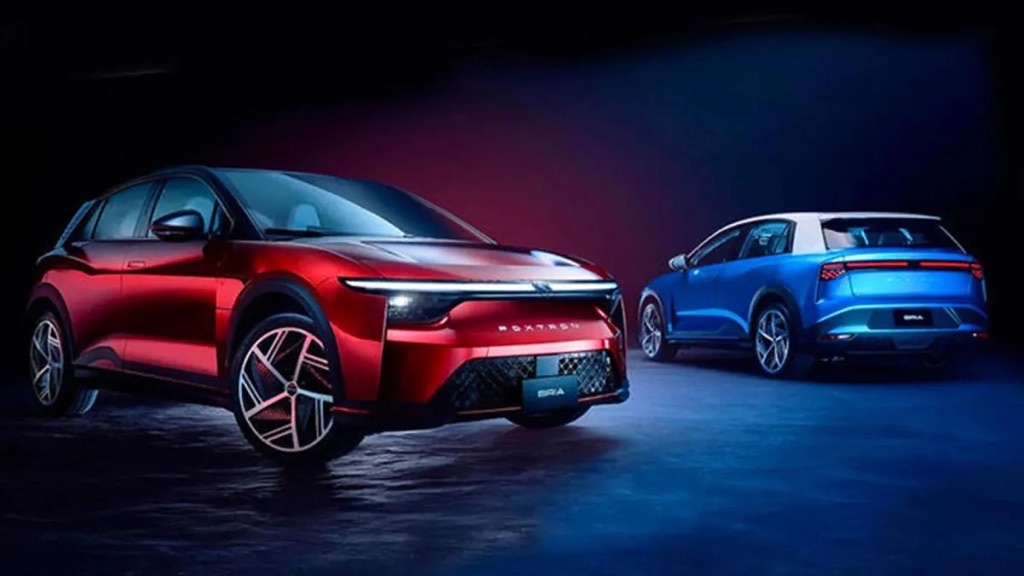
Performance Specs: 300kW Dual-Motor Flagship Delivers Hot-Hatch Credentials
| Specification | Details |
|---|---|
| Platform | Foxtron MIH 400V skateboard |
| Battery | 57.5kWh lithium iron phosphate (LFP) |
| Base Motor | 171kW (229hp) rear-mounted, RWD |
| Flagship Motor | Dual-motor AWD, 298kW (400hp) |
| 0-100km/h | 6.8 seconds (RWD), 3.9 seconds (AWD) |
| Range (NEDC) | 516km (RWD), 466km (AWD) |
| Range (WLTP est.) | ~430km (RWD), ~400km (AWD) |
| DC Fast Charging | Up to 134kW; 10-80% in ~30 minutes |
| Dimensions | 4,315mm L × 1,885mm W × 1,535mm H |
| Wheelbase | 2,800mm |
| Boot Space | 320 litres + 52-litre frunk |
The Foxtron Bria—which will be rebadged and restyled by Mitsubishi for the Australian market—comes in three variants. Entry-level Elegant and mid-spec Emerge models feature a single rear-mounted 171kW electric motor, capable of 0-100km/h in 6.8 seconds. The flagship Pioneer variant steps up to a dual-motor all-wheel-drive configuration producing 298kW (400 horsepower), achieving 0-100km/h in just 3.9 seconds. All variants share the same 57.5kWh lithium iron phosphate battery pack, offering claimed NEDC ranges of 516km for rear-wheel drive and 466km for all-wheel drive.
However, real-world range expectations should be tempered: WLTP estimates—the more stringent testing protocol—suggest approximately 430km and 400km respectively. DC fast charging reaches up to 134kW, enabling a 10-80 percent recharge in approximately 30 minutes.
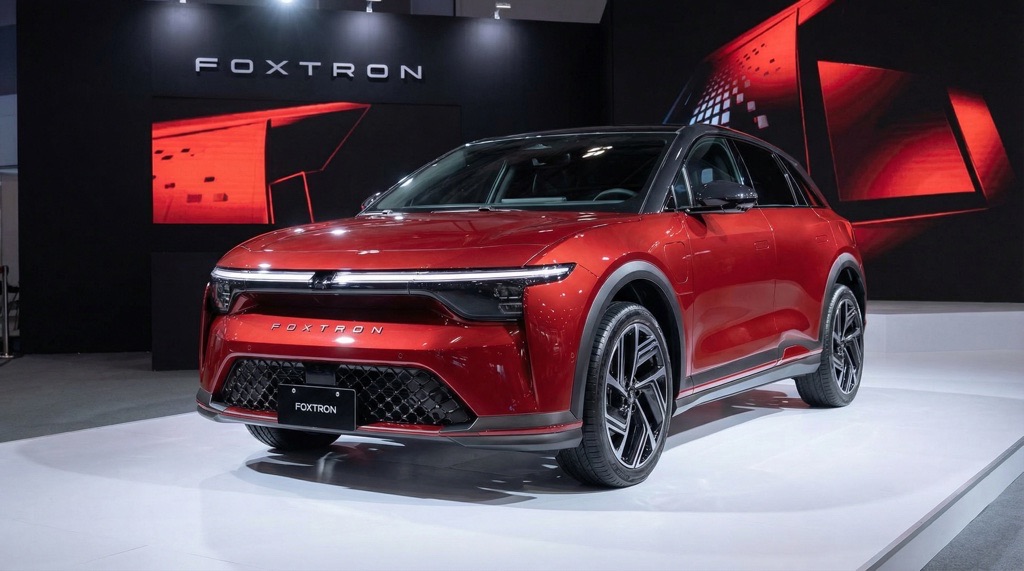
Design and Interior: Pininfarina Styling With Foxconn Tech Integration
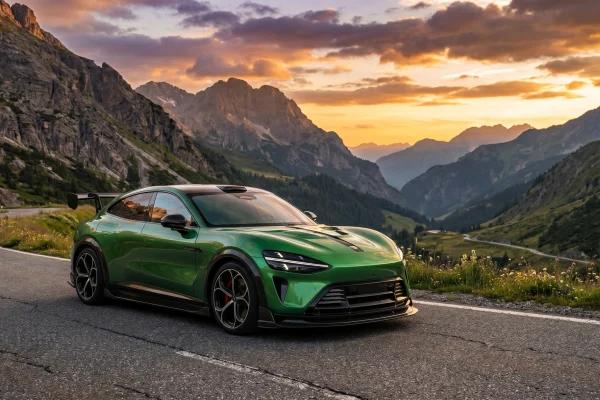
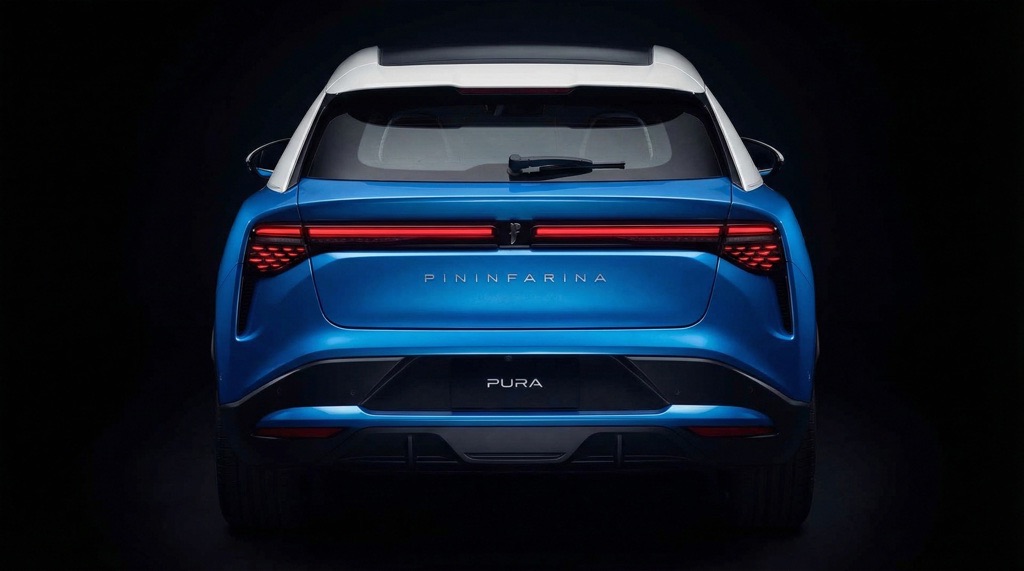
The Bria’s design comes from renowned Italian styling house Pininfarina, incorporating advanced aerodynamic elements, including air guides in the rear window pillars and a pass-through duct on the nose. The compact hatchback measures 4,315mm in length—positioning it between a Volkswagen Golf and Toyota Corolla—with a 2,800mm wheelbase and modest 320 litres of boot space supplemented by a 52-litre front storage compartment.
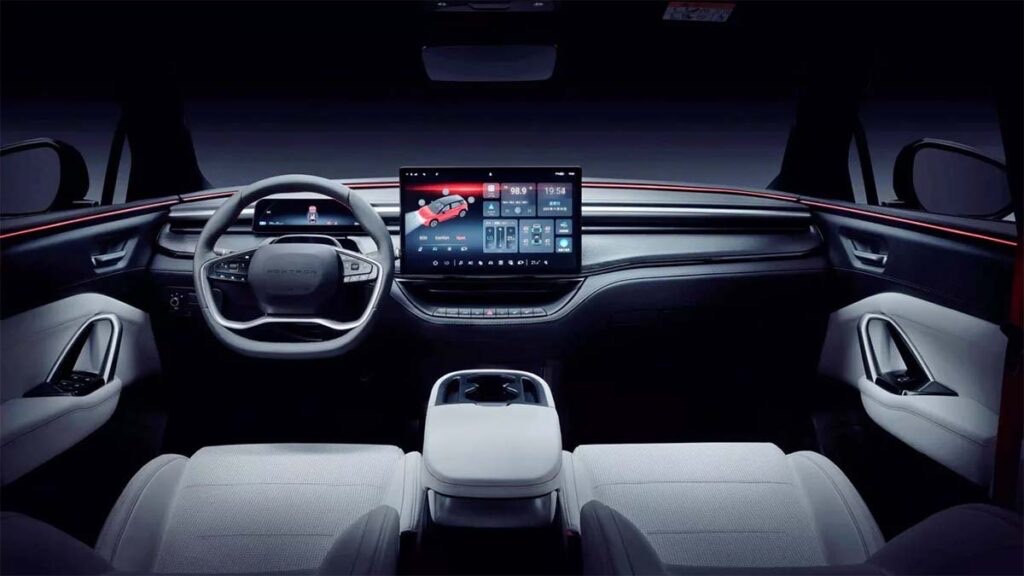
Inside, the Bria features a 15.6-inch infotainment touchscreen with wireless Apple CarPlay and Android Auto compatibility, paired with a 9.2-inch digital instrument cluster. Seven- or 12-speaker audio systems are available, depending on trim level. Most vehicle functions operate through the touchscreen, with dedicated climate control shortcuts positioned below the display.
Standard equipment in the base Taiwanese model includes power-adjustable front seats, rear-view camera, PM2.5 cabin air filtration, and a comprehensive safety suite featuring adaptive cruise control, lane-keep assist, and rear cross-traffic alert. Higher trims add a panoramic glass roof, power tailgate with kick sensor, ventilated front seats, ambient cabin lighting, 360-degree camera system, adaptive headlights, and integrated navigation.
Mitsubishi has confirmed that Australian versions will receive local engineering tuning for suspension and steering characteristics, optimized for local road conditions. However, any additional styling modifications beyond Mitsubishi badging remain unconfirmed.
 Cars
Cars
Thor Embark EV: The Smart Electric RV That Finally Makes Sense
“Electric is the future!”We’ve all heard that line before — and if you’re like me, you’ve probably smiled politely while...
 Cars
Cars
Mercedes Unveils 2025 GLC 350e 4MATIC Plug-in Hybrid: Price, Specs
Luxury Meets Efficiency in the New GLC 350e Mercedes-Benz has officially revealed the 2025 GLC 350e 4MATIC Plug-in Hybrid, blending...
 Cars
Cars
Volkswagen Cancels the 2026 ID. Buzz for the US Market
The electric revival of the legendary VW bus has hit an unexpected pause. Volkswagen has confirmed that it will skip...
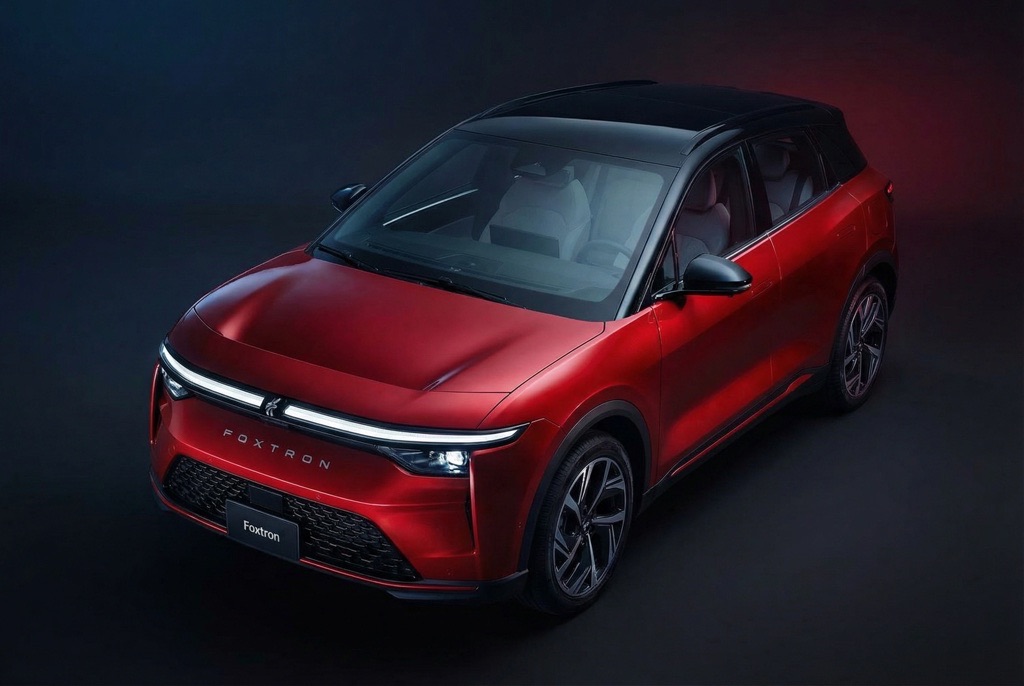
Australian Pricing and Naming Strategy: ASX GT-e and ASX VR-e Trademarks Filed
Mitsubishi has trademarked the badges “ASX GT-e” and “ASX VR-e” for the Australian market, suggesting the EV will adopt the ASX nameplate with sportier variant designations. The VR-e reference echoes the “VR-X” sports editions previously applied to models like the Lancer and Magna, indicating Mitsubishi’s intention to position this as a performance-focused offering.
Pricing details remain under wraps, though Australian market expectations suggest a starting point around $35,000 AUD plus on-road costs—compared to the Taiwanese Foxtron Bria’s $NT899,000 (approximately $42,500 AUD) base price. The final Australian pricing structure and trim lineup will likely differ from the Taiwanese three-variant configuration, with emphasis on sportier variants based on the trademark filings.
Manufacturing Partnership and Market Strategy
The Mitsubishi-Foxtron partnership was formalized in May 2025, with an agreement ensuring right-hand-drive production specifically for the Australia and New Zealand markets. Manufacturing will occur in Taiwan through Yulon Motor, leveraging Foxtron’s established production infrastructure and Foxconn’s supply chain expertise.
This partnership strategy contrasts sharply with Mitsubishi’s North American approach: the brand established a separate partnership with Nissan last year to share EV infrastructure and technology for the US market. The decision to partner with Foxtron for right-hand-drive markets reflects Mitsubishi’s pragmatic approach to electrification, prioritizing speed-to-market and cost efficiency over in-house development.
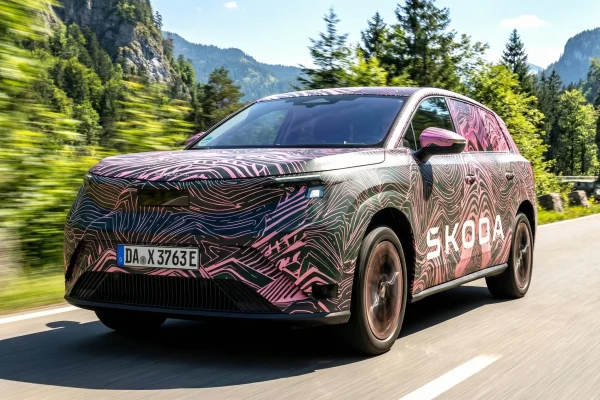
Testing of the new model is already underway in Australia, with local engineers fine-tuning the vehicle for regional conditions. Mitsubishi has committed to a second-half 2026 launch window, though more detailed specifications and pricing are expected closer to the official Australian debut.
Competitive Context: Filling a Gap in Mitsubishi’s Lineup
Mitsubishi’s EV lineup has been notably sparse in recent years. The Foxtron-based hatchback represents the brand’s first mass-market electric offering in Australia since the i-MiEV era, addressing a significant product gap as competitors expand their compact EV portfolios.
The 300kW dual-motor variant positions the Mitsubishi competitively against performance-focused compact EVs, though direct Australian competitors remain limited at this price point. The emphasis on the hot-hatch variant—rather than a traditional crossover—represents a deliberate strategy to inject performance credentials into Mitsubishi’s EV narrative.
Unanswered Questions and Considerations
Several critical details remain unconfirmed ahead of the official Australian launch. How Mitsubishi will differentiate the vehicle through styling beyond badging is unclear. The final Australian trim structure, pricing tiers, and whether all three Taiwanese variants will be offered locally have not been announced. Additionally, specifications may differ from the Taiwanese Bria—including potential power output adjustments, battery capacity variations, or charging speed modifications—though Mitsubishi has indicated local tuning will focus primarily on suspension and steering rather than powertrain changes.
The absence of any confirmed plans to bring the vehicle to other markets beyond Australia and New Zealand suggests this is a region-specific strategy, at least initially.
Verdict: A Pragmatic EV Strategy for Mitsubishi’s Australian Comeback
Mitsubishi’s decision to partner with Foxtron demonstrates a clear-eyed recognition that in-house EV development cannot compete with established players’ timelines and cost structures. By leveraging Foxconn’s automotive expertise and manufacturing scale, Mitsubishi gains access to a credible, modern EV platform without the capital expenditure of independent development. The 300kW dual-motor variant delivers genuine hot-hatch performance credentials—3.9-second 0-100km/h acceleration is genuinely competitive—while the base 171kW variant offers practical daily-driver capability at an accessible price point. The Pininfarina-designed exterior and Foxconn-integrated technology stack suggest a vehicle that doesn’t compromise on design or features despite its Taiwanese origins. For Australian buyers seeking a performance-oriented compact EV from an established brand at an expected sub-$40,000 starting price, this represents a credible alternative to Chinese EV imports and European competitors. The critical unknown is execution: whether Mitsubishi’s local tuning genuinely optimizes the platform for Australian conditions, and whether the brand can effectively market an iPhone-maker-built vehicle as authentically Mitsubishi.