
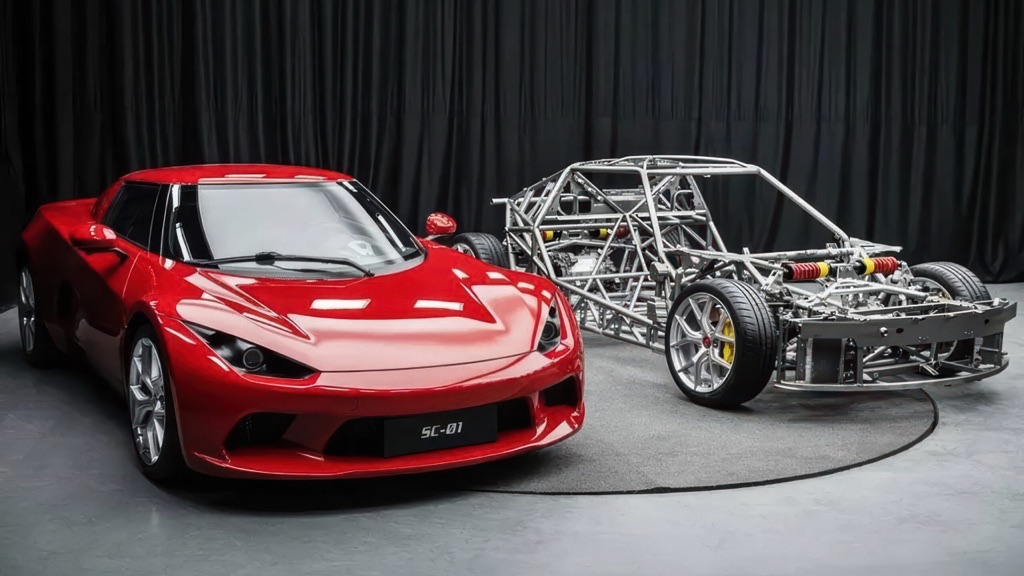
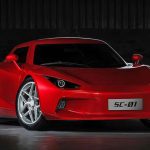
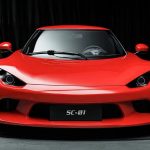
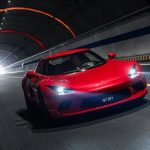
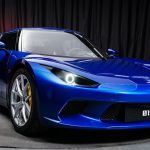
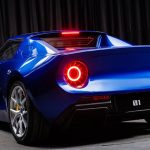
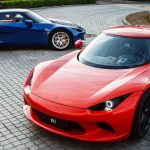
While the Tesla Roadster remains in development limbo, China’s JMEV SC01 has already arrived as a production-ready electric sports car that challenges everything the industry assumes about EV performance. At just 1,365 kg (3,009 lbs), this two-seater coupe accelerates from 0–100 km/h (62 mph) in 2.9 seconds with 429 hp, delivering genuine driver engagement at a fraction of the cost of comparable Western alternatives.
The SC01 represents a philosophical departure from the bloated SUV trend dominating the EV market. Developed by Tianjin Gongjiangpai Auto Technology and built by JMEV (a Jiangling Motors subsidiary backed by Xiaomi investment), the car prioritizes lightweight construction, configurable drivetrain modes, and track-capable engineering over luxury features or autonomous systems.
Specifications
| Specification | Detail |
|---|---|
| Length | 4,106 mm (161.7 in) |
| Wheelbase | 2,503 mm (98.5 in) |
| Curb Weight | 1,365 kg (3,009 lbs) |
| Motor Configuration | Dual Enpower permanent magnet synchronous motors (160 kW peak each) |
| Total Power Output | 429 hp (320 kW; 435 PS) |
| Total Torque | 560 N⋅m (413 lb · ft) |
| 0–100 km/h (62 mph) | 2.9 seconds |
| Top Speed | 200 km/h (124 mph) |
| Battery | 60 kWh NMC (CALB), 160 Wh/kg energy density |
| CLTC Range | 520 km (323 miles) |
| 30–80% Charge Time | Under 25 minutes |
| Drivetrain Modes | All-wheel drive, rear-wheel drive, front-wheel drive (selectable) |
| Wheels | 18-inch forged magnesium alloy with Michelin Pilot Sport Cup2 or Vitour Tempesta Enzo V-01R tires |
| Brakes | 350 mm discs; six-piston front, four-piston rear calipers |
| Suspension | Horizontal pushrod with 8 adjustable control arms (9 pitch settings) |
| Frame | 4130 chrome-molybdenum steel tube space frame |
| Center of Gravity Height | 380 mm (15.0 in) |
| China Price | CN¥229,800 (US$31,600) |
| European Production | Assembled in Italy; 1,000 units planned for select markets |
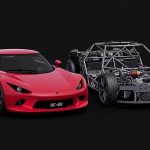
Weight as Strategy: Why 3,009 Pounds Matters
The SC01’s most radical specification is what it doesn’t have: mass. At 1,365 kg, it weighs approximately 220 pounds less than a current Porsche 911 and roughly 1,000 pounds less than a Tesla Model 3 Performance. This isn’t accidental—it’s the foundation of the entire engineering philosophy.
In an industry where electric sedans routinely exceed 2,000 kg, and SUVs approach 3,000 kg, the SC01’s featherweight construction enables genuine performance without requiring excessive power. The 429 hp output, modest by modern EV standards, becomes genuinely potent when distributed across such minimal mass. The car achieves its 2.9-second 0–100 km/h time not through brute force but through the physics of lightweight design.
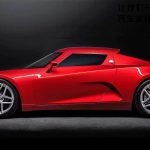
This weight discipline required unconventional choices. Rather than adopting the skateboard platform common in modern EVs, JMEV mounted the 60 kWh battery pack directly behind the passenger compartment—similar to a mid-engine vehicle layout. This placement creates a center of gravity height of just 380 mm, comparable to a GT3 race car, and enables the weight distribution and handling characteristics of a traditional sports car rather than an EV appliance.
Configurable Drivetrain: Engineering Flexibility Over Marketing Simplicity
The SC01’s dual-motor all-wheel drive system includes an unusual feature: drivers can select all-wheel drive, rear-wheel drive, or front-wheel drive via ceiling-mounted buttons. While front-wheel drive on a 429 hp sports car invites torque steer and seems counterintuitive, the engineers deliberately included it as an option, comparing it to the Honda Civic Type R’s front-drive performance capability.
 Cars
Cars
2026 BMW iX3 Debuts With Amazon Alexa+ AI and 800 km Electric Range
BMW Turns the Car Into a Conversational Companion Talking to your car used to feel like arguing with a brick...
 Cars
Cars
Changan Nevo A06 with 45 kWh Sodium-Ion Battery Delivers 400+ km Range, Launches Mid-2026
Changan Automobile and CATL have unveiled the Nevo A06 (also known as Qiyuan A06), the world’s first mass-produced passenger EV...
 Cars
Cars
Tesla Model 3 & Model Y Batteries From China Show “Catastrophic” Failure Rates — Report by EV Clinic
European EV repair experts warn about severe degradation in LG NCM811 packs used in Tesla Long Range & Performance models...
The suspension architecture reflects similar engineering precision. The car uses a horizontal pushrod system with fully adjustable compression and rebound dampers, forged 7075 aluminum steering knuckles, and eight control arms with nine adjustable pitch settings. This configuration allows camber adjustment at the steering knuckle without altering control arm length—avoiding the secondary effect of changing camber gain. According to development-test driver Wang Yue, this level of adjustability enables fine-tuning for different driving conditions and track configurations.
Brake cooling receives track-focused engineering: ram air channels integrated into the headlights direct airflow into the front wheel arch, with optional hose routing to direct air directly onto the brake discs. The six-piston front and four-piston rear calipers work with 350 mm discs, while battery cooling uses side inlets that leverage the low-pressure wake behind the car to reduce drag.
Range and Charging: Realistic Expectations
The 60 kWh battery pack delivers a CLTC range rating of 520 km (323 miles), though real-world range will be substantially lower depending on driving style and conditions. The CLTC testing cycle is notoriously optimistic compared to WLTP or EPA standards. Charging from 30–80% takes under 25 minutes with appropriate DC fast charging infrastructure, providing practical refueling intervals for road trips without requiring full charges.
The battery’s 160 Wh/kg energy density and peak output of 360 kW support sustained performance without thermal throttling during track use, though JMEV integrated enhanced cooling systems specifically for high-temperature scenarios.
Interior and Practicality: Minimalism as Feature
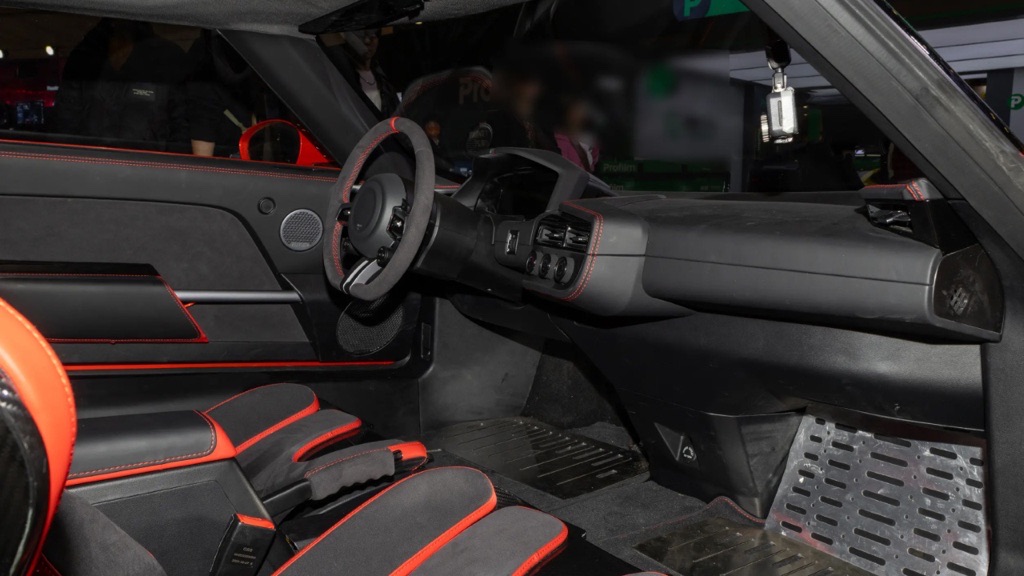
The SC01’s cabin prioritizes driver focus over luxury. Forged carbon fiber racing-style bucket seats with multi-point harness cutouts dominate the interior, while the asymmetrical seating arrangement shifts the driver’s seat 6 cm toward the car’s center for optimal positioning, reducing passenger-side legroom. An Edifier sound system with a claimed dual-channel three-way configuration provides audio without the distraction of infotainment screens.
Notably, the car includes a substantial rear storage compartment capable of holding two large suitcases—a deliberate development target to address luggage space limitations common in lightweight sports cars. The minimalist cabin design, featuring simple controls and carbon fiber construction, echoes the Lotus Elise philosophy: remove everything unnecessary, keep everything essential.
Production and Market Availability
The SC01 entered production in 2025 with a planned limited run of 1,000 units reserved for select European markets. European versions will be assembled in Italy, potentially offering tariff advantages while maintaining manufacturing standards. The Chinese domestic price of CN¥229,800 (US$31,600) establishes a baseline, though European pricing will reflect import costs, assembly, and market positioning.
The car remains unavailable in the United States, though JMEV has not ruled out future North American availability. Competitors in the lightweight electric sports car segment include the Caterham (planned US availability) and the Longbow, both positioned at higher price points with different engineering priorities.
Comparison with Competitors
| Model | Weight | Power | 0–60 Time | Price (Approx.) | Availability |
|---|---|---|---|---|---|
| JMEV SC01 | 1,365 kg (3,009 lbs) | 429 hp | 2.9 seconds | $31,600 (China) | Europe (Italian assembly); China |
| Lotus Elise (ICE) | ~920 kg (2,028 lbs) | 111–243 hp | 3.8–5.9 seconds | $50,000–$70,000 | Limited; production ended in 2021 |
| Caterham Seven | ~600 kg (1,323 lbs) | 270+ hp | 2.8–3.5 seconds | $40,000–$60,000 | US (planned); Europe |
| Tesla Roadster (2025+) | Details not yet confirmed | 1,000+ hp | 1.9 seconds (claimed) | $200,000+ | Not yet available |
Verdict
The SC01 represents a genuine alternative to the bloated EV performance car trend, proving that electric sports cars don’t require 2,000+ kg curb weights or six-figure prices to deliver engaging performance. Its lightweight construction, configurable drivetrain, and track-focused engineering create a driver’s car rather than a technology showcase. For European buyers seeking an affordable, nimble electric sports car with genuine handling credentials, the SC01 delivers on promises the industry has repeatedly failed to keep. The car’s primary limitation—European-only availability and limited production—reflects its status as a boutique offering rather than a mass-market product. Whether JMEV can sustain production quality and customer support across international markets remains the critical unanswered question.