
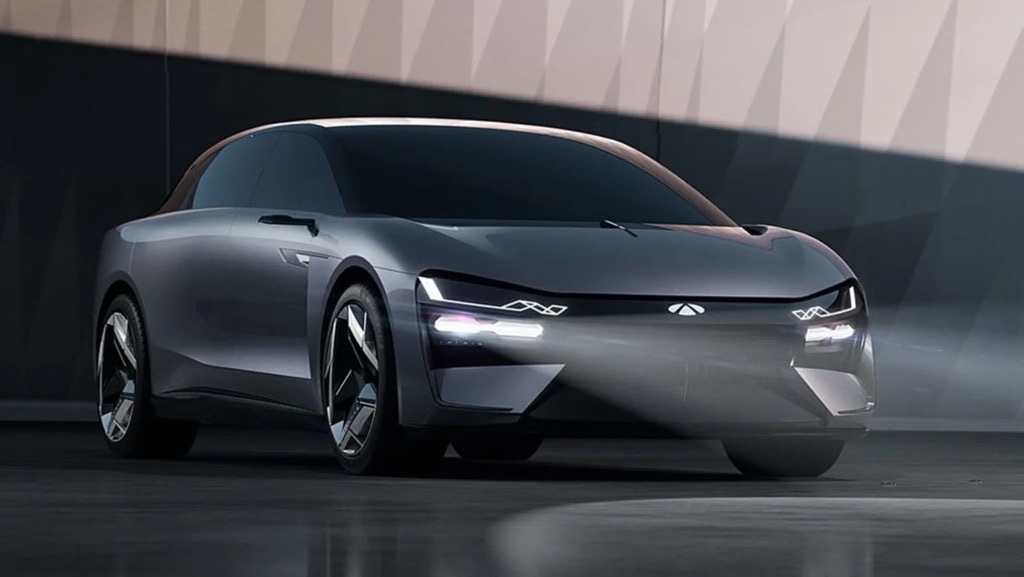
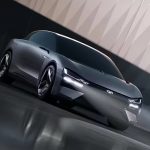
Chery’s Exeed Liefeng shooting brake will launch in 2026 with a Rhino S solid-state battery delivering 1,500 km range even at -30°C, addressing a key weakness of current EVs in cold climates. This positions Exeed as a pioneer in solid-state tech under Chery’s premium brand, targeting ride-hailing fleets first before mass production in 2027. For EV buyers in harsh winters, this could mean reliable long-distance travel without range anxiety.
Background: Chery’s Rise and Exeed’s Premium Push
Chery Automobile, China’s top car exporter, sold 2,007,768 vehicles in the first three quarters of 2025, with exports up 12.9% year-over-year to 936,428 units. The company unveiled its first solid-state battery prototype at the 2025 Global Innovation Conference in October, achieving 600 Wh/kg energy density using an in-situ polymerized solid electrolyte with a lithium-rich manganese cathode. Exeed, Chery’s upscale brand, builds on this with models like the ES8 shooting brake, revealed in December 2025 with a 1,000 km pure electric range on solid-state tech.
Chery’s solid-state efforts stem from its Rhino S battery line, betting on oxide electrolytes amid polymer, oxide, and sulfide options. Chairman Yin Tongyue outlined vehicle trials in 2026 and full production in 2027, ahead of rivals like BYD and CATL. This aligns with the ‘Yaoguang 2025’ program for premium EVs. However, experts at the 2025 World Power Battery Conference cautioned that solid-state tech remains unready for large-scale commercialization.
Key Specifications
| Specification | Details |
|---|---|
| Battery | Rhino S solid-state, 600 Wh/kg energy density, oxide electrolyte |
| Range | 1,500 km at -30°C; up to 1,300 km real-world in standard conditions |
| Architecture | 800 V |
| Motor | 30,000 rpm electric motor |
| Acceleration | 0-100 km/h < 3 seconds |
| Top Speed | 260 km/h |
| Launch Plan | Pilot in ride-hailing/rental 2026; mass production 2027 |
| Safety | No fire/smoke in nail penetration, drill puncture, or deformation tests |
| Charging | 5 min for 500 km additional range (module level) |
Performance Analysis: Cold-Weather Breakthrough
The Liefeng’s headline claim—1,500 km range at -30°C—addresses EV range degradation in freezing conditions, where lithium-ion batteries often lose 30-50% of their capacity. Chery emphasizes ‘unbeatable performance in freezing temperatures,’ with the battery maintaining reliability at extreme cold. This could significantly enhance winter EV usability in regions such as northern China, Russia, or Canada, where current models often struggle.
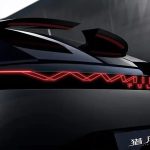
Powertrain specs include an 800 V architecture and high-revving 30,000 rpm motor, enabling sub-3-second 0-100 km/h sprints and 260 km/h top speed—sports car territory for a shooting brake. The design echoes the Exeed ES8’s headlight pattern, suggesting shared platforms for cost efficiency.
 Cars
Cars
2026 Afeela 1: Price, Range, Specs, and High-Tech Features
Sony–Honda’s Afeela 1 Makes Its North American Debut The 2026 Afeela 1 marks the official launch of Afeela, a new...
 News
News
2026 BYD Seal Offers 520km WLTP Range and More Interior Space at Unchanged Pricing
The 2026 BYD Seal sedan gains increased interior room, upgraded technology features, and a 520km WLTP range in its Performance...
 Cars
Cars
The European EV Subsidy Dilemma: A Crossroads for Electric Mobility
The electric vehicle (EV) revolution in Europe is facing a critical moment. Just as electric cars were gaining momentum, governments...
Battery Technology Deep Dive
Chery’s Rhino S uses oxide electrolytes, hitting 600 Wh/kg—double current lithium-ion packs at 250-300 Wh/kg. Safety tests show no thermal runaway: cells withstand drill punctures, 50% deformation, and water immersion while discharging normally. A related module claims 5-minute charging for a 500 km range and over 1,000 km full charge.
Pilot production starts in 2026 in fleets to collect data, scaling to mass output in 2027. Yet skepticism persists: Chinese battery experts warn of commercialization hurdles, questioning if 2026-2027 proves viable or just hype. Cost remains high, limiting initial rollout.
Design and Market Strategy
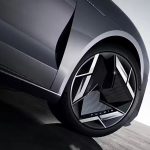
The Liefeng concept is a shooting brake—a sleek wagon blending coupe style with practicality—under Exeed, targeting premium buyers. A similar front-end design to ES8 hints at production intent. Chery’s phased approach prioritizes real-world validation in ride-hailing, mitigating risks before consumer sales.
As China’s export leader, Chery eyes global premium EV markets. September 2025 saw 137,624 overseas shipments, the fifth month over 100,000. Success here could leapfrog competitors in solid-state adoption.
Comparison with Competitors
| Model/Brand | Range | Energy Density | Timeline | Cold Weather Claim |
|---|---|---|---|---|
| Chery Exeed Liefeng | 1,500 km @ -30°C | 600 Wh/kg | Pilot 2026 | Full performance |
| Exeed ES8 (Chery) | 1,000 km | 600 Wh/kg | 2026 | Not specified |
| BYD/CATL Solid-State | ~1,200 km (projected) | ~500 Wh/kg | 2027 limited | Not specified |
| Toyota Solid-State | 1,200 km (target) | ~450 Wh/kg | 2027-2028 | Pending |
Chery leads in cold-weather specs and timeline versus BYD/CATL and Toyota, but real-world verification is pending.

Verdict
Chery’s Liefeng sets an ambitious benchmark with proven prototype safety and extreme-range claims, ideal for fleet operators and long-haul drivers in cold climates. Success hinges on 2026 pilots delivering on promises amid expert doubts—watch for data from ride-hailing tests. For premium EV enthusiasts, it’s a calculated bet on China’s battery edge; casual buyers should wait for 2027 pricing and independent validation.