
Mitsubishi’s First Mass-Market EV Arrives with Supercar-Rivalling Performance
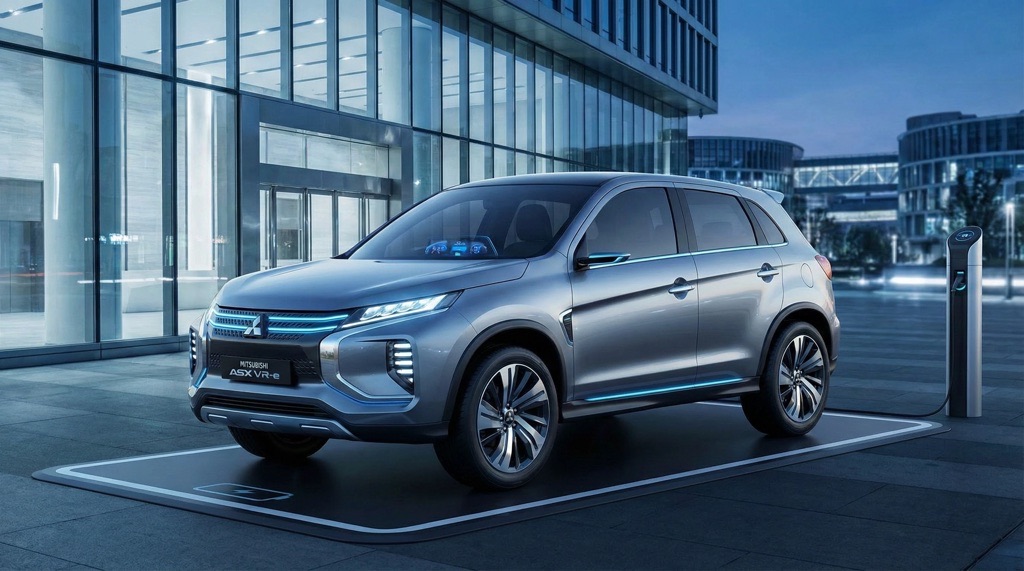
Mitsubishi Australia is preparing to launch its first mass-market electric vehicle in the second half of 2026, with the Foxtron Bria preview revealing a compact hatch capable of 0-100km/h in 3.9 seconds and a maximum power output of 299kW. The dual-motor flagship variant will deliver all-wheel drive performance that positions it as a serious contender in the premium EV hatchback segment, while an entry-level single-motor option offers practicality with up to 516km of range.
The Foxtron Bria: Taiwan’s Answer to Global EV Competition
Unveiled on Christmas Day 2025, the Foxtron Bria serves as the global preview for what will become Mitsubishi’s Australian offering. The compact hatch measures 4315mm long, 1885mm wide, and 1535mm tall—positioning it as a direct competitor to models like the Tesla Model 3 and BYD Atto 3 in the compact EV segment. Both powertrains share a 57.7kWh lithium iron phosphate (LFP) battery pack, a choice that prioritises thermal stability and longevity over energy density.
The dual-motor system represents the performance flagship, combining front and rear electric motors to produce 299kW of combined output. This configuration enables the claimed 3.9-second 0-100km/h acceleration—a figure that places it alongside performance-focused EVs like the Tesla Model 3 Performance. However, this power comes with a trade-off: the dual-motor variant’s cruising range drops to 466km compared to the single-motor’s 516km, suggesting the additional motor and all-wheel drive system add approximately 100kg of weight.
The entry-level single-motor variant outputs 171kW and achieves 0-100km/h in 6.8 seconds—respectable for a mainstream EV but not exceptional. This rear-drive configuration prioritises efficiency and range, making it the practical choice for daily commuting and longer journeys.
Charging and Battery Technology: Fast-Charging Capability with Caveats
The Bria’s charging infrastructure reveals both strengths and limitations. DC fast charging reaches 134kW, enabling a 10-80% charge in under 30 minutes—competitive with mainstream EV offerings. However, AC charging maxes out at 7kW, which is relatively modest and suggests overnight charging at home will take 8-10 hours for a full charge from empty. This asymmetry may frustrate owners without access to workplace charging.
The choice of LFP chemistry is significant. While LFP batteries typically offer lower energy density than NCA or NCM alternatives, they provide superior thermal stability, longer cycle life (often 1,000+ cycles), and lower cost. For a mass-market EV, this represents a pragmatic engineering decision that prioritises reliability and affordability over maximum range.
Interior and Technology: Premium Ambitions in a Compact Package
The interior design signals Mitsubishi’s intent to compete on more than just performance metrics. A 15.6-inch infotainment touchscreen dominates the dashboard, paired with a 9.2-inch digital instrument cluster. The system supports over-the-air (OTA) updates and wireless smartphone mirroring, features increasingly expected in 2026 EVs but still absent from some competitors.
 Cars
Cars
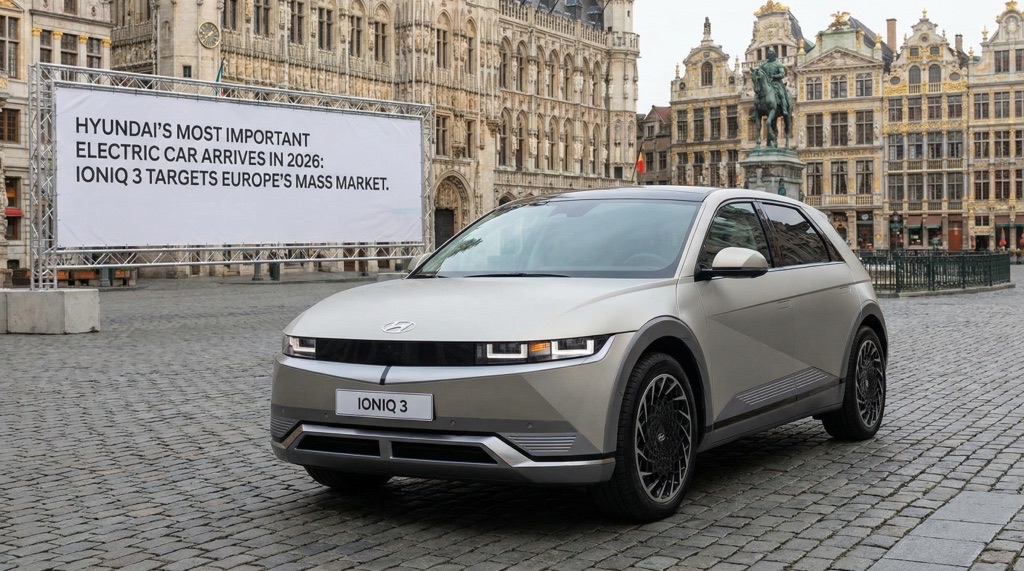
Hyundai’s Most Important Electric Car Arrives in 2026: Ioniq 3 Targets Europe’s Mass Market
A Strategic EV Launch for a Changing Market In 2026, Hyundai will introduce the Hyundai Ioniq 3, a new electric...
 Cars
Cars
Audi’s New Electric Roadster Concept C: The Future of Sports Cars Is Electric
Audi has officially unveiled its new electric roadster, the Audi Concept C, and it’s everything fans of the brand have...
 Cars
Cars
2026 Subaru Trailseeker Debuts With 280 Miles of Range and a $39,995 Starting Price
Subaru has officially revealed full pricing and performance details for the 2026 Subaru Trailseeker, the brand’s long-awaited electric alternative to...
Storage is practical rather than generous: 320 litres of boot space expands to 1043 litres with the rear seats folded, while a 52-litre frunk provides additional storage. These figures are typical for compact hatchbacks and won’t surprise buyers familiar with the current ASX.
Design elements like the floating centre console, layered interior trim, and unusually-shaped steering wheel suggest Mitsubishi is targeting a younger, tech-savvy demographic. However, without seeing the actual interior, it’s unclear whether these design choices enhance usability or prioritise aesthetics over function.
The Naming Question: ASX VR-e vs. ASX GT-e
Mitsubishi Australia has filed trademark applications for both ‘ASX GT-e’ and ‘ASX VR-e’ nameplates, with the latter appearing to be the stronger candidate. The VR designation carries significant heritage—it adorned the high-performance Galant VR-4 and GTO, models that defined Mitsubishi’s performance credentials in the 1980s and 1990s. Reviving this badge for an electric hatchback represents a deliberate attempt to connect the new model to Mitsubishi’s rally racing legacy.
If both names proceed to production, the likely scenario is ASX VR-e for the dual-motor performance variant and ASX GT-e for the single-motor model. This naming strategy would mirror how other manufacturers differentiate their lineups—think BMW’s M designation or Mercedes-AMG branding. However, Mitsubishi has not confirmed this approach, and the final decision remains pending.
Competitive Positioning: Where the Bria Fits
| Model | Power (kW) | 0-100km/h | Range (km) | Battery (kWh) |
|---|---|---|---|---|
| Mitsubishi ASX VR-e (dual-motor) | 299 | 3.9s | 466 | 57.7 |
| Tesla Model 3 Performance | 346 | 3.1s | 547 | 75 |
| BYD Atto 3 (dual-motor) | 300 | 3.9s | 480 | 60 |
| Mitsubishi ASX GT-e (single-motor) | 171 | 6.8s | 516 | 57.7 |
The dual-motor variant’s 299kW output and 3.9-second acceleration place it directly alongside the BYD Atto 3 dual-motor and within striking distance of the Tesla Model 3 Performance. However, the Bria’s 466km range is notably shorter than the Model 3’s 547km, suggesting either a more conservative battery capacity or higher energy consumption. The single-motor variant’s 516km range is impressive for a 171kW powertrain, indicating efficient drivetrain design.
Pricing remains unconfirmed for the Australian market, but the Taiwanese Foxtron Bria’s positioning suggests the ASX VR-e will likely compete in the $50,000-$65,000 AUD range, positioning it above mainstream EVs like the MG4 but below premium offerings like the Tesla Model 3.
Unanswered Questions and Market Implications
Several critical details remain unconfirmed. Mitsubishi has not disclosed Australian pricing, exact variant availability, or the final badging decision. The NEDC range figure for the single-motor (516km) uses an outdated testing standard; WLTP figures would provide more realistic real-world expectations. Additionally, details about warranty, charging network partnerships, and after-sales support are absent.
The choice of LFP chemistry is noteworthy but raises questions about cold-weather performance—LFP batteries typically suffer greater range loss in freezing conditions compared to NCA alternatives. For Australian buyers, this is less critical than for northern hemisphere markets, but it’s worth monitoring.
The arrival of the ASX VR-e represents Mitsubishi’s commitment to the EV transition after years of focusing on hybrid and plug-in hybrid technology. The dual-motor variant’s performance credentials are genuine, and the single-motor’s range efficiency is competitive. However, success will depend on pricing, charging infrastructure support, and whether the VR-e badge resonates with buyers seeking to connect with Mitsubishi’s performance heritage.
Verdict: A Credible EV Contender with Heritage Appeal
The Mitsubishi ASX VR-e (or GT-e) represents a calculated entry into the mass-market EV segment. The dual-motor variant delivers legitimate supercar-embarrassing acceleration at what should be an accessible price point, while the single-motor option prioritises practicality and range. The LFP battery choice reflects pragmatism over marketing hype, and the tech-forward interior suggests Mitsubishi understands what 2026 buyers expect. This vehicle is for buyers who value performance credentials and heritage badging alongside EV practicality—those who want their electric hatchback to feel like more than just a compliance exercise. The critical test arrives in H2 2026 when Australian pricing and final specifications are revealed.