
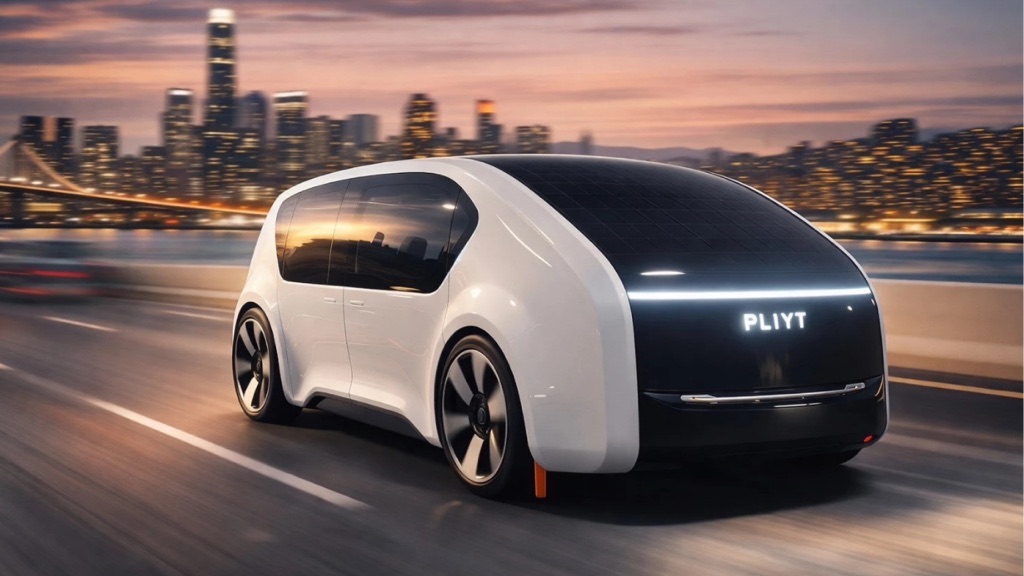
Pliyt unveiled a four-pod electric vehicle concept at CES 2026 designed for shared autonomous rides without passenger interaction. This California startup’s modular design offers independent private capsules, addressing common complaints in ridesharing like unwanted conversations and shared odors. EV enthusiasts should note this as it rethinks urban mobility for personal comfort amid growing robotaxi competition.
Background: Pliyt Enters a Crowded Robotaxi Market
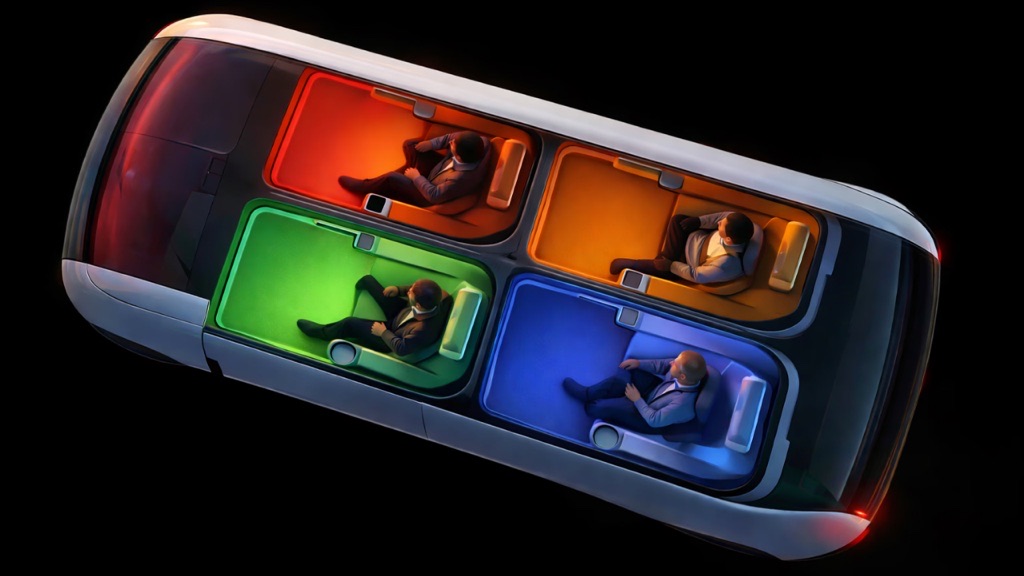
Pliyt, a new entrant from California, debuted its introvert-focused taxi concept at CES 2026, positioning itself against established players like Waymo and Amazon’s Zoox. The company’s pitch—“shared transport for introverts”—targets users frustrated with traditional rideshares, where passengers endure small talk or odors from strangers. Unlike competitors’ open cabins, Pliyt’s vehicle divides into four sealed pods, each with its own door and atmosphere.
While Pliyt lacks a public company history or prior products, it operates in a maturing EV robotaxi space. Uber, for instance, partnered with Lucid and Nuro for a robotaxi launching in San Francisco’s Bay Area in late 2026, using modified Lucid Gravity SUVs with Nuro’s autonomous tech. Pliyt admits it has no self-driving system yet and seeks partners, placing it early in development compared to these rivals.



Key Specifications
Details on powertrain, range, and performance remain unconfirmed, as Pliyt released no spec sheet at CES 2026. The company is in the engineering validation phase, focusing on pod structure over propulsion.
| Feature | Details |
|---|---|
| Configuration | 4 independent modular pods |
| Privacy | One-way glass windows; optional lowerable dividing window between pods |
| Seating | Zero-gravity seating (neutral spine posture) |
| Entertainment | Personalized screens for gaming/streaming |
| Workstation | Retractable with a large screen and a side table |
| Autonomy | Details not yet confirmed; seeking partners |
| Timeline | Pilot vehicle targeted for 2028 |
| Battery/Range | Details not yet confirmed |
| Motor Output | Details not yet confirmed |
Design Analysis: Modular Privacy Redefines Ridesharing
The core innovation is the modular chassis built around four private pods, not retrofitted dividers. Each pod provides a sealed environment with individual doors, preventing shared air or eye contact—ideal for avoiding tuna sandwiches or weather chats. One-way glass lets passengers view traffic without visibility from outside, enhancing the sense of isolation.
 Cars
Cars
French Style Meets the Electric Future in the New Peugeot 408
Peugeot Reinvents the Family Car With a Fastback EV With the new Peugeot 408, the French brand is making a...
 Cars
Cars
Chery Exeed Liefeng: 1500 km Range on Solid-State Battery at -30°C in 2026
Chery’s Exeed Liefeng shooting brake will launch in 2026 with a Rhino S solid-state battery delivering 1,500 km range even...
 News
News
Gotion Finalizes 2GWh Solid-State Battery Line Design: 350 Wh/kg Density Targets 2026 EV Integration
Gotion High-Tech has completed design work on its first 2GWh all-solid-state battery production line, achieving a cell energy density of...
Pods include distractions to fill ride time: integrated screens for streaming or gaming, and a retractable workstation for productivity. Seating uses zero-gravity technology, aiming to reduce spinal stress via a neutral posture, though real-world comfort is untested. An optional interior dividing window allows social interaction if desired, offering flexibility without mandating it.
Development Status: Concept Stage with Hurdles Ahead
Pliyt’s concept skips technical details like battery capacity, motor power, or 0-60 times, raising vaporware concerns. The startup seeks investors for a 2028 pilot and autonomous partners, as it currently lacks self-driving tech. In robotaxi timelines, 2028 aligns with cautious projections, but delays are common—full self-driving has been “one year away” for over a decade.
This pod-focused approach suits urban shared rides, but questions persist: How will pods handle charging, cleaning, or emergencies? Scalability in dense cities and regulatory approval for modular chassis add risks. Still, it taps into demand for mood-centric transport in an EV market shifting toward passenger experience.


Technical and Market Challenges
Without specs, assessing viability is tough. Competitors provide more data: Uber’s robotaxi uses lidar, radar, cameras, and a roof halo for sensors, accommodating six passengers with interactive displays. Pliyt’s silence on EV fundamentals like range limits comparisons, especially as batteries remain a bottleneck in mobility EVs.
Market fit targets introverts in rideshare-heavy cities, but adoption hinges on partnerships. If Pliyt secures Waymo-like autonomy, its privacy edge could differentiate it; otherwise, it risks fading like CES concepts past.
Comparison: Pliyt vs. Uber, Zoox, and Waymo
| Aspect | Pliyt (Concept) | Uber/Lucid/Nuro (2026 Launch) | Zoox/Waymo |
|---|---|---|---|
| Seating Capacity | 4 private pods | 6 passengers, open cabin | Open cabin (4-6 est.) |
| Privacy | Full pod isolation, one-way glass | Shared space, individual controls | Shared space |
| Autonomy Status | Seeking partners, 2028 pilot | Nuro Driver, late 2026 deploy | Operational |
| Key Features | Zero-gravity seats, workstation | Sensor halo, path display | Battery-focused pods |
| EV Specs | Details not confirmed | Lucid Gravity base | Unspecified |
Pliyt stands out for privacy but trails in readiness. Uber’s model hits the streets sooner with proven partners, while Zoox emphasizes compact shared rides without Pliyt’s isolation.
Verdict: Promising Concept for Privacy-Seeking Urban Riders
Pliyt’s 4-pod taxi concept innovates on passenger mood over raw specs, suiting introverted commuters in dense cities who value solitude in shared EVs. It’s best for venture watchers and rideshare users tired of interactions, but skeptics should wait for the 2028 pilot proof—current lack of powertrain details and autonomy leaves execution uncertain. In a field with Uber’s near-term launches, Pliyt needs partners fast to compete.