


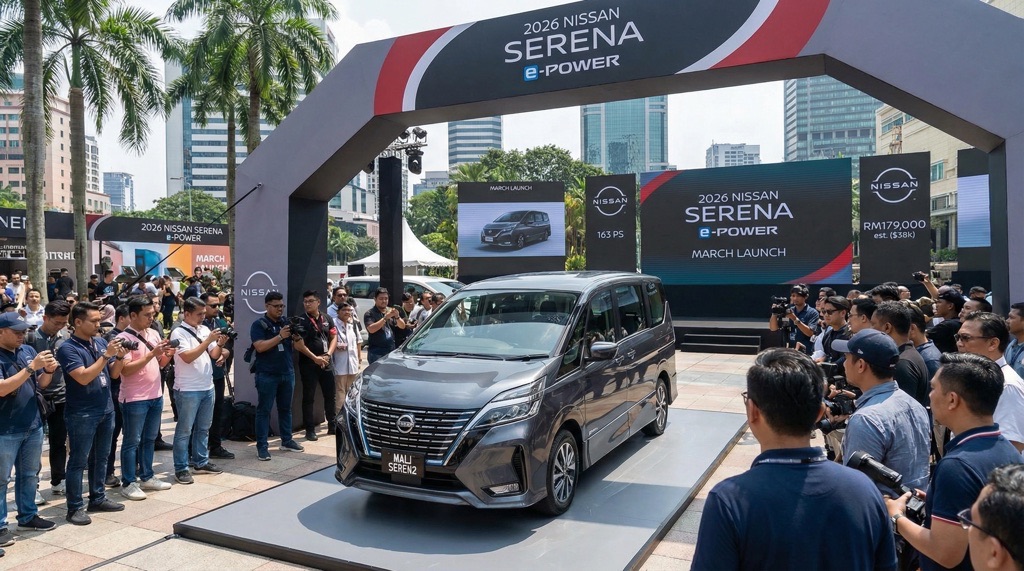
Edaran Tan Chong Motor (ETCM) will launch the sixth-generation C28 Nissan Serena e-Power in Malaysia in early March 2026, with full specifications now revealed for the sole Premium Highway Star trim. Priced at an estimated $38,000-$43,000, this locally assembled seven-seater MPV has already secured 400 bookings, signaling strong demand for its series hybrid powertrain that pairs a 1.4L generator engine with a 163 PS electric motor.
Family buyers seeking efficient, tech-loaded people movers should note this model’s no-plug-in e-Power system, which claims 18.5 km/L fuel economy and up to 1,000 km range on a full tank, positioning it as Nissan’s second e-Power offering after the Kicks in Malaysia.
ETCM and Nissan’s MPV Legacy in Malaysia
Edaran Tan Chong Motor (ETCM), Nissan’s Malaysian distributor, has a long history with the Serena nameplate, previously offering it with 2.0L petrol and S-Hybrid setups. The C28 marks a shift to full e-Power hybridization, ditching the S-Hybrid variant entirely as ETCM views e-Power as the superior evolution. Previewed in December 2025, production delays stemmed from CKD retooling at the Serendah plant to accommodate the new powertrain.
Nissan holds a solid position in Malaysia’s MPV segment, competing against Toyota Innova and Honda Stepwgn imports. With 400 pre-launch bookings reported by ETCM executive VP Christopher Tan, the Serena e-Power demonstrates robust interest despite no official pricing or variant confirmations yet. ETCM plans a full reveal at launch, potentially introducing more trims beyond the detailed Premium Highway Star.
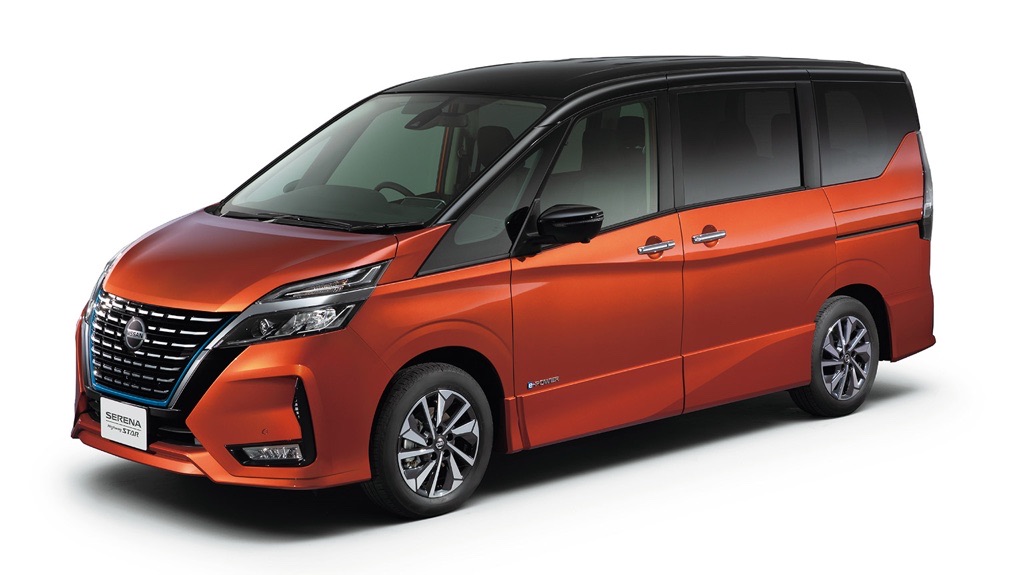
Key Specifications
| Category | Specification |
|---|---|
| Powertrain | HR14DDe 1.4L 3-cyl petrol generator (98 PS/123 Nm); 1.77 kWh Li-ion battery; EM57 electric motor (163 PS/315 Nm, front-wheel drive) |
| Fuel Economy | 18.5 km/L (NEDC); up to 1,000 km range on 52L tank |
| Dimensions | Details not yet confirmed (Japanese C28: ~4,690 mm L x 1,695 mm W x 1,870 mm H) |
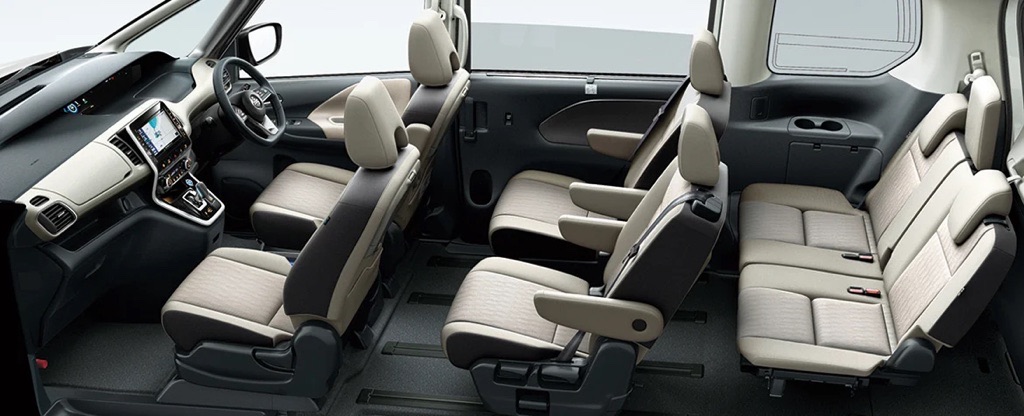
| Seating | 7-seater (2-2-3 layout); 13 configurations; zero-gravity front/second-row seats; USB-C ports for all |
| Infotainment | Dual 12.3-inch displays (digital cluster + NissanConnect with wireless AA/CP); rear 14-inch ceiling monitor |
| Safety/Assist | 6 airbags; ProPILOT (ACC, lane centering, blind spot intervention); FCW, AEB, BSW, RCTA, high beam assist, around view monitor |
| Exterior | Tri-beam LED headlights/DRLs/fog lamps; 16-inch wheels (205/65R16); colors: Diamond Black (mono), Turquoise Blue/Brilliant White/Dark Metal Grey (two-tone black roof) |
| Interior | Black Nappa leather; keyless entry/start; e-parking brake w/auto hold; power sliding doors; second-row tray tables |
| Warranty | 5 years/100,000 km vehicle; 8 years/160,000 km e-Power components |
| Price (est.) | $38,000-$43,000 (RM160k-RM180k) |
| Assembly | CKD in Serendah, Malaysia |
Powertrain and Efficiency Analysis
The e-Power system’s hallmark is its series hybrid setup: a 1.4L inline-three engine (98 PS/123 Nm) runs solely as a generator to charge the underfloor 1.77 kWh lithium-ion battery, which feeds a 163 PS (161 hp)/315 Nm electric motor directly driving the front wheels. No transmission links engine to wheels, enabling instant torque and modes like Eco, Standard, Sport, B-mode regen, and e-Pedal one-pedal driving.
 Cars
Cars
CATL’s 45 kWh Sodium-Ion Battery Retains 90% Capacity at -40°C, Enabling Cold-Climate Electric Trucks
CATL has launched the Tectrans II series, including the industry’s first mass-produced 45 kWh sodium-ion battery for light commercial vehicles....
 Cars
Cars
2027 Acura RSX: Price, Specs, Performance, and Full Overview
Acura Unveils Its First In-House Electric SUV-Coupe on Honda’s New EV Platform The 2027 Acura RSX has officially been revealed...
 Cars
Cars
China Names the Best Electric Car for Winter Driving — Tesla Finishes Only Fourth
China’s largest-ever winter test of electric vehicles has delivered surprising results, reshaping perceptions of how EVs perform in extreme cold....
Nissan claims 18.5 km/L (NEDC) efficiency, translating to roughly 1,000 km on the 52L tank—impressive for a seven-seater, though real-world Malaysian conditions (traffic, heat) may vary. Motion sickness mitigation includes front air curtains and SUV-like suspension with 20% stiffer stabilizers. Drive modes adjust regen braking, but exact WLTP figures remain undisclosed for local relevance.
Interior, Safety, and Practicality Breakdown
The cabin features dual 12.3-inch screens, wireless Android Auto/Apple CarPlay, and a 14-inch rear entertainment screen, paired with an electronic parking brake and auto hold. The 2-2-3 seating offers zero-gravity comfort in first/second rows (ISOFIX on second), 50:50 third-row folds, and 13 configurations with USB-C everywhere—ideal for families.
Safety is comprehensive: six airbags, around view monitor, and ProPILOT with adaptive cruise, lane centering, and blind spot intervention standard on Premium Highway Star. Power sliding doors and second-row pedals ease third-row access, while Nappa leather and tray tables add luxury. Unanswered: exact boot space with seats up/down, and third-row ISOFIX absence.
Competitor Comparison
| Model | Power | Price (est. USD) | Key Edge | Serena Advantage |
|---|---|---|---|---|
| 2026 Nissan Serena e-Power | 163 PS electric (1.4L hybrid) | $38k-$43k | e-Power efficiency, ProPILOT | – |
| Toyota Innova Zenix HEV | 186 PS hybrid | $40k-$45k | Series-parallel hybrid | Full electric drive, better warranty |
| Honda Stepwgn e: HEV (import) | 184 PS hybrid | $45k-$50k | Spacious, plugless hybrid | Locally assembled (lower price), 400 bookings |
| Perodua Alphard (budget alt.) | 2.5L hybrid | $35k-$40k | Affordable | Premium features, 7 seats w/flexibility |
The Serena undercuts imports like Stepwgn on price via CKD assembly while matching Innova’s hybrid efficiency with unique electric-only propulsion. Lacks Innova’s AWD but gains superior e-Power smoothness and longer powertrain warranty.
Verdict
The 2026 Nissan Serena e-Power Premium Highway Star sets a high bar for Malaysian MPVs at $38,000-$43,000, with its 163 PS electric drive, loaded safety suite, and 400 bookings proving appeal for tech-savvy families prioritizing efficiency over raw power. Ideal for urban commuters needing 7 seats, one-pedal driving, and ProPILOT aids, but wait for launch confirmation on variants, real-world range, and exact pricing—details not yet confirmed could shift value. ETCM’s e-Power push strengthens Nissan’s hybrid lineup, though rivals like Innova may edge in AWD or space metrics.
For the reason that the admin of this site is working, no uncertainty very quickly it will be renowned, due to its quality contents.