Charging is possible by using a regular wall plug or a charging station. Public charging is always done through a charging station. How fast the EV can charge depends on the charging station (EVSE) used and the maximum charging capacity of the EV. The table below shows all possible options for charging the Audi Q6 e-tron. Each option shows how fast the battery can be charged from empty to full.
Europe
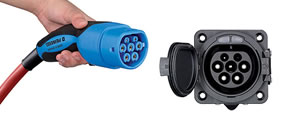
Charging an EV in Europe differs by country. Some European countries primarily use 1-phase connections to the grid, while other countries are almost exclusively using a 3-phase connection. The table below shows all possible ways the Audi Q6 e-tron can be charged, but some modes of charging might not be widely available in certain countries.
Type 2 (Mennekes - IEC 62196)
Charging Point
Max. Power
Power
Time
Rate
Standard 11.0 kW On-Board Charger
Wall Plug (2.3 kW)
230V / 1x10A
2.3 kW
39 hours
10 km/h
1-phase 16A (3.7 kW)
230V / 1x16A
3.7 kW
24h15m
16 km/h
1-phase 32A (7.4 kW)
230V / 1x32A
7.4 kW
12h15m
32 km/h
3-phase 16A (11 kW)
400V / 3x16A
11 kW
8h15m
48 km/h
3-phase 32A (22 kW)
400V / 3x16A
11 kW †
8h15m
48 km/h
Optional 22.0kW On-Board Charger
Wall Plug (2.3 kW)
230V / 1x10A
2.3 kW
39 hours
10 km/h
1-phase 16A (3.7 kW)
230V / 1x16A
3.7 kW
24h15m
16 km/h
1-phase 32A (7.4 kW)
230V / 1x32A
7.4 kW
12h15m
32 km/h
3-phase 16A (11 kW)
400V / 3x16A
11 kW
8h15m
48 km/h
3-phase 32A (22 kW)
400V / 3x32A
22 kW †
4h15m
93 km/h
† = Limited by on-board charger, vehicle cannot charge faster.
Fast Charging (10 -> 80%)
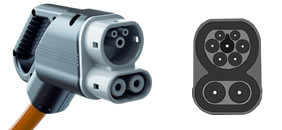
Rapid charging enables longer journeys by adding as much range as possible in the shortest amount of time. Charging power will decrease significantly after 80% state-of-charge has been reached. A typical rapid charge therefore rarely exceeds 80% SoC. The rapid charge rate of an EV depends on the charger used and the maximum charging power the EV can handle. The table below shows all details for rapid charging the Audi Q6 e-tron.
Max. Power: maximum power provided by charge point
Avg. Power: average power provided by charge point over a session from 10% to 80%
Time: time needed to charge from 10% to 80%
Rate: average charging speed over a session from 10% to 80%
Combined Charging System (CCS Combo 2)
Charging Point
Max. Power
Avg. Power
Time
Rate
CCS (50 kW DC)
50 kW
50 kW
67 min
240 km/h
CCS (100 kW DC)
100 kW
90 kW †
37 min
440 km/h
CCS (150 kW DC)
150 kW
115 kW †
29 min
570 km/h
CCS (175 kW DC)
175 kW
125 kW †
27 min
610 km/h
CCS (350 kW DC)
225 kW †
150 kW †
22 min
750 km/h
This vehicle supports Plug & Charge
† = Limited by charging capabilities of vehicle
Plug & Charge: allows for automatic initiation of a charging session at supported CCS charging stations in accordance with ISO 15118.
Actual charging rates may differ from data shown due to factors like outside temperature, state of the battery and driving style.
Audi Claimed Specifications
The table below shows the claimed specifications from the manufacturer for charging the Audi Q6 e-tron. The specifications can differ from the table above for a variety of reasons. If real-world charge tests are available, these differences can be signifcant. If no real-world tests are available, the table above will be based on the manufacturer specifications as per the table below.
Max. Power: maximum charge power during charging session
Charge From: battery percentage (% SoC) where charging session is started
Charge To: battery percentage (% SoC) where charging session is ended
Time: time needed for charging session
Audi Claimed Specifications
Max. Power
Charge From
Charge To
Time
225 kW
10 %
80 %
21 min
Dimensions and Weight
Length
4771 mm
Width
1939 mm
Width with mirrors
2193 mm
Height
1685 mm
Wheelbase
2889 mm
Weight Unladen (EU)
2200 kg
Gross Vehicle Weight (GVWR)
2740 kg
Max. Payload
615 kg
Cargo Volume
526 L
Cargo Volume Max
1517 L
Cargo Volume Frunk
64 L
Roof Load
75 kg
Tow Hitch Possible
Yes
Towing Weight Unbraked
750 kg
Towing Weight Braked
2000 kg
Vertical Load Max
100 kg
About this Vehicle
Audi Q6 e-tron Overview
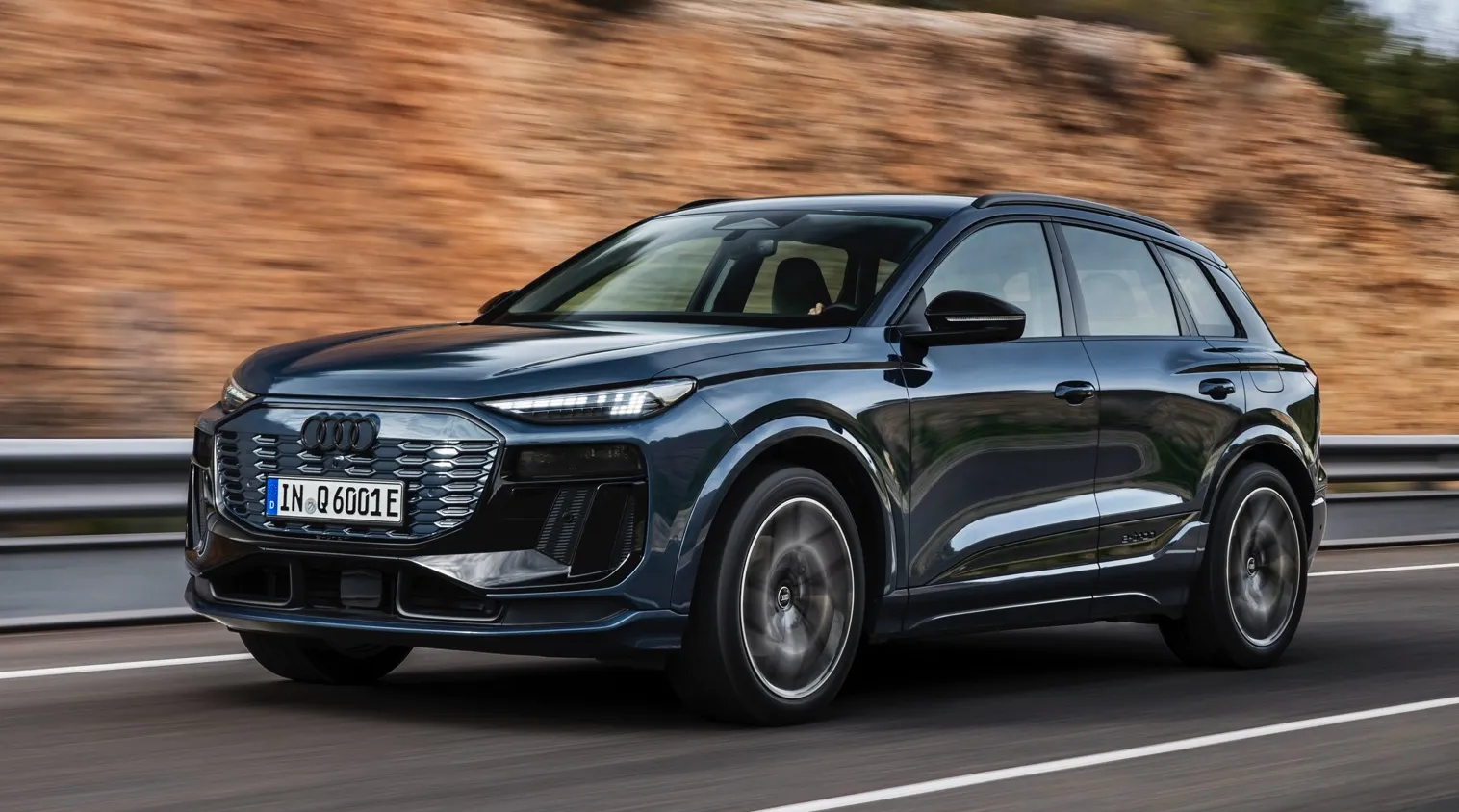
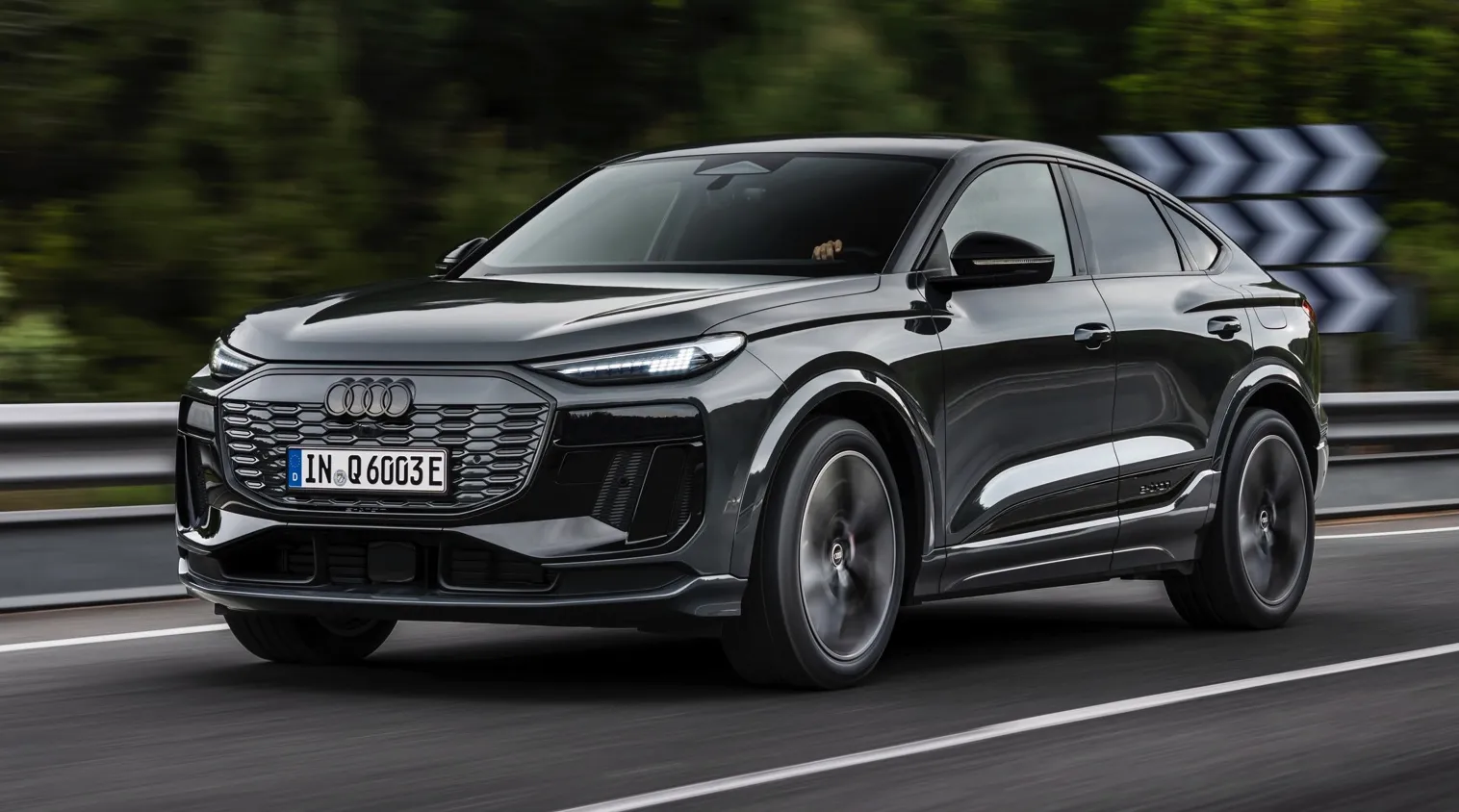
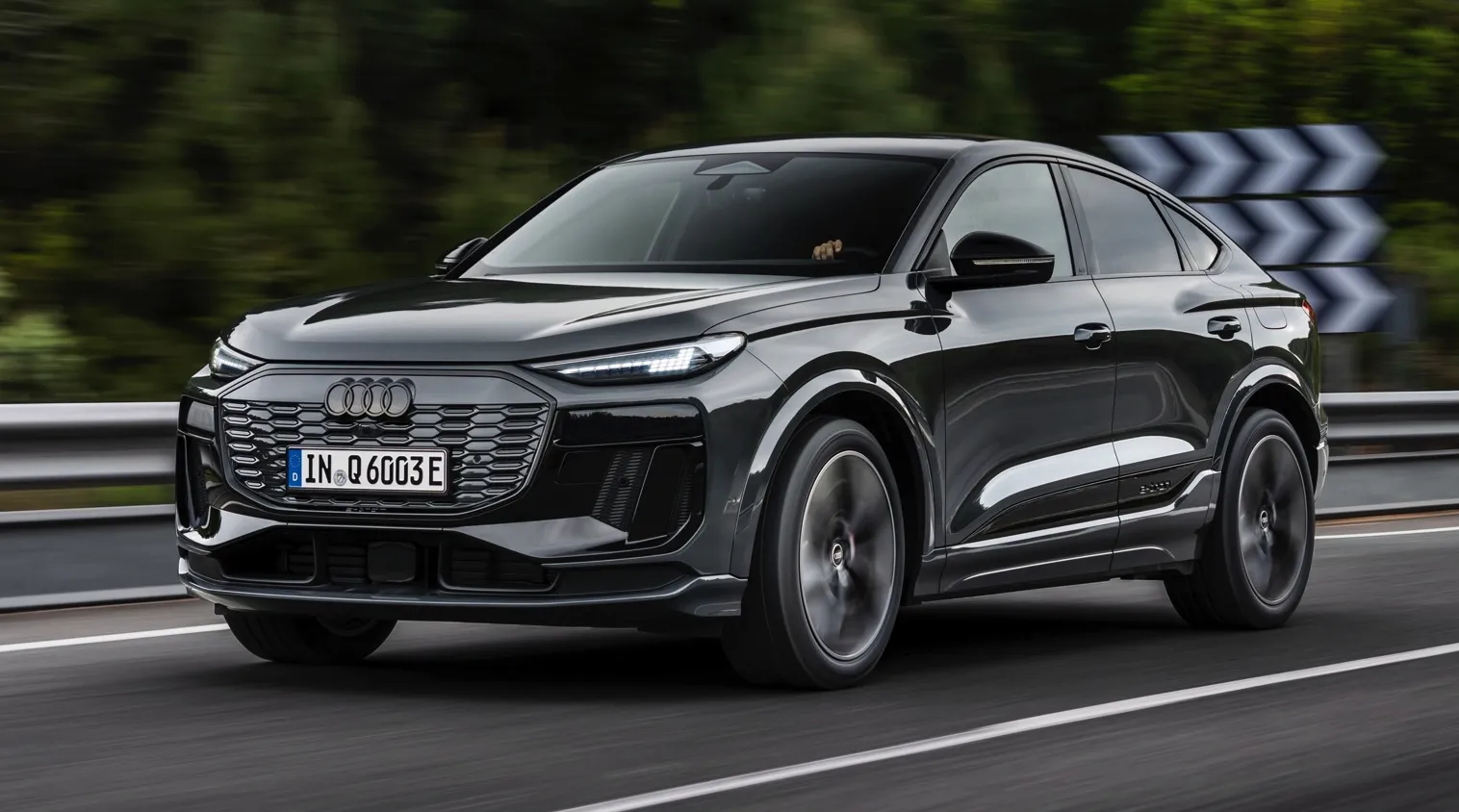
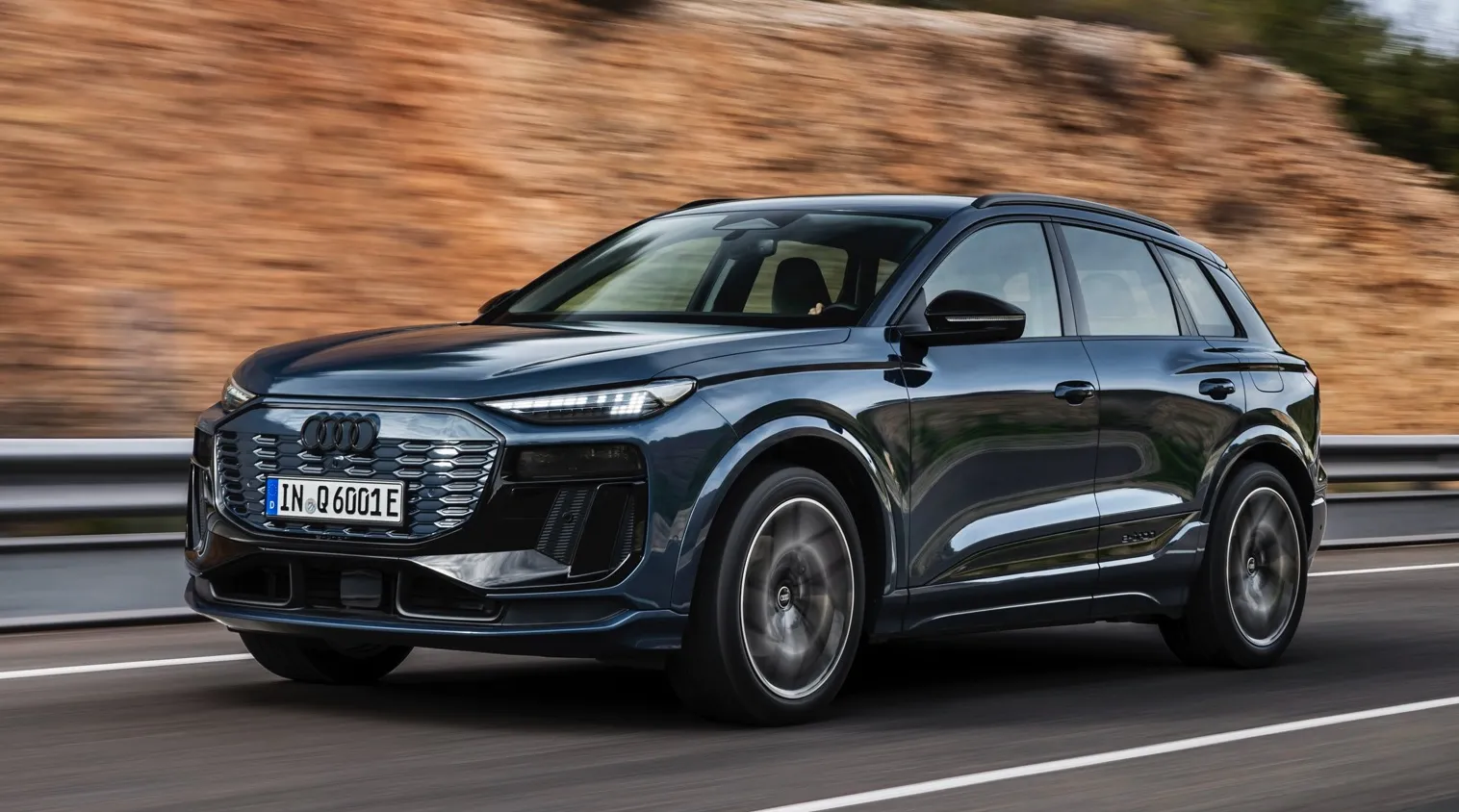
The Audi Q6 e-tron is a premium midsize Audi electric SUV, positioned between the Q4 e-tron and Q8 e-tron as the brand’s new core EV in the family segment. Built on the all-new Premium Platform Electric (PPE) co-developed with Porsche, it targets buyers who want a refined electric family car with long range, advanced tech, and true Audi driving dynamics rather than a purely minimalist EV experience. In the competitive luxury EV SUV market, the Audi Q6 e-tron aims squarely at the Tesla Model Y, BMW iX3/iX, and Mercedes EQE SUV.
This new architecture brings an 800-volt electrical system, fast charging, and a flat-floor packaging that maximizes space, making the Audi Q6 e-tron a highly versatile electric vehicle for daily use and long trips. Highlights include a sophisticated dual-screen “Digital Stage” cockpit, optional augmented reality head-up display, and the latest driver-assistance and connectivity tech. With competitive EV specs, a usable battery capacity of around 95 kWh, and an EPA-estimated range of up to 321 miles in RWD guise, the Q6 e-tron matters because it shows where mainstream Audi electrification is heading. For many buyers, this will be the first “no-compromise” Audi EV that can realistically replace a combustion-powered Q5 or Q7, and that makes every Audi Q6 e-tron review especially important in today’s EV landscape.
Audi Q6 e-tron Performance and Driving Experience
The Audi Q6 e-tron is available with single-motor rear-wheel drive and dual-motor quattro all-wheel drive. The RWD model produces about 322 hp, while the Q6 e-tron quattro delivers 456 hp and brisk acceleration. Audi and independent tests report 0–60 mph in around 6.3 seconds for the single‑motor and about 4.4–4.9 seconds for the quattro, putting it on par with many sporty gas SUVs. Power delivery is linear and smooth, with a strong mid‑range shove for effortless highway passing.
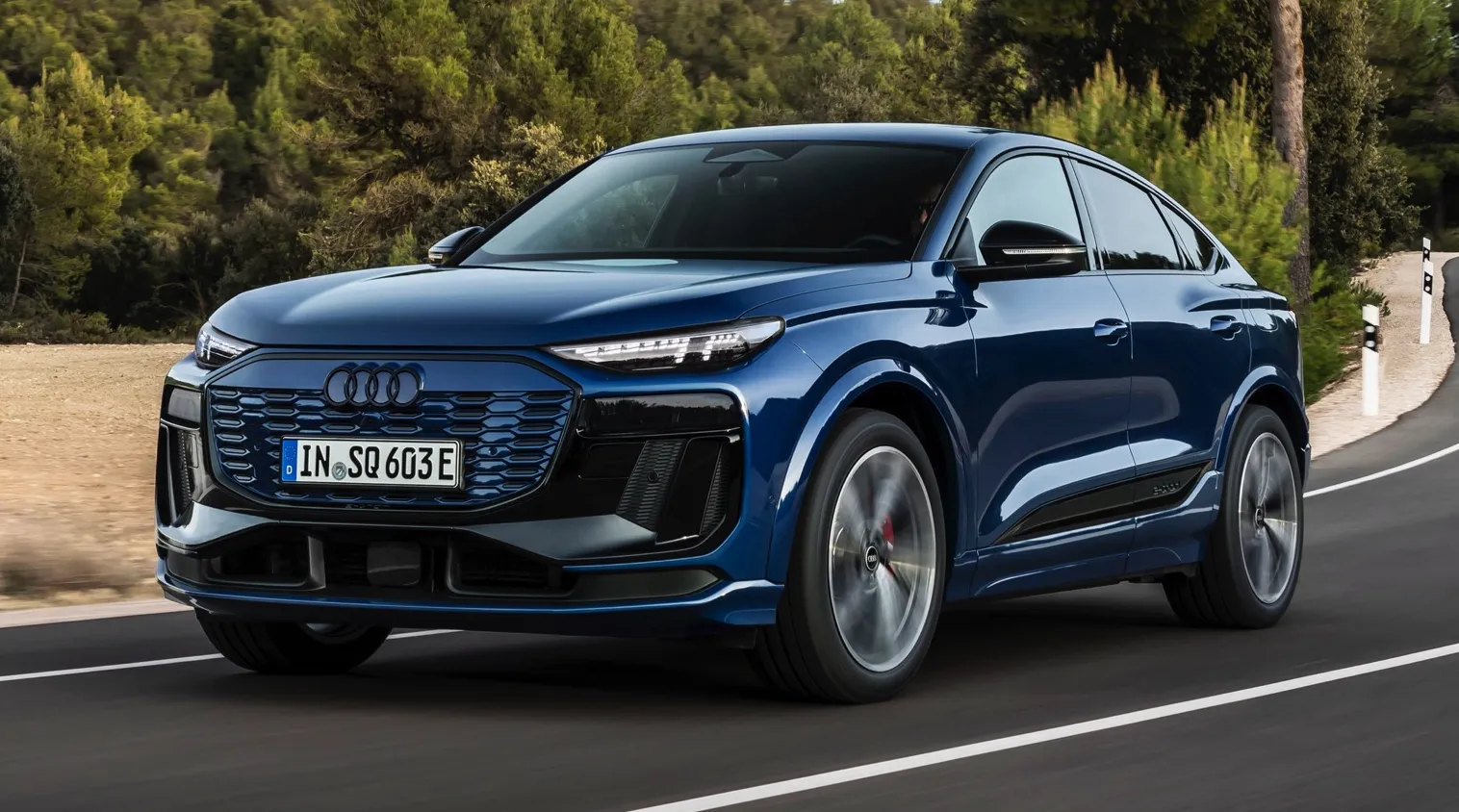
On the road, the Audi Q6 e-tron is tuned for comfort and confidence rather than outright sportiness, with a compliant multilink suspension and precise steering. The PPE platform gives it a low center of gravity, so body roll is well controlled, and the SQ6 variant further sharpens handling with a sportier suspension tune. The dual‑motor quattro setup actively shuffles torque between axles for secure traction in poor weather, while the RWD version feels lighter and more efficient, ideal for urban and suburban driving.
Specification
Value
0-60 mph (0-100 km/h)
6.3–4.4 sec
Top Speed
130 mph / 210 km/h (governed)
Power Output
322–456 hp / 240–340 kW
Torque
up to ~479 lb-ft / ~650 Nm
Audi Q6 e-tron Range and Battery Specifications
The Audi Q6 e-tron battery specs center on a large lithium‑ion pack of about 94–95 kWh usable (100 kWh gross in many markets). Officially, the Q6 e-tron SUV achieves up to around 623 km WLTP range in efficient RWD European configurations and up to 321 miles EPA range for the U.S. single‑motor model. Dual‑motor quattro versions are rated at about 307 miles EPA and roughly 534–623 km WLTP, depending on wheels and trim.
In real use, independent highway testing has seen the Q6 e-tron quattro deliver about 250 miles (402 km) at 75 mph, which is a good indicator of the Audi Q6 e-tron’s real-world range for mixed driving with some margin. Efficiency typically sits in the mid‑to‑high 300 Wh/mile range, influenced by wheel size, temperature, and speed. Cold weather, sustained high‑speed driving, or heavy loads will naturally reduce range, while urban driving and moderate climates can get you closer to WLTP figures. For many drivers, a realistic everyday range window is 240–280 miles for the quattro and 270–300 miles for the RWD model.
Range Metric
Value
WLTP Range
up to ~387 miles / 623 km
EPA Range
307–321 miles / 494–517 km
Real-World Range
~250–290 miles / 402–467 km
Battery Capacity
~94–95 kWh (usable)
Audi Q6 e-tron Charging Times and Options
The Audi Q6 e-tron leverages its 800‑volt PPE architecture for very fast DC charging. On a suitable high‑power charger, it supports peak DC rates up to about 270 kW, allowing a 10–80% charge in roughly 25–30 minutes in ideal conditions. In independent testing, a 10–90% session has taken about 35 minutes, with an average rate around 129 kW, which is still excellent for real‑world road‑trip use.
At home, the Audi Q6 e-tron uses an onboard AC charger around 9.6–11 kW, suitable for Level 2 charging on a 240V wallbox. This typically means a full charge from empty to 100% in about 9–10 hours, so an overnight top‑up is easy, even from low states of charge. Level 1 (120V) charging is possible but very slow and only practical for emergency or low‑mileage usage. The Q6 e-tron supports common CCS fast‑charging standards (NACS adapters are expected to roll out in some markets), giving access to major public charging networks and making long‑distance travel straightforward.
Charging Method
Time
Speed
Level 1 (120V)
40–50 hours (0–100%)
~1.4 kW
Level 2 (240V/7kW)
12–14 hours (0–100%)
~7 kW
Level 2 (240V/11kW)
8–10 hours (0–100%)
~11 kW
DC Fast Charge (10-80%)
~25–30 min
up to ~270 kW
Audi Q6 e-tron vs Competitors
In Audi Q6 e-tron vs Tesla Model Y comparisons, the Audi typically offers a more premium interior, quieter ride, and faster DC charging, while the Model Y still wins on charging network breadth and some efficiency metrics. Against the BMW iX and Mercedes EQE SUV, the Audi Q6 e-tron slots in with slightly more agile driving dynamics and a more modern PPE-based electrical architecture, though the BMW offers a roomier cabin and the Mercedes emphasizes comfort and luxury tech. Compared with mainstream rivals like Hyundai Ioniq 5 and Kia EV6, the Q6 e-tron positions itself as the more upscale, refined option with a traditional Audi feel and superior perceived quality, even if those Korean models can sometimes match or beat it on price-to-range value.
Frequently Asked Questions
In mixed real-world driving, most owners can expect roughly 250–290 miles (402–467 km) of usable range from the Audi Q6 e-tron, depending on drivetrain, wheel size, weather and driving style. Highway-only driving at higher speeds tends to land around 250 miles for the quattro model.
On a typical Level 2 home charger (11 kW), a full 0–100% charge takes about 8–10 hours, ideal for overnight charging. At a high-power DC fast charger, the Audi Q6 e-tron can go from 10–80% in roughly 25–30 minutes, making long trips practical with brief stops.
The Audi Q6 e-tron is available in both rear-wheel-drive (single-motor) and quattro all-wheel-drive (dual-motor) versions. The RWD variant prioritizes efficiency and range, while the quattro adds a second front motor for improved traction and quicker acceleration.
The Premium Platform Electric (PPE) is Audi’s new dedicated EV architecture co-developed with Porsche. It uses an 800‑volt system for ultra-fast charging, a flat battery floor for better packaging, and scalable components that will underpin many future Audi electric SUVs and sedans.
Compared with the Tesla Model Y, the Audi Q6 e-tron typically offers a more luxurious cabin, higher material quality, and quieter ride, as well as very competitive DC fast-charging speeds. The Model Y counters with a more extensive charging network and slightly better efficiency, especially on highway drives.
Yes, the Audi Q6 e-tron is a strong all-round electric SUV, with a long range, rapid charging, refined driving manners, and a high-tech interior. Its main downsides are a premium price and, in some markets, slightly less cargo space than boxier rivals, but overall it is one of the most complete luxury EVs in its class.> The Audi Q6 e-tron is a premium midsize electric SUV from Audi built on the new PPE platform, offering up to around 321 miles of range, 456 hp in quattro trim, and 270 kW DC fast charging. With its refined interior, fast charging, and balanced performance, the Audi Q6 e-tron stands out as a compelling alternative to the Tesla Model Y, BMW iX, and Mercedes EQE SUV in the luxury EV space.


 Audi
Audi
 Audi
Audi
 Audi
Audi
 Audi
Audi