

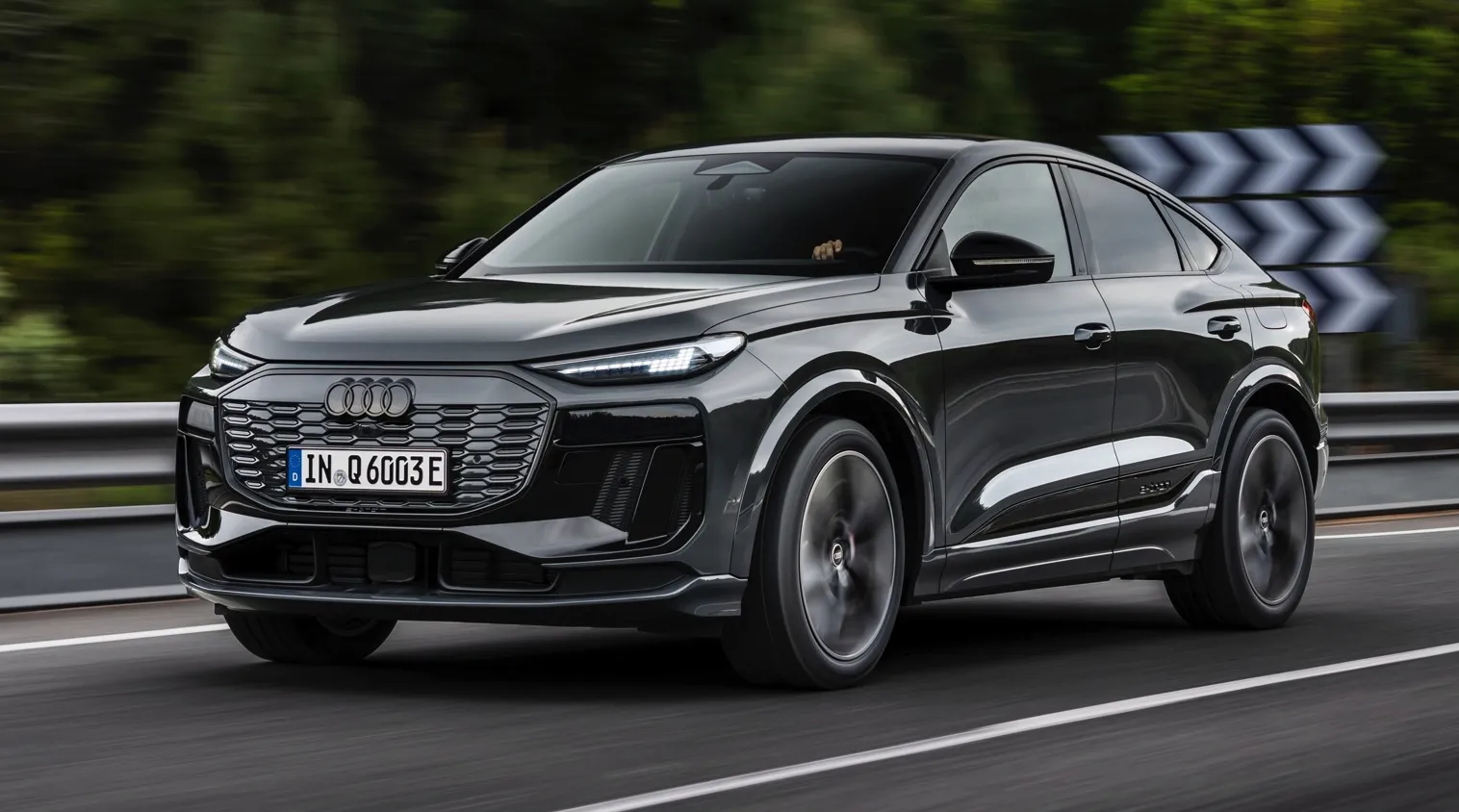
Audi Q6 e-tron Sportback performance
Key Specifications
Real Range Estimation
| City - Cold Weather * | 500 km |
| Highway - Cold Weather * | 365 km |
| Combined - Cold Weather * | 430 km |
between 365 - 740 km
| City - Mild Weather * | 740 km |
| Highway - Mild Weather * | 470 km |
| Combined - Mild Weather * | 585 km |
Battery
| Nominal Capacity | 100.0 kWh |
| Battery Type | Lithium-ion |
| Number of Cells | 180 |
| Architecture | 800 V |
| Warranty Period | No Data |
| Warranty Mileage | No Data |
| Useable Capacity | 94.9 kWh |
| Cathode Material | NCM811 |
| Pack Configuration | 180s1p |
| Nominal Voltage | No Data |
| Form Factor | Prismatic |
| Name / Reference | No Data |
Performance
| Acceleration 0 - 100 km/h | 6.6 sec |
| Top Speed | 210 km/h |
| Electric Range * | 510 km |
| Total Power | 240 kW (326 PS) |
| Total Torque | 485 Nm |
| Drive | Rear |
Home and Destination Charging (0 -> 100%)
Charging is possible by using a regular wall plug or a charging station. Public charging is always done through a charging station. How fast the EV can charge depends on the charging station (EVSE) used and the maximum charging capacity of the EV. The table below shows all possible options for charging the Audi Q6 e-tron Sportback performance. Each option shows how fast the battery can be charged from empty to full.
Europe
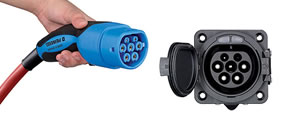
Charging an EV in Europe differs by country. Some European countries primarily use 1-phase connections to the grid, while other countries are almost exclusively using a 3-phase connection. The table below shows all possible ways the Audi Q6 e-tron Sportback performance can be charged, but some modes of charging might not be widely available in certain countries.
| Type 2 (Mennekes - IEC 62196) |
|---|
 |
| Charging Point | Max. Power | Power | Time | Rate |
|---|---|---|---|---|
| Standard 11.0 kW On-Board Charger | ||||
| Wall Plug (2.3 kW) | 230V / 1x10A | 2.3 kW | 48h45m | 10 km/h |
| 1-phase 16A (3.7 kW) | 230V / 1x16A | 3.7 kW | 30h15m | 17 km/h |
| 1-phase 32A (7.4 kW) | 230V / 1x32A | 7.4 kW | 15h15m | 33 km/h |
| 3-phase 16A (11 kW) | 400V / 3x16A | 11 kW | 10h15m | 50 km/h |
| 3-phase 32A (22 kW) | 400V / 3x16A | 11 kW † | 10h15m | 50 km/h |
| Optional 22.0kW On-Board Charger | ||||
| Wall Plug (2.3 kW) | 230V / 1x10A | 2.3 kW | 48h45m | 10 km/h |
| 1-phase 16A (3.7 kW) | 230V / 1x16A | 3.7 kW | 30h15m | 17 km/h |
| 1-phase 32A (7.4 kW) | 230V / 1x32A | 7.4 kW | 15h15m | 33 km/h |
| 3-phase 16A (11 kW) | 400V / 3x16A | 11 kW | 10h15m | 50 km/h |
| 3-phase 32A (22 kW) | 400V / 3x32A | 22 kW † | 5h15m | 97 km/h |
† = Limited by on-board charger, vehicle cannot charge faster.
Fast Charging (10 -> 80%)
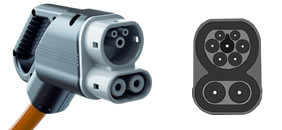
Rapid charging enables longer journeys by adding as much range as possible in the shortest amount of time. Charging power will decrease significantly after 80% state-of-charge has been reached. A typical rapid charge therefore rarely exceeds 80% SoC. The rapid charge rate of an EV depends on the charger used and the maximum charging power the EV can handle. The table below shows all details for rapid charging the Audi Q6 e-tron Sportback performance.
- Max. Power: maximum power provided by charge point
- Avg. Power: average power provided by charge point over a session from 10% to 80%
- Time: time needed to charge from 10% to 80%
- Rate: average charging speed over a session from 10% to 80%
| Combined Charging System (CCS Combo 2) |
|---|
 |
| Charging Point | Max. Power | Avg. Power | Time | Rate |
|---|---|---|---|---|
| CCS (50 kW DC) | 50 kW | 50 kW | 84 min | 250 km/h |
| CCS (100 kW DC) | 100 kW | 90 kW † | 47 min | 450 km/h |
| CCS (150 kW DC) | 150 kW | 125 kW † | 34 min | 630 km/h |
| CCS (175 kW DC) | 175 kW | 140 kW † | 30 min | 710 km/h |
| CCS (350 kW DC) | 260 kW † | 190 kW † | 22 min | 970 km/h |
| This vehicle supports Plug & Charge |
|---|
† = Limited by charging capabilities of vehicle
Plug & Charge: allows for automatic initiation of a charging session at supported CCS charging stations in accordance with ISO 15118.
Actual charging rates may differ from data shown due to factors like outside temperature, state of the battery and driving style.
Audi Claimed Specifications
The table below shows the claimed specifications from the manufacturer for charging the Audi Q6 e-tron Sportback performance. The specifications can differ from the table above for a variety of reasons. If real-world charge tests are available, these differences can be signifcant. If no real-world tests are available, the table above will be based on the manufacturer specifications as per the table below.
- Max. Power: maximum charge power during charging session
- Charge From: battery percentage (% SoC) where charging session is started
- Charge To: battery percentage (% SoC) where charging session is ended
- Time: time needed for charging session
| Audi Claimed Specifications |
|---|
| Max. Power | Charge From | Charge To | Time |
|---|---|---|---|
| 260 kW | 10 % | 80 % | 22 min |
Dimensions and Weight
| Length | 4771 mm |
| Width | 1939 mm |
| Width with mirrors | 2193 mm |
| Height | 1665 mm |
| Wheelbase | 2889 mm |
| Weight Unladen (EU) * | 2250 kg |
| Gross Vehicle Weight (GVWR) | No Data |
| Max. Payload | No Data |
| Cargo Volume | 511 L |
| Cargo Volume Max | 1373 L |
| Cargo Volume Frunk | 64 L |
| Roof Load | 75 kg |
| Tow Hitch Possible | Yes |
| Towing Weight Unbraked | 750 kg |
| Towing Weight Braked | 2000 kg |
| Vertical Load Max | 100 kg |
About this Vehicle
Audi Q6 e-tron Sportback Overview
The Audi Q6 e-tron Sportback positions itself as a premium midsize Audi electric SUV with a sleeker, coupe-style roofline aimed at style-conscious EV buyers who do not want to sacrifice practicality. Building on the new Premium Platform Electric (PPE), it sits between the Q4 and Q8 in Audi’s lineup and targets families and professionals stepping up from compact EVs into a more luxurious, tech-forward crossover.
Audi’s design philosophy shines here: the Q6 e-tron Sportback combines a low-drag silhouette with a wide stance, advanced matrix LED lighting, and a minimalist, high-tech interior built around a large curved display and AR head-up options. According to Audi, the Sportback’s aerodynamics make it the range champion of the Q6 lineup, with up to 656 km WLTP in certain trims, giving it a strong headline figure in any Audi Q6 e-tron Sportback review. This model matters in the EV landscape because it debuts PPE for Audi, brings 800‑volt fast charging to the brand’s core segment, and delivers highly competitive EV specs in range, charging, and performance against rivals like the Tesla Model Y and BMW iX.
—
Audi Q6 e-tron Sportback Performance and Driving Experience
The Q6 Sportback e-tron launches primarily with dual‑motor quattro all‑wheel drive, using an asynchronous front motor and a permanently excited synchronous rear motor for rear-biased torque distribution and strong traction. Audi cites up to 422 hp in the standard Q6 Sportback e-tron and up to 483 hp in the SQ6 Sportback e-tron in nominal mode, with even higher output available in boost, translating to brisk real‑world acceleration and confident passing performance. Steering software and a new front axle design aim to deliver precise feedback and agility, while the low battery placement keeps the center of gravity down for planted cornering.
Independent testing of the closely related Q6 e-tron quattro shows 0–60 mph around 4.4 seconds and a governed top speed of 130 mph, giving a good indicator of what the Q6 e-tron Sportback performance variant can achieve. The Sportback retains everyday comfort, with a suspension tune that balances compliance and body control, making it equally suitable for highway cruising and twisty back roads.
| Specification | Value |
|---|---|
| 0-60 mph (0-100 km/h) | ~4.4 sec (quattro/Sportback estimate) |
| Top Speed | 130 mph / 210 km/h (Q6 Sportback e-tron), 143 mph / 230 km/h (SQ6 Sportback) |
| Power Output | up to 422 hp / 315 kW (Q6 Sportback), up to 483 hp / 360 kW (SQ6 Sportback nominal) |
| Torque | Approx. 600+ Nm combined (model dependent) |
Audi Q6 e-tron Sportback Range and Battery Specifications
Audi equips the Q6 e-tron Sportback with a large 100 kWh battery (94.4 kWh net) in dual‑motor quattro versions, while some markets also get a smaller 83 kWh pack in rear‑drive variants. On PPE, efficiency is a major focus: Audi quotes combined electric consumption from around 18.9 to 16.6 kWh/100 km for the quattro Sportback, with a WLTP range figure of up to 656 km (about 408 miles) for the most efficient configurations.
For U.S. buyers, Audi expects the Q6 Sportback e-tron WLTP range to translate to an EPA estimate similar to the Q6 e-tron quattro, around 300 miles on a charge, with real‑world range commonly landing slightly below that depending on conditions. In European testing, the Q6 Sportback e-tron quattro is rated at up to 569 km WLTP, and independent reviews have measured energy consumption around 19.2 kWh/100 km in mixed driving, indicating strong efficiency for a midsize premium SUV. As with any EV, the Q6 e-tron Sportback’s real-world range will vary with motorway speeds, cold weather, elevation changes, and driving style.
| Range Metric | Value |
|---|---|
| WLTP Range | up to 408 miles / 656 km (best-case trims) |
| EPA Range | ~300 miles / ~483 km (Audi expectation, final EPA TBA) |
| Real-World Range | ~260–310 miles / ~420–500 km (depending on use) |
| Battery Capacity | 94.4 kWh (usable) on 100 kWh pack |
—
Audi Q6 e-tron Sportback Charging Times and Options
Home charging for the Audi Q6 e-tron Sportback is straightforward. With an AC onboard charger of around 9.6–11 kW, depending on market, a 240V Level 2 wallbox will typically refill the battery from near-empty to full overnight. Level 1 (120V) charging is possible but more of a backup solution due to very slow speeds.
The real headline is DC fast charging on the PPE platform. The Q6 Sportback e-tron supports up to 270 kW on 800‑volt chargers, allowing a 10–80% charge in roughly 30 minutes under optimal conditions. Audi also supports “bank charging,” splitting the pack into two 400‑V halves on lower-voltage fast chargers to maintain strong speeds. In testing on the Q6 e-tron, average DC charging from 10–90% sits around 129 kW over 35 minutes, giving a realistic picture of what owners can expect at high‑power public stations.
| Charging Method | Time | Speed |
|---|---|---|
| Level 1 (120V) | ~40–48 hours (0–100%) | ~1–2 kW |
| Level 2 (240V/7kW) | ~14–16 hours (0–100%) | ~7 kW |
| Level 2 (240V/11kW) | ~9–10 hours (0–100%) | ~11 kW |
| DC Fast Charge (10-80%) | ~30 min | up to 270 kW |
—
Audi Q6 e-tron Sportback vs Competitors
In Audi Q6 e-tron Sportback vs Tesla Model Y comparisons, the Audi delivers a more premium interior, quieter cabin, and faster peak DC charging, while the Model Y often undercuts it on price and offers Tesla’s Supercharger ecosystem. Against the BMW iX and Mercedes EQE SUV, the Audi Q6 e-tron Sportback matches or exceeds their charging tech and competitive range while offering a sportier, coupe-like profile similar to Mercedes’ EQE SUV and BMW’s iX M60 positioning. Compared to the Hyundai Ioniq 5 and Kia EV6, the Q6 Sportback e-tron sits higher on price and luxury but draws on similar 800‑V charging principles, appealing to buyers who want German premium refinement with cutting-edge EV specs.
—
Frequently Asked Questions
Related Vehicles
View All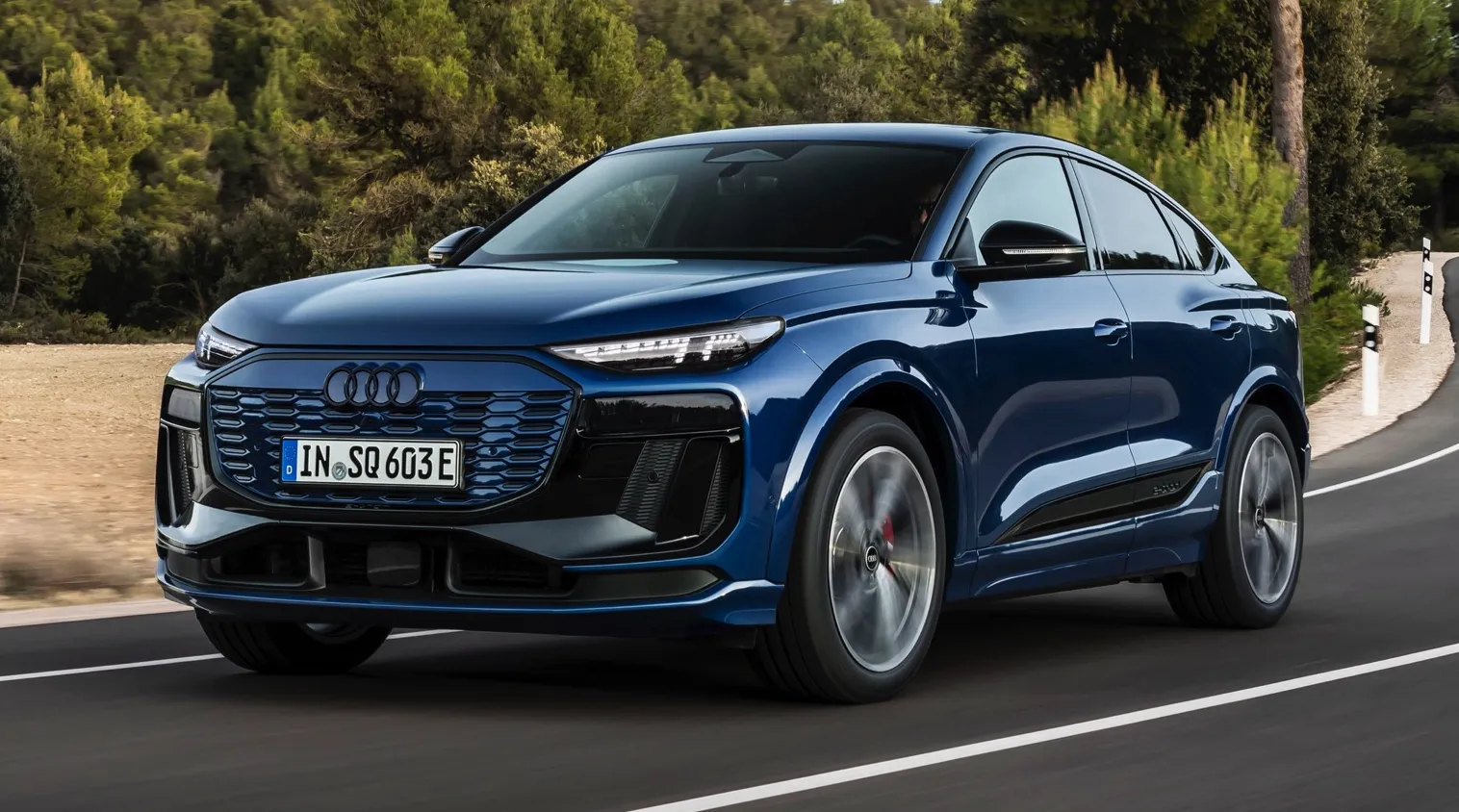 Audi
Audi
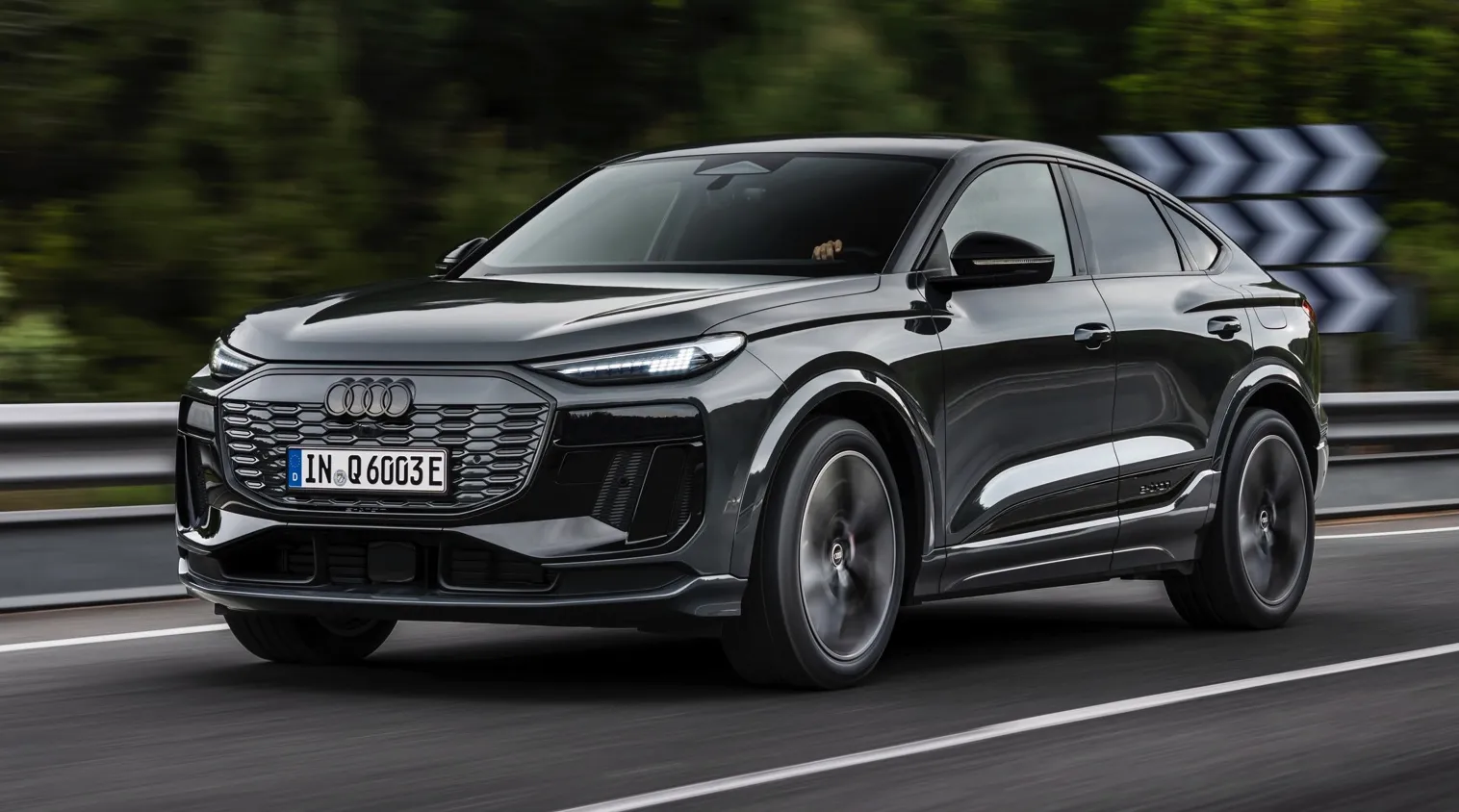
Audi SQ6 e-tron Sportback
 Audi
Audi
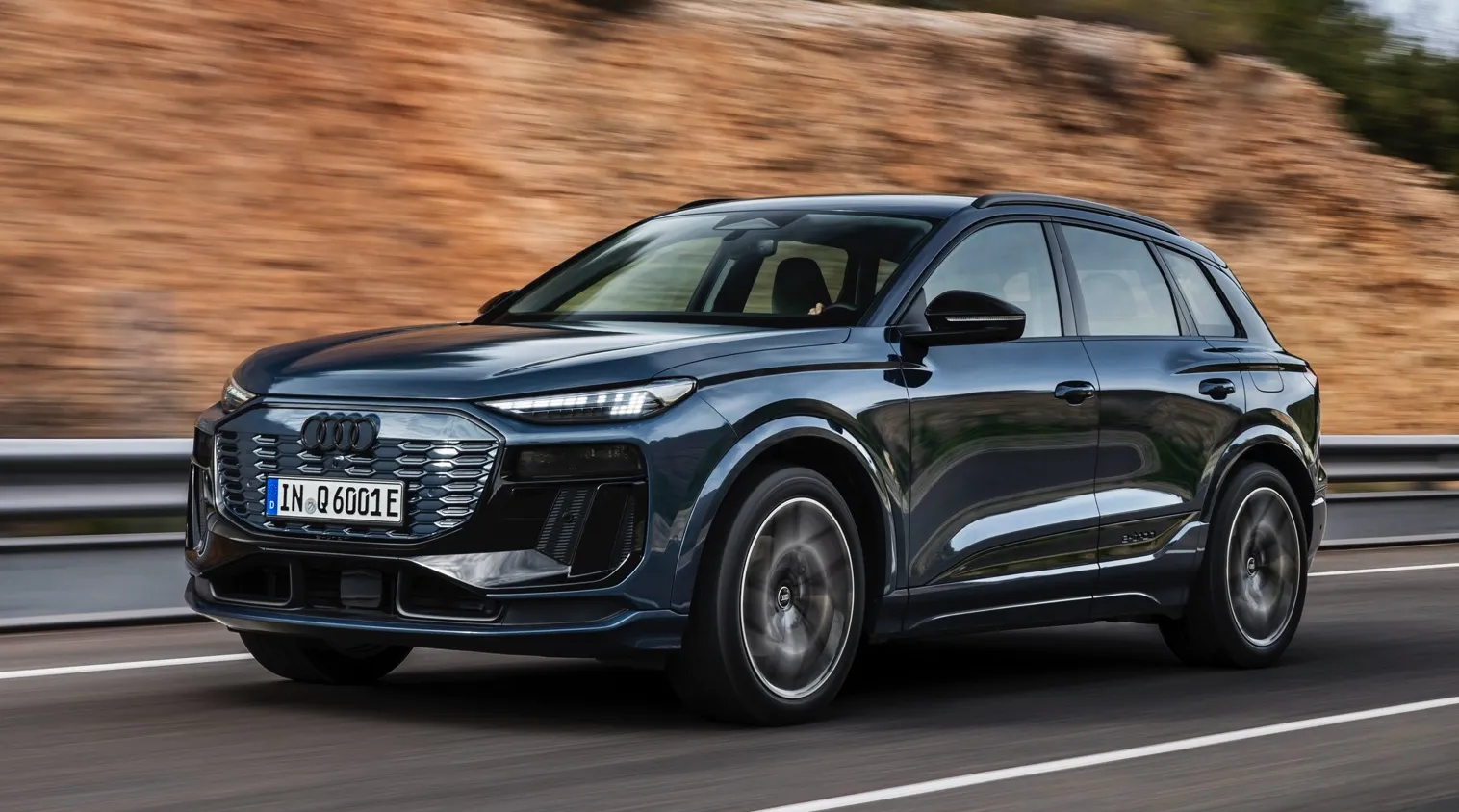
Audi Q6 e-tron Sportback quattro
 Audi
Audi
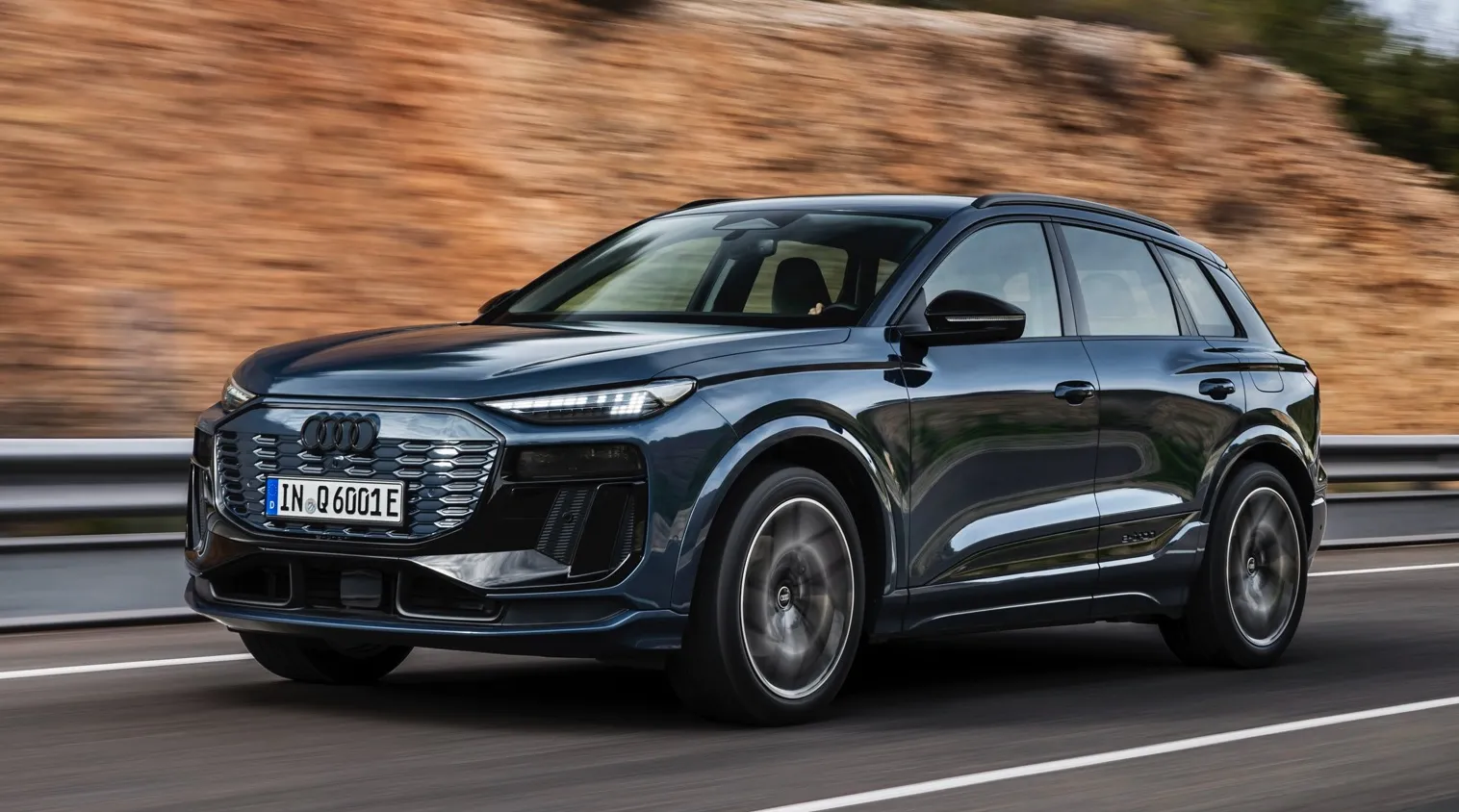
Audi Q6 e-tron
 Audi
Audi