

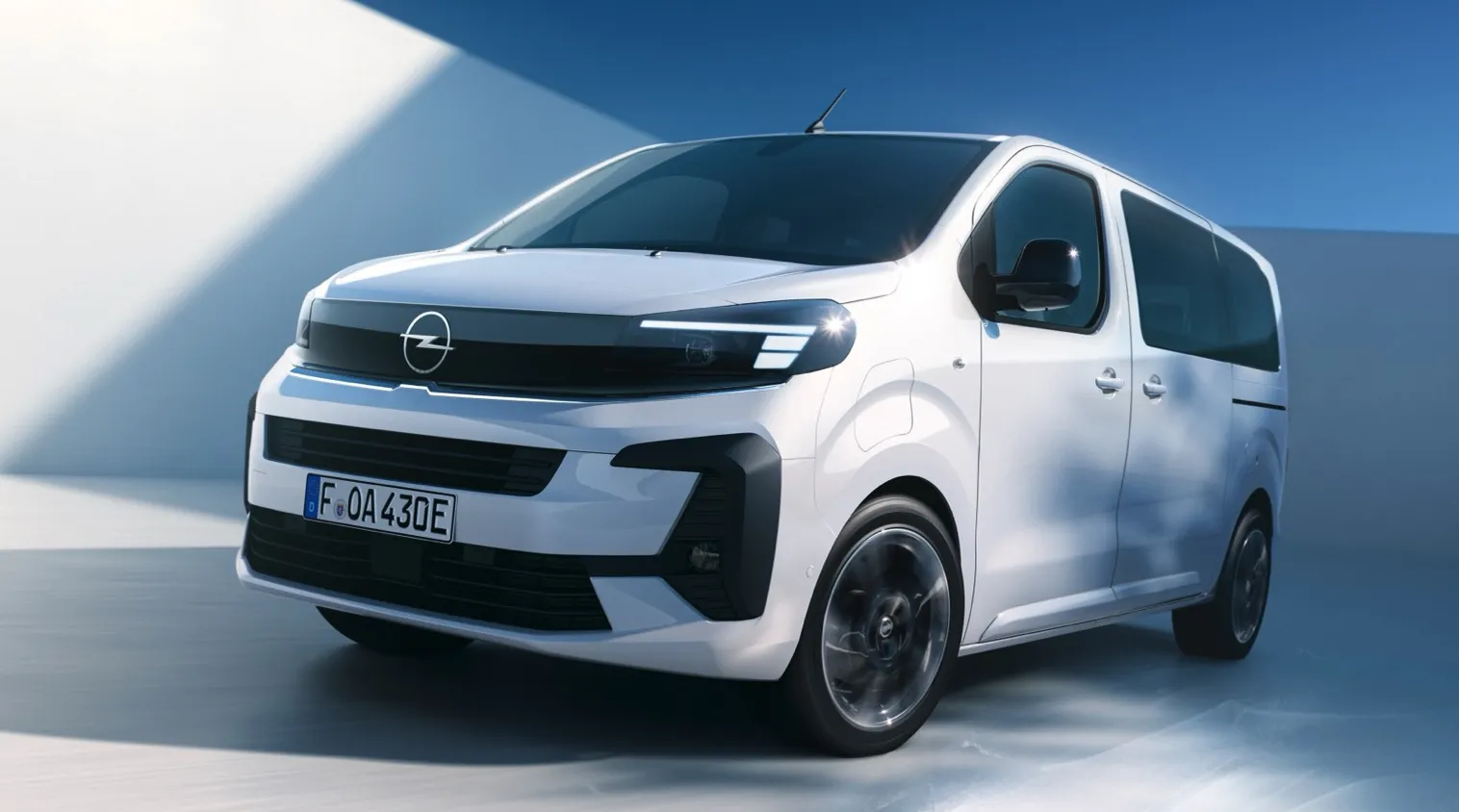
Opel Zafira-e Life L2 75 kWh
Key Specifications
Real Range Estimation
| City - Cold Weather * | 280 km |
| Highway - Cold Weather * | 185 km |
| Combined - Cold Weather * | 225 km |
between 185 - 390 km
| City - Mild Weather * | 390 km |
| Highway - Mild Weather * | 225 km |
| Combined - Mild Weather * | 290 km |
Battery
| Nominal Capacity* | 75.0 kWh |
| Battery Type | Lithium-ion |
| Number of Cells | 324 |
| Architecture | 400 V |
| Warranty Period | 8 years |
| Warranty Mileage | 160,000 km |
| Useable Capacity* | 68.0 kWh |
| Cathode Material | NCM |
| Pack Configuration | 108s3p |
| Nominal Voltage | 400 V |
| Form Factor | No Data |
| Name / Reference | No Data |
Performance
| Acceleration 0 - 100 km/h | 14.2 sec |
| Top Speed | 130 km/h |
| Electric Range * | 260 km |
| Total Power | 100 kW (136 PS) |
| Total Torque | 270 Nm |
| Drive | Front |
Home and Destination Charging (0 -> 100%)
Charging is possible by using a regular wall plug or a charging station. Public charging is always done through a charging station. How fast the EV can charge depends on the charging station (EVSE) used and the maximum charging capacity of the EV. The table below shows all possible options for charging the Opel Zafira-e Life L2 75 kWh. Each option shows how fast the battery can be charged from empty to full.
Europe
Charging an EV in Europe differs by country. Some European countries primarily use 1-phase connections to the grid, while other countries are almost exclusively using a 3-phase connection. The table below shows all possible ways the Opel Zafira-e Life L2 75 kWh can be charged, but some modes of charging might not be widely available in certain countries.
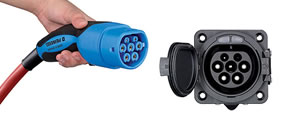
| Type 2 (Mennekes - IEC 62196) |
|---|
 |
| Charging Point | Max. Power | Power | Time | Rate |
|---|---|---|---|---|
| Wall Plug (2.3 kW) | 230V / 1x10A | 2.3 kW | 35 hours | 7 km/h |
| 1-phase 16A (3.7 kW) | 230V / 1x16A | 3.7 kW | 21h45m | 12 km/h |
| 1-phase 32A (7.4 kW) | 230V / 1x32A | 7.4 kW | 11 hours | 24 km/h |
| 3-phase 16A (11 kW) | 400V / 3x16A | 11 kW | 7h30m | 35 km/h |
| 3-phase 32A (22 kW) | 400V / 3x16A | 11 kW † | 7h30m | 35 km/h |
† = Limited by on-board charger, vehicle cannot charge faster.
Fast Charging (10 -> 80%)
Rapid charging enables longer journeys by adding as much range as possible in the shortest amount of time. Charging power will decrease significantly after 80% state-of-charge has been reached. A typical rapid charge therefore rarely exceeds 80% SoC. The rapid charge rate of an EV depends on the charger used and the maximum charging power the EV can handle. The table below shows all details for rapid charging the Opel Zafira-e Life L2 75 kWh.
- Max. Power: maximum power provided by charge point
- Avg. Power: average power provided by charge point over a session from 10% to 80%
- Time: time needed to charge from 10% to 80%
- Rate: average charging speed over a session from 10% to 80%
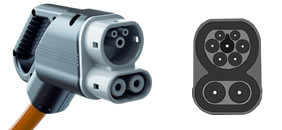
| Combined Charging System (CCS Combo 2) |
|---|
 |
| Charging Point | Max. Power | Avg. Power | Time | Rate |
|---|---|---|---|---|
| CCS (50 kW DC) | 50 kW | 40 kW † | 75 min | 140 km/h |
| CCS (100 kW DC) | 100 kW | 79 kW † | 38 min | 280 km/h |
| CCS (150 kW DC) | 100 kW † | 79 kW † | 38 min | 280 km/h |
| This vehicle supports Autocharge |
|---|
| This vehicle does not support Plug & Charge |
† = Limited by charging capabilities of vehicle
Autocharge: allows for automatic initiation of a charging session at supported CCS charging stations.
Plug & Charge: allows for automatic initiation of a charging session at supported CCS charging stations in accordance with ISO 15118.
Actual charging rates may differ from data shown due to factors like outside temperature, state of the battery and driving style.
Opel Claimed Specifications
The table below shows the claimed specifications from the manufacturer for charging the Opel Zafira-e Life L2 75 kWh. The specifications can differ from the table above for a variety of reasons. If real-world charge tests are available, these differences can be signifcant. If no real-world tests are available, the table above will be based on the manufacturer specifications as per the table below.
- Max. Power: maximum charge power during charging session
- Charge From: battery percentage (% SoC) where charging session is started
- Charge To: battery percentage (% SoC) where charging session is ended
- Time: time needed for charging session
| Opel Claimed Specifications |
|---|
| Max. Power | Charge From | Charge To | Time |
|---|---|---|---|
| 100 kW | 0 % | 80 % | 45 min |
Dimensions and Weight
| Length | 4983 mm |
| Width | 1920 mm |
| Width with mirrors | 2204 mm |
| Height | 1890 mm |
| Wheelbase | 3275 mm |
| Weight Unladen (EU) | 2211 kg |
| Gross Vehicle Weight (GVWR) | 3100 kg |
| Max. Payload | 964 kg |
| Cargo Volume | 603 L |
| Cargo Volume Max | 3968 L |
| Cargo Volume Frunk | 0 L |
| Roof Load | 150 kg |
| Tow Hitch Possible | Yes |
| Towing Weight Unbraked | 750 kg |
| Towing Weight Braked | 1000 kg |
| Vertical Load Max | 60 kg |
About this Vehicle
# Opel Zafira-e Life L2 75 kWh: Comprehensive Electric Family Van Review
Opel Zafira-e Life L2 75 kWh Overview
The Opel Zafira-e Life L2 75 kWh represents a practical entry into electric family transportation, positioning itself as a mainstream electric van designed for European families prioritizing versatility and affordability. This seven-to nine-seat electric vehicle targets buyers seeking spacious, eco-friendly alternatives to traditional combustion-engine MPVs without premium pricing. Built on the proven PSA EMP2 platform, the Zafira-e Life combines proven engineering with modern electric propulsion, making it an accessible choice for families transitioning to electric mobility.
The Zafira-e Life distinguishes itself through its flexible seating configuration, accommodating up to nine passengers while maintaining practical cargo space. Unlike dedicated electric SUVs, this electric van prioritizes interior volume and passenger comfort over sporty performance, appealing to families, small businesses, and fleet operators. The model launched in June 2024 with a base price of €53,600, offering genuine value in the growing electric van segment, where options remain limited compared to traditional passenger vehicles.
Opel Zafira-e Life L2 75 kWh Performance and Driving Experience
The Opel Zafira-e Life L2 delivers modest but adequate performance for family duties rather than spirited driving. Its front-wheel-drive electric motor produces 136 horsepower and 270 Newton-meters of torque, enabling smooth acceleration suitable for urban and highway driving. The van accelerates from 0-62 mph in 14.2 seconds, with a maximum speed of 81 mph—practical limits for a vehicle prioritizing efficiency and passenger comfort over performance thrills.
Driving dynamics emphasize stability and comfort rather than agility. The Zafira-e Life’s suspension and weight distribution reflect its van heritage, providing composed handling for family journeys. The regenerative braking system offers three modes with paddle shifter control, allowing drivers to optimize energy recovery during deceleration. Real-world driving impressions highlight smooth, predictable performance ideal for mixed driving conditions, though the van’s size and weight mean it won’t match the nimbleness of compact electric cars.
| Specification | Value |
|---|---|
| 0-62 mph (0-100 km/h) | 14.2 sec / 13.3 sec |
| Top Speed | 81 mph / 130 km/h |
| Power Output | 136 hp / 100 kW |
| Torque | 270 Nm / 199 lb-ft |
Opel Zafira-e Life L2 75 kWh Range and Battery Specifications
The Opel Zafira-e Life L2 75 kWh delivers practical range for daily family use and regular commuting. The 75 kWh total battery capacity provides 209 miles of WLTP-rated range, though real-world testing suggests approximately 260 kilometers under mixed conditions. WLTP ratings reach 330 kilometers, reflecting optimistic laboratory conditions. Real-world range varies significantly based on driving style, weather, and terrain—cold weather driving can reduce efficiency to 243 Wh/km in city conditions, while highway driving in cold weather increases consumption to 368 Wh/km.
The battery utilizes lithium-ion NCM chemistry in a 400-volt architecture with 68 kWh of usable capacity. Energy efficiency averages 262 Wh/km under real-world conditions, translating to approximately 2.5 miles per kilowatt-hour. The integrated heat pump optimizes thermal management, improving winter range compared to traditional resistance heating. For families with regular charging access, the Zafira-e Life’s range proves sufficient for daily school runs, shopping trips, and weekend excursions.
| Range Metric | Value |
|---|---|
| WLTP Range | 330 km / 209 miles |
| Real-World Range | 260 km / 162 miles |
| Battery Capacity | 75 kWh total / 68 kWh usable |
| Energy Efficiency | 262 Wh/km |
Opel Zafira-e Life L2 75 kWh Charging Times and Options
The Opel Zafira-e Life L2 supports flexible charging across multiple scenarios. Home charging via Type 2 connector delivers 11 kW AC power, fully charging the battery in approximately 7-8 hours overnight—ideal for daily use. Level 1 charging via standard wall plugs takes 35 hours, while 3.7 kW single-phase charging requires 21 hours and 45 minutes. For faster top-ups, the vehicle supports 100 kW DC fast charging via CCS connector, achieving 20-80% charge in just 45 minutes—practical for road trips and commercial applications.
The Zafira-e Life lacks vehicle-to-load (V2L) and vehicle-to-home (V2H) capabilities, limiting bidirectional energy functionality. However, the robust DC charging capability compensates, enabling quick turnarounds for fleet operations and family road trips. Charging network compatibility across European CCS infrastructure ensures accessibility across the continent.
| Charging Method | Time | Speed |
|---|---|---|
| Level 1 (2.3 kW) | 35 hours | 7 km/h |
| Level 2 (3.7 kW) | 21h 45m | 12 km/h |
| Level 2 (11 kW) | 7-8 hours | 24 km/h |
| DC Fast Charge (20-80%) | 45 minutes | up to 100 kW |
Opel Zafira-e Life L2 75 kWh vs Competitors
The Opel Zafira-e Life L2 competes in a limited electric van segment against the Volkswagen ID. Buzz (when available in comparable configurations), Mercedes eVito, and traditional MPV alternatives like the Citroën Berlingo Electric. Compared to the ID.Buzz, the Zafira-e Life offers more affordable entry pricing and proven platform reliability, though the VW provides superior design language and technology integration. Against the Mercedes eVito, the Opel delivers better value for families prioritizing passenger comfort over commercial specifications. The Zafira-e Life’s key advantage lies in its balance of practicality, affordability, and genuine nine-seat flexibility—rare in the electric vehicle market where most competitors focus on five-seat configurations.
Frequently Asked Questions
Related Vehicles
View All Opel
Opel
Opel Grandland 73 kWh
 Opel
Opel
Opel Astra Electric
 Opel
Opel
Opel Frontera 44 kWh
 Opel
Opel