

Volvo EX40 Twin Motor
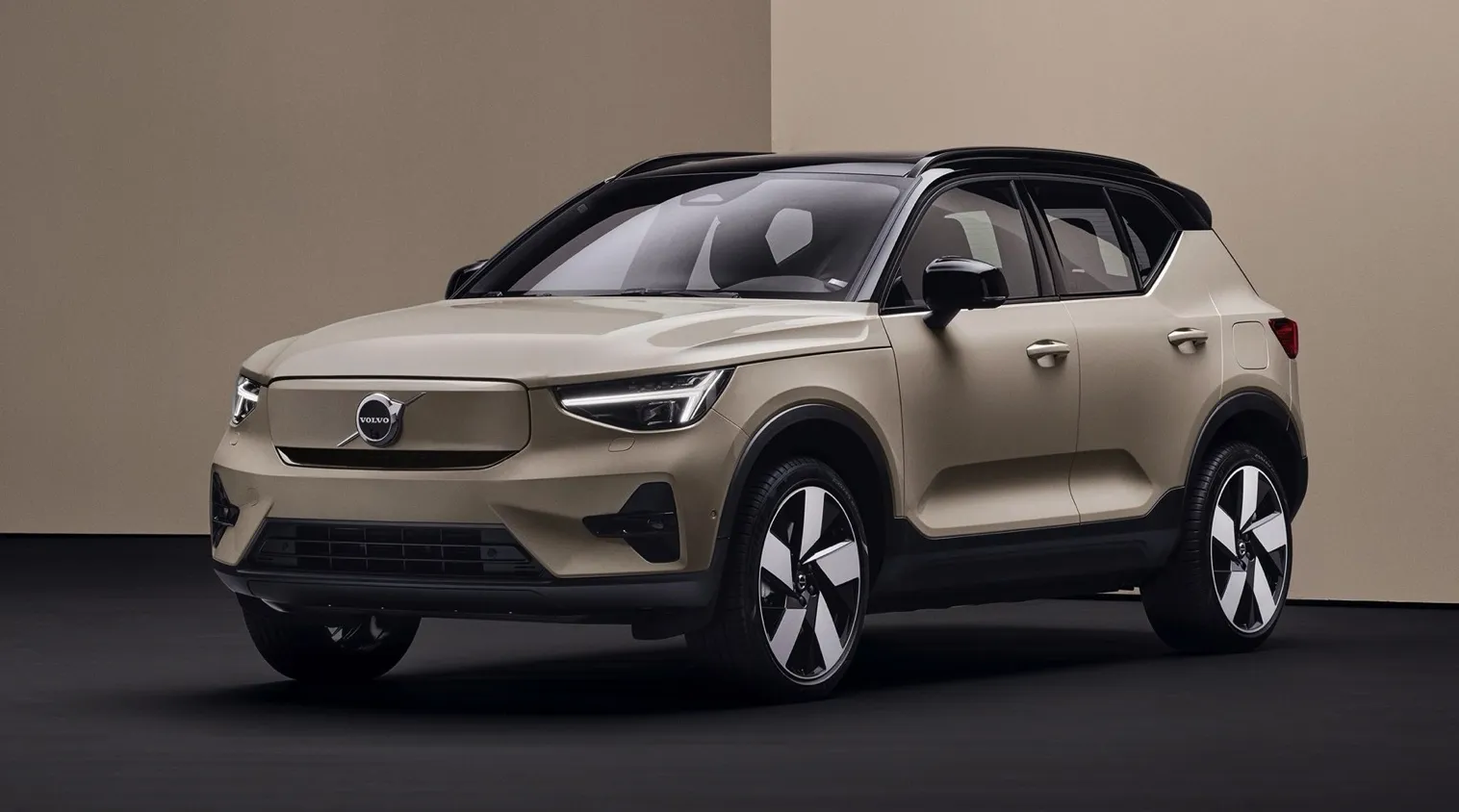
Key Specifications
Real Range
| City - Cold Weather | 390 km |
| Highway - Cold Weather | 270 km |
| Combined - Cold Weather | 325 km |
between 270 - 565 km
| City - Mild Weather | 565 km |
| Highway - Mild Weather | 345 km |
| Combined - Mild Weather | 435 km |
Battery
| Nominal Capacity | 82.0 kWh |
| Battery Type | Lithium-ion |
| Number of Cells | 324 |
| Architecture | 400 V |
| Warranty Period | 8 years |
| Warranty Mileage | 160,000 km |
| Useable Capacity | 79.0 kWh |
| Cathode Material | NCM |
| Pack Configuration | 108s3p |
| Nominal Voltage | 400 V |
| Form Factor | Pouch |
| Name / Reference | No Data |
Performance
| Acceleration 0 - 100 km/h | 4.8 sec |
| Top Speed | 180 km/h |
| Electric Range | 385 km |
| Total Power | 300 kW (408 PS) |
| Total Torque | 670 Nm |
| Drive | AWD |
Home and Destination Charging (0 -> 100%)
Charging is possible by using a regular wall plug or a charging station. Public charging is always done through a charging station. How fast the EV can charge depends on the charging station (EVSE) used and the maximum charging capacity of the EV. The table below shows all possible options for charging the Volvo EX40 Twin Motor. Each option shows how fast the battery can be charged from empty to full.
Europe
Charging an EV in Europe differs by country. Some European countries primarily use 1-phase connections to the grid, while other countries are almost exclusively using a 3-phase connection. The table below shows all possible ways the Volvo EX40 Twin Motor can be charged, but some modes of charging might not be widely available in certain countries.
| Type 2 (Mennekes - IEC 62196) |
|---|
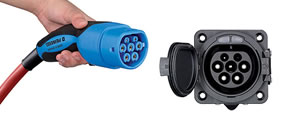 |
| Charging Point | Max. Power | Power | Time | Rate |
|---|---|---|---|---|
| Wall Plug (2.3 kW) | 230V / 1x10A | 2.3 kW | 40h30m | 10 km/h |
| 1-phase 16A (3.7 kW) | 230V / 1x16A | 3.7 kW | 25h15m | 15 km/h |
| 1-phase 32A (7.4 kW) | 230V / 1x32A | 7.4 kW | 12h45m | 30 km/h |
| 3-phase 16A (11 kW) | 400V / 3x16A | 11 kW | 8h30m | 45 km/h |
| 3-phase 32A (22 kW) | 400V / 3x16A | 11 kW † | 8h30m | 45 km/h |
† = Limited by on-board charger, vehicle cannot charge faster.
Fast Charging (10 -> 80%)
Rapid charging enables longer journeys by adding as much range as possible in the shortest amount of time. Charging power will decrease significantly after 80% state-of-charge has been reached. A typical rapid charge therefore rarely exceeds 80% SoC. The rapid charge rate of an EV depends on the charger used and the maximum charging power the EV can handle. The table below shows all details for rapid charging the Volvo EX40 Twin Motor.
- Max. Power: maximum power provided by charge point
- Avg. Power: average power provided by charge point over a session from 10% to 80%
- Time: time needed to charge from 10% to 80%
- Rate: average charging speed over a session from 10% to 80%
| Combined Charging System (CCS Combo 2) |
|---|
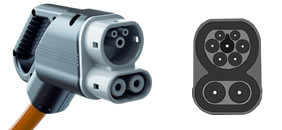 |
| Charging Point | Max. Power | Avg. Power | Time | Rate |
|---|---|---|---|---|
| CCS (50 kW DC) | 50 kW | 50 kW | 70 min | 230 km/h |
| CCS (100 kW DC) | 100 kW | 85 kW † | 41 min | 390 km/h |
| CCS (150 kW DC) | 150 kW | 105 kW † | 33 min | 490 km/h |
| CCS (175 kW DC) | 175 kW | 115 kW † | 30 min | 530 km/h |
| CCS (350 kW DC) | 205 kW † | 125 kW † | 28 min | 570 km/h |
| This vehicle supports Autocharge |
|---|
| This vehicle does not support Plug & Charge |
† = Limited by charging capabilities of vehicle
Autocharge: allows for automatic initiation of a charging session at supported CCS charging stations.
Plug & Charge: allows for automatic initiation of a charging session at supported CCS charging stations in accordance with ISO 15118.
Actual charging rates may differ from data shown due to factors like outside temperature, state of the battery and driving style.
Volvo Claimed Specifications
The table below shows the claimed specifications from the manufacturer for charging the Volvo EX40 Twin Motor. The specifications can differ from the table above for a variety of reasons. If real-world charge tests are available, these differences can be signifcant. If no real-world tests are available, the table above will be based on the manufacturer specifications as per the table below.
- Max. Power: maximum charge power during charging session
- Charge From: battery percentage (% SoC) where charging session is started
- Charge To: battery percentage (% SoC) where charging session is ended
- Time: time needed for charging session
| Volvo Claimed Specifications |
|---|
| Max. Power | Charge From | Charge To | Time |
|---|---|---|---|
| 205 kW | 10 % | 80 % | 28 min |
Dimensions and Weight
| Length | 4440 mm |
| Width | 1863 mm |
| Width with mirrors | 2034 mm |
| Height | 1652 mm |
| Wheelbase | 2702 mm |
| Weight Unladen (EU) | 2170 kg |
| Gross Vehicle Weight (GVWR) | 2650 kg |
| Max. Payload | 555 kg |
| Cargo Volume | 410 L |
| Cargo Volume Max | 1286 L |
| Cargo Volume Frunk | 31 L |
| Roof Load | 75 kg |
| Tow Hitch Possible | Yes |
| Towing Weight Unbraked | 750 kg |
| Towing Weight Braked | 1800 kg |
| Vertical Load Max | 100 kg |
About this Vehicle
Volvo EX40 Twin Motor Overview
The Volvo EX40 Twin Motor positions itself as a premium compact electric SUV, blending Scandinavian luxury with advanced EV technology in the competitive mainstream EV market. Replacing the XC40 Recharge, this Volvo electric SUV targets safety-conscious families, urban professionals, and eco-driven buyers seeking upscale comfort without sacrificing performance. Built on Volvo’s dedicated EMA platform, it emphasizes sustainable materials, minimalist design philosophy, and cutting-edge safety features like Pilot Assist semi-autonomous driving.
Key distinguishing features include its dual-motor AWD setup for confident handling, a spacious cabin with premium Connect suede upholstery, and integration of Google-built infotainment. In the EV landscape, the Volvo EX40 Twin Motor matters for its balance of EV specs—up to 402 hp and 260 miles EPA range—making it a refined alternative to flashier rivals. This EX40 review highlights its role in Volvo’s all-electric push, offering real-world versatility for daily commutes and weekend adventures in a stylish, secure package.
Volvo EX40 Twin Motor Performance and Driving Experience
The Volvo EX40 Twin Motor delivers exhilarating acceleration with its dual electric motors—one induction AC front motor (147 hp, 184 lb-ft) and a rear permanent-magnet synchronous AC (255 hp, 310 lb-ft)—combining for 402 hp and 494 lb-ft of instant torque. Real-world testing shows a brisk 0-60 mph in 4.1 seconds, with responsive power delivery that feels punchy yet controlled, ideal for highway merges. Handling shines with a composed chassis, multi-link rear suspension, and 0.84 g skidpad grip, providing secure dynamics on twisty roads despite its 4,780-lb curb weight.
Full-time AWD enhances traction in wet or snowy conditions via brake-actuated limited-slip differentials, while regen braking and Pilot Assist add driver confidence. Real-world impressions praise its refined ride, quiet cabin, and stable high-speed cruising up to 114 mph (governor-limited).
| Specification | Value |
|---|---|
| 0-60 mph (0-100 km/h) | 4.1 sec (4.8 sec) |
| Top Speed | 114 mph / 180 km/h |
| Power Output | 402 hp / 299 kW |
| Torque | 494 lb-ft / 670 Nm |
Volvo EX40 Twin Motor Range and Battery Specifications
The Volvo EX40 Twin Motor boasts an EPA range of 260 miles, with WLTP figures up to 296 miles (476 km) for strong highway efficiency at 94 MPGe combined. Real-world range varies from 270-390 km in mixed conditions, dropping in cold weather but holding up well at 93 MPGe observed. Its 79-82 kWh liquid-cooled lithium-ion battery (82 kWh nominal) powers efficient driving, with factors like aggressive acceleration, winter temps, or loaded terrain reducing it by 20-30%.
Energy efficiency averages 85-103 MPGe city/highway, making the EX40 WLTP range competitive for compact luxury EVs. EX40 real-world range impresses for daily use, aided by Volvo’s optimized thermal management.
| Range Metric | Value |
|---|---|
| WLTP Range | 296 miles / 476 km |
| EPA Range | 260 miles / 418 km |
| Real-World Range | 270-335 miles / 435-540 km |
| Battery Capacity | 82 kWh (79 kWh usable) |
Volvo EX40 Twin Motor Charging Times and Options
Home charging for the Volvo EX40 Twin Motor is straightforward with its 11 kW onboard charger: Level 2 at 240V/11 kW fills from 0-100% in about 8 hours, perfect for overnight top-ups. Level 1 (120V) suits emergencies but takes longer. DC fast charging peaks at 205 kW, achieving 10-80% in 28 minutes (10-90% in 46 minutes at 86 kW average), compatible with major networks like Electrify America.
Practical scenarios include quick road-trip stops or garage Level 2 for 200+ miles daily. Volvo’s app enables preconditioning for optimal speeds.
| Charging Method | Time | Speed |
|---|---|---|
| Level 1 (120V) | 30+ hours | ~1.4 kW |
| Level 2 (240V/7kW) | 12 hours | ~7 kW |
| Level 2 (240V/11kW) | 8 hours | ~11 kW |
| DC Fast Charge (10-80%) | 28 min | up to 205 kW |
Volvo EX40 Twin Motor vs Competitors
The Volvo EX40 Twin Motor edges the Tesla Model Y in luxury build and safety tech like Pilot Assist, though it trails in range (260 vs 320 miles) and fast-charging speed. Against the BMW iX and Audi Q4 e-tron, the EX40 offers better value at $62,000 MSRP with comparable 400+ hp AWD performance, superior cabin refinement, and towing up to 2,000 lbs—making EX40 vs Tesla Model Y or EX40 comparison favor Volvo for premium buyers prioritizing comfort over raw efficiency. The Hyundai Ioniq 5 undercuts on price but lacks the EX40’s upscale materials.
Frequently Asked Questions
Related Vehicles
View All Volvo
Volvo
Volvo EX90 Twin Motor
 Volvo
Volvo
Volvo EC40 Single Motor
 Volvo
Volvo
Volvo EC40 Twin Motor
 Volvo
Volvo