

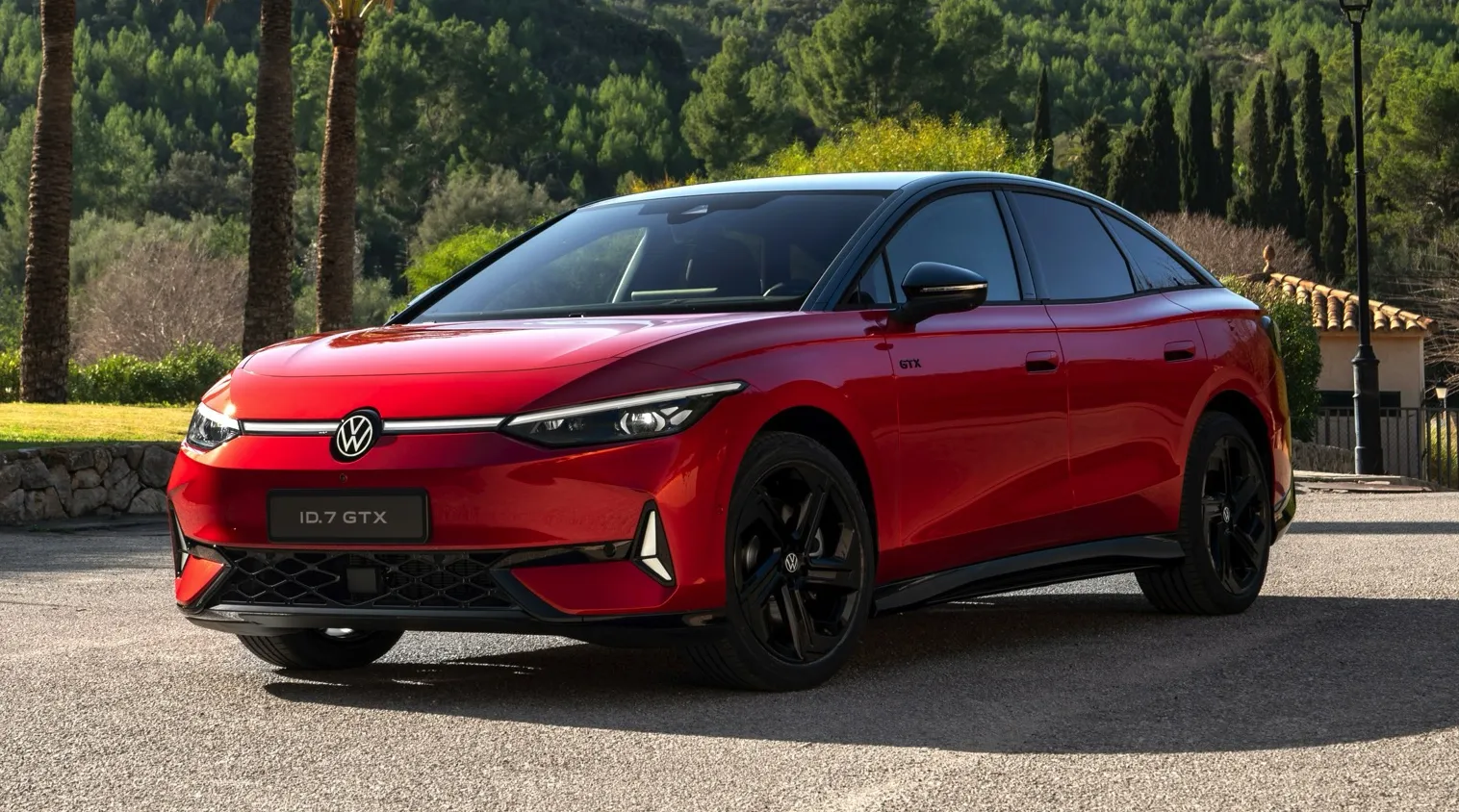
Volkswagen ID.7 GTX
Key Specifications
Real Range Estimation
| City - Cold Weather * | 465 km |
| Highway - Cold Weather * | 350 km |
| Combined - Cold Weather * | 405 km |
between 350 - 690 km
| City - Mild Weather * | 690 km |
| Highway - Mild Weather * | 450 km |
| Combined - Mild Weather * | 555 km |
Battery
| Nominal Capacity | 91.0 kWh |
| Battery Type | Lithium-ion |
| Number of Cells | 312 |
| Architecture | 400 V |
| Warranty Period | 8 years |
| Warranty Mileage | 160,000 km |
| Useable Capacity | 86.0 kWh |
| Cathode Material | NCM |
| Pack Configuration | 104s3p |
| Nominal Voltage | 383 V |
| Form Factor | No Data |
| Name / Reference | No Data |
Performance
| Acceleration 0 - 100 km/h | 5.4 sec |
| Top Speed | 180 km/h |
| Electric Range * | 485 km |
| Total Power | 250 kW (340 PS) |
| Total Torque | 560 Nm |
| Drive | AWD |
Home and Destination Charging (0 -> 100%)
Charging is possible by using a regular wall plug or a charging station. Public charging is always done through a charging station. How fast the EV can charge depends on the charging station (EVSE) used and the maximum charging capacity of the EV. The table below shows all possible options for charging the Volkswagen ID.7 GTX. Each option shows how fast the battery can be charged from empty to full.
Europe
Charging an EV in Europe differs by country. Some European countries primarily use 1-phase connections to the grid, while other countries are almost exclusively using a 3-phase connection. The table below shows all possible ways the Volkswagen ID.7 GTX can be charged, but some modes of charging might not be widely available in certain countries.
| Type 2 (Mennekes - IEC 62196) |
|---|
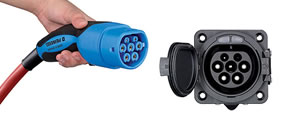 |
| Charging Point | Max. Power | Power | Time | Rate |
|---|---|---|---|---|
| Wall Plug (2.3 kW) | 230V / 1x10A | 2.3 kW | 44 hours | 11 km/h |
| 1-phase 16A (3.7 kW) | 230V / 1x16A | 3.7 kW | 27h30m | 18 km/h |
| 1-phase 32A (7.4 kW) | 230V / 1x32A | 7.4 kW | 13h45m | 35 km/h |
| 3-phase 16A (11 kW) | 400V / 3x16A | 11 kW | 9h15m | 52 km/h |
| 3-phase 32A (22 kW) | 400V / 3x16A | 11 kW † | 9h15m | 52 km/h |
† = Limited by on-board charger, vehicle cannot charge faster.
Fast Charging (10 -> 80%)
Rapid charging enables longer journeys by adding as much range as possible in the shortest amount of time. Charging power will decrease significantly after 80% state-of-charge has been reached. A typical rapid charge therefore rarely exceeds 80% SoC. The rapid charge rate of an EV depends on the charger used and the maximum charging power the EV can handle. The table below shows all details for rapid charging the Volkswagen ID.7 GTX.
- Max. Power: maximum power provided by charge point
- Avg. Power: average power provided by charge point over a session from 10% to 80%
- Time: time needed to charge from 10% to 80%
- Rate: average charging speed over a session from 10% to 80%
| Combined Charging System (CCS Combo 2) |
|---|
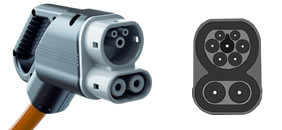 |
| Charging Point | Max. Power | Avg. Power | Time | Rate |
|---|---|---|---|---|
| CCS (50 kW DC) | 50 kW | 50 kW | 76 min | 260 km/h |
| CCS (100 kW DC) | 100 kW | 90 kW † | 42 min | 480 km/h |
| CCS (150 kW DC) | 150 kW | 115 kW † | 33 min | 610 km/h |
| CCS (175 kW DC) | 175 kW | 130 kW † | 29 min | 700 km/h |
| CCS (350 kW DC) | 200 kW † | 145 kW † | 26 min | 780 km/h |
| This vehicle does not support Autocharge |
|---|
| This vehicle supports Plug & Charge |
† = Limited by charging capabilities of vehicle
Autocharge: allows for automatic initiation of a charging session at supported CCS charging stations.
Plug & Charge: allows for automatic initiation of a charging session at supported CCS charging stations in accordance with ISO 15118.
Actual charging rates may differ from data shown due to factors like outside temperature, state of the battery and driving style.
Volkswagen Claimed Specifications
The table below shows the claimed specifications from the manufacturer for charging the Volkswagen ID.7 GTX. The specifications can differ from the table above for a variety of reasons. If real-world charge tests are available, these differences can be signifcant. If no real-world tests are available, the table above will be based on the manufacturer specifications as per the table below.
- Max. Power: maximum charge power during charging session
- Charge From: battery percentage (% SoC) where charging session is started
- Charge To: battery percentage (% SoC) where charging session is ended
- Time: time needed for charging session
| Volkswagen Claimed Specifications |
|---|
| Max. Power | Charge From | Charge To | Time |
|---|---|---|---|
| 200 kW | 10 % | 80 % | 26 min |
Dimensions and Weight
| Length | 4961 mm |
| Width | 1862 mm |
| Width with mirrors | 2141 mm |
| Height | 1536 mm |
| Wheelbase | 2971 mm |
| Weight Unladen (EU) | 2328 kg |
| Gross Vehicle Weight (GVWR) | 2790 kg |
| Max. Payload | 537 kg |
| Cargo Volume | 532 L |
| Cargo Volume Max | 1586 L |
| Cargo Volume Frunk | 0 L |
| Roof Load | 75 kg |
| Tow Hitch Possible | Yes |
| Towing Weight Unbraked | 750 kg |
| Towing Weight Braked | 1200 kg |
| Vertical Load Max | 75 kg |
About this Vehicle
# Volkswagen ID.7 GTX
Volkswagen ID.7 GTX Overview
The Volkswagen ID.7 GTX represents the premium performance variant of VW’s flagship electric sedan, combining executive comfort with genuine driving dynamics. Positioned as a mid-to-premium electric vehicle, the ID.7 GTX targets discerning drivers who demand both efficiency and exhilarating acceleration in a sophisticated package. This model distinguishes itself through Volkswagen’s innovative 4MOTION all-wheel drive system, which pairs a powerful rear motor with an intelligent front motor for balanced performance and exceptional traction.
The ID.7 GTX matters in the competitive EV landscape because it proves that electric vehicles can deliver the immediate throttle response and driving engagement traditionally associated with high-performance combustion engines. With its 86 kWh battery, advanced thermal management, and dual-motor architecture, the ID.7 GTX bridges the gap between practical family transport and genuine performance credentials. The vehicle’s sleek sedan design, combined with its 0.25 drag coefficient, exemplifies Volkswagen’s commitment to aerodynamic efficiency without sacrificing visual appeal.
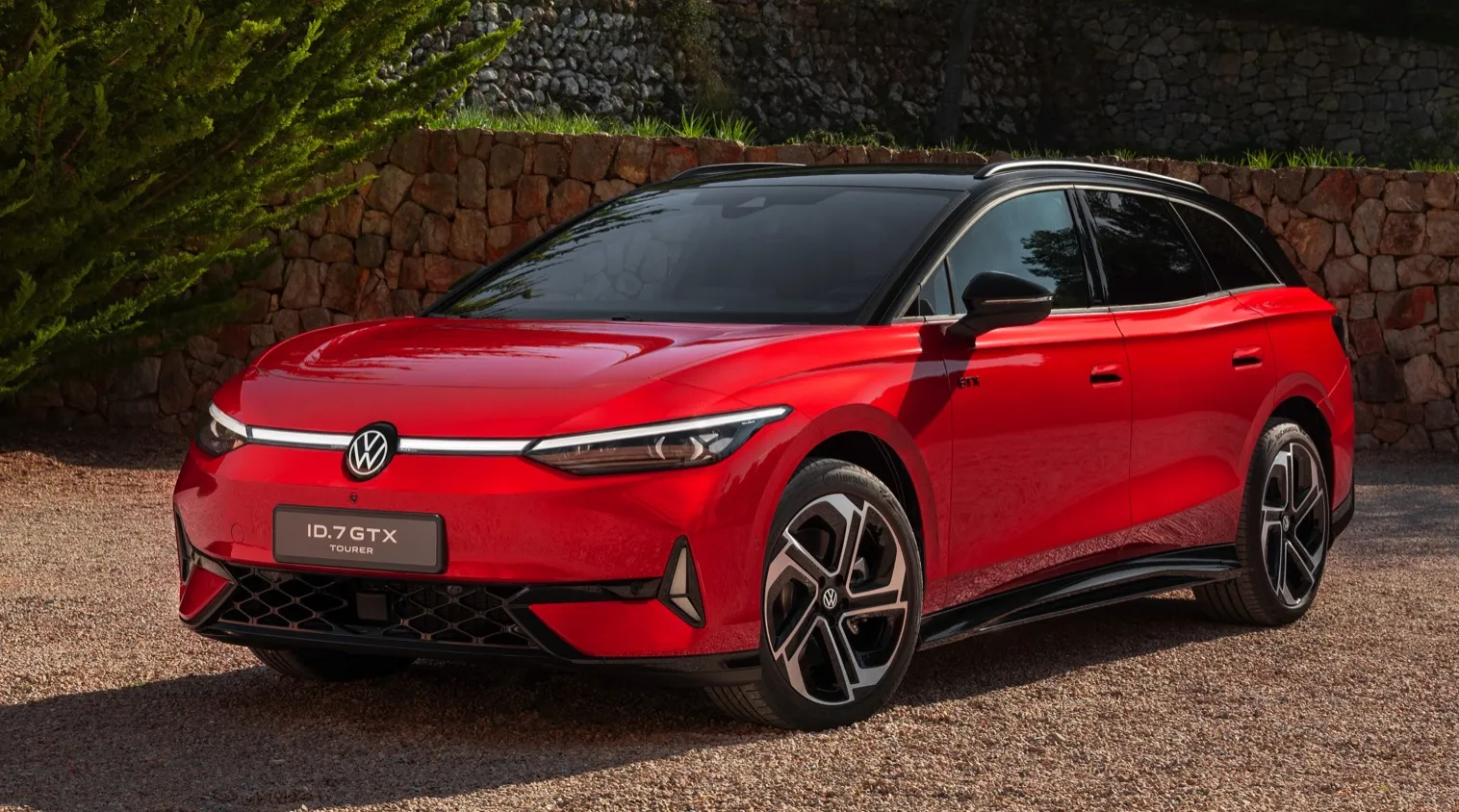
The ID.7 GTX also introduces the estate variant—the ID.7 GTX Tourer—offering practicality for families who refuse to compromise on performance. Both versions leverage Volkswagen’s MEB platform, ensuring refined ride quality, spacious interiors, and cutting-edge infotainment systems that rival premium competitors.
Volkswagen ID.7 GTX Performance and Driving Experience
The Volkswagen ID.7 GTX delivers genuine performance credentials with its dual-motor 4MOTION system producing 340 horsepower and 413 lb-ft of torque. The rear motor (210 kW/286 PS) provides primary propulsion using a permanent magnet synchronous motor, while the front asynchronous motor (80 kW/109 PS) activates intelligently based on driving conditions. This architecture enables the ID.7 GTX to accelerate from 0-62 mph in just 5.4 seconds—a figure that rivals many traditional sports cars.
Dynamically, the ID.7 GTX excels as a composed long-distance cruiser with accurate steering and confident grip through corners. The vehicle’s electronically controlled suspension features double-wishbone front geometry and a multilink rear setup, providing excellent body control without sacrificing comfort. In sport mode, the ID.7 GTX exhibits genuine bite and responsive throttle characteristics, though it reaches its dynamic limits sooner than BMW i4 or Tesla Model 3 competitors. The optional Progressive Steering system sharpens low-speed response, though reviewers note the improvement doesn’t justify the additional cost for most drivers.
| Specification | Value |
|---|---|
| 0-60 mph (0-100 km/h) | 5.4 seconds |
| Top Speed | 112 mph / 180 km/h |
| Power Output | 340 hp / 250 kW |
| Torque | 413 lb-ft / 560 Nm |
Volkswagen ID.7 GTX Range and Battery Specifications
The ID.7 GTX achieves impressive real-world range thanks to its new 86 kWh net battery capacity—Volkswagen’s largest to date. The sedan variant achieves up to 595 km (370 miles) WLTP range, while the ID.7 GTX Tourer estate reaches 584 km (363 miles). Real-world range typically falls between 300 and 350 miles, depending on driving style, weather conditions, and highway versus city driving patterns.
Energy efficiency remains exceptional at 16.2-18.4 kWh/100 km combined consumption. The battery’s NMC cathode chemistry and 12-module configuration deliver consistent performance across temperature extremes. Volkswagen’s regenerative braking system recovers energy during deceleration, extending range by up to 10-15% in typical driving scenarios. The ID.7 GTX’s 0.25 drag coefficient and optimized aerodynamics contribute significantly to its efficiency advantage over competitors.
| Range Metric | Value |
|---|---|
| WLTP Range (Sedan) | 595 km / 370 miles |
| WLTP Range (Tourer) | 584 km / 363 miles |
| Real-World Range | 300-350 miles |
| Battery Capacity | 86 kWh (net) / 91 kWh (gross) |
Volkswagen ID.7 GTX Charging Times and Options
The ID.7 GTX supports rapid charging with a maximum DC fast-charging capacity of 200 kW, enabling 10-80% charging in approximately 25-30 minutes at optimal conditions. Home charging via Level 2 (7-11 kW) takes 8-12 hours for a full charge, making overnight charging practical for daily commutes. The vehicle’s compatibility with most European charging networks ensures convenient access to public infrastructure.
| Charging Method | Time | Speed |
|---|---|---|
| Level 1 (120V) | 40+ hours | ~1.4 kW |
| Level 2 (7 kW) | 12 hours | 7 kW |
| Level 2 (11 kW) | 8 hours | 11 kW |
| DC Fast Charge (10-80%) | 25-30 minutes | up to 200 kW |
Volkswagen ID.7 GTX vs Competitors
The ID.7 GTX competes directly with the BMW i4 xDrive40, Mercedes-AMG EQE 53, and Tesla Model 3 Performance. Compared to the BMW i4, the ID.7 GTX offers superior range and lower energy consumption, though the i4 delivers sharper handling dynamics. Against the Mercedes EQE 53, the Volkswagen provides better value and efficiency, though Mercedes offers more luxury appointments. The Tesla Model 3 Performance accelerates faster (3.1 seconds 0-60), but the ID.7 GTX matches it on range while offering superior interior space and a more refined driving experience at highway speeds.
Frequently Asked Questions
Related Vehicles
View All Volkswagen
Volkswagen ID.4 Pure
 Volkswagen
Volkswagen ID.7 Tourer GTX
 Volkswagen
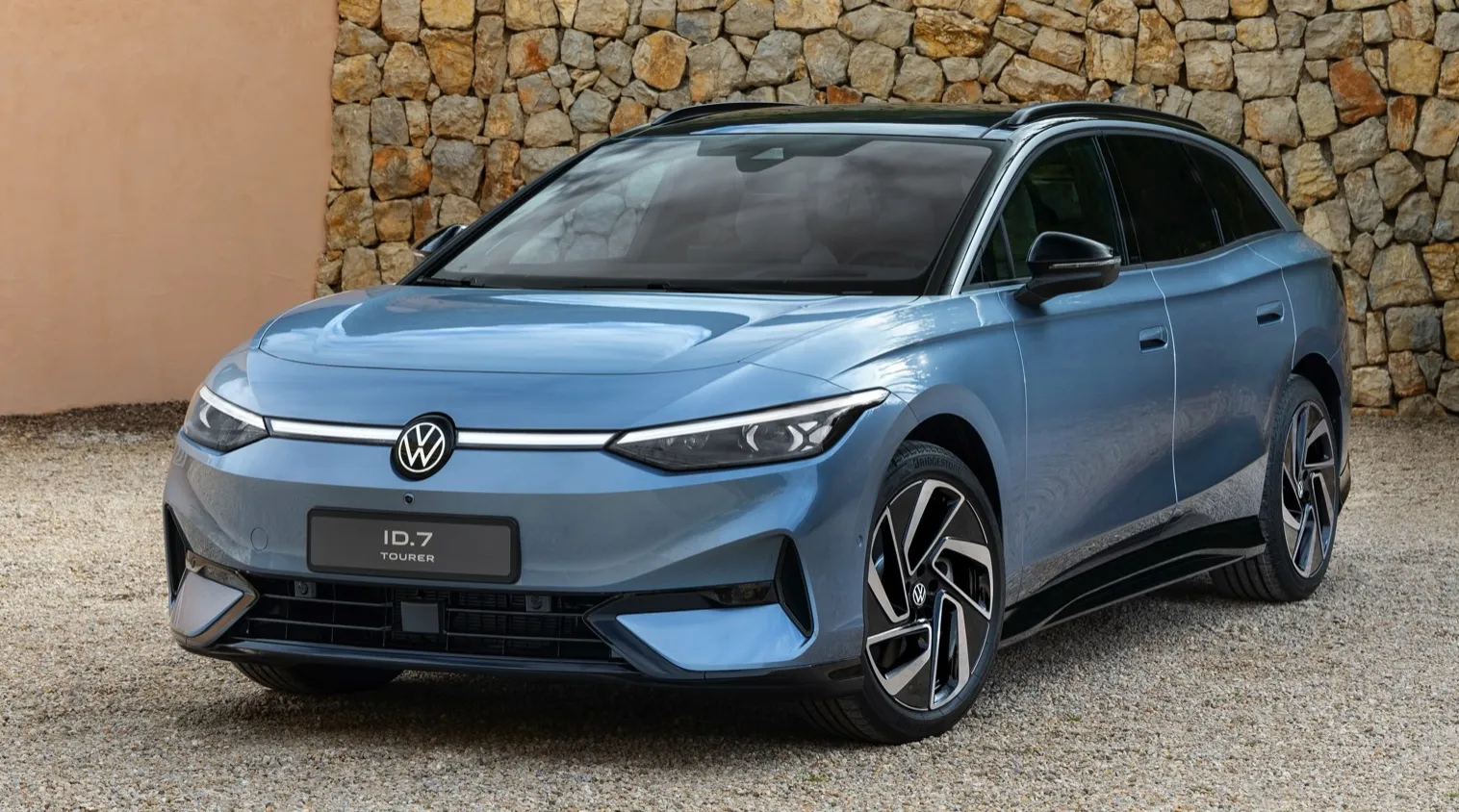
Volkswagen ID.7 Tourer Pro S
 Volkswagen