

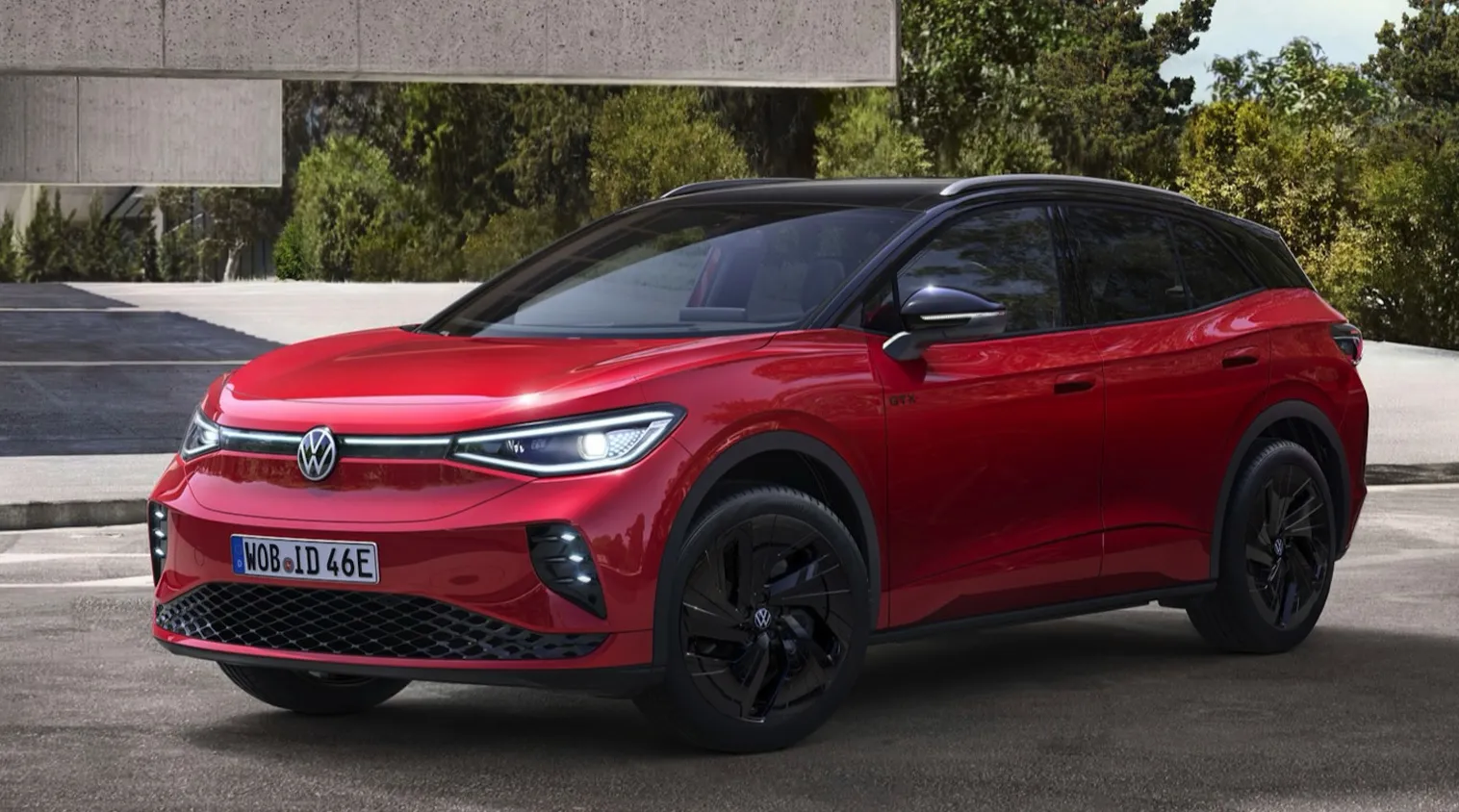
Volkswagen ID.4 GTX
Key Specifications
Real Range Estimation
| City - Cold Weather * | 415 km |
| Highway - Cold Weather * | 300 km |
| Combined - Cold Weather * | 355 km |
between 300 - 610 km
| City - Mild Weather * | 610 km |
| Highway - Mild Weather * | 385 km |
| Combined - Mild Weather * | 480 km |
Battery
| Nominal Capacity | 82.0 kWh |
| Battery Type | Lithium-ion |
| Number of Cells | 288 |
| Architecture | 400 V |
| Warranty Period | No Data |
| Warranty Mileage | No Data |
| Useable Capacity | 77.0 kWh |
| Cathode Material | No Data |
| Pack Configuration | 96s3p |
| Nominal Voltage | 352 V |
| Form Factor | No Data |
| Name / Reference | No Data |
Performance
| Acceleration 0 - 100 km/h | 5.4 sec |
| Top Speed | 180 km/h |
| Electric Range * | 420 km |
| Total Power | 250 kW (340 PS) |
| Total Torque | 679 Nm |
| Drive | AWD |
Home and Destination Charging (0 -> 100%)
Charging is possible by using a regular wall plug or a charging station. Public charging is always done through a charging station. How fast the EV can charge depends on the charging station (EVSE) used and the maximum charging capacity of the EV. The table below shows all possible options for charging the Volkswagen ID.4 GTX. Each option shows how fast the battery can be charged from empty to full.
Europe
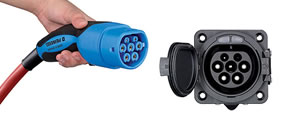
Charging an EV in Europe differs by country. Some European countries primarily use 1-phase connections to the grid, while other countries are almost exclusively using a 3-phase connection. The table below shows all possible ways the Volkswagen ID.4 GTX can be charged, but some modes of charging might not be widely available in certain countries.
| Type 2 (Mennekes - IEC 62196) |
|---|
 |
| Charging Point | Max. Power | Power | Time | Rate |
|---|---|---|---|---|
| Wall Plug (2.3 kW) | 230V / 1x10A | 2.3 kW | 39h30m | 11 km/h |
| 1-phase 16A (3.7 kW) | 230V / 1x16A | 3.7 kW | 24h30m | 17 km/h |
| 1-phase 32A (7.4 kW) | 230V / 1x32A | 7.4 kW | 12h15m | 34 km/h |
| 3-phase 16A (11 kW) | 400V / 3x16A | 11 kW | 8h15m | 51 km/h |
| 3-phase 32A (22 kW) | 400V / 3x16A | 11 kW † | 8h15m | 51 km/h |
† = Limited by on-board charger, vehicle cannot charge faster.
Fast Charging (10 -> 80%)
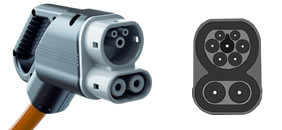
Rapid charging enables longer journeys by adding as much range as possible in the shortest amount of time. Charging power will decrease significantly after 80% state-of-charge has been reached. A typical rapid charge therefore rarely exceeds 80% SoC. The rapid charge rate of an EV depends on the charger used and the maximum charging power the EV can handle. The table below shows all details for rapid charging the Volkswagen ID.4 GTX.
- Max. Power: maximum power provided by charge point
- Avg. Power: average power provided by charge point over a session from 10% to 80%
- Time: time needed to charge from 10% to 80%
- Rate: average charging speed over a session from 10% to 80%
| Combined Charging System (CCS Combo 2) |
|---|
 |
| Charging Point | Max. Power | Avg. Power | Time | Rate |
|---|---|---|---|---|
| CCS (50 kW DC) | 50 kW | 50 kW | 68 min | 250 km/h |
| CCS (100 kW DC) | 100 kW | 85 kW † | 40 min | 440 km/h |
| CCS (150 kW DC) | 150 kW | 105 kW † | 32 min | 550 km/h |
| CCS (175 kW DC) | 175 kW | 120 kW † | 28 min | 630 km/h |
| CCS (350 kW DC) | 175 kW † | 120 kW † | 28 min | 630 km/h |
| This vehicle does not support Autocharge |
|---|
| This vehicle supports Plug & Charge |
† = Limited by charging capabilities of vehicle
Autocharge: allows for automatic initiation of a charging session at supported CCS charging stations.
Plug & Charge: allows for automatic initiation of a charging session at supported CCS charging stations in accordance with ISO 15118.
Actual charging rates may differ from data shown due to factors like outside temperature, state of the battery and driving style.
Dimensions and Weight
| Length | 4584 mm |
| Width | 1852 mm |
| Width with mirrors | No Data |
| Height | 1631 mm |
| Wheelbase | 2771 mm |
| Weight Unladen (EU) | 2256 kg |
| Gross Vehicle Weight (GVWR) | 2770 kg |
| Max. Payload | 589 kg |
| Cargo Volume | 543 L |
| Cargo Volume Max | 1575 L |
| Cargo Volume Frunk | 0 L |
| Roof Load | 75 kg |
| Tow Hitch Possible | Yes |
| Towing Weight Unbraked | 750 kg |
| Towing Weight Braked | 1200 kg |
| Vertical Load Max | 75 kg |
About this Vehicle
Volkswagen ID.4 GTX Overview
The Volkswagen ID.4 GTX positions itself as a premium electric SUV in Volkswagen’s ID lineup, blending sporty performance with family-friendly practicality. As a high-performance variant of the popular ID.4, it targets tech-savvy families and enthusiasts seeking a mainstream EV with German engineering finesse. Built on Volkswagen’s flexible MEB platform, the ID.4 GTX stands out with its dual-motor AWD setup, aggressive styling cues like a lowered suspension and GTX-specific bumpers, and advanced driver aids. This Volkswagen electric SUV delivers a compelling mix of EV specs that make it a strong contender in the crowded midsize EV market.
What makes the ID.4 GTX review noteworthy is its balance of power and efficiency in the EV landscape. With instant torque and a spacious interior seating five comfortably, it appeals to buyers upgrading from gas SUVs like the Tiguan. Key distinguishing features include the ID.4 GTX‘s 77 kWh battery, CCS charging port, and Volkswagen’s IQ.DRIVE suite for semi-autonomous driving. In a segment dominated by Tesla and Hyundai, the Volkswagen ID.4 GTX matters for offering European build quality, competitive electric vehicle range, and pricing around mainstream levels, making premium EV ownership accessible without sacrificing thrills.
Volkswagen ID.4 GTX Performance and Driving Experience
The Volkswagen ID.4 GTX unleashes 295 hp (220 kW) from its dual electric motors, paired with 339 lb-ft (460 Nm) of torque for explosive acceleration. It sprints from 0-60 mph in 6.0 seconds, delivering smooth, linear power that’s ideal for highway merges and overtakes. The AWD system, with motors at both axles, enhances traction in wet or snowy conditions while maintaining agile handling thanks to a low center of gravity from the underfloor battery.
Real-world driving impressions highlight the ID.4 GTX‘s refined dynamics: sharp steering, composed body control at speed, and a tight turning circle for urban maneuvers. It’s not as razor-sharp as a sports sedan but punches above its 4,936 lb weight for an SUV, offering quiet cabin comfort and one-pedal driving via regenerative braking.
| Specification | Value |
|---|---|
| 0-60 mph (0-100 km/h) | 6.0 sec (6.2 sec) |
| Top Speed | 112 mph / 180 km/h |
| Power Output | 295 hp / 220 kW |
| Torque | 339 lb-ft / 460 Nm |
Volkswagen ID.4 GTX Range and Battery Specifications
The Volkswagen ID.4 GTX boasts a WLTP range of up to 310 miles (500 km), though real-world figures hover around 250-280 miles depending on conditions. Its 77 kWh usable lithium-ion battery (liquid-cooled) powers efficient cruising at 28.3 kWh/100 miles combined. Energy efficiency shines in mild weather, but cold temps or aggressive driving can drop it by 20-30%.
Factors like highway speeds, terrain, and HVAC use impact the ID.4 GTX WLTP range versus real-world range. Volkswagen’s intelligent recovery system recaptures energy during braking, boosting overall efficiency for daily commutes or road trips. ID.4 GTX battery specs emphasize durability with an 8-year warranty.
| Range Metric | Value |
|---|---|
| WLTP Range | 310 miles / 500 km |
| EPA Range | 260 miles / 418 km |
| Real-World Range | 250 miles / 400 km |
| Battery Capacity | 77.0 kWh (usable) |
Volkswagen ID.4 GTX Charging Times and Options
Home charging for the Volkswagen ID.4 GTX is straightforward with its standard 11 kW onboard AC charger, fully replenishing from 0-100% in about 8 hours on a Level 2 setup. DC fast charging peaks at 170-175 kW via CCS, achieving 10-80% in under 30 minutes—perfect for road trips on Electrify America or European networks.
Practical scenarios include overnight Level 2 top-ups for daily drivers or quick DC stops, adding 150+ miles in 20 minutes. Compatibility with public stations ensures versatility.
| Charging Method | Time | Speed |
|---|---|---|
| Level 1 (120V) | 48 hours | ~1.4 kW |
| Level 2 (240V/7kW) | 11 hours | ~7 kW |
| Level 2 (240V/11kW) | 8 hours | ~11 kW |
| DC Fast Charge (10-80%) | 28 min | up to 175 kW |
Volkswagen ID.4 GTX vs Competitors
In the ID.4 GTX vs Tesla Model Y matchup, Volkswagen’s offering edges out with superior interior quality and ride comfort, though the Model Y leads in raw acceleration and Supercharger access. Compared to the Hyundai Ioniq 5 and Kia EV6, the ID.4 GTX matches AWD performance (6-second 0-60) but offers more cargo space (543 liters) and a smoother highway demeanor, making it a refined alternative in ID.4 GTX comparison tests. The BMW iX feels more luxurious, yet the GTX undercuts it on price.
Frequently Asked Questions
Related Vehicles
View All Volkswagen
Volkswagen ID.4 Pure
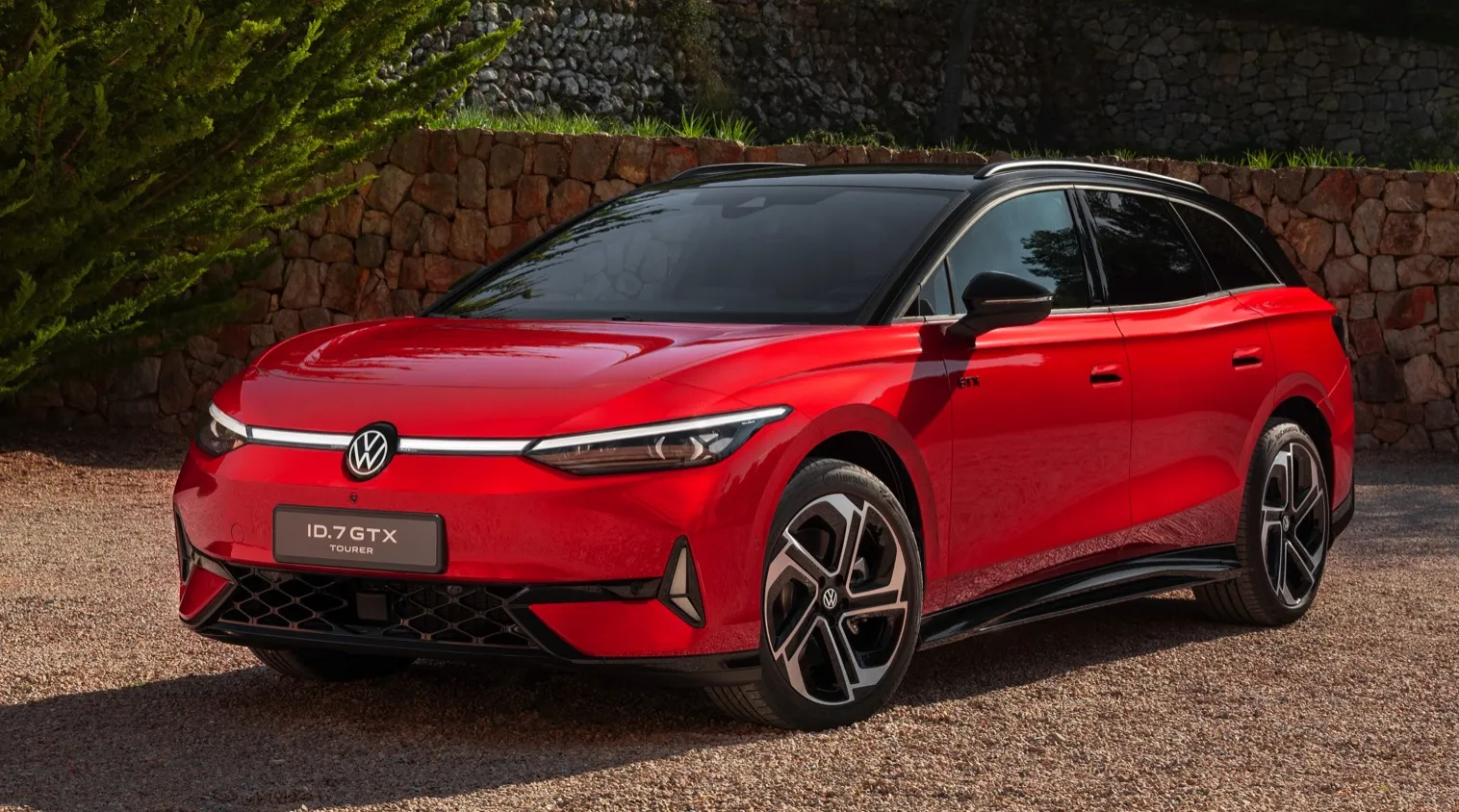 Volkswagen
Volkswagen ID.7 Tourer GTX
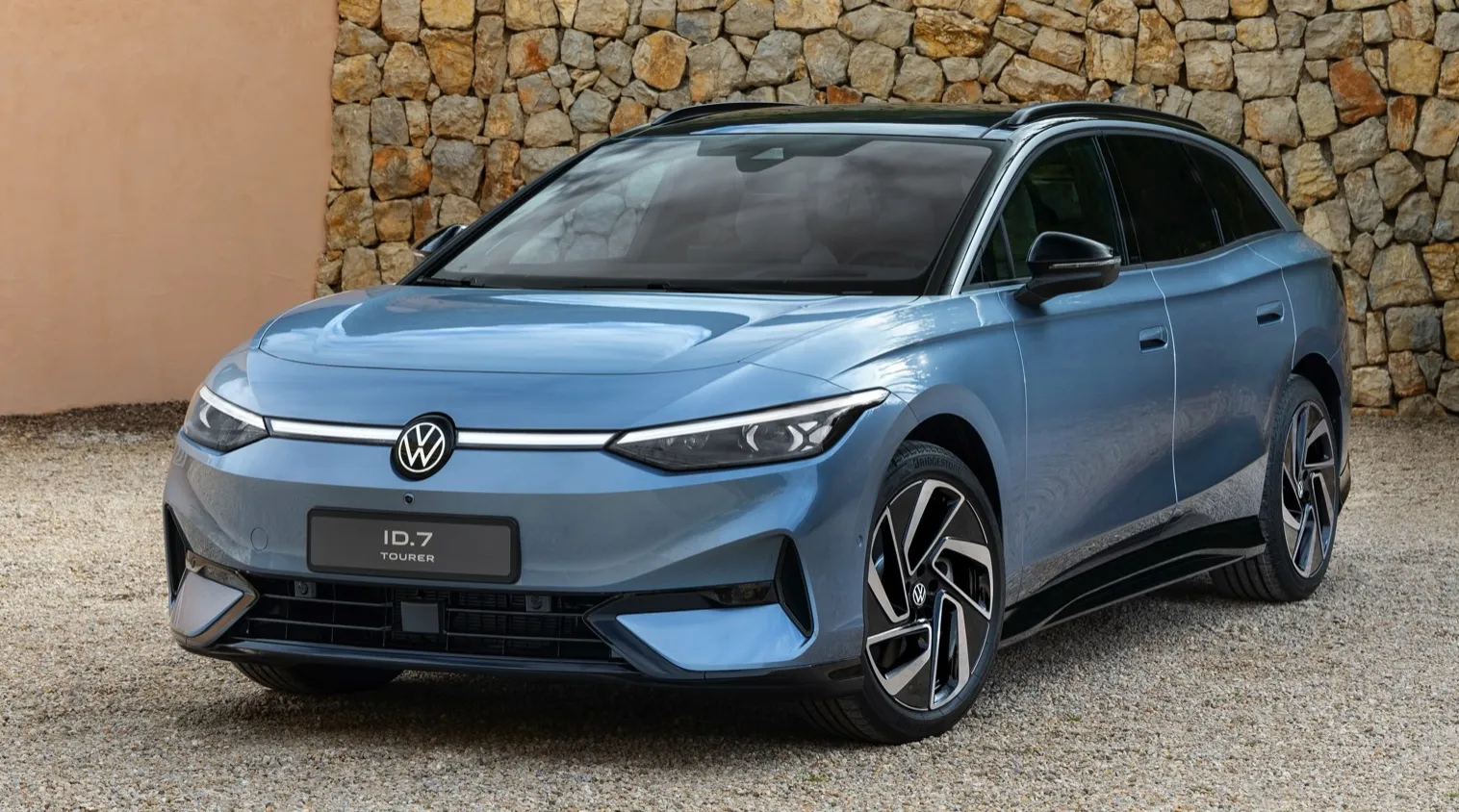 Volkswagen
Volkswagen ID.7 Tourer Pro S
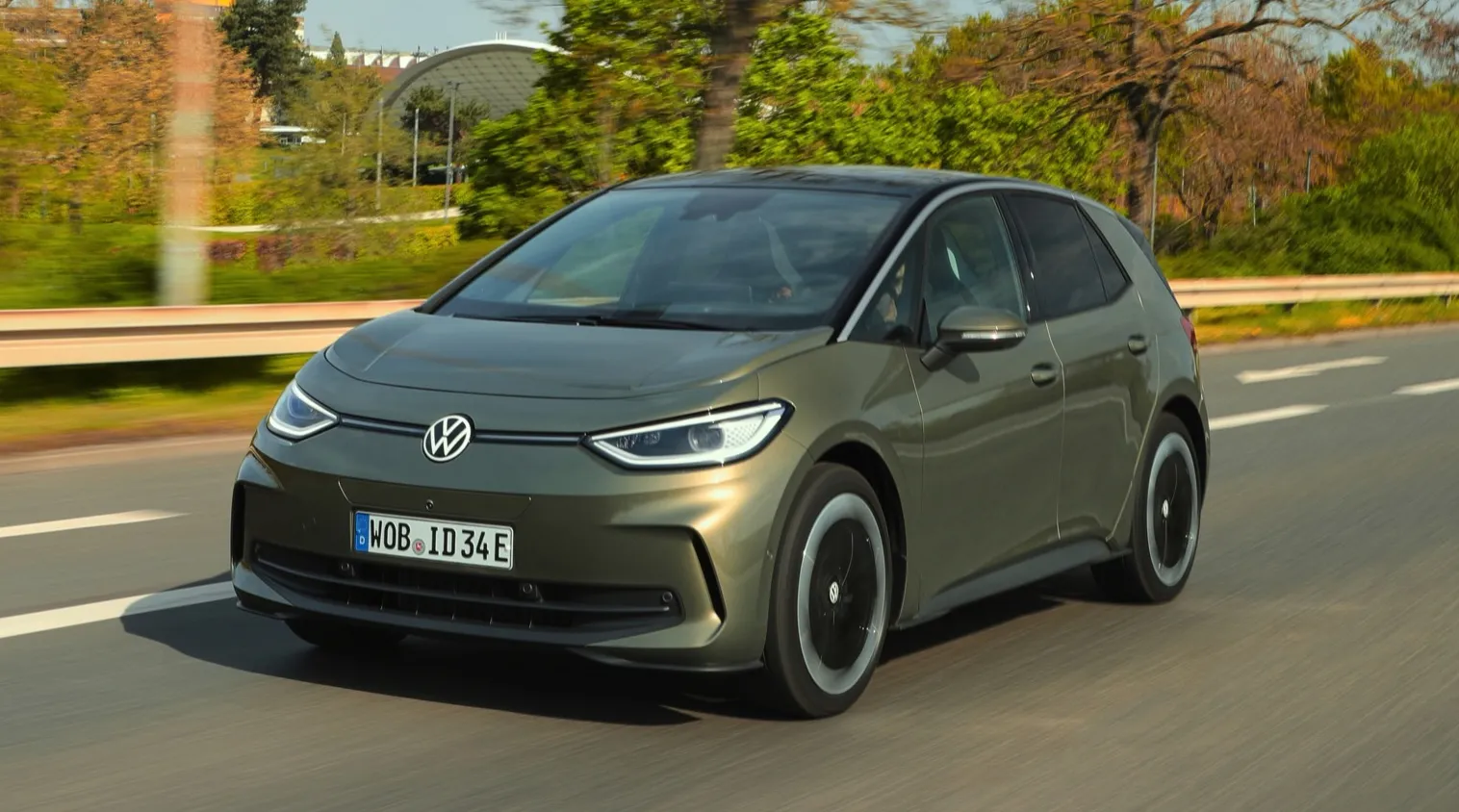 Volkswagen