

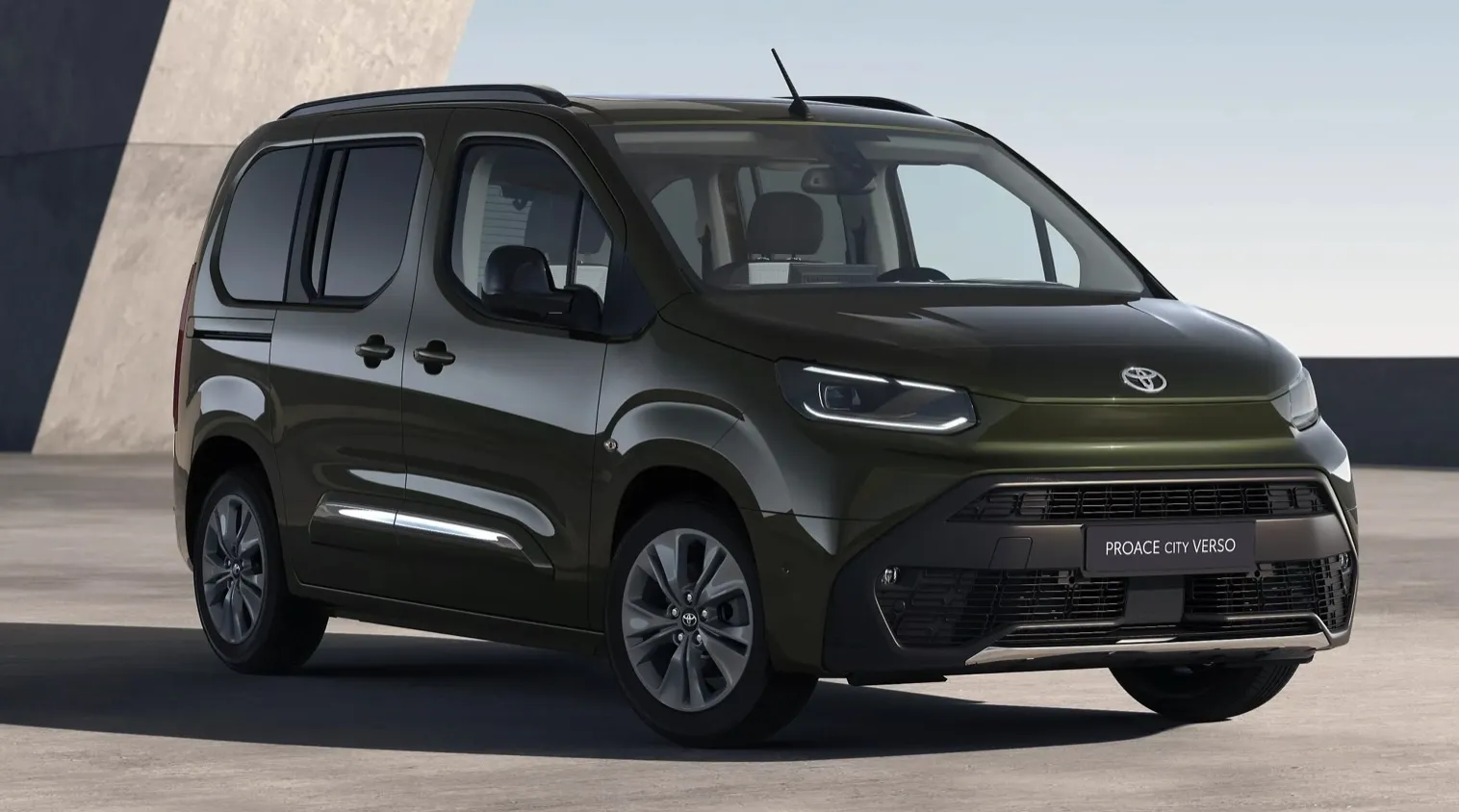
Toyota Proace City Verso Electric L2 50 kWh
Key Specifications
Real Range Estimation
| City - Cold Weather * | 240 km |
| Highway - Cold Weather * | 160 km |
| Combined - Cold Weather * | 200 km |
between 160 - 345 km
| City - Mild Weather * | 345 km |
| Highway - Mild Weather * | 205 km |
| Combined - Mild Weather * | 260 km |
Battery
| Nominal Capacity | 52.0 kWh |
| Battery Type | Lithium-ion |
| Number of Cells | No Data |
| Architecture | 400 V |
| Warranty Period | 10 years |
| Warranty Mileage | 200,000 km |
| Useable Capacity | 50.0 kWh |
| Cathode Material | LFP |
| Pack Configuration | No Data |
| Nominal Voltage | No Data |
| Form Factor | No Data |
| Name / Reference | No Data |
Performance
| Acceleration 0 - 100 km/h | 11.7 sec |
| Top Speed | 132 km/h |
| Electric Range * | 230 km |
| Total Power | 100 kW (136 PS) |
| Total Torque | 260 Nm |
| Drive | Front |
Home and Destination Charging (0 -> 100%)
Charging is possible by using a regular wall plug or a charging station. Public charging is always done through a charging station. How fast the EV can charge depends on the charging station (EVSE) used and the maximum charging capacity of the EV. The table below shows all possible options for charging the Toyota Proace City Verso Electric L2 50 kWh. Each option shows how fast the battery can be charged from empty to full.
Europe
Charging an EV in Europe differs by country. Some European countries primarily use 1-phase connections to the grid, while other countries are almost exclusively using a 3-phase connection. The table below shows all possible ways the Toyota Proace City Verso Electric L2 50 kWh can be charged, but some modes of charging might not be widely available in certain countries.
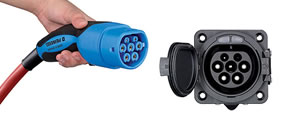
| Type 2 (Mennekes - IEC 62196) |
|---|
 |
| Charging Point | Max. Power | Power | Time | Rate |
|---|---|---|---|---|
| Standard 7.4 kW On-Board Charger | ||||
| Wall Plug (2.3 kW) | 230V / 1x10A | 2.3 kW | 25h45m | 9 km/h |
| 1-phase 16A (3.7 kW) | 230V / 1x16A | 3.7 kW | 16 hours | 14 km/h |
| 1-phase 32A (7.4 kW) | 230V / 1x32A | 7.4 kW | 8 hours | 29 km/h |
| 3-phase 16A (11 kW) | 230V / 1x16A | 3.7 kW † | 16 hours | 14 km/h |
| 3-phase 32A (22 kW) | 230V / 1x32A | 7.4 kW † | 8 hours | 29 km/h |
| Optional 11.0kW On-Board Charger * | ||||
| Wall Plug (2.3 kW) | 230V / 1x10A | 2.3 kW | 25h45m | 9 km/h |
| 1-phase 16A (3.7 kW) | 230V / 1x16A | 3.7 kW | 16 hours | 14 km/h |
| 1-phase 32A (7.4 kW) | 230V / 1x32A | 7.4 kW | 8 hours | 29 km/h |
| 3-phase 16A (11 kW) | 400V / 3x16A | 11 kW | 5h30m | 42 km/h |
| 3-phase 32A (22 kW) | 400V / 3x16A | 11 kW † | 5h30m | 42 km/h |
† = Limited by on-board charger, vehicle cannot charge faster.
* = Optional in some countries, standard in others. Check local specifications for details.
Fast Charging (10 -> 80%)
Rapid charging enables longer journeys by adding as much range as possible in the shortest amount of time. Charging power will decrease significantly after 80% state-of-charge has been reached. A typical rapid charge therefore rarely exceeds 80% SoC. The rapid charge rate of an EV depends on the charger used and the maximum charging power the EV can handle. The table below shows all details for rapid charging the Toyota Proace City Verso Electric L2 50 kWh.
- Max. Power: maximum power provided by charge point
- Avg. Power: average power provided by charge point over a session from 10% to 80%
- Time: time needed to charge from 10% to 80%
- Rate: average charging speed over a session from 10% to 80%
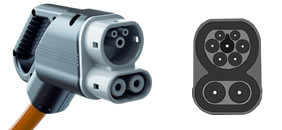
| Combined Charging System (CCS Combo 2) |
|---|
 |
| Charging Point | Max. Power | Avg. Power | Time | Rate |
|---|---|---|---|---|
| CCS (50 kW DC) | 50 kW | 45 kW † | 49 min | 190 km/h |
| CCS (100 kW DC) | 100 kW | 80 kW † | 28 min | 340 km/h |
| CCS (150 kW DC) | 100 kW † | 80 kW † | 28 min | 340 km/h |
| This vehicle supports Autocharge |
|---|
| This vehicle does not support Plug & Charge |
† = Limited by charging capabilities of vehicle
Autocharge: allows for automatic initiation of a charging session at supported CCS charging stations.
Plug & Charge: allows for automatic initiation of a charging session at supported CCS charging stations in accordance with ISO 15118.
Actual charging rates may differ from data shown due to factors like outside temperature, state of the battery and driving style.
Toyota Claimed Specifications
The table below shows the claimed specifications from the manufacturer for charging the Toyota Proace City Verso Electric L2 50 kWh. The specifications can differ from the table above for a variety of reasons. If real-world charge tests are available, these differences can be signifcant. If no real-world tests are available, the table above will be based on the manufacturer specifications as per the table below.
- Max. Power: maximum charge power during charging session
- Charge From: battery percentage (% SoC) where charging session is started
- Charge To: battery percentage (% SoC) where charging session is ended
- Time: time needed for charging session
| Toyota Claimed Specifications |
|---|
| Max. Power | Charge From | Charge To | Time |
|---|---|---|---|
| 100 kW | 0 % | 80 % | 30 min |
Dimensions and Weight
| Length | 4753 mm |
| Width | 1921 mm |
| Width with mirrors | 2107 mm |
| Height | 1814 mm |
| Wheelbase | 2975 mm |
| Weight Unladen (EU) | 1881 kg |
| Gross Vehicle Weight (GVWR) | 2390 kg |
| Max. Payload | 584 kg |
| Cargo Volume | 1050 L |
| Cargo Volume Max | 3500 L |
| Cargo Volume Frunk | 0 L |
| Roof Load | 100 kg |
| Tow Hitch Possible | Yes |
| Towing Weight Unbraked | 750 kg |
| Towing Weight Braked | 750 kg |
| Vertical Load Max | 50 kg |
About this Vehicle
Toyota Proace City Verso Electric L2 Overview
The Toyota Proace City Verso Electric L2 is a practical, family-oriented electric minivan designed for European markets, combining spacious seven-seat capacity with zero-emission capability. This electric vehicle targets families and small businesses seeking a versatile, eco-friendly alternative to traditional diesel vans, offering genuine usability without compromising on cargo space. The L2 variant distinguishes itself through an extended wheelbase (117.1 inches) compared to the L1 model, providing significantly more interior room while maintaining the same efficient 50 kWh lithium-ion battery system. The Proace City Verso Electric represents Toyota’s commitment to electrifying its commercial and family vehicle lineup, delivering a compelling option in the growing electric minivan segment where practicality meets sustainability.
Manufactured in Spain and produced from 2021-2024, the Proace City Verso Electric L2 features a front-wheel-drive configuration powered by a 100 kW permanent magnet synchronous motor. The vehicle’s design philosophy prioritizes cargo accessibility, with the battery strategically positioned beneath the load compartment floor to avoid intrusion into usable space. This thoughtful engineering allows the Toyota Proace City Verso Electric L2 to offer up to 95.1 cubic feet of maximum cargo volume—a significant advantage for families requiring flexible storage solutions. The minivan’s five-door configuration and available seven-seat layout make it an attractive choice for those needing both passenger comfort and commercial versatility.
Toyota Proace City Verso Electric L2 Performance and Driving Experience
The Proace City Verso Electric L2 delivers adequate performance for urban and suburban driving through its 100 kW electric motor, which produces 134 horsepower and 260 Nm (192 lb-ft) of torque in standard configuration. The vehicle features three selectable drive modes—Eco, Normal, and Power—that adjust motor output and throttle mapping to suit different driving conditions. In Power mode, the motor reaches full output for spirited acceleration, while Normal mode restricts power to 108 bhp for balanced efficiency, and Eco mode limits output to 81 bhp for maximum range. The Proace City Verso Electric L2 accelerates from 0-62 mph in 11.2 seconds with a top speed of 84 mph, making it suitable for highway driving despite its van classification.
Handling characteristics reflect the vehicle’s practical design philosophy rather than sporty dynamics. The front-wheel-drive system provides predictable traction, while the low center of gravity from floor-mounted battery placement contributes to stable cornering. Real-world driving impressions emphasize the Proace City Verso Electric L2’s quiet operation and smooth power delivery, with regenerative braking available through the transmission’s “B” setting to maximize range recovery during deceleration.
| Specification | Value |
|---|---|
| 0-60 mph (0-100 km/h) | 11.2 sec |
| Top Speed | 84 mph / 135 km/h |
| Power Output | 134 hp / 100 kW |
| Torque | 192 lb-ft / 260 Nm |
Toyota Proace City Verso Electric L2 Range and Battery Specifications
The Proace City Verso Electric L2 delivers a WLTP-rated range of 210-213 miles (338-343 km) on a full charge, with real-world range typically falling between 149-175 miles depending on driving conditions, load, and climate. The vehicle’s 50 kWh lithium-ion battery (with 46.3 kWh usable capacity) utilizes 216 cells organized into 18 modules, providing reliable energy storage beneath the load floor. Energy efficiency averages 31.1 kWh per 100 miles, translating to approximately 3.22 miles per kWh—respectable for a vehicle of this size and weight class.
Range performance varies significantly with driving mode selection and external factors. The Proace City Verso Electric L2 achieves optimal range in Eco mode, though this restricts climate control functionality. Normal mode offers the best balance between range and comfort, while Power mode prioritizes performance at the expense of efficiency. Weather conditions, particularly cold temperatures, can reduce range by 15-20%, and carrying maximum passenger and cargo loads will noticeably impact distance between charges.
| Range Metric | Value |
|---|---|
| WLTP Range | 210-213 miles / 338-343 km |
| Real-World Range | 149-175 miles / 240-280 km |
| Battery Capacity (Gross) | 52 kWh |
| Battery Capacity (Usable) | 50 kWh / 46.3 kWh |
| Energy Efficiency | 31.1 kWh/100 mi |
Toyota Proace City Verso Electric L2 Charging Times and Options
The Proace City Verso Electric L2 supports both AC and DC charging through its CCS Type 2 connector on a 400V architecture. Home charging via Level 2 (7.4 kW) requires approximately 6-7 hours for a complete charge, making overnight charging practical for daily use. DC fast charging represents the most convenient option for longer journeys, delivering an 80% charge in approximately 30 minutes using the vehicle’s 100 kW maximum DC charging capability.
Charging infrastructure compatibility extends across European networks, with the Proace City Verso Electric L2 accepting standard CCS Type 2 connectors found at most public charging stations. For commercial users and families with regular charging access, the combination of home Level 2 charging and occasional DC fast charging provides sufficient flexibility for typical usage patterns.
| Charging Method | Time | Speed |
|---|---|---|
| Level 1 (120V) | Not applicable | N/A |
| Level 2 (7.4 kW) | 6-7 hours | 7.4 kW |
| DC Fast Charge (10-80%) | ~30 minutes | 100 kW |
Toyota Proace City Verso Electric L2 vs Competitors
The Proace City Verso Electric L2 occupies a unique market position with limited direct competitors in the electric minivan segment. The Volkswagen ID. Buzz offers superior performance and range but commands a significantly higher price point and targets premium buyers. The Mercedes EQV provides comparable space and practicality but with greater power output and premium pricing. The Proace City Verso Electric L2 distinguishes itself through Toyota’s reliability reputation, lower acquisition cost, and practical seven-seat configuration that balances passenger comfort with cargo flexibility. For buyers prioritizing affordability and proven brand dependability over cutting-edge performance, the Proace City Verso Electric L2 presents a compelling alternative to premium competitors.
Frequently Asked Questions
Related Vehicles
View All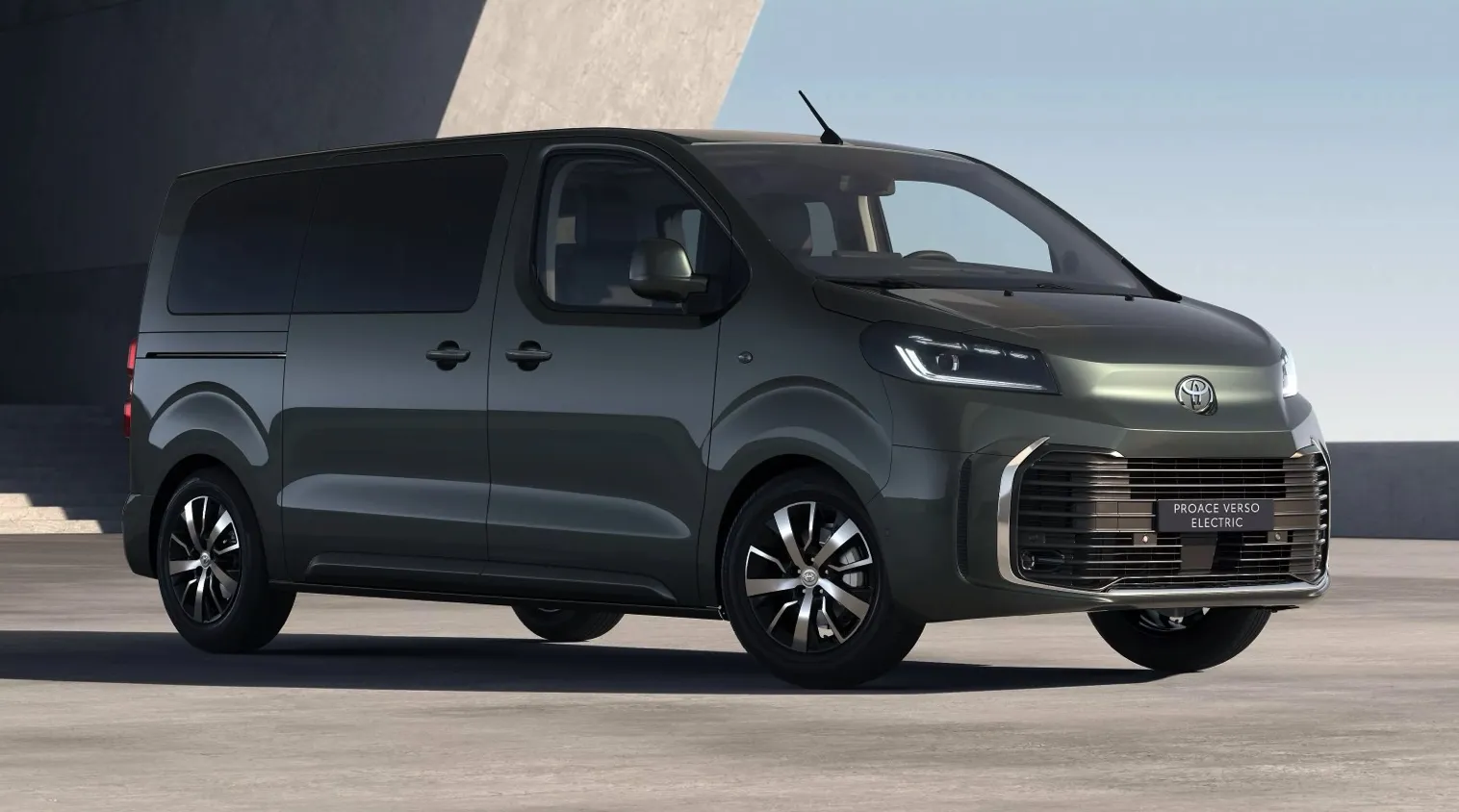 Toyota
Toyota PROACE Verso M 50 kWh
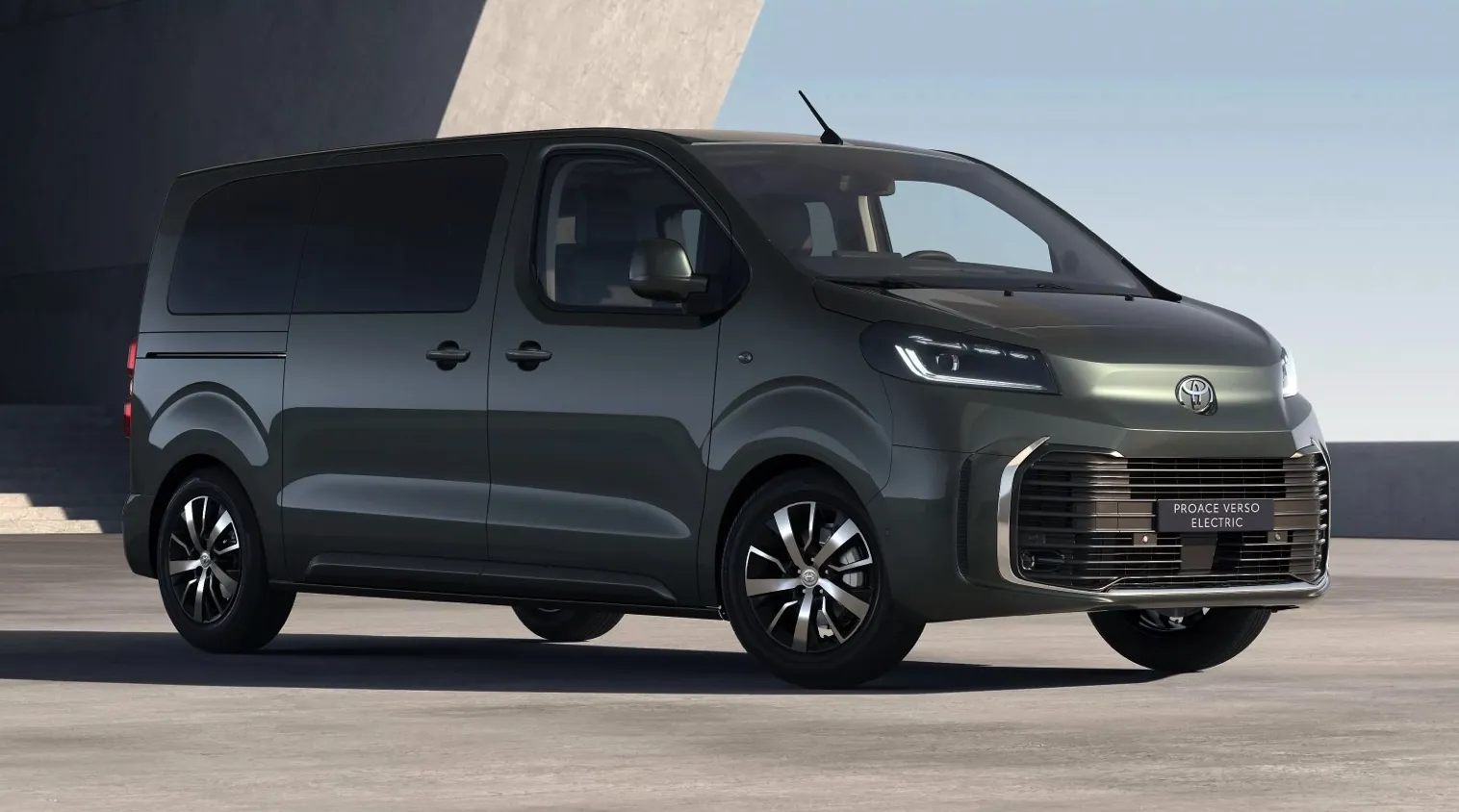 Toyota
Toyota PROACE Verso M 75 kWh
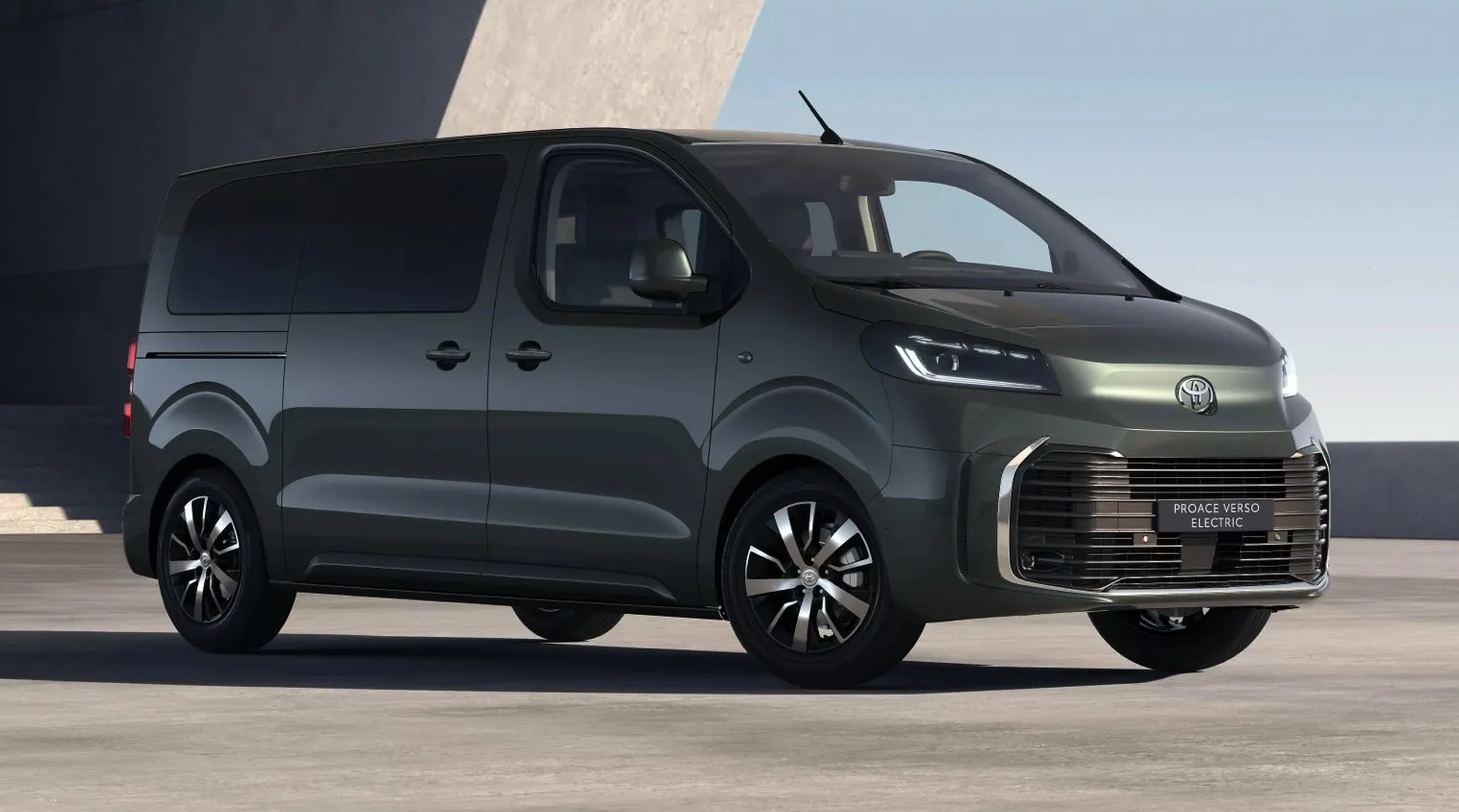 Toyota
Toyota PROACE Verso L 75 kWh
 Toyota