

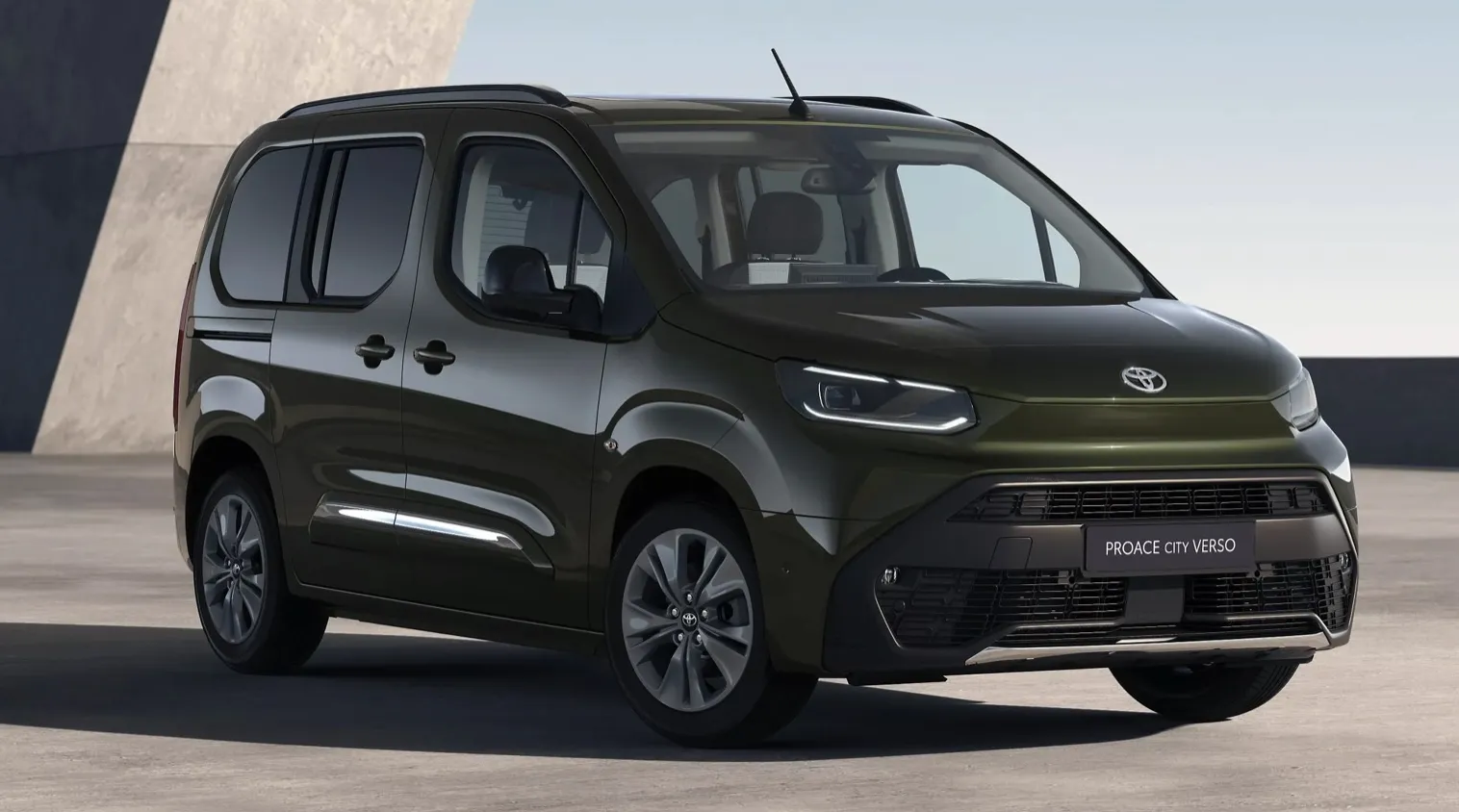
Toyota Proace City Verso Electric L1 50 kWh
Key Specifications
Real Range Estimation
| City - Cold Weather * | 245 km |
| Highway - Cold Weather * | 165 km |
| Combined - Cold Weather * | 200 km |
between 165 - 355 km
| City - Mild Weather * | 355 km |
| Highway - Mild Weather * | 205 km |
| Combined - Mild Weather * | 265 km |
Battery
| Nominal Capacity | 52.0 kWh |
| Battery Type | Lithium-ion |
| Number of Cells | No Data |
| Architecture | 400 V |
| Warranty Period | 10 years |
| Warranty Mileage | 200,000 km |
| Useable Capacity | 50.0 kWh |
| Cathode Material | LFP |
| Pack Configuration | No Data |
| Nominal Voltage | No Data |
| Form Factor | No Data |
| Name / Reference | No Data |
Performance
| Acceleration 0 - 100 km/h | 11.7 sec |
| Top Speed | 132 km/h |
| Electric Range * | 235 km |
| Total Power | 100 kW (136 PS) |
| Total Torque | 260 Nm |
| Drive | Front |
Home and Destination Charging (0 -> 100%)
Charging is possible by using a regular wall plug or a charging station. Public charging is always done through a charging station. How fast the EV can charge depends on the charging station (EVSE) used and the maximum charging capacity of the EV. The table below shows all possible options for charging the Toyota Proace City Verso Electric L1 50 kWh. Each option shows how fast the battery can be charged from empty to full.
Europe
Charging an EV in Europe differs by country. Some European countries primarily use 1-phase connections to the grid, while other countries are almost exclusively using a 3-phase connection. The table below shows all possible ways the Toyota Proace City Verso Electric L1 50 kWh can be charged, but some modes of charging might not be widely available in certain countries.
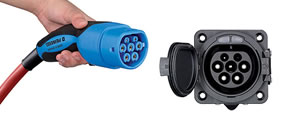
| Type 2 (Mennekes - IEC 62196) |
|---|
 |
| Charging Point | Max. Power | Power | Time | Rate |
|---|---|---|---|---|
| Standard 7.4 kW On-Board Charger | ||||
| Wall Plug (2.3 kW) | 230V / 1x10A | 2.3 kW | 25h45m | 9 km/h |
| 1-phase 16A (3.7 kW) | 230V / 1x16A | 3.7 kW | 16 hours | 15 km/h |
| 1-phase 32A (7.4 kW) | 230V / 1x32A | 7.4 kW | 8 hours | 29 km/h |
| 3-phase 16A (11 kW) | 230V / 1x16A | 3.7 kW † | 16 hours | 15 km/h |
| 3-phase 32A (22 kW) | 230V / 1x32A | 7.4 kW † | 8 hours | 29 km/h |
| Optional 11.0kW On-Board Charger * | ||||
| Wall Plug (2.3 kW) | 230V / 1x10A | 2.3 kW | 25h45m | 9 km/h |
| 1-phase 16A (3.7 kW) | 230V / 1x16A | 3.7 kW | 16 hours | 15 km/h |
| 1-phase 32A (7.4 kW) | 230V / 1x32A | 7.4 kW | 8 hours | 29 km/h |
| 3-phase 16A (11 kW) | 400V / 3x16A | 11 kW | 5h30m | 43 km/h |
| 3-phase 32A (22 kW) | 400V / 3x16A | 11 kW † | 5h30m | 43 km/h |
† = Limited by on-board charger, vehicle cannot charge faster.
* = Optional in some countries, standard in others. Check local specifications for details.
Fast Charging (10 -> 80%)
Rapid charging enables longer journeys by adding as much range as possible in the shortest amount of time. Charging power will decrease significantly after 80% state-of-charge has been reached. A typical rapid charge therefore rarely exceeds 80% SoC. The rapid charge rate of an EV depends on the charger used and the maximum charging power the EV can handle. The table below shows all details for rapid charging the Toyota Proace City Verso Electric L1 50 kWh.
- Max. Power: maximum power provided by charge point
- Avg. Power: average power provided by charge point over a session from 10% to 80%
- Time: time needed to charge from 10% to 80%
- Rate: average charging speed over a session from 10% to 80%
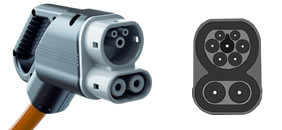
| Combined Charging System (CCS Combo 2) |
|---|
 |
| Charging Point | Max. Power | Avg. Power | Time | Rate |
|---|---|---|---|---|
| CCS (50 kW DC) | 50 kW | 45 kW † | 49 min | 200 km/h |
| CCS (100 kW DC) | 100 kW | 80 kW † | 28 min | 350 km/h |
| CCS (150 kW DC) | 100 kW † | 80 kW † | 28 min | 350 km/h |
| This vehicle supports Autocharge |
|---|
| This vehicle does not support Plug & Charge |
† = Limited by charging capabilities of vehicle
Autocharge: allows for automatic initiation of a charging session at supported CCS charging stations.
Plug & Charge: allows for automatic initiation of a charging session at supported CCS charging stations in accordance with ISO 15118.
Actual charging rates may differ from data shown due to factors like outside temperature, state of the battery and driving style.
Toyota Claimed Specifications
The table below shows the claimed specifications from the manufacturer for charging the Toyota Proace City Verso Electric L1 50 kWh. The specifications can differ from the table above for a variety of reasons. If real-world charge tests are available, these differences can be signifcant. If no real-world tests are available, the table above will be based on the manufacturer specifications as per the table below.
- Max. Power: maximum charge power during charging session
- Charge From: battery percentage (% SoC) where charging session is started
- Charge To: battery percentage (% SoC) where charging session is ended
- Time: time needed for charging session
| Toyota Claimed Specifications |
|---|
| Max. Power | Charge From | Charge To | Time |
|---|---|---|---|
| 100 kW | 0 % | 80 % | 30 min |
Dimensions and Weight
| Length | 4403 mm |
| Width | 1921 mm |
| Width with mirrors | 2107 mm |
| Height | 1803 mm |
| Wheelbase | 2785 mm |
| Weight Unladen (EU) | 1811 kg |
| Gross Vehicle Weight (GVWR) | 2360 kg |
| Max. Payload | 624 kg |
| Cargo Volume | 775 L |
| Cargo Volume Max | 3000 L |
| Cargo Volume Frunk | 0 L |
| Roof Load | 100 kg |
| Tow Hitch Possible | Yes |
| Towing Weight Unbraked | 750 kg |
| Towing Weight Braked | 750 kg |
| Vertical Load Max | 50 kg |
About this Vehicle
Toyota Proace City Verso Overview
The Toyota Proace City Verso is a practical, family-oriented electric MPV that combines Toyota’s reliability with zero-emission capability. Positioned as a mainstream electric vehicle for families and small businesses, the Proace City Verso L1 50 kWh model offers versatility without compromising on space or functionality. This electric MPV targets buyers seeking a spacious, eco-friendly alternative to traditional petrol or diesel family cars, with seating for up to seven passengers and impressive cargo flexibility. The Proace City Verso distinguishes itself through its Smart Cargo system, which enables through-loading and folding passenger seats to maximize load space up to 4.4 cubic meters. As an electric family MPV, the Toyota Proace City Verso represents a significant shift in how families approach sustainable transportation, delivering the practicality of a traditional MPV with the environmental benefits and lower running costs of electric power.
The Proace City Verso’s design philosophy prioritizes real-world usability over flashy styling. Toyota’s engineering ensures that the lithium-ion battery, with its 50 kWh capacity, sits beneath the load compartment floor, preserving interior space that would otherwise be compromised. This thoughtful integration makes the Proace City Verso an intelligent choice for families who refuse to sacrifice practicality for environmental responsibility. The vehicle’s front-wheel-drive configuration and compact dimensions make it equally suitable for urban commuting and longer family journeys.
Toyota Proace City Verso Performance and Driving Experience
The Toyota Proace City Verso delivers responsive, predictable performance suitable for family driving. Powered by a 100 kW permanent magnet synchronous electric motor, the Proace City Verso accelerates from 0-62 mph in 11.2 seconds with a maximum speed of 84 mph. The electric drivetrain provides 260 Nm of torque in Power mode, delivering smooth acceleration without the gear-shifting delays of traditional transmissions. The Proace City Verso features three selectable drive modes—Power, Normal, and Eco—allowing drivers to adjust motor output and throttle mapping based on driving conditions and passenger load.
The Proace City Verso’s handling characteristics reflect its MPV heritage, prioritizing comfort and stability over sporty dynamics. The MacPherson strut front suspension and torsion beam rear suspension absorb road imperfections effectively, making the Proace City Verso a composed cruiser for family trips. Electric power-assisted steering provides light, responsive control, while the 11.2-meter turning circle ensures maneuverability in tight urban spaces. Real-world driving impressions highlight the Proace City Verso’s quiet cabin and linear power delivery, making it an excellent choice for families transitioning to electric vehicles.
| Specification | Value |
|---|---|
| 0-62 mph (0-100 km/h) | 11.2 sec |
| Top Speed | 84 mph / 135 km/h |
| Power Output | 136 hp / 100 kW |
| Torque | 260 lb-ft / 260 Nm |
Toyota Proace City Verso Range and Battery Specifications
The Toyota Proace City Verso L1 50 kWh model delivers a WLTP-certified range of 213 miles (343 km), making it suitable for daily family use and weekend getaways. Real-world range varies between 145-315 km depending on driving conditions, with cold weather reducing range to approximately 220 km. The Proace City Verso’s 50 kWh lithium-ion battery comprises 216 cells organized into 18 modules, providing reliable energy storage with a 5-year warranty. Energy consumption averages 0.3 kWh per mile, or 18.1 kWh per 100 km, demonstrating efficient power management across various driving scenarios.
Range performance in the Proace City Verso depends significantly on driving style, weather conditions, and passenger load. Highway driving at constant speeds reduces range compared to urban stop-and-start driving. The Proace City Verso’s battery management system optimizes energy distribution across Power, Normal, and Eco modes, with Eco mode extending range when carrying the maximum payload. Winter temperatures can reduce the Proace City Verso’s range by 15-20%, a consideration for families in colder climates.
| Range Metric | Value |
|---|---|
| WLTP Range | 213 miles / 343 km |
| Real-World Range | 145-315 km (varies by conditions) |
| Cold Weather Range | 220 km |
| Battery Capacity | 50 kWh (usable) |
Toyota Proace City Verso Charging Times and Options
The Toyota Proace City Verso supports multiple charging solutions for different scenarios. Home charging via a 240V wallbox takes approximately 4.5 hours for a full charge, while a standard domestic socket requires 30.5 hours. The Proace City Verso includes an 11 kW on-board charger as standard, enabling efficient Level 2 charging at home or public charging stations. DC fast charging reaches 80% capacity in approximately 30 minutes, making the Proace City Verso practical for longer journeys requiring quick top-ups.
The Proace City Verso accepts both Type 2 AC connectors for normal charging and CCS2 (Combo2) connectors for DC fast charging, ensuring compatibility with most European charging networks. For families with dedicated home charging infrastructure, the Proace City Verso’s 11 kW charger provides overnight charging convenience, while DC fast charging capability supports road trips and commercial applications requiring rapid turnaround times.
| Charging Method | Time | Speed |
|---|---|---|
| Level 1 (Domestic Socket) | 30.5 hours | ~1.6 kW |
| Level 2 (240V/11kW Wallbox) | 4.5 hours | 11 kW |
| DC Fast Charge (10-80%) | 30 minutes | up to 100 kW |
Toyota Proace City Verso vs Competitors
The Toyota Proace City Verso competes directly with the Volkswagen ID. Buzz, Kia EV9, and Hyundai Ioniq 7 in the electric family MPV segment. While the Proace City Verso prioritizes practicality and affordability with its 213-mile range and 50 kWh battery, the Volkswagen ID. Buzz offers more premium styling and advanced technology at higher price points. The Kia EV9 provides larger battery options and greater range (up to 300+ miles), appealing to families requiring extended driving capability. The Hyundai Ioniq 7 delivers competitive range and faster charging speeds, though at comparable or higher pricing. The Proace City Verso’s strength lies in its proven Toyota reliability, Smart Cargo system flexibility, and competitive pricing starting at £31,985, making it the practical choice for budget-conscious families prioritizing functionality over cutting-edge technology.
Frequently Asked Questions
Related Vehicles
View All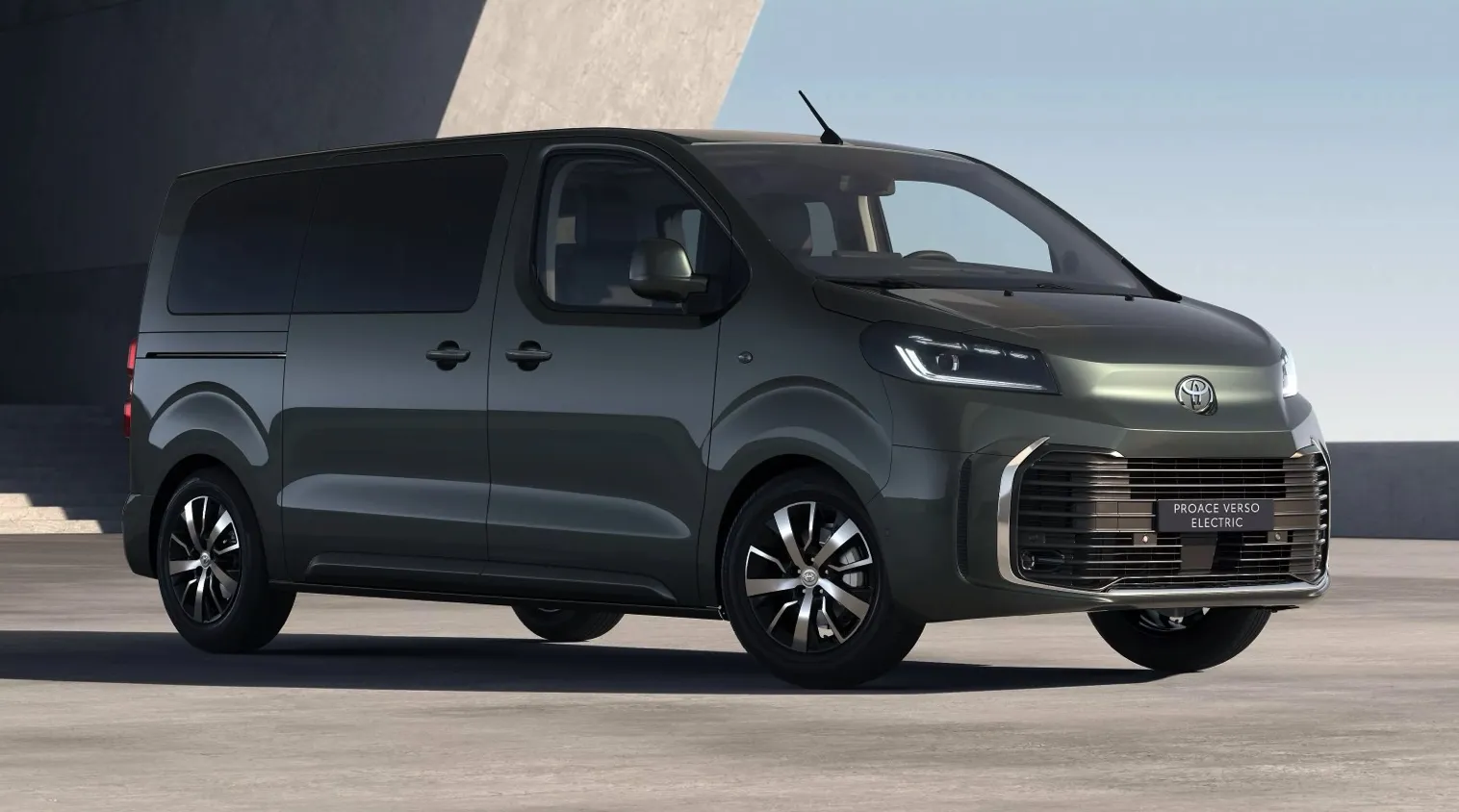 Toyota
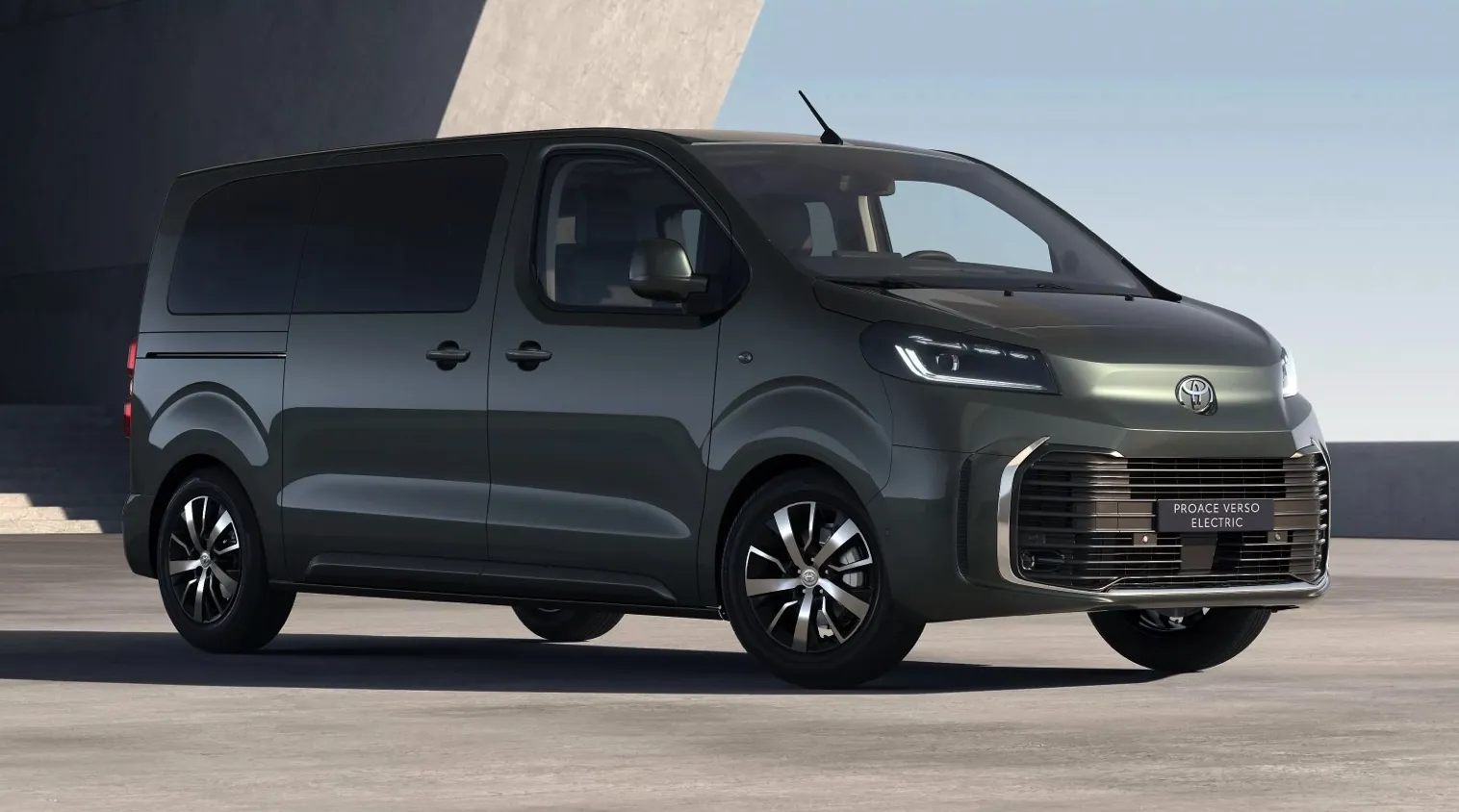
Toyota PROACE Verso M 50 kWh
 Toyota
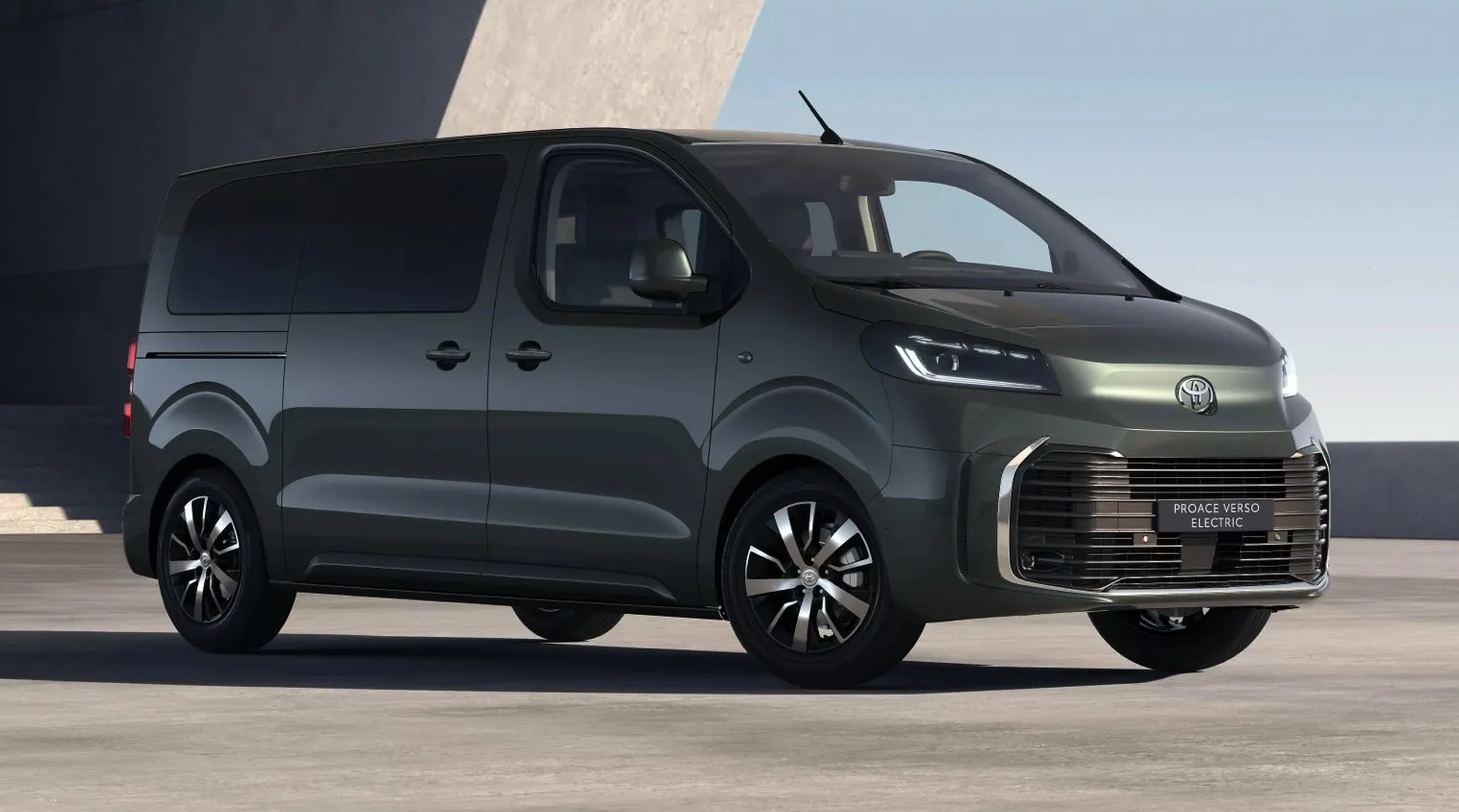
Toyota PROACE Verso M 75 kWh
 Toyota
Toyota PROACE Verso L 75 kWh
 Toyota