

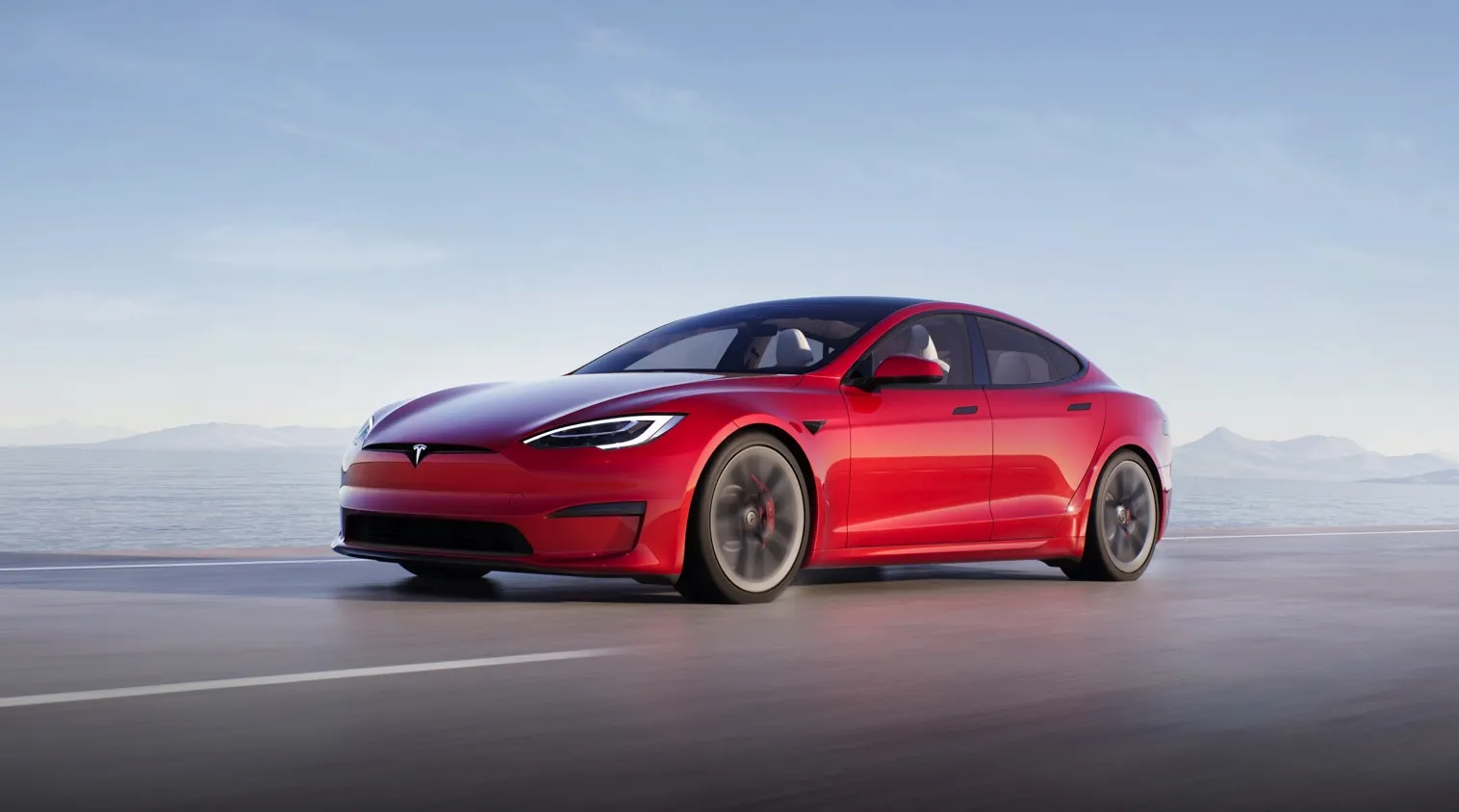
Tesla Model S Plaid
Key Specifications
Real Range
| City - Cold Weather | 525 km |
| Highway - Cold Weather | 410 km |
| Combined - Cold Weather | 470 km |
between 410 - 790 km
| City - Mild Weather | 790 km |
| Highway - Mild Weather | 535 km |
| Combined - Mild Weather | 645 km |
Battery
| Nominal Capacity* | 100.0 kWh |
| Battery Type | Lithium-ion |
| Number of Cells | 7920 |
| Architecture | 400 V |
| Warranty Period | 8 years |
| Warranty Mileage | 240,000 km |
| Useable Capacity* | 95.0 kWh |
| Cathode Material | NCA |
| Pack Configuration | 110s72p |
| Nominal Voltage | 407 V |
| Form Factor | No Data |
| Name / Reference | Panasonic 18650 |
Performance
| Acceleration 0 - 100 km/h * | 2.3 sec |
| Top Speed | 282 km/h |
| Electric Range | 560 km |
| Total Power | 760 kW (1033 PS) |
| Total Torque | No Data |
| Drive | AWD |
Home and Destination Charging (0 -> 100%)
Charging is possible by using a regular wall plug or a charging station. Public charging is always done through a charging station. How fast the EV can charge depends on the charging station (EVSE) used and the maximum charging capacity of the EV. The table below shows all possible options for charging the Tesla Model S Plaid. Each option shows how fast the battery can be charged from empty to full.
Europe
Charging an EV in Europe differs by country. Some European countries primarily use 1-phase connections to the grid, while other countries are almost exclusively using a 3-phase connection. The table below shows all possible ways the Tesla Model S Plaid can be charged, but some modes of charging might not be widely available in certain countries.
| Type 2 (Mennekes - IEC 62196) |
|---|
 |
| Charging Point | Max. Power | Power | Time | Rate |
|---|---|---|---|---|
| Wall Plug (2.3 kW) | 230V / 1x10A | 2.3 kW | 48h45m | 11 km/h |
| 1-phase 16A (3.7 kW) | 230V / 1x16A | 3.7 kW | 30h15m | 19 km/h |
| 1-phase 32A (7.4 kW) | 230V / 1x32A | 7.4 kW | 15h15m | 37 km/h |
| 3-phase 16A (11 kW) | 400V / 3x16A | 11 kW | 10h15m | 55 km/h |
| 3-phase 32A (22 kW) | 400V / 3x16A | 11 kW † | 10h15m | 55 km/h |
† = Limited by on-board charger, vehicle cannot charge faster.
Fast Charging (10 -> 80%)
Rapid charging enables longer journeys by adding as much range as possible in the shortest amount of time. Charging power will decrease significantly after 80% state-of-charge has been reached. A typical rapid charge therefore rarely exceeds 80% SoC. The rapid charge rate of an EV depends on the charger used and the maximum charging power the EV can handle. The table below shows all details for rapid charging the Tesla Model S Plaid.
Tesla has not released details about rapid charging the Model S. The information below is based on estimated values of the most likely rapid charging capabilities.
- Max. Power: maximum power provided by charge point
- Avg. Power: average power provided by charge point over a session from 10% to 80%
- Time: time needed to charge from 10% to 80%
- Rate: average charging speed over a session from 10% to 80%
| Combined Charging System (CCS Combo 2) |
|---|
 |
| Charging Point | Max. Power | Avg. Power | Time | Rate |
|---|---|---|---|---|
| CCS (50 kW DC) | 50 kW | 50 kW | 84 min | 280 km/h |
| Supercharger v2 Shared (75 kW DC) | 75 kW | 70 kW † | 60 min | 390 km/h |
| Supercharger v2 (150 kW DC) | 150 kW | 110 kW † | 38 min | 610 km/h |
| CCS (175 kW DC) | 175 kW | 120 kW † | 35 min | 670 km/h |
| Supercharger v3 (250 kW DC) | 250 kW | 140 kW † | 30 min | 780 km/h |
| CCS (350 kW DC) | 250 kW † | 140 kW † | 30 min | 780 km/h |
| This vehicle supports Autocharge |
|---|
| This vehicle does not support Plug & Charge |
† = Limited by charging capabilities of vehicle
Autocharge: allows for automatic initiation of a charging session at supported CCS charging stations.
Plug & Charge: allows for automatic initiation of a charging session at supported CCS charging stations in accordance with ISO 15118.
Actual charging rates may differ from data shown due to factors like outside temperature, state of the battery and driving style.
Dimensions and Weight
| Length | 5021 mm |
| Width | 1987 mm |
| Width with mirrors | 2189 mm |
| Height | 1431 mm |
| Wheelbase | 2960 mm |
| Weight Unladen (EU) | 2265 kg |
| Gross Vehicle Weight (GVWR) | 2629 kg |
| Max. Payload | 439 kg |
| Cargo Volume | 709 L |
| Cargo Volume Max | 1828 L |
| Cargo Volume Frunk | 89 L |
| Roof Load | 75 kg |
| Tow Hitch Possible | Yes |
| Towing Weight Unbraked | 750 kg |
| Towing Weight Braked | 1600 kg |
| Vertical Load Max | 100 kg |
About this Vehicle
Tesla Model S Plaid Overview
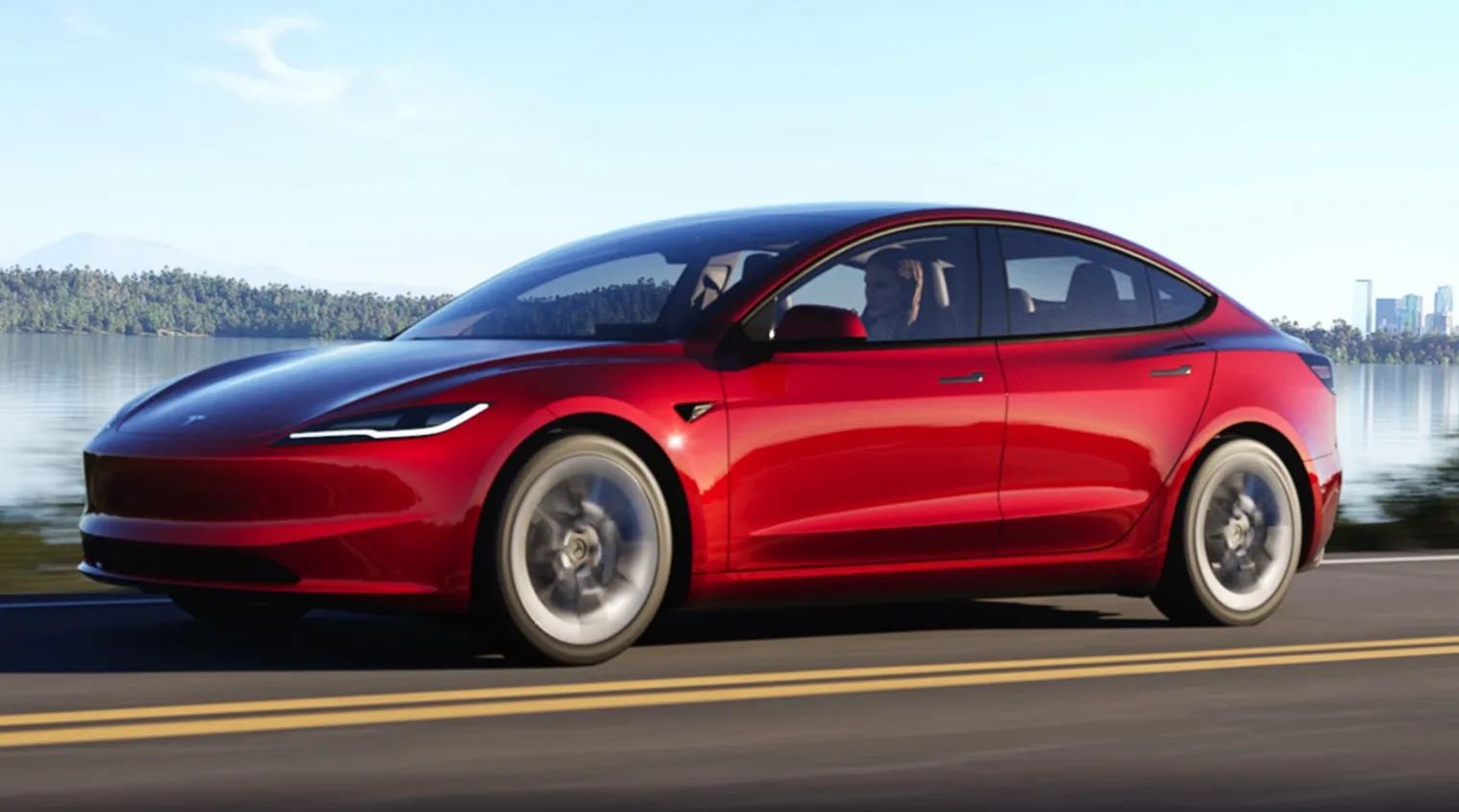
The Tesla Model S Plaid is positioned as a premium high-performance electric sedan, effectively a halo car for Tesla’s lineup and a benchmark for EV performance worldwide. As a flagship Tesla electric sedan, it targets buyers who want supercar acceleration, long-distance usability, and cutting‑edge tech in a practical five-seat package. With its tri‑motor all‑wheel‑drive powertrain and luxury fastback body, the Model S Plaid sits above mainstream EVs and most German executive sedans in outright performance.
This Tesla Model S Plaid review focuses on its blend of brutal speed, strong EV specs, and everyday usability. Tesla’s tri‑motor setup delivers an estimated 1,020 hp and AWD traction, while the updated suspension and sound deadening improve refinement for 2026. The car’s minimalist interior, large central touchscreen, and advanced driver‑assistance systems underline Tesla’s tech‑first design philosophy. In the current EV landscape, the Model S Plaid matters because it still defines what a long‑range, ultra‑quick electric vehicle can be, combining up to 368 miles of EPA range with near‑hypercar acceleration.
Tesla Model S Plaid Performance and Driving Experience
On performance, the Tesla Model S Plaid remains one of the quickest production cars on sale. Tesla quotes 0–60 mph in 1.99 seconds with rollout subtracted and a top speed of 200 mph when equipped with the Track Package and appropriate wheels and brakes. The tri‑motor AWD layout (one motor front, two rear) delivers instant torque and relentless acceleration, yet the single‑speed transmission keeps power delivery seamless and silent.
Recent updates bring revised suspension tuning and improved high‑speed stability, making the Model S Plaid more composed on fast highways and better controlled on back roads. Steering is quick and the low center of gravity from the underfloor battery contributes to flat cornering. While comfort‑oriented compared with track specials, the optional Track Package upgrades brakes, wheels, and tires for serious circuit use and repeated high‑speed stops.
| Specification | Value |
|---|---|
| 0-60 mph (0-100 km/h) | 1.99 sec |
| Top Speed | 200 mph / 322 km/h<em> |
| Power Output | 1,020 hp / ~761 kW |
| Torque | ~714 lb-ft / ~968 Nm</em> |
\Top speed requires Track Package; torque based on independent test data.
Tesla Model S Plaid Range and Battery Specifications
The Tesla Model S Plaid WLTP range is not officially highlighted by Tesla for all markets, but in the U.S. the EPA‑estimated range is 368 miles (592 km) on the standard wheel setup. Real‑world range will vary; many owners and tests report around 320–340 miles (515–550 km) on mixed driving if you avoid repeated hard acceleration and very high speeds. With 21‑inch wheels, range can drop significantly, closer to the low‑300‑mile bracket.
Under the floor sits an approximate 100 kWh lithium‑ion battery pack, with usable capacity in the low‑ to mid‑90 kWh range. Energy efficiency sits around 31 kWh/100 mi (about 310 Wh/mi) per EPA data for the 2026 Plaid. Weather, sustained high speed, aggressive driving, and elevation changes will all affect the Tesla Model S Plaid’s real‑world range far more than they would in a combustion sedan, so planning for a 10–20% buffer on long trips is sensible.
| Range Metric | Value |
|---|---|
| WLTP Range | ~390–400 miles / ~630–645 km</em> |
| EPA Range | 368 miles / 592 km |
| Real-World Range | ~320–340 miles / ~515–550 km |
| Battery Capacity | ~95 kWh (usable) |
\*Approximate based on European data; Tesla publishes EPA figures.
Tesla Model S Plaid Charging Times and Options
For home charging, the Tesla Model S Plaid supports up to 11.5 kW AC on a 240 V Level 2 wall connector, which typically adds around 30–35 miles of range per hour and can recharge the pack from empty to full in about 9–11 hours. A regular 120 V household outlet (Level 1) is much slower and best used only for overnight top‑ups, adding just a few miles of range per hour.
On the road, the Model S Plaid shines with DC fast charging up to 250 kW on compatible Tesla Superchargers. Under ideal conditions, you can expect 10–80% in roughly 25–30 minutes, with the fastest charging from 10–50% before the curve tapers. The car uses Tesla’s NACS connector in North America, giving access to the expansive Tesla Supercharger network and, increasingly, third‑party networks adopting NACS. In practice, most owners combine home Level 2 charging with occasional Supercharger stops on long trips.
| Charging Method | Time | Speed |
|---|---|---|
| Level 1 (120V) | ~60–80 hours (0–100%) | ~1–1.5 kW |
| Level 2 (240V/7kW) | ~14–16 hours (0–100%) | ~7 kW |
| Level 2 (240V/11kW) | ~9–11 hours (0–100%) | ~11.5 kW |
| DC Fast Charge (10-80%) | ~25–30 min | up to 250 kW |
Tesla Model S Plaid vs Competitors
In a Tesla Model S Plaid vs Tesla Model 3 Performance comparison, the Plaid delivers far more power, range, and interior space, but at a much higher price. Against German rivals like the BMW i5 M60 and Mercedes-AMG EQE, the Model S Plaid is substantially quicker in a straight line and offers stronger range and charging speeds, though it trails them in material richness and traditional luxury feel. Compared with the Audi e-tron GT and Porsche Taycan, the Model S Plaid wins on headline range and practicality, while those competitors fight back with sharper steering feel and more consistent track performance. As a whole, the Tesla Model S Plaid comparison set underscores its role as the outright performance and value leader at its price point.
Frequently Asked Questions
Related Vehicles
View All Tesla
Tesla
Tesla Model Y Long Range RWD
 Tesla
Tesla
Tesla Model Y Long Range Dual Motor
 Tesla
Tesla
Tesla Model X Plaid
 Tesla
Tesla