Charging is possible by using a regular wall plug or a charging station. Public charging is always done through a charging station. How fast the EV can charge depends on the charging station (EVSE) used and the maximum charging capacity of the EV. The table below shows all possible options for charging the Smart #1 Pure. Each option shows how fast the battery can be charged from empty to full.
Europe
Charging an EV in Europe differs by country. Some European countries primarily use 1-phase connections to the grid, while other countries are almost exclusively using a 3-phase connection. The table below shows all possible ways the Smart #1 Pure can be charged, but some modes of charging might not be widely available in certain countries.
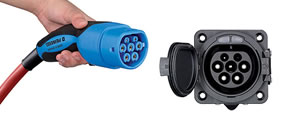
Type 2 (Mennekes - IEC 62196)
Charging Point
Max. Power
Power
Time
Rate
Wall Plug (2.3 kW)
230V / 1x10A
2.3 kW
24h15m
10 km/h
1-phase 16A (3.7 kW)
230V / 1x16A
3.7 kW
15 hours
17 km/h
1-phase 32A (7.4 kW)
230V / 1x32A
7.4 kW
7h30m
33 km/h
3-phase 16A (11 kW)
230V / 1x16A
3.7 kW †
15 hours
17 km/h
3-phase 32A (22 kW)
230V / 1x32A
7.4 kW †
7h30m
33 km/h
† = Limited by on-board charger, vehicle cannot charge faster.
Fast Charging (10 -> 80%)
Rapid charging enables longer journeys by adding as much range as possible in the shortest amount of time. Charging power will decrease significantly after 80% state-of-charge has been reached. A typical rapid charge therefore rarely exceeds 80% SoC. The rapid charge rate of an EV depends on the charger used and the maximum charging power the EV can handle. The table below shows all details for rapid charging the Smart #1 Pure.
Max. Power: maximum power provided by charge point
Avg. Power: average power provided by charge point over a session from 10% to 80%
Time: time needed to charge from 10% to 80%
Rate: average charging speed over a session from 10% to 80%
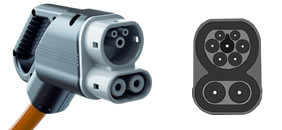
Combined Charging System (CCS Combo 2)
Charging Point
Max. Power
Avg. Power
Time
Rate
CCS (50 kW DC)
50 kW
40 kW †
52 min
200 km/h
CCS (100 kW DC)
100 kW
60 kW †
35 min
300 km/h
CCS (150 kW DC)
130 kW †
65 kW †
32 min
320 km/h
This vehicle supports Autocharge
This vehicle does not support Plug & Charge
† = Limited by charging capabilities of vehicle
Autocharge: allows for automatic initiation of a charging session at supported CCS charging stations.
Plug & Charge: allows for automatic initiation of a charging session at supported CCS charging stations in accordance with ISO 15118.
Actual charging rates may differ from data shown due to factors like outside temperature, state of the battery and driving style.
Smart Claimed Specifications
The table below shows the claimed specifications from the manufacturer for charging the Smart #1 Pure. The specifications can differ from the table above for a variety of reasons. If real-world charge tests are available, these differences can be signifcant. If no real-world tests are available, the table above will be based on the manufacturer specifications as per the table below.
Max. Power: maximum charge power during charging session
Charge From: battery percentage (% SoC) where charging session is started
Charge To: battery percentage (% SoC) where charging session is ended
Time: time needed for charging session
Smart Claimed Specifications
Max. Power
Charge From
Charge To
Time
130 kW
10 %
80 %
30 min
Dimensions and Weight
Length
4270 mm
Width
1822 mm
Width with mirrors
2025 mm
Height
1636 mm
Wheelbase
2750 mm
Weight Unladen (EU)
1855 kg
Gross Vehicle Weight (GVWR)
2205 kg
Max. Payload
425 kg
Cargo Volume
323 L
Cargo Volume Max
986 L
Cargo Volume Frunk
15 L
Roof Load
0 kg
Tow Hitch Possible
No
Towing Weight Unbraked
0 kg
Towing Weight Braked
0 kg
Vertical Load Max
0 kg
About this Vehicle
Smart #1 Pure Overview
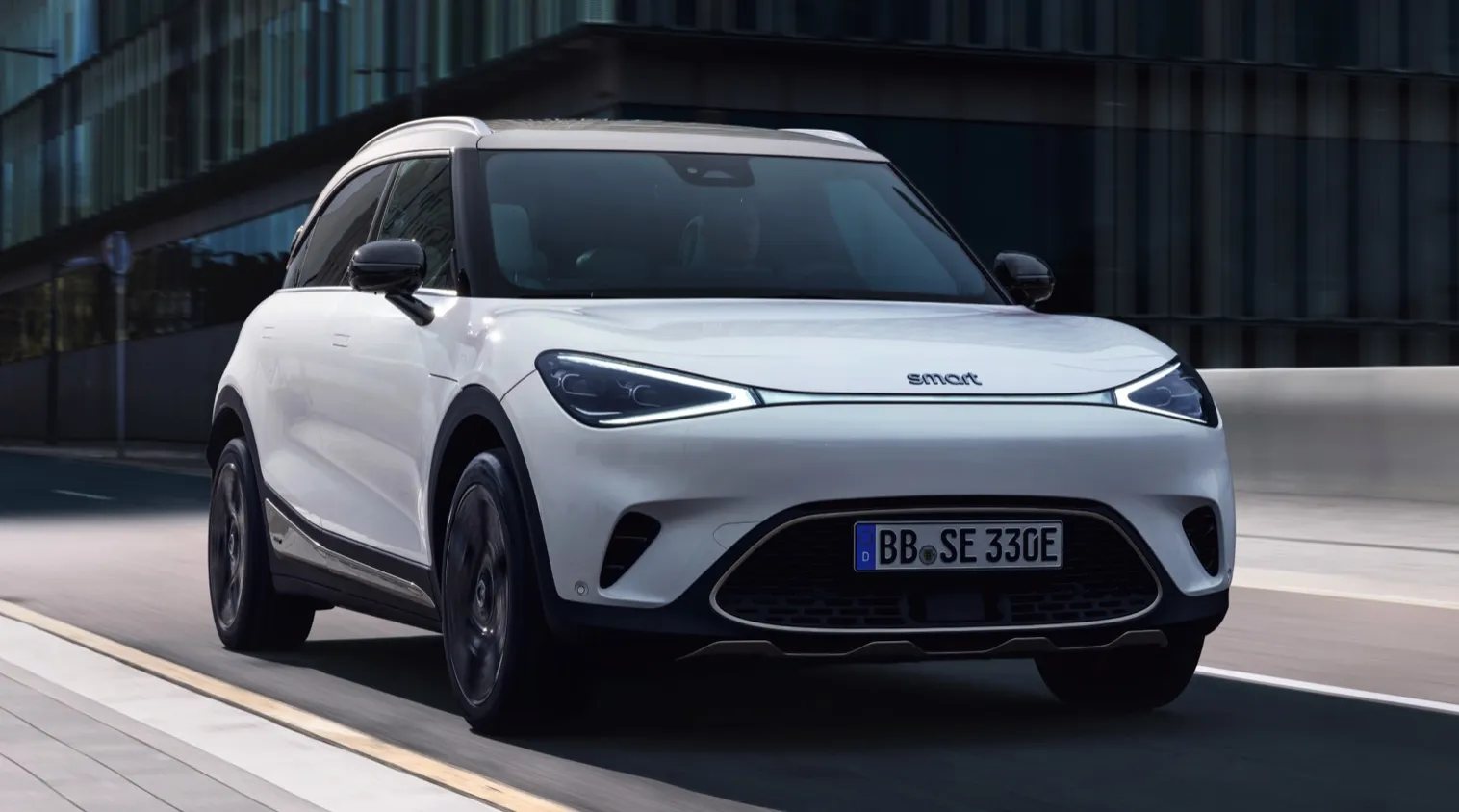
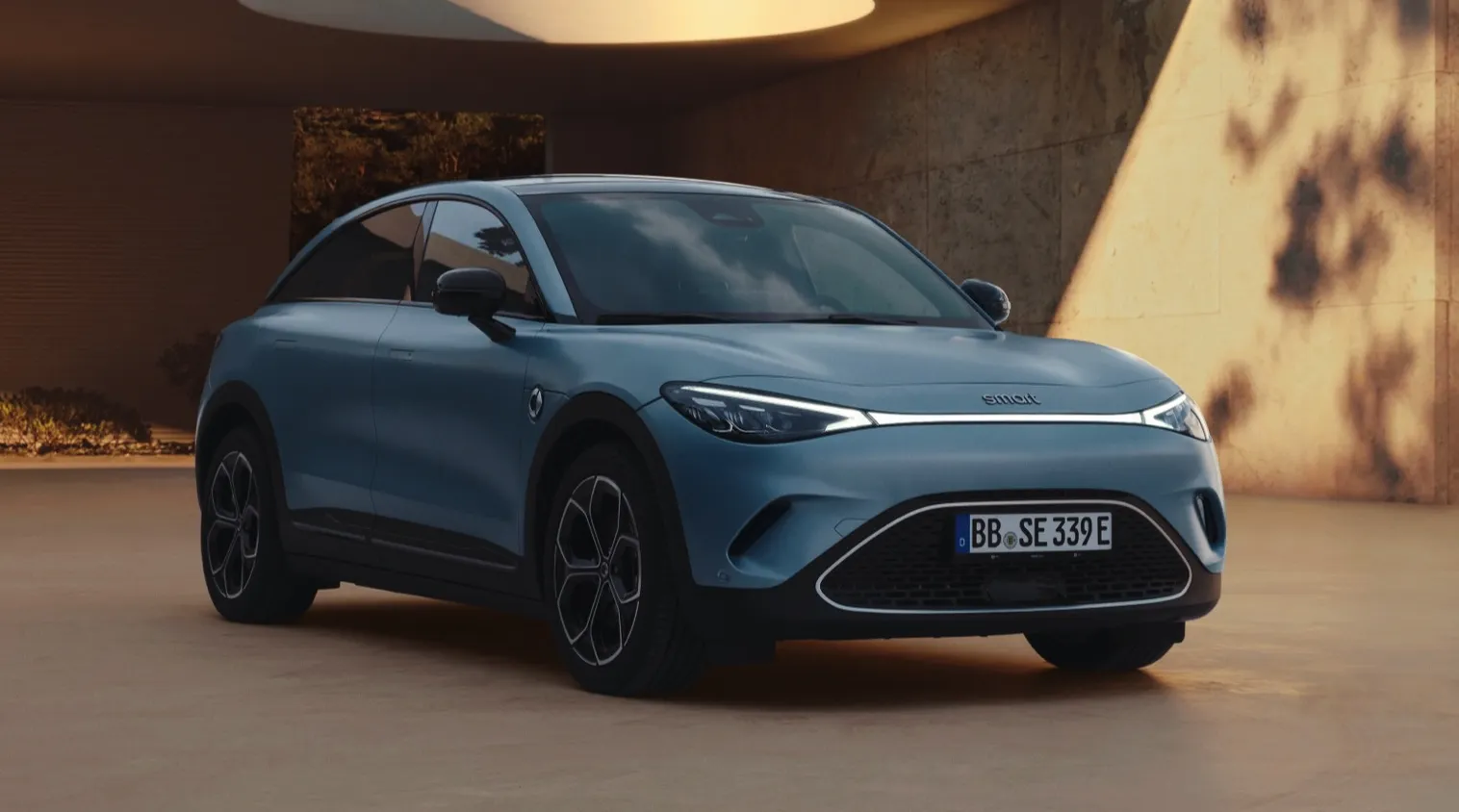
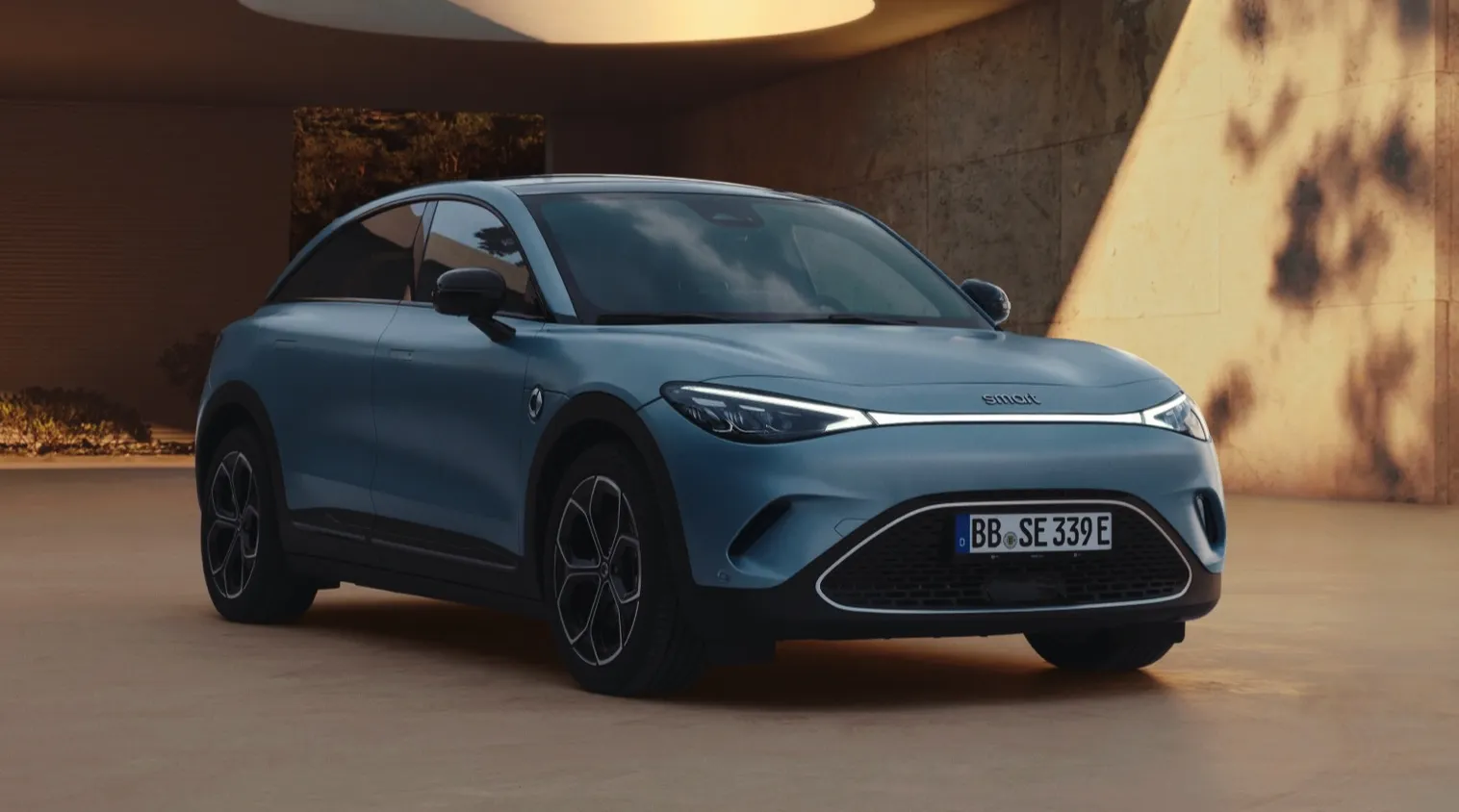
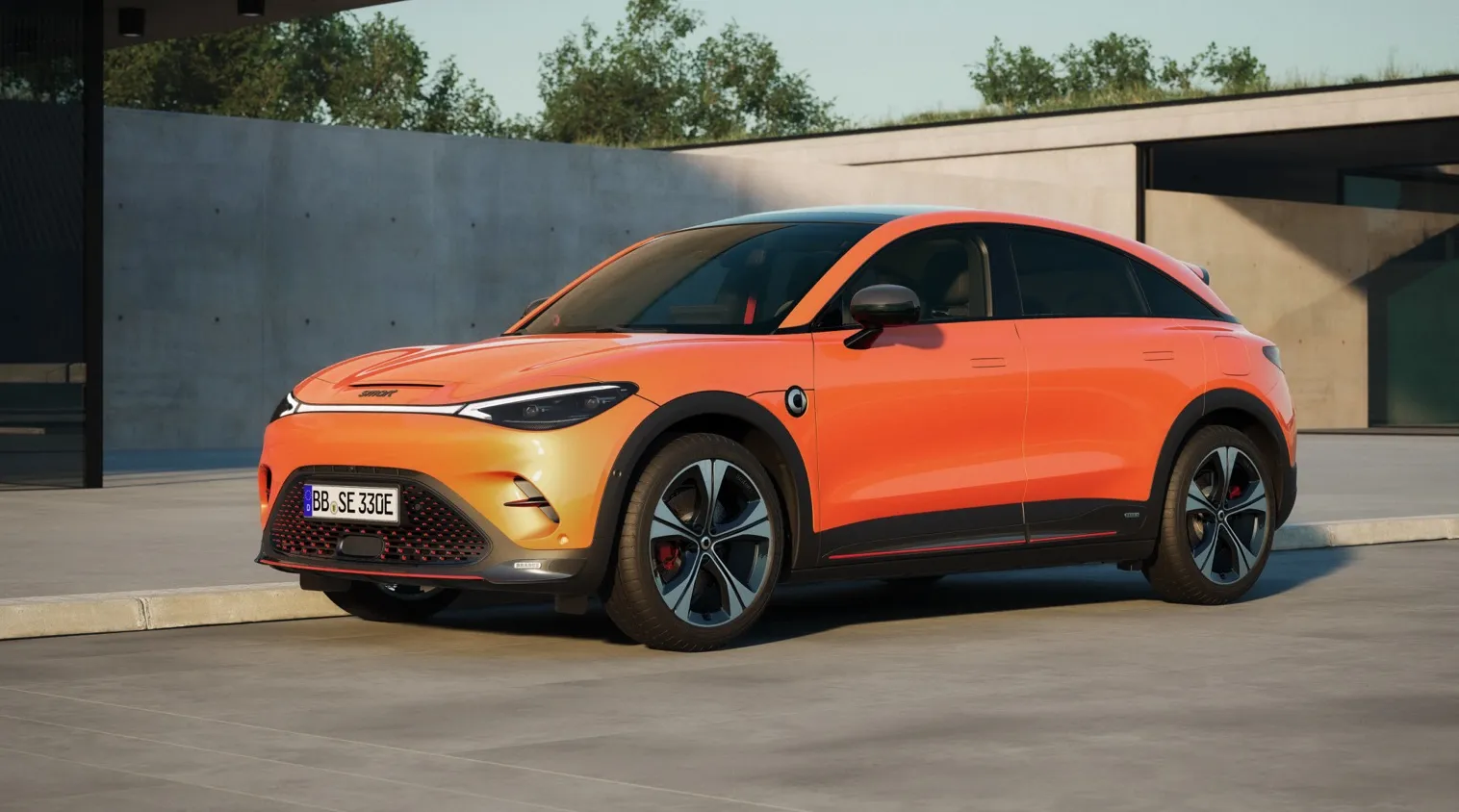
The Smart #1 Pure positions itself as an entry-level premium electric SUV in the compact segment, offering stylish urban mobility from the revived Smart brand under Geely ownership. Targeting young professionals and city dwellers seeking a fun, tech-packed EV without the bulk of larger crossovers, it stands out with its Mercedes-inspired design philosophy, sustainable interior materials, and the SEA (Sustainable Experience Architecture) platform shared with premium Geely models. Key Smart #1 review highlights include a compact footprint with a 2.75m wheelbase, seating for five, and clever packaging like a 15L frunk alongside 313-323L boot space.
In the bustling electric vehicle landscape, the Smart #1 Pure matters as an accessible gateway to premium EV specs, blending quirky personality with practical range and advanced driver aids like Smart Pilot Assist. Its electric SUV appeal lies in responsive RWD dynamics, a 12.8-inch central display, and modes from ECO to Sport, making it a fresh alternative to cookie-cutter crossovers. With pricing starting around £29,960, it democratizes high-end features for everyday drives.
Smart #1 Pure Performance and Driving Experience
The Smart #1 Pure delivers punchy acceleration from its rear-wheel-drive setup, hitting 0-60 mph in about 6.7 seconds thanks to smooth power delivery and e-Pedal one-pedal driving. Handling shines with agile steering, comfort suspension, and drive modes that adapt from efficient ECO to spirited Sport, providing engaging urban dynamics without drama on highways. Real-world impressions praise its nimble feel around town, aided by features like intelligent battery temperature control for consistent performance.
Specification
Value
0-60 mph (0-100 km/h)
6.7 sec
Top Speed
112 mph / 180 km/h
Power Output
268 hp / 200 kW
Torque
221 lb-ft / 300 Nm
Smart #1 Pure Range and Battery Specifications
The Smart #1 Pure boasts a WLTP range of up to 273 miles with its 62 kWh usable battery (66 kWh gross NMC pack), though real-world range typically settles at 220-250 miles depending on conditions. Energy efficiency hovers around 16.7-17.0 Wh/km (268-274 Wh/mi), influenced by factors like cold weather, aggressive driving, or highway speeds. Premium variants with heat pumps fare better than base models. This makes it solid for daily commutes but less ideal for long hauls without planning.
Smart #1 WLTP range and battery specs ensure reliability, with the Pure trim prioritizing affordability over max distance.
Range Metric
Value
WLTP Range
273 miles / 440 km
EPA Range
N/A
Real-World Range
220-250 miles / 355-400 km
Battery Capacity
62 kWh (usable)
Smart #1 Pure Charging Times and Options
Home charging for the Smart #1 Pure is straightforward with its 7.4 kW onboard AC charger via a Type 2 port, ideal for overnight top-ups on Level 2 setups. DC fast charging peaks at 150 kW for 10-80% in about 30 minutes, compatible with CCS2 networks—perfect for road trips. Practical scenarios include urban street parking with the included RFID Smart Charge package or Bluetooth plug-and-charge for seamless sessions.
Charging Method
Time
Speed
Level 1 (120V)
20-24 hours
~1.4 kW
Level 2 (240V/7kW)
8-10 hours
~7.4 kW
Level 2 (240V/11kW)
N/A
N/A
DC Fast Charge (10-80%)
30 min
up to 150 kW
Smart #1 Pure vs Competitors
The Smart #1 Pure edges out the Hyundai Ioniq 5 base model in quirky styling and urban agility while matching its Smart #1 vs Ioniq 5 pace at a lower price, though the Ioniq offers superior real-world range. Against the Smart #1 vs Tesla Model Y, it can’t rival Tesla’s efficiency or Supercharger access, but provides more premium cabin tech for city buyers. Compared to the Kia EV6, the Pure trim delivers similar 0-60 times with better value, lacking the EV6’s optional AWD punch.
Frequently Asked Questions
The Smart #1 Pure achieves 220-250 miles (355-400 km) in mixed driving, dropping to 180-200 miles in cold weather or highway use, based on its 62 kWh battery and 16.7-17.0 Wh/km efficiency.
Level 2 AC at 7.4 kW takes 8-10 hours for a full charge; DC fast charging at up to 150 kW adds 10-80% in 30 minutes.
The Smart #1 Pure is rear-wheel drive (RWD) with a single 268 hp motor; AWD is exclusive to the Brabus variant.
Smart Pilot Assist is an advanced driver aid combining adaptive cruise control, lane-keeping, traffic jam assist, and evasive maneuvers for semi-autonomous highway and city driving.
The Smart #1 Pure offers comparable acceleration and more stylish interiors at a lower cost than the base Model Y, but trails in range (273 vs 320 miles WLTP) and charging network.
Yes for urban buyers—pros include fun handling, premium tech, and value; cons are modest range and no towing approval on Pure trim.> The Smart #1 Pure is a premium compact electric SUV from Smart with 268 hp, up to 273-mile WLTP range, and 150 kW fast charging. It excels in city driving with agile RWD dynamics, advanced assists, and stylish design, outpacing rivals like Ioniq 5 in value while offering everyday EV specs for modern commuters.


 Smart
Smart
 Smart
Smart
 Smart
Smart
 Smart
Smart