

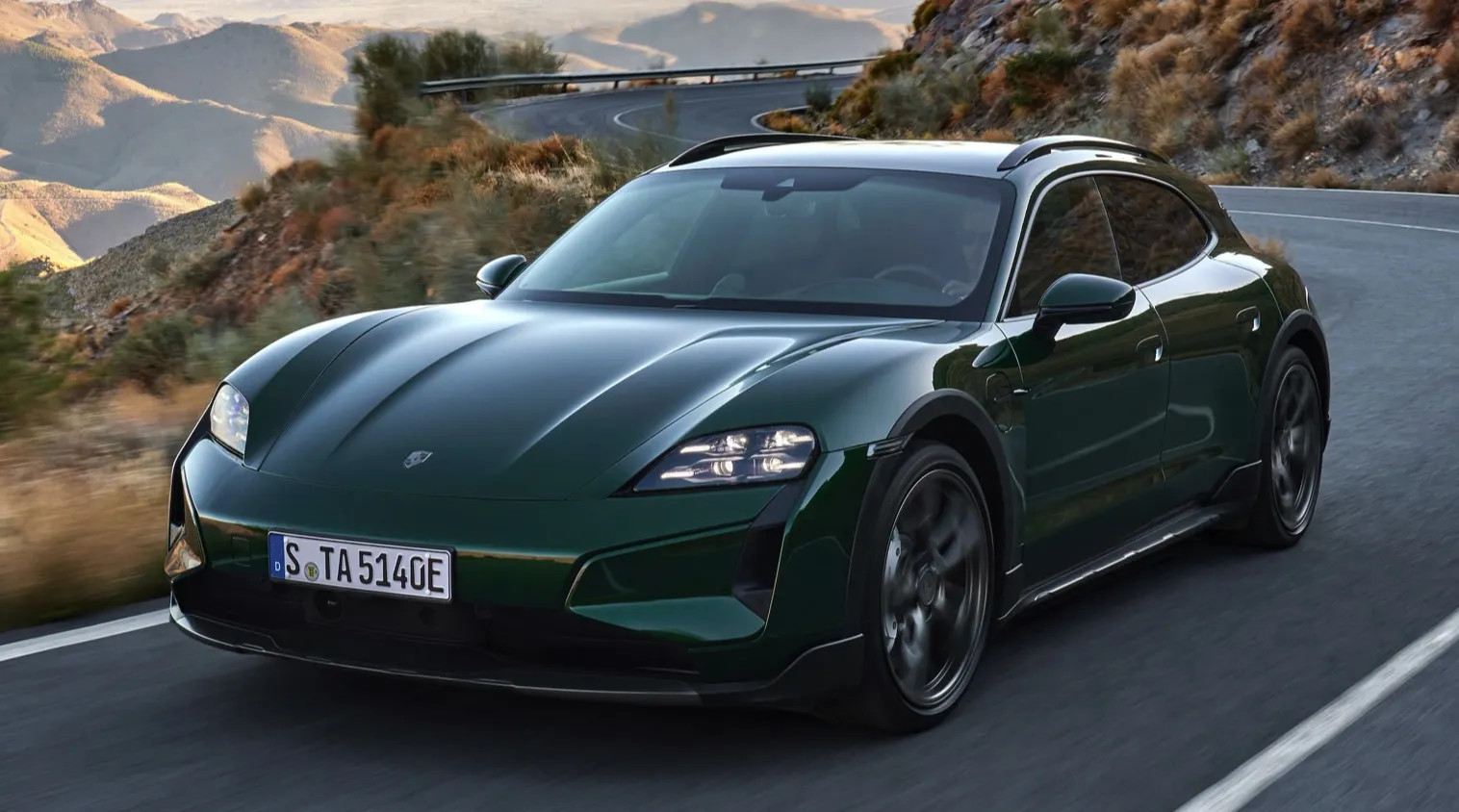
Porsche Taycan Turbo S Cross Turismo
Key Specifications
Real Range Estimation
| City - Cold Weather * | 475 km |
| Highway - Cold Weather * | 350 km |
| Combined - Cold Weather * | 410 km |
between 350 - 690 km
| City - Mild Weather * | 690 km |
| Highway - Mild Weather * | 450 km |
| Combined - Mild Weather * | 550 km |
Battery
| Nominal Capacity | 105.0 kWh |
| Battery Type | Lithium-ion |
| Number of Cells | 396 |
| Architecture | 800 V |
| Warranty Period | No Data |
| Warranty Mileage | 160,000 km |
| Useable Capacity | 97.0 kWh |
| Cathode Material | NCM811 |
| Pack Configuration | 198s2p |
| Nominal Voltage | No Data |
| Form Factor | No Data |
| Name / Reference | No Data |
Performance
| Acceleration 0 - 100 km/h | 2.5 sec |
| Top Speed | 250 km/h |
| Electric Range * | 485 km |
| Total Power | 700 kW (952 PS) |
| Total Torque | 1110 Nm |
| Drive | AWD |
Home and Destination Charging (0 -> 100%)
Charging is possible by using a regular wall plug or a charging station. Public charging is always done through a charging station. How fast the EV can charge depends on the charging station (EVSE) used and the maximum charging capacity of the EV. The table below shows all possible options for charging the Porsche Taycan Turbo S Cross Turismo. Each option shows how fast the battery can be charged from empty to full.
Europe
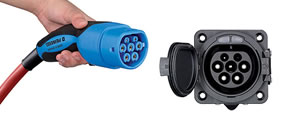
Charging an EV in Europe differs by country. Some European countries primarily use 1-phase connections to the grid, while other countries are almost exclusively using a 3-phase connection. The table below shows all possible ways the Porsche Taycan Turbo S Cross Turismo can be charged, but some modes of charging might not be widely available in certain countries.
| Type 2 (Mennekes - IEC 62196) |
|---|
 |
| Charging Point | Max. Power | Power | Time | Rate |
|---|---|---|---|---|
| Standard 11.0 kW On-Board Charger | ||||
| Wall Plug (2.3 kW) | 230V / 1x10A | 2.3 kW | 49h45m | 10 km/h |
| 1-phase 16A (3.7 kW) | 230V / 1x16A | 3.7 kW | 31 hours | 16 km/h |
| 1-phase 32A (7.4 kW) | 230V / 1x32A | 7.4 kW | 15h30m | 31 km/h |
| 3-phase 16A (11 kW) | 400V / 3x16A | 11 kW | 10h30m | 46 km/h |
| 3-phase 32A (22 kW) | 400V / 3x16A | 11 kW † | 10h30m | 46 km/h |
| Optional 22.0kW On-Board Charger | ||||
| Wall Plug (2.3 kW) | 230V / 1x10A | 2.3 kW | 49h45m | 10 km/h |
| 1-phase 16A (3.7 kW) | 230V / 1x16A | 3.7 kW | 31 hours | 16 km/h |
| 1-phase 32A (7.4 kW) | 230V / 1x32A | 7.4 kW | 15h30m | 31 km/h |
| 3-phase 16A (11 kW) | 400V / 3x16A | 11 kW | 10h30m | 46 km/h |
| 3-phase 32A (22 kW) | 400V / 3x32A | 22 kW † | 5h15m | 92 km/h |
† = Limited by on-board charger, vehicle cannot charge faster.
Fast Charging (10 -> 80%)
Rapid charging enables longer journeys by adding as much range as possible in the shortest amount of time. Charging power will decrease significantly after 80% state-of-charge has been reached. A typical rapid charge therefore rarely exceeds 80% SoC. The rapid charge rate of an EV depends on the charger used and the maximum charging power the EV can handle. The table below shows all details for rapid charging the Porsche Taycan Turbo S Cross Turismo.
- Max. Power: maximum power provided by charge point
- Avg. Power: average power provided by charge point over a session from 10% to 80%
- Time: time needed to charge from 10% to 80%
- Rate: average charging speed over a session from 10% to 80%
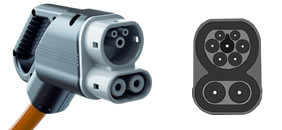
| Combined Charging System (CCS Combo 2) |
|---|
 |
| Charging Point | Max. Power | Avg. Power | Time | Rate |
|---|---|---|---|---|
| CCS (50 kW DC) | 50 kW | 50 kW | 86 min | 230 km/h |
| CCS (100 kW DC) | 100 kW | 95 kW † | 45 min | 450 km/h |
| CCS (150 kW DC) | 150 kW | 130 kW † | 33 min | 610 km/h |
| CCS (175 kW DC) | 175 kW | 150 kW † | 29 min | 700 km/h |
| CCS (350 kW DC) | 320 kW † | 240 kW † | 18 min | 1130 km/h |
| This vehicle supports Autocharge |
|---|
| This vehicle supports Plug & Charge |
† = Limited by charging capabilities of vehicle
Autocharge: allows for automatic initiation of a charging session at supported CCS charging stations.
Plug & Charge: allows for automatic initiation of a charging session at supported CCS charging stations in accordance with ISO 15118.
Actual charging rates may differ from data shown due to factors like outside temperature, state of the battery and driving style.
Porsche Claimed Specifications
The table below shows the claimed specifications from the manufacturer for charging the Porsche Taycan Turbo S Cross Turismo. The specifications can differ from the table above for a variety of reasons. If real-world charge tests are available, these differences can be signifcant. If no real-world tests are available, the table above will be based on the manufacturer specifications as per the table below.
- Max. Power: maximum charge power during charging session
- Charge From: battery percentage (% SoC) where charging session is started
- Charge To: battery percentage (% SoC) where charging session is ended
- Time: time needed for charging session
| Porsche Claimed Specifications |
|---|
| Max. Power | Charge From | Charge To | Time |
|---|---|---|---|
| 320 kW | 10 % | 80 % | 18 min |
Dimensions and Weight
| Length | 4974 mm |
| Width | 1967 mm |
| Width with mirrors | 2144 mm |
| Height | 1407 mm |
| Wheelbase | 2904 mm |
| Weight Unladen (EU) | 2400 kg |
| Gross Vehicle Weight (GVWR) | 2880 kg |
| Max. Payload | 555 kg |
| Cargo Volume | 405 L |
| Cargo Volume Max | 1171 L |
| Cargo Volume Frunk | 84 L |
| Roof Load | 75 kg |
| Tow Hitch Possible | No |
| Towing Weight Unbraked | 0 kg |
| Towing Weight Braked | 0 kg |
| Vertical Load Max | 0 kg |
About this Vehicle
Porsche Taycan Turbo S Cross Turismo Overview
The Porsche Taycan Turbo S Cross Turismo stands as a premium electric SUV in Porsche’s lineup, blending the brand’s signature performance with versatile wagon practicality. Positioned at the top of the Taycan Cross Turismo range, this EV starts at around $211,700-$220,300, targeting affluent enthusiasts seeking luxury, speed, and all-weather capability in an electric vehicle. Its ruggedized design elevates it above the standard Taycan sedan, offering increased ground clearance via adaptive air suspension and a Gravel mode for light off-road adventures, while maintaining Porsche’s athletic ethos.
Key distinguishing features include the 800V architecture for ultra-fast charging, dual permanent-magnet synchronous motors delivering overboost power, and a spacious cargo area of 41 cubic feet behind the rear seats. In the EV landscape, the Taycan Turbo S Cross Turismo matters as Porsche’s quickest production wagon ever tested, redefining high-performance electric SUVs with sedan-like dynamics and superior utility. This Porsche electric SUV excels in Taycan Cross Turismo review discussions for its blend of EV specs like 938 hp and real-world versatility, appealing to those prioritizing electric vehicle range without sacrificing thrill.
Porsche Taycan Turbo S Cross Turismo Performance and Driving Experience
The Porsche Taycan Turbo S Cross Turismo unleashes ferocious acceleration, sprinting from 0-60 mph in 2.2-2.4 seconds thanks to its 938 hp (700 kW) overboost output and 819 lb-ft (1110 Nm) of instant torque from dual motors. Real-world tests confirm its dominance, covering the quarter-mile in 9.8 seconds at 143 mph, making it the quickest wagon tested by outlets like Car and Driver. Handling remains Porsche-sharp with all-wheel drive (AWD), a fully variable torque-vectoring rear differential, and adaptive air suspension that balances track precision (1.02 g skidpad) with elevated ride height for versatility.
Its AWD system employs two permanent-magnet motors—one front, one rear—for seamless power distribution, enabling Gravel mode for dirt roads while preserving sports-car poise. Braking is exemplary at 155 ft from 70 mph, and top speed hits 155-162 mph. Drivers praise its composed dynamics, low noise (65 dBA at 70 mph cruise), and engaging feel that elevates daily drives into events.
| Specification | Value |
|---|---|
| 0-60 mph (0-100 km/h) | 2.4 sec (tested 2.2 sec) |
| Top Speed | 155 mph / 260 km/h |
| Power Output | 938 hp / 700 kW |
| Torque | 819 lb-ft / 1110 Nm |
Porsche Taycan Turbo S Cross Turismo Range and Battery Specifications
Official WLTP range for the Porsche Taycan Turbo S Cross Turismo reaches 391 miles (630 km) in TEL conditions, dropping to 347 miles (558 km) in TEH, with EPA estimates aligning around 300+ miles based on observed 77 MPGe efficiency. Real-world range typically hits 250-300 miles, influenced by aggressive driving, cold weather, or highway speeds, thanks to its 97 kWh usable capacity from a liquid-cooled lithium-ion pack (105 kWh gross) on the high-voltage 800V system. Energy consumption averages 28.8-33 kWh/100 miles (17.9-20.5 kWh/100 km).
Battery tech emphasizes performance with sustained high output, though factors like terrain and climate impact results—expect reduced range in winter but strong efficiency on mixed routes.
| Range Metric | Value |
|---|---|
| WLTP Range | 391 miles / 630 km |
| EPA Range | ~300 miles (est.) |
| Real-World Range | 250-300 miles / 400-480 km |
| Battery Capacity | 97 kWh (usable) |
Porsche Taycan Turbo S Cross Turismo Charging Times and Options
The Porsche Taycan Turbo S Cross Turismo shines in charging, supporting up to 320 kW DC fast charging for 10-80% in just 18 minutes under ideal conditions (battery at 23°C, high-power station). Its 800V system enables peak rates far beyond competitors, compatible with major networks like Electrify America. Home charging is flexible: Level 1 at 120V takes overnight, while Level 2 (240V) at 7-11 kW fully replenishes in 9-10 hours.
Practical scenarios include road-trip viability with rapid top-ups, making it ideal for long hauls despite its power draw.
| Charging Method | Time | Speed |
|---|---|---|
| Level 1 (120V) | 30+ hours | ~1.4 kW |
| Level 2 (240V/7kW) | ~14 hours | ~7 kW |
| Level 2 (240V/11kW) | ~9 hours | ~11 kW |
| DC Fast Charge (10-80%) | 18 min | up to 320 kW |
Porsche Taycan Turbo S Cross Turismo vs Competitors
In Porsche Taycan Turbo S Cross Turismo vs competitors matchups, it outpaces the Tesla Model Y Performance (0-60 in 3.5 sec, 303-mile range) with double the power and superior handling, while trouncing the BMW iX M60 (3.8 sec, 317 miles) in acceleration and wagon utility. Against the Audi e-tron GT RS (2.5 sec, similar range), the Taycan edges in real-world speed (9.8-sec quarter-mile) and charging, though the Mercedes EQS SUV offers more space at the cost of dynamics. Overall, it leads in Taycan comparison for thrill-seekers.
Frequently Asked Questions
Related Vehicles
View All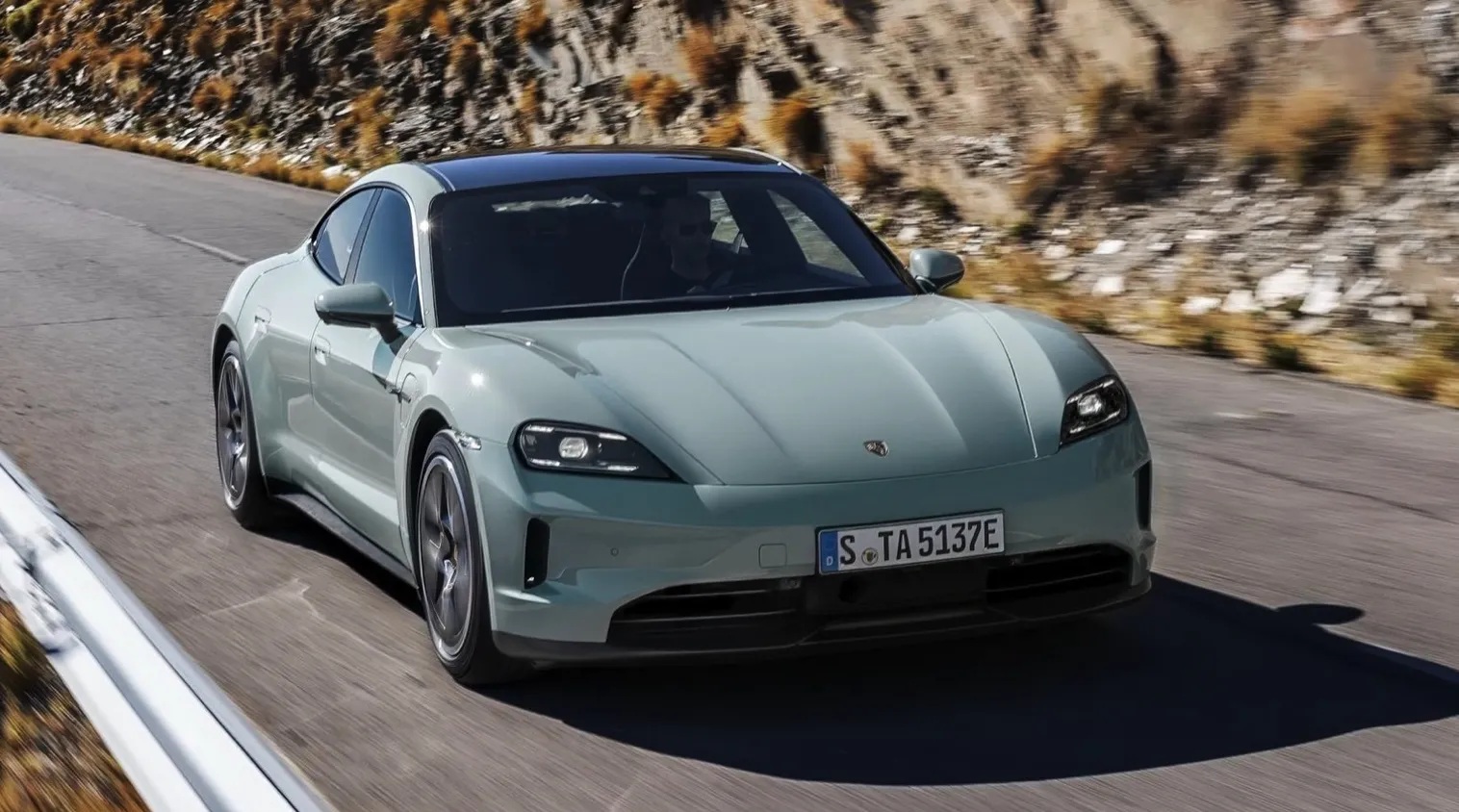 Porsche
Porsche Taycan
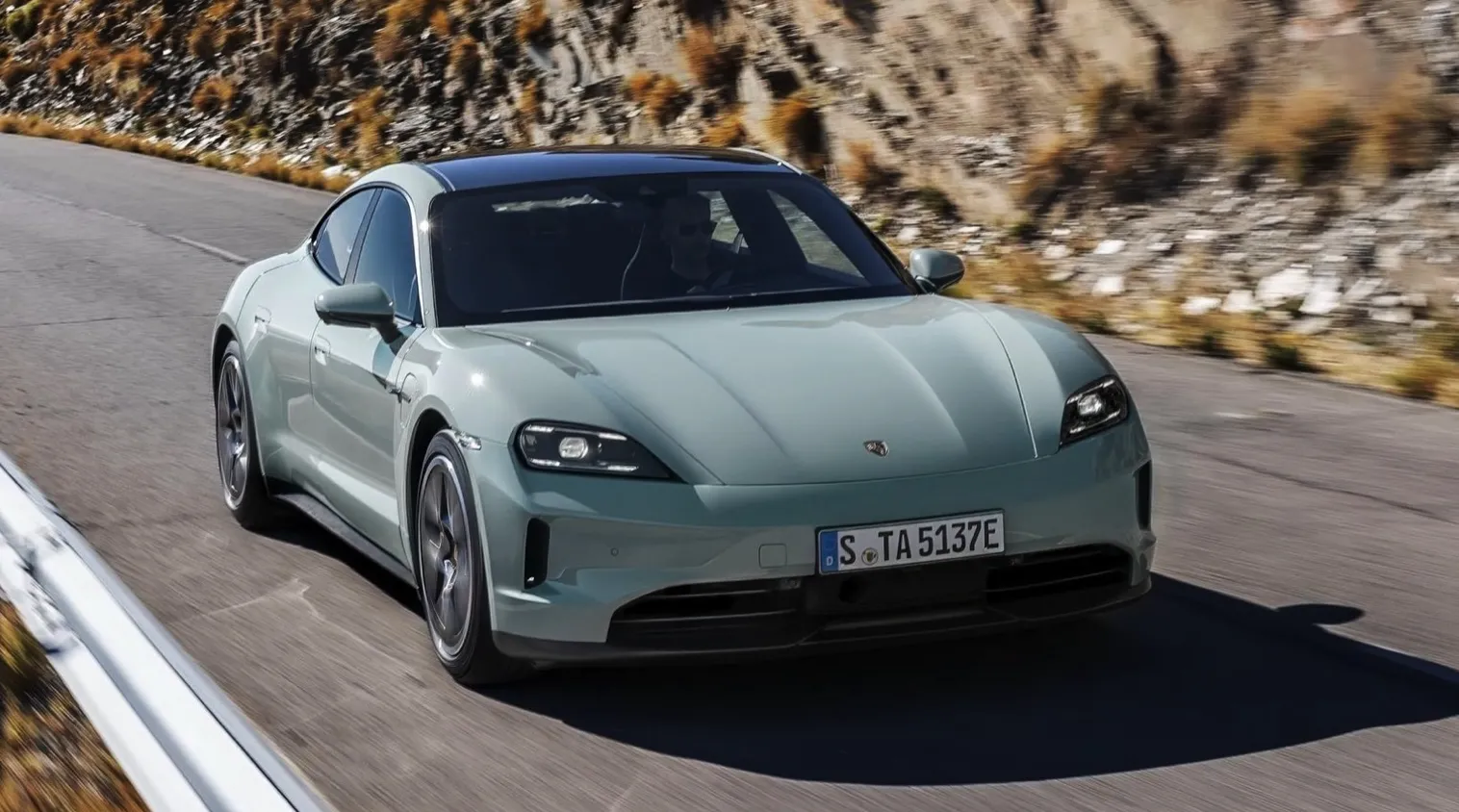 Porsche
Porsche Taycan 4 Plus
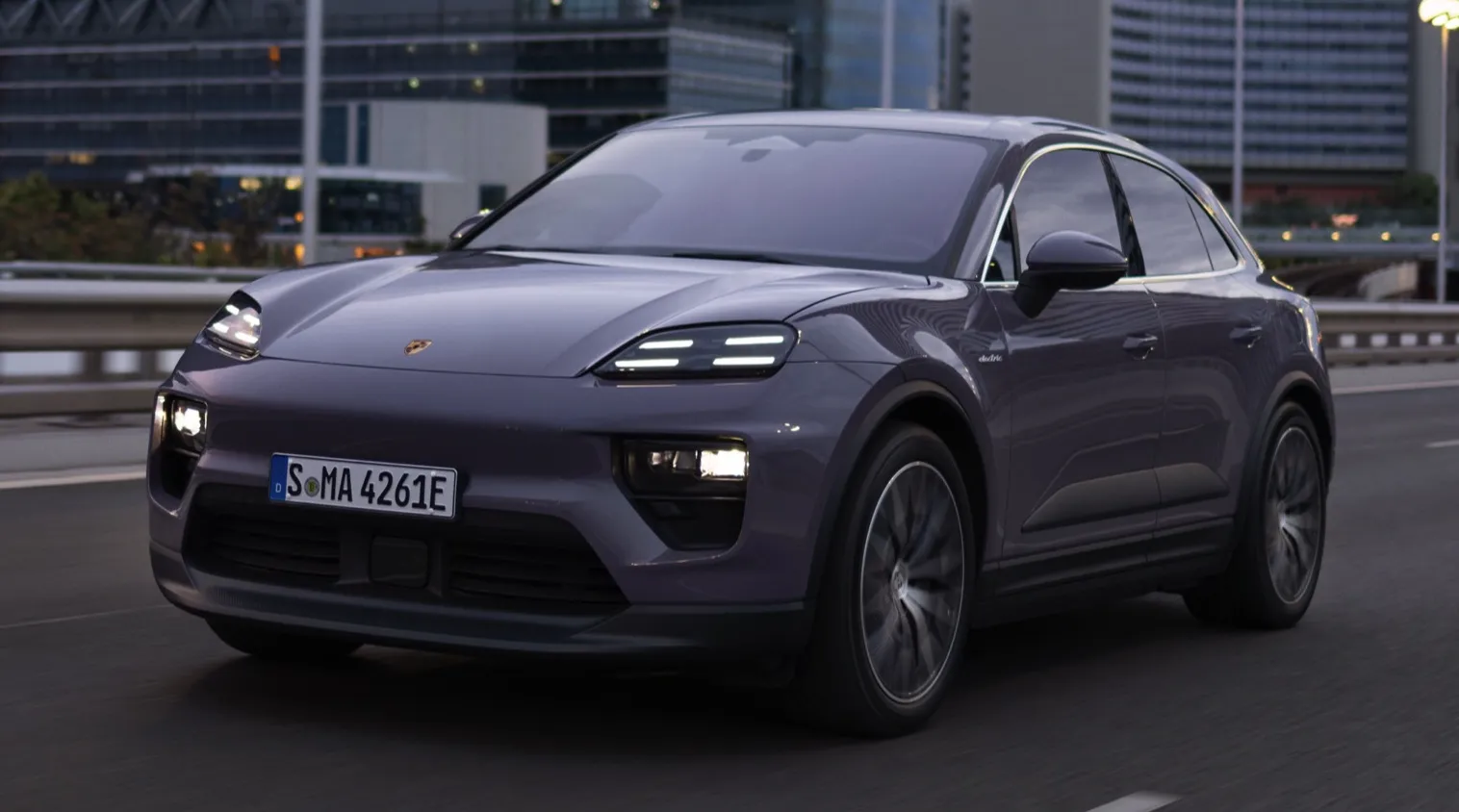 Porsche
Porsche Macan 4 Electric
 Porsche