

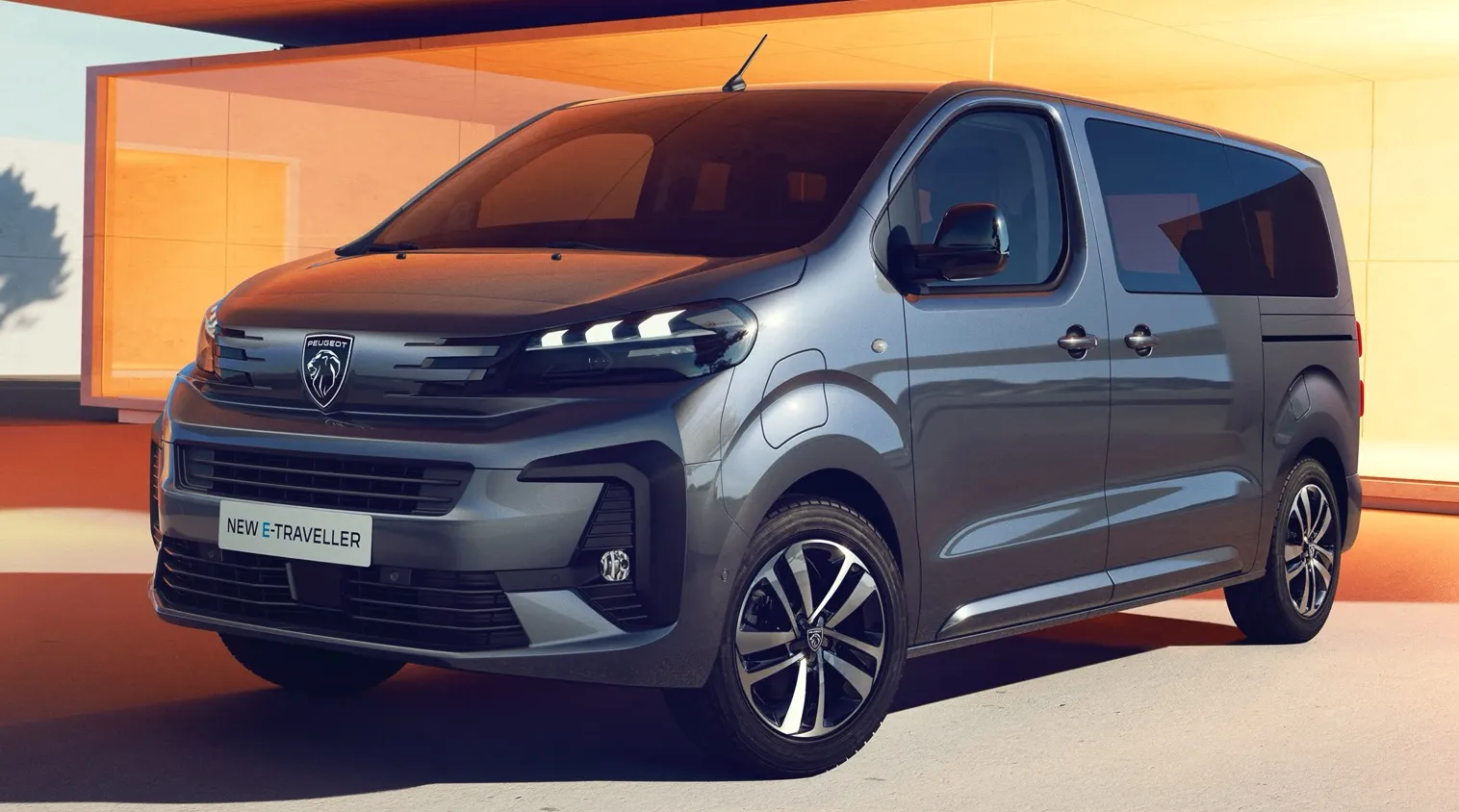
Peugeot e-Traveller L3 50 kWh
Key Specifications
Real Range Estimation
| City - Cold Weather * | 195 km |
| Highway - Cold Weather * | 125 km |
| Combined - Cold Weather * | 155 km |
between 125 - 270 km
| City - Mild Weather * | 270 km |
| Highway - Mild Weather * | 155 km |
| Combined - Mild Weather * | 200 km |
Battery
| Nominal Capacity | 50.0 kWh |
| Battery Type | Lithium-ion |
| Number of Cells | 216 |
| Architecture | 400 V |
| Warranty Period | 8 years |
| Warranty Mileage | 160,000 km |
| Useable Capacity | 46.3 kWh |
| Cathode Material | NCM |
| Pack Configuration | 108s2p |
| Nominal Voltage | 400 V |
| Form Factor | No Data |
| Name / Reference | No Data |
Performance
| Acceleration 0 - 100 km/h | 13.3 sec |
| Top Speed | 130 km/h |
| Electric Range * | 180 km |
| Total Power | 100 kW (136 PS) |
| Total Torque | 270 Nm |
| Drive | Front |
Home and Destination Charging (0 -> 100%)
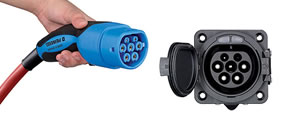
Charging is possible by using a regular wall plug or a charging station. Public charging is always done through a charging station. How fast the EV can charge depends on the charging station (EVSE) used and the maximum charging capacity of the EV. The table below shows all possible options for charging the Peugeot e-Traveller L3 50 kWh. Each option shows how fast the battery can be charged from empty to full.
Europe
Charging an EV in Europe differs by country. Some European countries primarily use 1-phase connections to the grid, while other countries are almost exclusively using a 3-phase connection. The table below shows all possible ways the Peugeot e-Traveller L3 50 kWh can be charged, but some modes of charging might not be widely available in certain countries.
| Type 2 (Mennekes - IEC 62196) |
|---|
 |
| Charging Point | Max. Power | Power | Time | Rate |
|---|---|---|---|---|
| Wall Plug (2.3 kW) | 230V / 1x10A | 2.3 kW | 23h45m | 8 km/h |
| 1-phase 16A (3.7 kW) | 230V / 1x16A | 3.7 kW | 14h45m | 12 km/h |
| 1-phase 32A (7.4 kW) | 230V / 1x32A | 7.4 kW | 7h30m | 24 km/h |
| 3-phase 16A (11 kW) | 400V / 3x16A | 11 kW | 5 hours | 36 km/h |
| 3-phase 32A (22 kW) | 400V / 3x16A | 11 kW † | 5 hours | 36 km/h |
† = Limited by on-board charger, vehicle cannot charge faster.
Fast Charging (10 -> 80%)
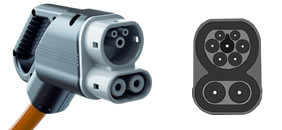
Rapid charging enables longer journeys by adding as much range as possible in the shortest amount of time. Charging power will decrease significantly after 80% state-of-charge has been reached. A typical rapid charge therefore rarely exceeds 80% SoC. The rapid charge rate of an EV depends on the charger used and the maximum charging power the EV can handle. The table below shows all details for rapid charging the Peugeot e-Traveller L3 50 kWh.
- Max. Power: maximum power provided by charge point
- Avg. Power: average power provided by charge point over a session from 10% to 80%
- Time: time needed to charge from 10% to 80%
- Rate: average charging speed over a session from 10% to 80%
| Combined Charging System (CCS Combo 2) |
|---|
 |
| Charging Point | Max. Power | Avg. Power | Time | Rate |
|---|---|---|---|---|
| CCS (50 kW DC) | 50 kW | 40 kW † | 51 min | 140 km/h |
| CCS (100 kW DC) | 100 kW | 75 kW † | 27 min | 280 km/h |
| CCS (150 kW DC) | 101 kW † | 78 kW † | 26 min | 290 km/h |
| This vehicle supports Autocharge |
|---|
| This vehicle does not support Plug & Charge |
† = Limited by charging capabilities of vehicle
Autocharge: allows for automatic initiation of a charging session at supported CCS charging stations.
Plug & Charge: allows for automatic initiation of a charging session at supported CCS charging stations in accordance with ISO 15118.
Actual charging rates may differ from data shown due to factors like outside temperature, state of the battery and driving style.
Peugeot Claimed Specifications
The table below shows the claimed specifications from the manufacturer for charging the Peugeot e-Traveller L3 50 kWh. The specifications can differ from the table above for a variety of reasons. If real-world charge tests are available, these differences can be signifcant. If no real-world tests are available, the table above will be based on the manufacturer specifications as per the table below.
- Max. Power: maximum charge power during charging session
- Charge From: battery percentage (% SoC) where charging session is started
- Charge To: battery percentage (% SoC) where charging session is ended
- Time: time needed for charging session
| Peugeot Claimed Specifications |
|---|
| Max. Power | Charge From | Charge To | Time |
|---|---|---|---|
| 100 kW | 0 % | 80 % | 30 min |
Dimensions and Weight
| Length | 5333 mm |
| Width | 1920 mm |
| Width with mirrors | 2204 mm |
| Height | 1890 mm |
| Wheelbase | 3275 mm |
| Weight Unladen (EU) | 2056 kg |
| Gross Vehicle Weight (GVWR) | 2941 kg |
| Max. Payload | 960 kg |
| Cargo Volume | 989 L |
| Cargo Volume Max | 4554 L |
| Cargo Volume Frunk | 0 L |
| Roof Load | 150 kg |
| Tow Hitch Possible | Yes |
| Towing Weight Unbraked | 750 kg |
| Towing Weight Braked | 1000 kg |
| Vertical Load Max | 60 kg |
About this Vehicle
Peugeot e-Traveller L3 50 kWh Overview
The Peugeot e-Traveller L3 50 kWh is a mainstream electric MPV that targets families, shuttle operators, and business users needing up to eight seats with zero-emission capability. As a long-wheelbase Peugeot electric van-based MPV, it blends commercial-vehicle practicality with passenger-car comfort, making it a compelling choice in the large electric people-carrier segment. With flexible 5–8 seat layouts, a low overall height of around 1.90 m for car-park access, and generous luggage space, it is designed for airport transfers, hotels, taxis, and large families.
Positioned below premium rivals on price but offering competitive EV specs, the Peugeot e-Traveller L3 50 kWh focuses on usability: simple controls, multiple regenerative braking levels via steering-wheel paddles, and a 10‑inch digital cluster with EV-specific displays. Driver-assistance features such as lane keeping assist, driver attention alert, and advanced emergency braking enhance safety and ease of use. For buyers comparing electric shuttles, any Peugeot e-Traveller review will highlight why this model matters: it brings electric mobility to the high-occupancy people-mover class, where diesel has long dominated, and offers a refined, quiet cabin plus low running costs for urban and suburban duty cycles.
—
Peugeot e-Traveller L3 50 kWh Performance and Driving Experience
The Peugeot e-Traveller L3 50 kWh uses a 136 hp (100 kW) front-mounted electric motor, making it a front-wheel-drive (FWD) MPV rather than AWD. Power delivery is smooth and linear, ideal for city traffic and stop‑start shuttle work. Acceleration is modest but adequate for its size, with a 0–100 km/h time of about 13.3 seconds, prioritising efficiency and comfort over outright speed.
On the road, the e-Traveller L3 feels secure and predictable, with electric power steering tuned for light effort at low speeds and better control on the motorway. Regenerative braking can be adjusted in three levels (light, medium, strong) via steering-wheel paddles, allowing one-pedal-style driving in town and helping to extend range. The long wheelbase contributes to ride comfort, and the quiet electric powertrain significantly improves refinement compared with diesel Traveller variants.
| Specification | Value |
|---|---|
| 0-60 mph (0-100 km/h) | ~13.3 sec |
| Top Speed | 81 mph / 130 km/h |
| Power Output | 136 hp / 100 kW |
| Torque | 192 lb-ft / 260 Nm |
—
Peugeot e-Traveller L3 50 kWh Range and Battery Specifications
The Peugeot e-Traveller L3 50 kWh uses a 50 kWh lithium-ion battery (around 46–47 kWh usable), shared with other Stellantis mid-size EVs. Official WLTP range for 50 kWh e-Traveller models is up to about 148 miles (238 km), depending on configuration. The extended L3 body and multiple seats make it slightly less efficient than the shorter models, and real-world testing suggests a real‑world range between roughly 125–270 km depending on speed, temperature, and load.
For mixed driving, many users can expect around 150–160 km (93–100 miles) on a full charge in typical conditions. Energy consumption typically lies around 250–300 Wh/km, influenced by motorway use, HVAC settings, and passenger/cargo weight. As with any EV, cold weather, high speeds, and hilly routes will reduce the Peugeot e-Traveller L3 50 kWh real-world range, while gentle urban driving and effective use of regeneration can push it towards the upper end of estimates.
| Range Metric | Value |
|---|---|
| WLTP Range | ~148 miles / ~238 km |
| EPA Range | N/A (not officially rated) |
| Real-World Range | ~80–170 miles / 125–270 km |
| Battery Capacity | 50.0 kWh (≈46–47 kWh usable) |
—
Peugeot e-Traveller L3 50 kWh Charging Times and Options
The Peugeot e-Traveller L3 50 kWh offers strong flexibility in charging. For home use, a single-phase 7.4 kW or available three-phase 11 kW onboard charger allows overnight AC charging on a wallbox. On a typical 7.4 kW home charger, a full charge from empty to 100% takes roughly 7–8 hours, while an 11 kW AC supply can reduce that to around 5 hours (where three-phase is available).
On the road, the e-Traveller L3 supports DC fast charging up to 100 kW, allowing a 10–80% charge in about 30 minutes under ideal conditions. This makes it viable for taxi, shuttle, or hotel fleets that need quick turnaround between runs. It uses the CCS standard, compatible with most European rapid-charging networks, and supports timed charging and pre-conditioning via the PEUGEOT Connect app, which can help manage charging costs and efficiency.
| Charging Method | Time | Speed |
|---|---|---|
| Level 1 (120V) | ~24–30 hours (0–100%) | ~2 kW |
| Level 2 (240V/7kW) | ~7–8 hours (0–100%) | ~7.4 kW |
| Level 2 (240V/11kW) | ~5 hours (0–100%) | ~11 kW |
| DC Fast Charge (10-80%) | ~30 min | up to 100 kW |
—
Peugeot e-Traveller L3 50 kWh vs Competitors
In a Peugeot e-Traveller L3 50 kWh comparison, the closest rivals are other large electric MPVs like the Mercedes EQV, Volkswagen ID. Buzz, and Hyundai Staria electric (where available), plus cross-shopping with Tesla Model Y, Kia EV9, and Mercedes EQE SUV for buyers considering three-row EVs. Against a Tesla Model Y or Kia EV9, the e-Traveller L3 offers more people‑carrier space and up to eight seats, but a much shorter range and slower acceleration. Versus premium vans like the Mercedes EQV, the Peugeot focuses on value and practicality, with simpler interiors but lower purchase price and similar DC fast-charging capability. For urban shuttle and family-hauling duties where outright range is less critical, the Peugeot e-Traveller L3 50 kWh remains a strong, cost-effective alternative.
—
Frequently Asked Questions
Related Vehicles
View All Peugeot
Peugeot e-3008 97 kWh Long Range
 Peugeot
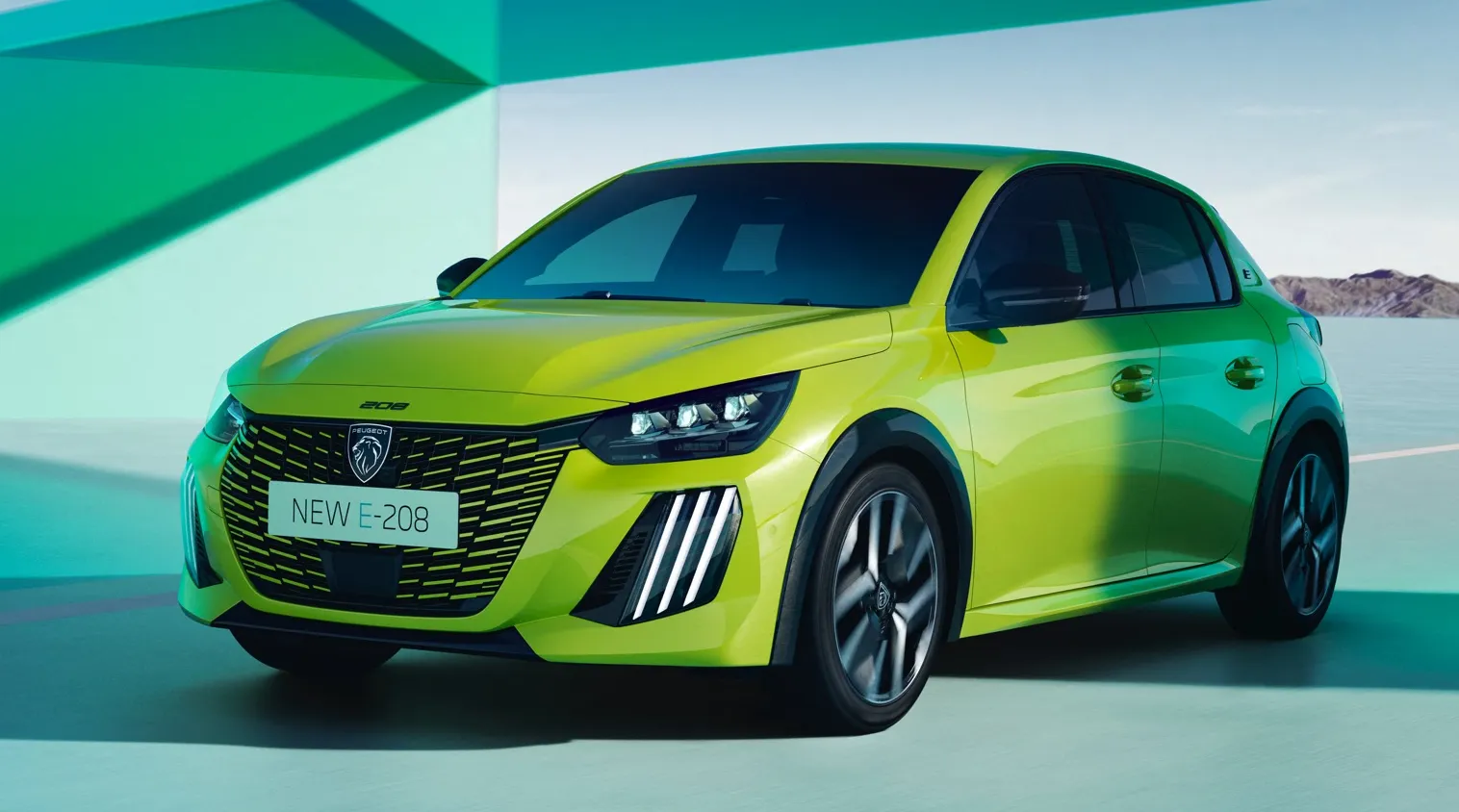
Peugeot e-208 50 kWh
 Peugeot
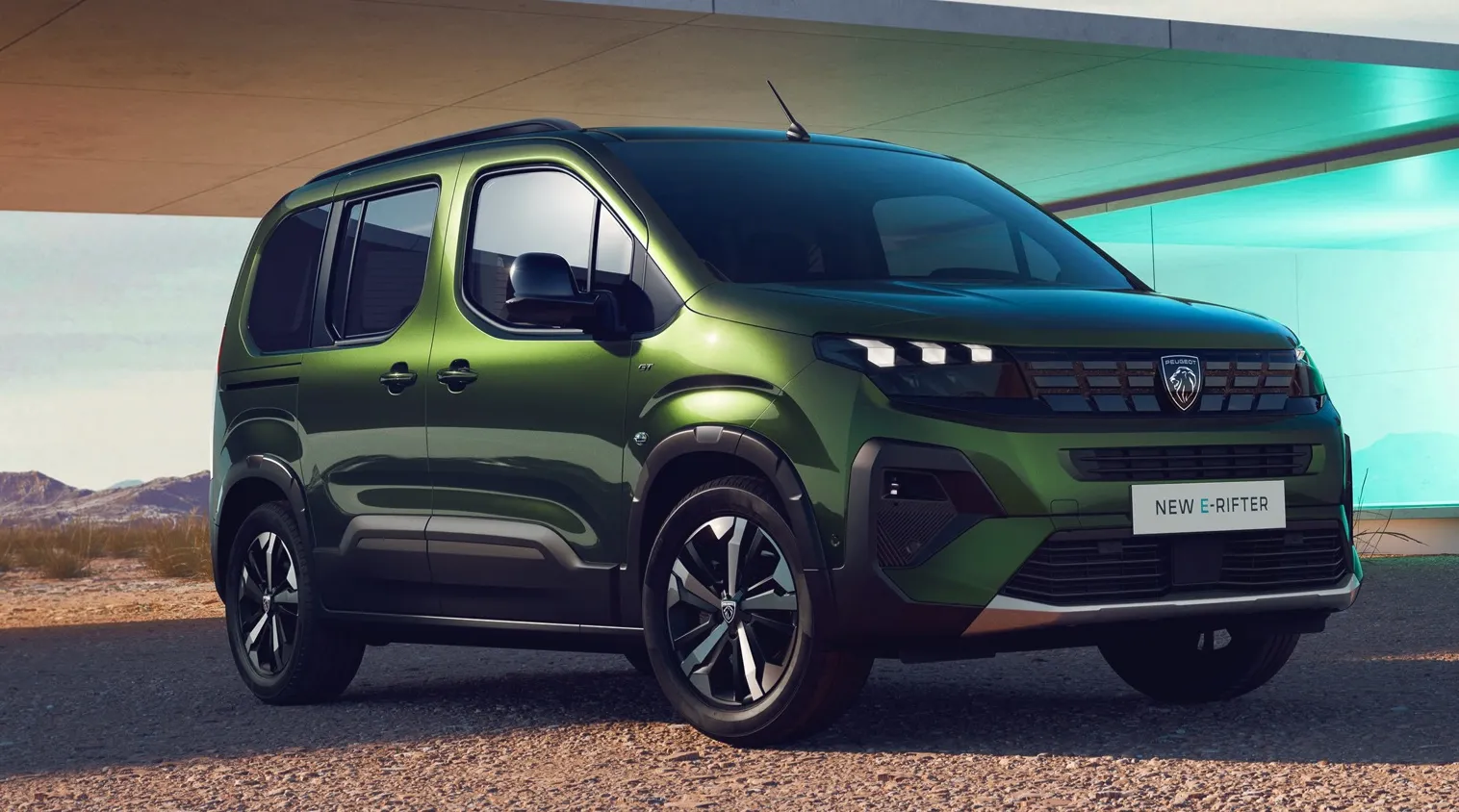
Peugeot e-Rifter XL 50 kWh
 Peugeot