

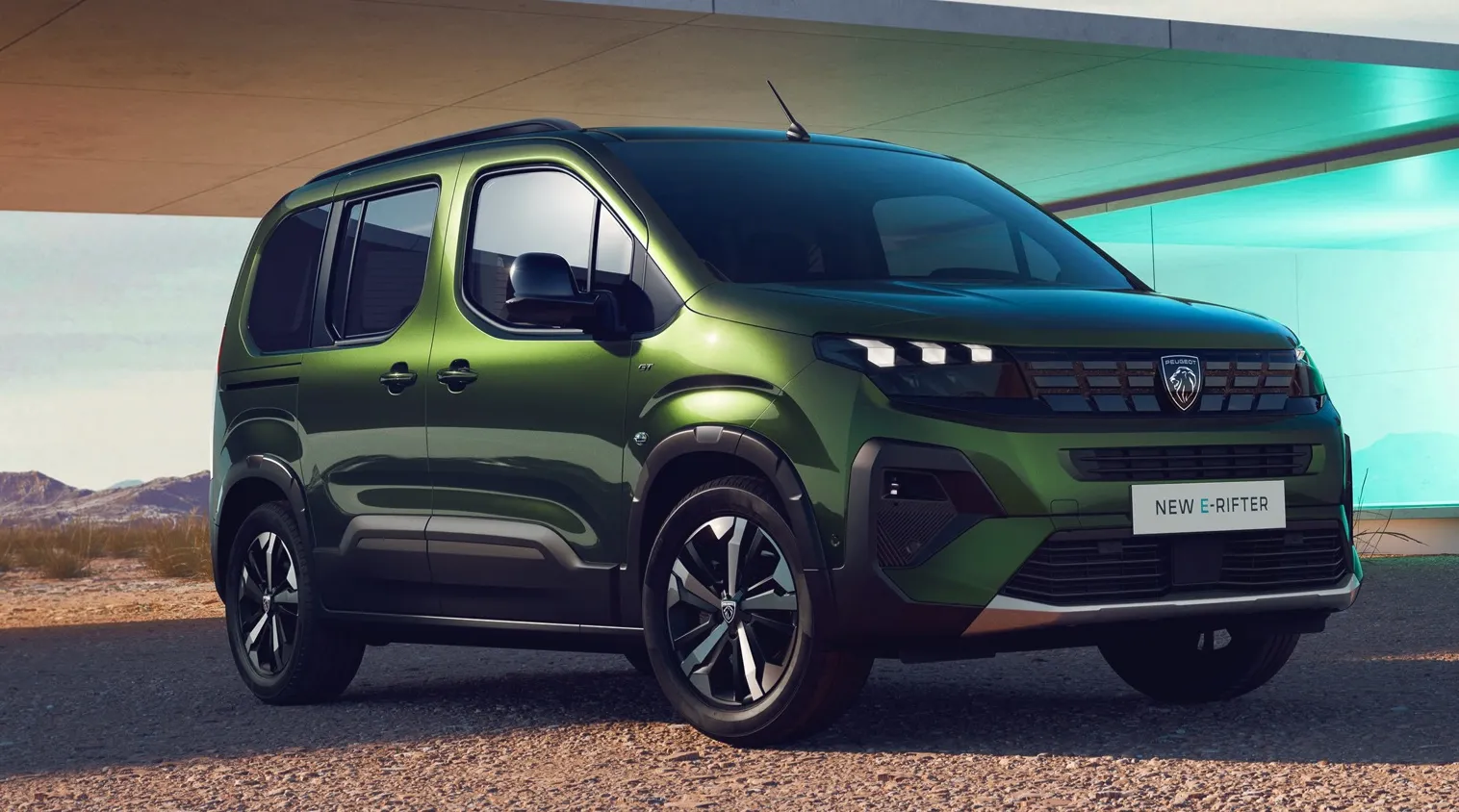
Peugeot e-Rifter XL 50 kWh
Key Specifications
Real Range Estimation
| City - Cold Weather * | 240 km |
| Highway - Cold Weather * | 160 km |
| Combined - Cold Weather * | 195 km |
between 160 - 345 km
| City - Mild Weather * | 345 km |
| Highway - Mild Weather * | 200 km |
| Combined - Mild Weather * | 260 km |
Battery
| Nominal Capacity | 52.0 kWh |
| Battery Type | Lithium-ion |
| Number of Cells | No Data |
| Architecture | 400 V |
| Warranty Period | 8 years |
| Warranty Mileage | 160,000 km |
| Useable Capacity | 50.0 kWh |
| Cathode Material | LFP |
| Pack Configuration | No Data |
| Nominal Voltage | No Data |
| Form Factor | No Data |
| Name / Reference | No Data |
Performance
| Acceleration 0 - 100 km/h | 11.7 sec |
| Top Speed | 132 km/h |
| Electric Range * | 230 km |
| Total Power | 100 kW (136 PS) |
| Total Torque | 270 Nm |
| Drive | Front |
Home and Destination Charging (0 -> 100%)
Charging is possible by using a regular wall plug or a charging station. Public charging is always done through a charging station. How fast the EV can charge depends on the charging station (EVSE) used and the maximum charging capacity of the EV. The table below shows all possible options for charging the Peugeot e-Rifter XL 50 kWh. Each option shows how fast the battery can be charged from empty to full.
Europe
Charging an EV in Europe differs by country. Some European countries primarily use 1-phase connections to the grid, while other countries are almost exclusively using a 3-phase connection. The table below shows all possible ways the Peugeot e-Rifter XL 50 kWh can be charged, but some modes of charging might not be widely available in certain countries.
| Type 2 (Mennekes - IEC 62196) |
|---|
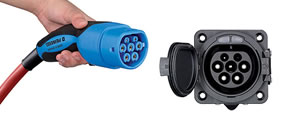 |
| Charging Point | Max. Power | Power | Time | Rate |
|---|---|---|---|---|
| Standard 7.4 kW On-Board Charger | ||||
| Wall Plug (2.3 kW) | 230V / 1x10A | 2.3 kW | 25h45m | 9 km/h |
| 1-phase 16A (3.7 kW) | 230V / 1x16A | 3.7 kW | 16 hours | 14 km/h |
| 1-phase 32A (7.4 kW) | 230V / 1x32A | 7.4 kW | 8 hours | 29 km/h |
| 3-phase 16A (11 kW) | 230V / 1x16A | 3.7 kW † | 16 hours | 14 km/h |
| 3-phase 32A (22 kW) | 230V / 1x32A | 7.4 kW † | 8 hours | 29 km/h |
| Optional 11.0kW On-Board Charger * | ||||
| Wall Plug (2.3 kW) | 230V / 1x10A | 2.3 kW | 25h45m | 9 km/h |
| 1-phase 16A (3.7 kW) | 230V / 1x16A | 3.7 kW | 16 hours | 14 km/h |
| 1-phase 32A (7.4 kW) | 230V / 1x32A | 7.4 kW | 8 hours | 29 km/h |
| 3-phase 16A (11 kW) | 400V / 3x16A | 11 kW | 5h30m | 42 km/h |
| 3-phase 32A (22 kW) | 400V / 3x16A | 11 kW † | 5h30m | 42 km/h |
† = Limited by on-board charger, vehicle cannot charge faster.
* = Optional in some countries, standard in others. Check local specifications for details.
Fast Charging (10 -> 80%)
Rapid charging enables longer journeys by adding as much range as possible in the shortest amount of time. Charging power will decrease significantly after 80% state-of-charge has been reached. A typical rapid charge therefore rarely exceeds 80% SoC. The rapid charge rate of an EV depends on the charger used and the maximum charging power the EV can handle. The table below shows all details for rapid charging the Peugeot e-Rifter XL 50 kWh.
- Max. Power: maximum power provided by charge point
- Avg. Power: average power provided by charge point over a session from 10% to 80%
- Time: time needed to charge from 10% to 80%
- Rate: average charging speed over a session from 10% to 80%
| Combined Charging System (CCS Combo 2) |
|---|
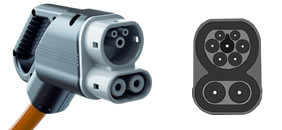 |
| Charging Point | Max. Power | Avg. Power | Time | Rate |
|---|---|---|---|---|
| CCS (50 kW DC) | 50 kW | 45 kW † | 49 min | 190 km/h |
| CCS (100 kW DC) | 100 kW | 80 kW † | 28 min | 340 km/h |
| CCS (150 kW DC) | 100 kW † | 80 kW † | 28 min | 340 km/h |
| This vehicle supports Autocharge |
|---|
| This vehicle does not support Plug & Charge |
† = Limited by charging capabilities of vehicle
Autocharge: allows for automatic initiation of a charging session at supported CCS charging stations.
Plug & Charge: allows for automatic initiation of a charging session at supported CCS charging stations in accordance with ISO 15118.
Actual charging rates may differ from data shown due to factors like outside temperature, state of the battery and driving style.
Peugeot Claimed Specifications
The table below shows the claimed specifications from the manufacturer for charging the Peugeot e-Rifter XL 50 kWh. The specifications can differ from the table above for a variety of reasons. If real-world charge tests are available, these differences can be signifcant. If no real-world tests are available, the table above will be based on the manufacturer specifications as per the table below.
- Max. Power: maximum charge power during charging session
- Charge From: battery percentage (% SoC) where charging session is started
- Charge To: battery percentage (% SoC) where charging session is ended
- Time: time needed for charging session
| Peugeot Claimed Specifications |
|---|
| Max. Power | Charge From | Charge To | Time |
|---|---|---|---|
| 100 kW | 0 % | 80 % | 30 min |
Dimensions and Weight
| Length | 4755 mm |
| Width | 1921 mm |
| Width with mirrors | 2107 mm |
| Height | 1837 mm |
| Wheelbase | 2975 mm |
| Weight Unladen (EU) | 1901 kg |
| Gross Vehicle Weight (GVWR) | 2390 kg |
| Max. Payload | 564 kg |
| Cargo Volume | 1050 L |
| Cargo Volume Max | 3500 L |
| Cargo Volume Frunk | 0 L |
| Roof Load | 100 kg |
| Tow Hitch Possible | Yes |
| Towing Weight Unbraked | 750 kg |
| Towing Weight Braked | 750 kg |
| Vertical Load Max | 50 kg |
About this Vehicle
Peugeot e-Rifter XL 50 kWh Overview
The Peugeot e-Rifter XL 50 kWh is Peugeot’s long-wheelbase, all-electric MPV, positioned as a practical, family-focused alternative to traditional diesel people carriers. As a Peugeot electric MPV, it targets growing families, active lifestyles and shuttle operators who need up to seven seats, huge luggage space and zero tailpipe emissions rather than premium performance. With its boxy silhouette and EMP2 platform, it blends van-like utility with passenger car comfort and the brand’s latest i-Cockpit cabin design.
In this Peugeot e-Rifter XL 50 kWh review, the key talking points are space, usability and low running costs. The XL body brings extra length for easier third-row access and more cargo room with all seats in place, making it one of the most versatile electric family vehicles in its price bracket. A 50 kWh lithium‑ion battery, front-mounted 100 kW motor, and competitive EV specs give it enough range for everyday school runs, commuting and weekend trips, while 100 kW DC charging keeps downtime short on long journeys.
Crucially, this model matters in the EV landscape because it’s one of the few electric MPVs to offer genuine seven-seat capability at a mainstream price, competing with electric SUVs and van-based people movers from other Stellantis brands and rivals. For buyers cross‑shopping an electric SUV or a compact van-based EV, the Peugeot e-Rifter XL 50 kWh stands out for its mix of practicality and efficiency.
—
Peugeot e-Rifter XL 50 kWh Performance and Driving Experience
Performance in the Peugeot e-Rifter XL 50 kWh is modest but adequate for its people-carrying brief. A single 100 kW (134 hp) permanent magnet motor drives the front wheels, delivering around 260–270 Nm of torque and a 0–100 km/h time of about 11.7 seconds. Top speed is limited to roughly 132–135 km/h, which is plenty for motorway use while helping efficiency. Power delivery is smooth and linear, with the instant torque typical of electric vehicles making urban driving feel more responsive than the numbers suggest.
On the road, the front‑wheel‑drive setup and relatively soft suspension are tuned for comfort and predictability rather than sharp dynamics. The tall body does lean a little in corners, but steering is light and visibility excellent, making the e-Rifter XL easy to place around town or in tight car parks. Regenerative braking helps stretch range and allows largely one‑pedal style driving in traffic. Overall, the Peugeot e-Rifter XL 50 kWh prioritises refinement, quietness and ease of use over sportiness – exactly what most family buyers want.
| Specification | Value |
|---|---|
| 0-60 mph (0-100 km/h) | ~11.3 s / 11.7 s |
| Top Speed | 84 mph / 135 km/h |
| Power Output | 134 hp / 100 kW |
| Torque | 192–199 lb-ft / 260–270 Nm |
—
Peugeot e-Rifter XL 50 kWh Range and Battery Specifications
All versions of the Peugeot e-Rifter XL 50 kWh use a 50 kWh lithium-ion NMC battery (around 45–50 kWh usable). Official Peugeot e-Rifter WLTP range figures are up to about 172–199 miles (277–320 km) depending on specification and test cycle, with many sources quoting roughly 279 km (173 miles) WLTP combined for the 50 kWh pack. In mixed real‑world use, owners can expect around 160–185 miles (255–300 km) from a charge, dropping in winter or at sustained motorway speeds.
Energy efficiency typically sits near 19.5–20.0 kWh/100 km (around 3.1–3.6 mi/kWh), respectable for a tall, boxy MPV. As with any EV, the Peugeot e-Rifter’s real-world range depends heavily on driving style, payload, temperature and terrain; fully loaded family trips at motorway speeds will use more energy than solo urban commuting. Still, for suburban families and fleets focused on short to medium daily routes, the Peugeot e-Rifter XL 50 kWh battery specs are well matched to its use case.
| Range Metric | Value |
|---|---|
| WLTP Range | ~173 miles / 279 km |
| EPA Range | N/A (Europe-focused model) |
| Real-World Range | ~160–185 miles / 255–300 km |
| Battery Capacity | 50 kWh (≈45–50 kWh usable) |
—
Peugeot e-Rifter XL 50 kWh Charging Times and Options
For home and workplace use, the Peugeot e-Rifter XL 50 kWh comes with a 7.4 kW AC onboard charger as standard, with an 11 kW three‑phase charger available as an option. On a typical 7 kW wallbox, a full charge from empty takes about 7.5 hours, making overnight charging straightforward. On 11 kW AC, that time drops closer to 5 hours, ideal for fleets or users who can access three‑phase power.
On the road, the e-Rifter supports up to 100 kW DC fast charging using a CCS connector. In optimal conditions, Peugeot quotes 10–80% in around 26–30 minutes, meaning a quick coffee stop can add well over 100 miles of range. The car is compatible with most major European rapid-charging networks, and scheduled charging plus preconditioning can maximise efficiency. For many buyers, a home wallbox will cover the majority of needs, with DC fast charging used for occasional longer journeys.
| Charging Method | Time | Speed |
|---|---|---|
| Level 1 (120V) | ~24–30 hours (est.) | ~2 kW |
| Level 2 (240V/7kW) | ~7.5 hours (0–100%) | ~7.4 kW |
| Level 2 (240V/11kW) | ~5 hours (0–100%) | ~11 kW |
| DC Fast Charge (10-80%) | 26–30 min | up to 100 kW |
—
Peugeot e-Rifter XL 50 kWh vs Competitors
In the Peugeot e-Rifter vs Tesla Model Y comparison, the Tesla offers far more performance, range and tech, but cannot match the e-Rifter’s van-like cargo volume and straightforward seven-seat practicality. Against similarly practical EVs like the Hyundai Ioniq 5 and Kia EV6, the Peugeot e-Rifter XL 50 kWh loses out on refinement, charging curve sophistication and range, yet undercuts many rivals on price while offering a true MPV shape. Compared with the Citroën ë-Berlingo or Vauxhall Combo Electric (its Stellantis cousins), the choice largely comes down to styling and interior design; mechanically, they are very similar, but the Peugeot’s i‑Cockpit and brand image may sway family buyers.
—
Frequently Asked Questions
Related Vehicles
View All Peugeot
Peugeot e-3008 97 kWh Long Range
 Peugeot
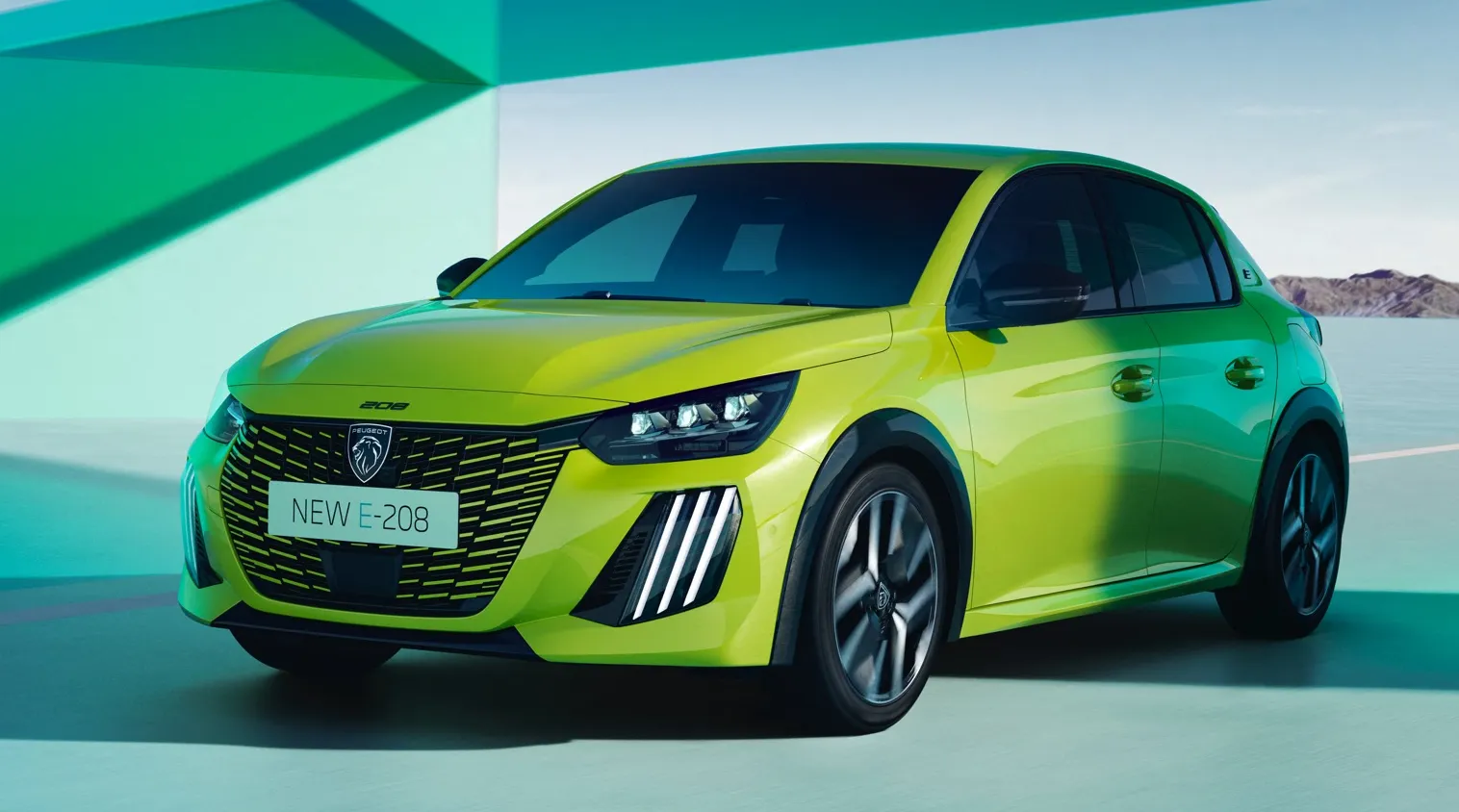
Peugeot e-208 50 kWh
 Peugeot
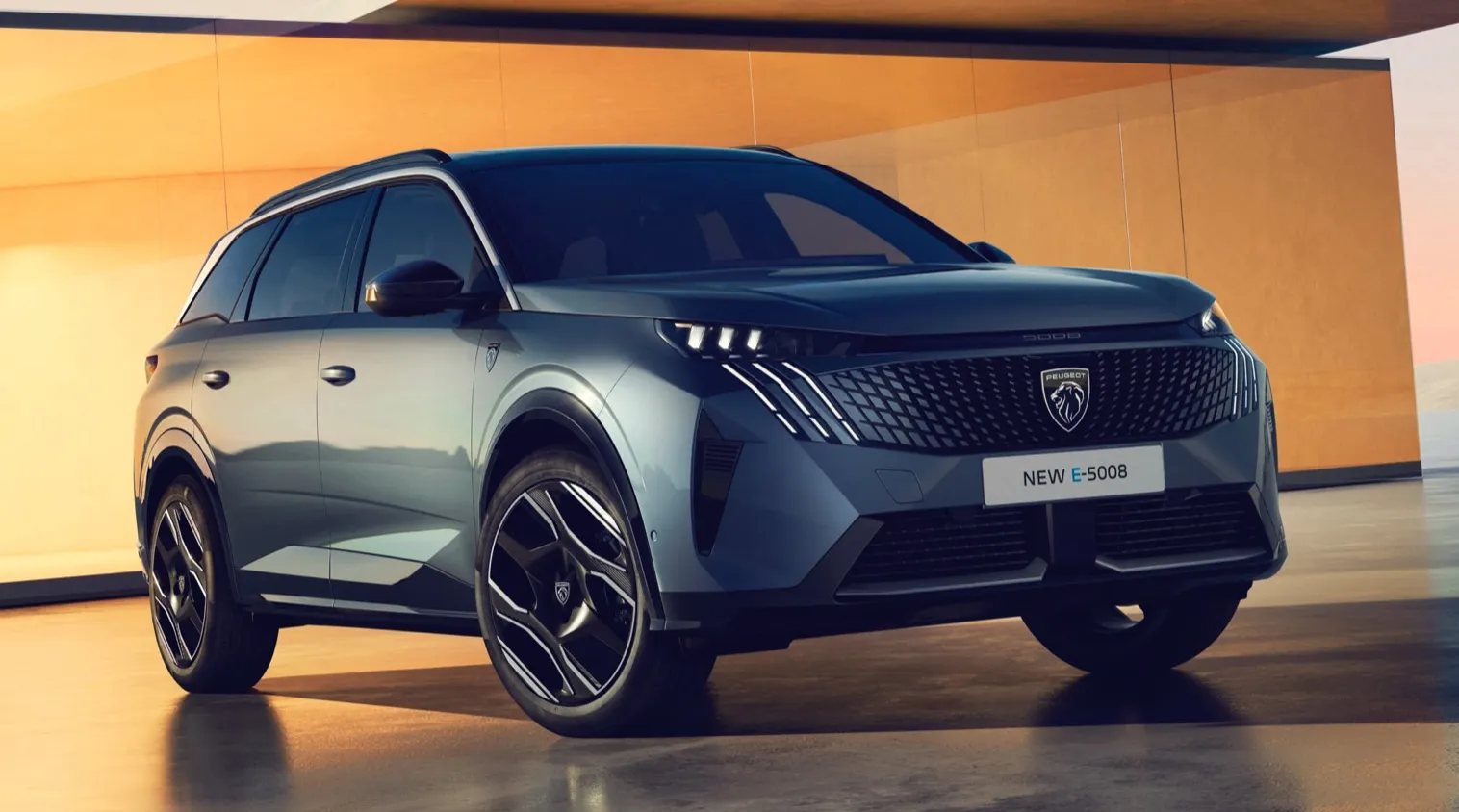
Peugeot e-5008 73 kWh Dual Motor
 Peugeot