

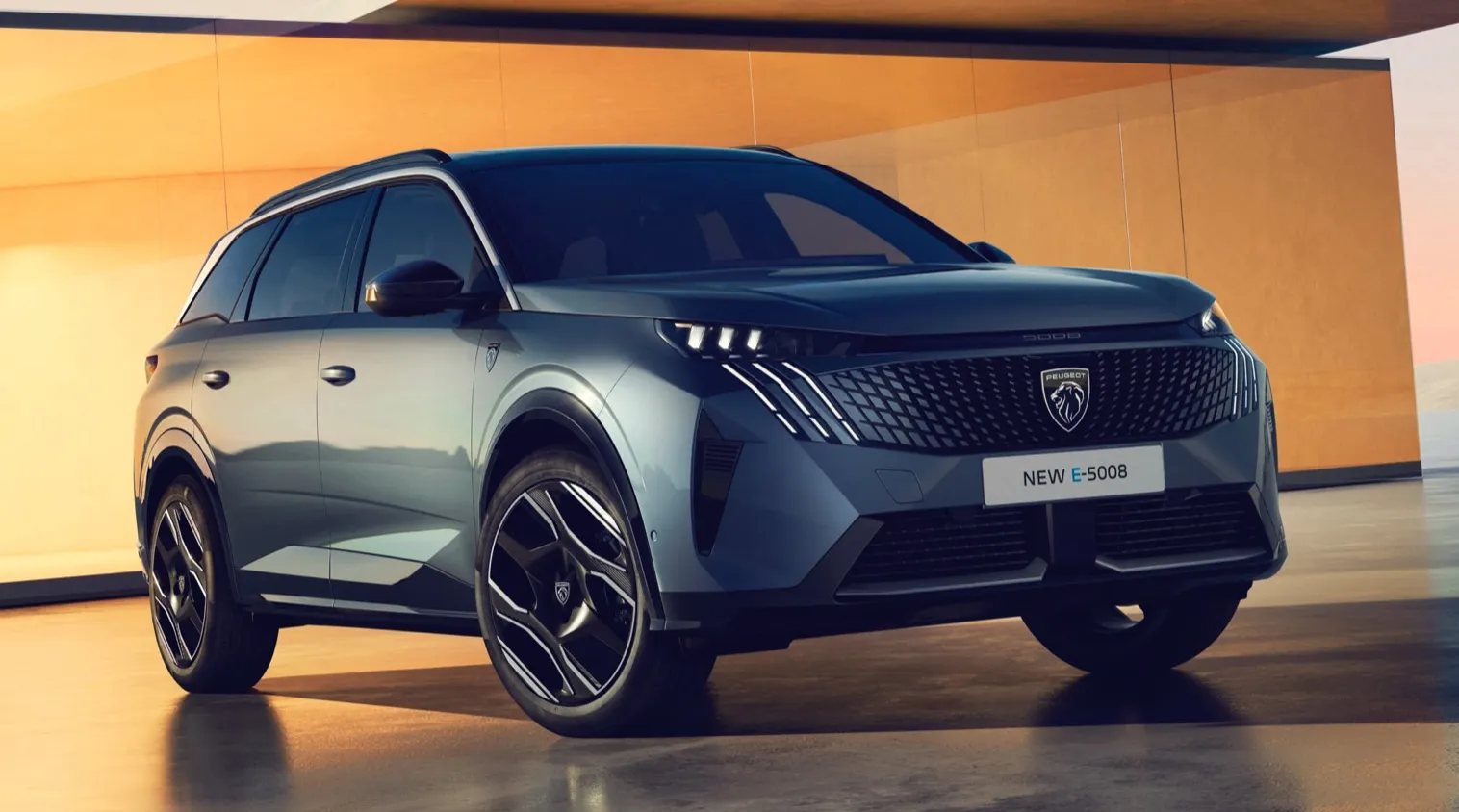
Peugeot e-5008 73 kWh Dual Motor
Key Specifications
Real Range Estimation
| City - Cold Weather * | 360 km |
| Highway - Cold Weather * | 260 km |
| Combined - Cold Weather * | 310 km |
between 260 - 525 km
| City - Mild Weather * | 525 km |
| Highway - Mild Weather * | 330 km |
| Combined - Mild Weather * | 410 km |
Battery
| Nominal Capacity* | 77.0 kWh |
| Battery Type | Lithium-ion |
| Number of Cells | 96 |
| Architecture | 400 V |
| Warranty Period | 8 years |
| Warranty Mileage | 160,000 km |
| Useable Capacity | 73.0 kWh |
| Cathode Material | NCM |
| Pack Configuration | 96s1p |
| Nominal Voltage | No Data |
| Form Factor | No Data |
| Name / Reference | No Data |
Performance
| Acceleration 0 - 100 km/h * | 7.0 sec |
| Top Speed | 170 km/h |
| Electric Range * | 360 km |
| Total Power | 240 kW (326 PS) |
| Total Torque | 511 Nm |
| Drive | AWD |
Home and Destination Charging (0 -> 100%)
Charging is possible by using a regular wall plug or a charging station. Public charging is always done through a charging station. How fast the EV can charge depends on the charging station (EVSE) used and the maximum charging capacity of the EV. The table below shows all possible options for charging the Peugeot e-5008 73 kWh Dual Motor. Each option shows how fast the battery can be charged from empty to full.
Europe
Charging an EV in Europe differs by country. Some European countries primarily use 1-phase connections to the grid, while other countries are almost exclusively using a 3-phase connection. The table below shows all possible ways the Peugeot e-5008 73 kWh Dual Motor can be charged, but some modes of charging might not be widely available in certain countries.
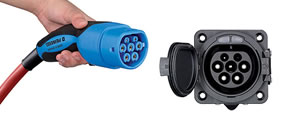
| Type 2 (Mennekes - IEC 62196) |
|---|
 |
| Charging Point | Max. Power | Power | Time | Rate |
|---|---|---|---|---|
| Wall Plug (2.3 kW) | 230V / 1x10A | 2.3 kW | 37h30m | 10 km/h |
| 1-phase 16A (3.7 kW) | 230V / 1x16A | 3.7 kW | 23h15m | 15 km/h |
| 1-phase 32A (7.4 kW) | 230V / 1x32A | 7.4 kW | 11h45m | 31 km/h |
| 3-phase 16A (11 kW) | 400V / 3x16A | 11 kW | 8 hours | 45 km/h |
| 3-phase 32A (22 kW) | 400V / 3x16A | 11 kW † | 8 hours | 45 km/h |
† = Limited by on-board charger, vehicle cannot charge faster.
Fast Charging (10 -> 80%)
Rapid charging enables longer journeys by adding as much range as possible in the shortest amount of time. Charging power will decrease significantly after 80% state-of-charge has been reached. A typical rapid charge therefore rarely exceeds 80% SoC. The rapid charge rate of an EV depends on the charger used and the maximum charging power the EV can handle. The table below shows all details for rapid charging the Peugeot e-5008 73 kWh Dual Motor.
- Max. Power: maximum power provided by charge point
- Avg. Power: average power provided by charge point over a session from 10% to 80%
- Time: time needed to charge from 10% to 80%
- Rate: average charging speed over a session from 10% to 80%
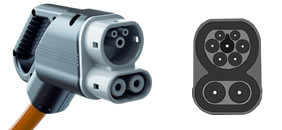
| Combined Charging System (CCS Combo 2) |
|---|
 |
| Charging Point | Max. Power | Avg. Power | Time | Rate |
|---|---|---|---|---|
| CCS (50 kW DC) | 50 kW | 45 kW † | 72 min | 210 km/h |
| CCS (100 kW DC) | 100 kW | 75 kW † | 43 min | 350 km/h |
| CCS (150 kW DC) | 150 kW | 85 kW † | 38 min | 390 km/h |
| CCS (175 kW DC) | 160 kW † | 90 kW † | 36 min | 420 km/h |
| CCS (350 kW DC) | 160 kW † | 90 kW † | 36 min | 420 km/h |
| This vehicle supports Autocharge |
|---|
| This vehicle does not support Plug & Charge |
† = Limited by charging capabilities of vehicle
Autocharge: allows for automatic initiation of a charging session at supported CCS charging stations.
Plug & Charge: allows for automatic initiation of a charging session at supported CCS charging stations in accordance with ISO 15118.
Actual charging rates may differ from data shown due to factors like outside temperature, state of the battery and driving style.
Peugeot Claimed Specifications
The table below shows the claimed specifications from the manufacturer for charging the Peugeot e-5008 73 kWh Dual Motor. The specifications can differ from the table above for a variety of reasons. If real-world charge tests are available, these differences can be signifcant. If no real-world tests are available, the table above will be based on the manufacturer specifications as per the table below.
- Max. Power: maximum charge power during charging session
- Charge From: battery percentage (% SoC) where charging session is started
- Charge To: battery percentage (% SoC) where charging session is ended
- Time: time needed for charging session
| Peugeot Claimed Specifications |
|---|
| Max. Power | Charge From | Charge To | Time |
|---|---|---|---|
| 160 kW | 20 % | 80 % | 30 min |
Dimensions and Weight
| Length | 4791 mm |
| Width | 1895 mm |
| Width with mirrors | No Data |
| Height | 1694 mm |
| Wheelbase | 2901 mm |
| Weight Unladen (EU) * | 2300 kg |
| Gross Vehicle Weight (GVWR) | No Data |
| Max. Payload | No Data |
| Cargo Volume | 348 L |
| Cargo Volume Max | 2232 L |
| Cargo Volume Frunk | 0 L |
| Roof Load | No Data |
| Tow Hitch Possible | Yes |
| Towing Weight Unbraked | No Data |
| Towing Weight Braked | No Data |
| Vertical Load Max | No Data |
About this Vehicle
Peugeot e-5008 73 kWh Dual Motor Overview
The Peugeot e-5008 73 kWh Dual Motor is a premium Peugeot electric SUV aimed at family buyers who want seven seats, strong performance and all-weather capability without going to a German premium badge. Sitting in the D‑segment, it targets drivers cross‑shopping large electric SUVs like the Tesla Model Y, Kia EV9 and Hyundai Ioniq 5, but with a more design‑led, European flavour and a slightly more attainable price point.
Built on Stellantis’ STLA Medium platform and using a 400‑V lithium‑ion NCM battery, the e‑5008 Dual Motor blends Peugeot’s latest design language with a high‑tech cabin, panoramic i-Cockpit and a flexible three-row interior with up to 2,232 litres of cargo space when all seats are folded. It’s one of the few 7-seat electric SUVs in its class, which makes it particularly attractive for larger families or those needing occasional third-row seating. According to EV Database and myenergi data, it uses a 73 kWh usable battery and delivers practical EV specs that balance range, performance and efficiency.
This flagship powertrain matters in the Peugeot e-5008 review landscape because it brings 325 hp all‑wheel drive to a mainstream brand, offering a compelling alternative to pricier premium competitors while still delivering real‑world range and DC fast‑charging speeds suitable for long‑distance family trips.
—
Peugeot e-5008 73 kWh Dual Motor Performance and Driving Experience
With dual motors and all‑wheel drive (AWD), the Peugeot e‑5008 73 kWh Dual Motor is the performance flagship of the range. Stellantis technical data and road tests quote a combined output of around 320–325 hp (about 239 kW) with total torque of about 511 Nm, giving this sizeable SUV brisk, confident acceleration. EV Database lists 0–100 km/h in 7.0 seconds, which translates to a roughly similar 0–60 mph time, and a top speed of 106 mph, more than adequate for European motorway cruising.
On the road, the dual‑motor system sends power to all four wheels for improved traction in poor weather, while the long 2,901 mm wheelbase helps stability and comfort on long journeys. The battery is mounted low in the floor, which keeps the centre of gravity down and helps the e‑5008 feel composed in bends despite an EU unladen weight of around 2,300 kg. Reviews note quiet running, smooth power delivery and a comfort‑biased setup that suits its role as a family‑oriented electric SUV rather than a sports EV.
| Specification | Value |
|---|---|
| 0-60 mph (0-100 km/h) | ~7.0 sec (0–100 km/h) |
| Top Speed | 106 mph / 171 km/h |
| Power Output | ~325 hp / ~239 kW |
| Torque | ~377 lb-ft / 511 Nm |
—
Peugeot e-5008 73 kWh Dual Motor Range and Battery Specifications
Official figures for the exact Peugeot e-5008 73 kWh Dual Motor WLTP range are still being finalised, but Peugeot quotes 258–310 miles WLTP for standard‑range e‑5008 versions, and independent tests suggest the Dual Motor sits towards the lower end of that window due to its extra power and AWD system. BusinessCar reports a 290‑mile WLTP range for the Dual Motor on the 73 kWh pack, while EV Database estimates a real‑world range around 225–285 miles depending on conditions and driving style.
The Peugeot e-5008 battery specs show a 77 kWh nominal / 73 kWh usable lithium‑ion NCM pack on a 400 V architecture. EVDB lists an average real‑world consumption of about 324 Wh/mi, equating to roughly 2.9–3.1 mi/kWh, which is credible for a large seven‑seat SUV. As always, Peugeot e-5008’s real‑world range will vary: cold weather, high motorway speeds, roof boxes, heavy loads and aggressive driving can significantly reduce range, while urban driving in mild temperatures can exceed official values.
| Range Metric | Value |
|---|---|
| WLTP Range | ~290 miles / ~467 km (est., Dual Motor) |
| EPA Range | N/A (not yet certified) |
| Real-World Range | ~225–285 miles / ~360–460 km (est.) |
| Battery Capacity | 73.0 kWh (usable) |
—
Peugeot e-5008 73 kWh Dual Motor Charging Times and Options
For home use, the Peugeot e‑5008 73 kWh Dual Motor supports up to 11 kW AC charging via its Type 2 port. On a typical 7.4 kW single‑phase wallbox, a full charge from empty takes around 11–12 hours, while at a full 11 kW (three‑phase where available) it drops to about 8 hours. A standard household plug (Level 1, 2.3 kW) is possible but slow, taking around 37.5 hours for a full charge, making it best for occasional or emergency use.
On the road, the e‑5008 Dual Motor uses a CCS connector and supports DC fast charging up to 160 kW. Myenergi and EVDB data indicate a 10–80% session can be completed in roughly 30–36 minutes at a suitably powerful charger, adding approximately 180–200 miles of range in that time. It is compatible with major public charging networks; Peugeot’s connected services and route planning can help locate chargers and precondition the battery for faster charging on arrival.
| Charging Method | Time | Speed |
|---|---|---|
| Level 1 (120V) | ~37.5 hours (0–100%) | ~2.3 kW |
| Level 2 (240V/7kW) | ~11–12 hours (0–100%) | ~7.4 kW |
| Level 2 (240V/11kW) | ~8 hours (0–100%) | ~11 kW |
| DC Fast Charge (10-80%) | ~30–36 min | up to 160 kW |
—
Peugeot e-5008 73 kWh Dual Motor vs Competitors
In a Peugeot e-5008 vs Tesla Model Y comparison, the Peugeot can’t match the Tesla’s outright efficiency or Supercharger network but fights back with seven seats, a more premium-feeling cabin and a softer, family‑oriented ride. Against the Hyundai Ioniq 5 and Kia EV6, the e‑5008 offers extra seating and interior space but slightly slower charging and a less sporty character. Compared with an Audi Q4 e‑tron, the Peugeot e‑5008 73 kWh Dual Motor undercuts typical German pricing while still delivering similar power, competitive range and a more practical seven‑seat layout, making it a strong value play in this growing segment.
—
Frequently Asked Questions
Related Vehicles
View All Peugeot
Peugeot e-3008 97 kWh Long Range
 Peugeot
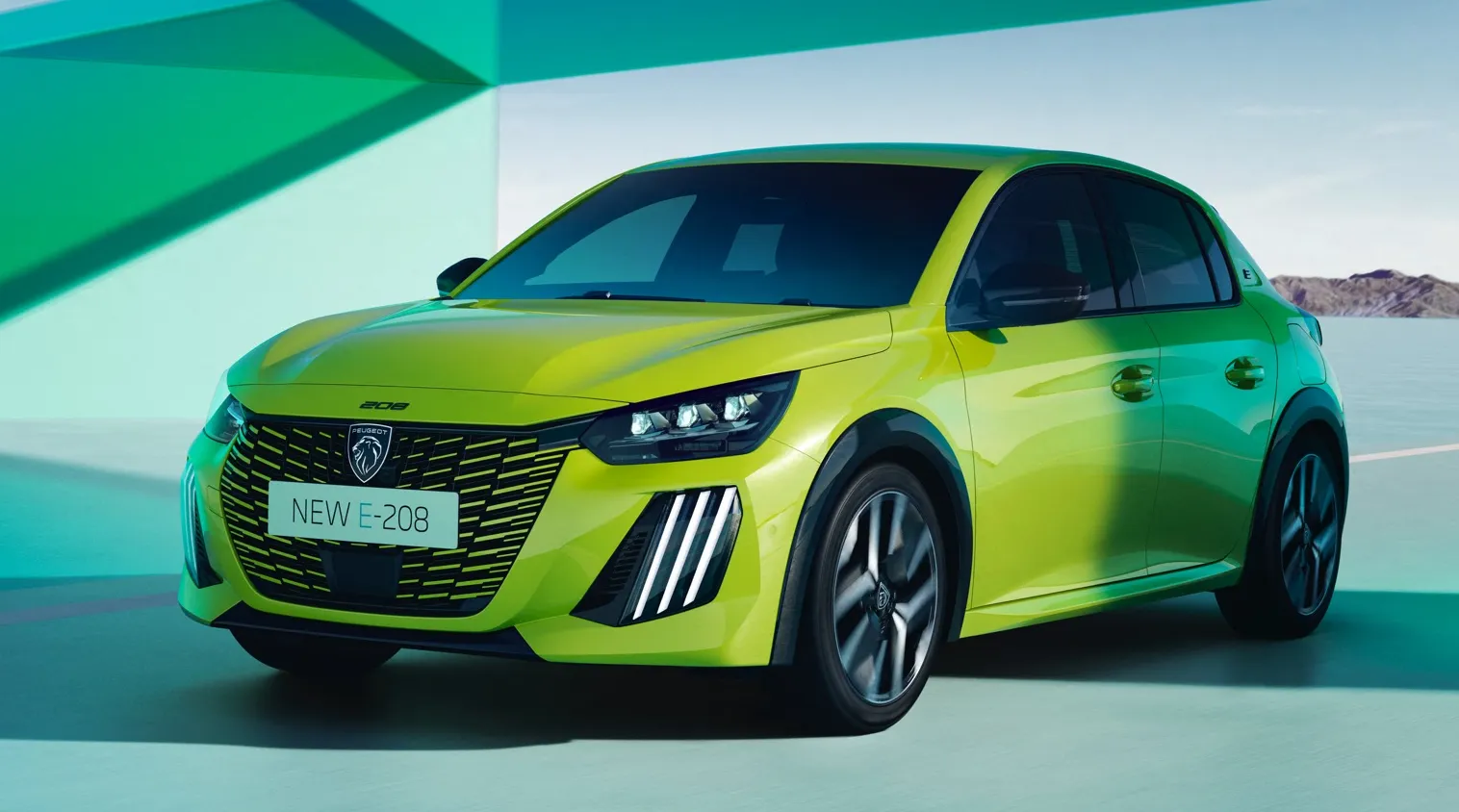
Peugeot e-208 50 kWh
 Peugeot
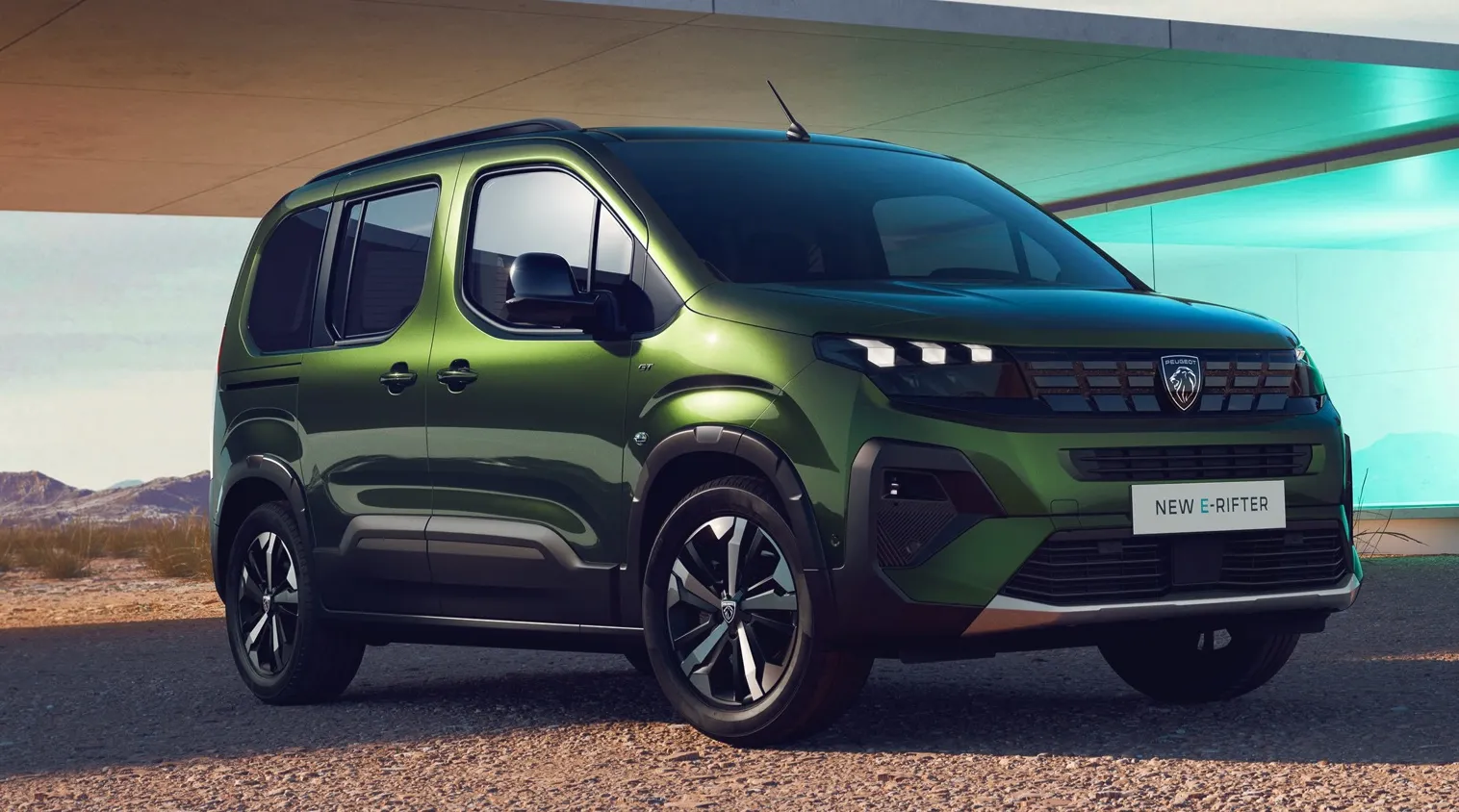
Peugeot e-Rifter XL 50 kWh
 Peugeot