Charging is possible by using a regular wall plug or a charging station. Public charging is always done through a charging station. How fast the EV can charge depends on the charging station (EVSE) used and the maximum charging capacity of the EV. The table below shows all possible options for charging the Peugeot e-408 58 kWh. Each option shows how fast the battery can be charged from empty to full.
Europe
Charging an EV in Europe differs by country. Some European countries primarily use 1-phase connections to the grid, while other countries are almost exclusively using a 3-phase connection. The table below shows all possible ways the Peugeot e-408 58 kWh can be charged, but some modes of charging might not be widely available in certain countries.
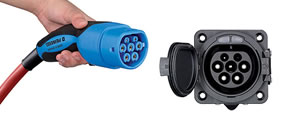
Type 2 (Mennekes - IEC 62196)
Charging Point
Max. Power
Power
Time
Rate
Wall Plug (2.3 kW)
230V / 1x10A
2.3 kW
30 hours
13 km/h
1-phase 16A (3.7 kW)
230V / 1x16A
3.7 kW
18h30m
20 km/h
1-phase 32A (7.4 kW)
230V / 1x32A
7.4 kW
9h15m
41 km/h
3-phase 16A (11 kW)
400V / 3x16A
11 kW
6h15m
60 km/h
3-phase 32A (22 kW)
400V / 3x16A
11 kW †
6h15m
60 km/h
† = Limited by on-board charger, vehicle cannot charge faster.
Fast Charging (10 -> 80%)
Rapid charging enables longer journeys by adding as much range as possible in the shortest amount of time. Charging power will decrease significantly after 80% state-of-charge has been reached. A typical rapid charge therefore rarely exceeds 80% SoC. The rapid charge rate of an EV depends on the charger used and the maximum charging power the EV can handle. The table below shows all details for rapid charging the Peugeot e-408 58 kWh.
Max. Power: maximum power provided by charge point
Avg. Power: average power provided by charge point over a session from 10% to 80%
Time: time needed to charge from 10% to 80%
Rate: average charging speed over a session from 10% to 80%
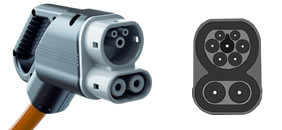
Combined Charging System (CCS Combo 2)
Charging Point
Max. Power
Avg. Power
Time
Rate
CCS (50 kW DC)
50 kW
40 kW †
64 min
240 km/h
CCS (100 kW DC)
100 kW
65 kW †
40 min
390 km/h
CCS (150 kW DC)
120 kW †
70 kW †
37 min
420 km/h
This vehicle supports Autocharge
This vehicle does not support Plug & Charge
† = Limited by charging capabilities of vehicle
Autocharge: allows for automatic initiation of a charging session at supported CCS charging stations.
Plug & Charge: allows for automatic initiation of a charging session at supported CCS charging stations in accordance with ISO 15118.
Actual charging rates may differ from data shown due to factors like outside temperature, state of the battery and driving style.
Peugeot Claimed Specifications
The table below shows the claimed specifications from the manufacturer for charging the Peugeot e-408 58 kWh. The specifications can differ from the table above for a variety of reasons. If real-world charge tests are available, these differences can be signifcant. If no real-world tests are available, the table above will be based on the manufacturer specifications as per the table below.
Max. Power: maximum charge power during charging session
Charge From: battery percentage (% SoC) where charging session is started
Charge To: battery percentage (% SoC) where charging session is ended
Time: time needed for charging session
Peugeot Claimed Specifications
Max. Power
Charge From
Charge To
Time
120 kW
20 %
80 %
31 min
Dimensions and Weight
Length
4687 mm
Width
1859 mm
Width with mirrors
2062 mm
Height
1478 mm
Wheelbase
2787 mm
Weight Unladen (EU)
1804 kg
Gross Vehicle Weight (GVWR)
2250 kg
Max. Payload
521 kg
Cargo Volume
471 L
Cargo Volume Max
1545 L
Cargo Volume Frunk
0 L
Roof Load
No Data
Tow Hitch Possible
No Data
Towing Weight Unbraked
No Data
Towing Weight Braked
No Data
Vertical Load Max
No Data
About this Vehicle
Peugeot e-408 Overview
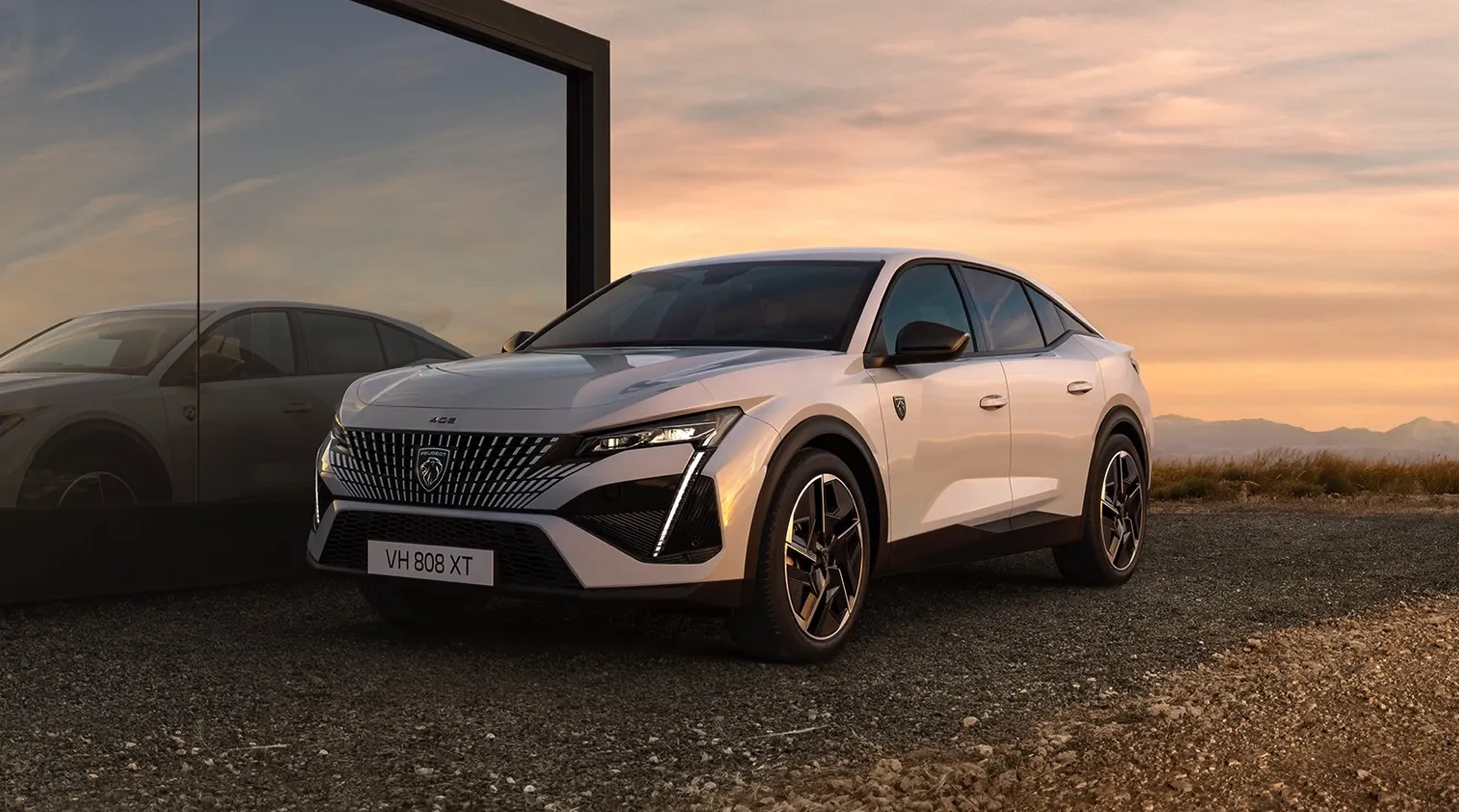
The Peugeot e-408 is a premium mainstream electric fastback-inspired crossover that combines stylish design with practical everyday usability. Positioned as an accessible entry into Peugeot’s electric vehicle lineup, the e-408 targets environmentally conscious drivers seeking a modern, spacious alternative to traditional combustion-engine vehicles. This electric SUV features Peugeot’s distinctive design language with angular cues that deliver presence on the road, while the interior showcases the brand’s modern i-Cockpit technology platform. The e-408 stands out in the competitive EV market by offering a generous 58 kWh battery paired with a capable electric motor, making it an attractive option for those prioritizing range and practicality without premium pricing.
The Peugeot e-408 electric vehicle represents the brand’s commitment to electrification across its model range. With its five-door configuration, five-seat layout, and 471-liter boot capacity, the e-408 delivers genuine family-friendly versatility. The model incorporates advanced features, including a 10-inch digital display, intuitive PEUGEOT i-Cockpit controls, wireless smartphone charging, and a FOCAL Premium HiFi system. What makes the Peugeot e-408 particularly compelling is its balance of technology, comfort, and efficiency—offering heated front seats, dual-zone automatic air conditioning, lane-keeping assist, and comprehensive safety features as standard on the Allure trim.
The e-408 electric car benefits from recent updates that enhance its appeal. Battery preconditioning, vehicle-to-load functionality, and plug-and-charge payment capabilities now come standard, while aerodynamic refinements have improved overall efficiency. These enhancements position the Peugeot e-408 as a thoughtfully engineered electric vehicle that addresses real-world charging and usability concerns.
Peugeot e-408 Performance and Driving Experience
The Peugeot e-408 delivers responsive performance with its 210 hp (157 kW) front-drive electric motor, providing smooth acceleration suitable for both urban commuting and highway driving. The electric powertrain offers immediate torque delivery characteristic of EV propulsion, while the compact automatic gearbox impulse selector and multi-driving mode selector—featuring Electric, Hybrid, and Sport modes—allow drivers to tailor their driving experience. The e-408’s handling benefits from its well-balanced chassis and modern suspension tuning, making it composed through corners while maintaining comfort on longer journeys. Driver attention warning, electronic stability control, and hill start assist contribute to confident, secure driving dynamics across various conditions.
Specification
Value
Power Output
210 hp / 157 kW
Torque
221 lb-ft / 300 Nm
0-60 mph (0-100 km/h)
~8.5 sec
Top Speed
160 km/h / 99 mph
Transmission
Automatic
Drivetrain
Front-Wheel Drive
Peugeot e-408 Range and Battery Specifications
The Peugeot e-408 delivers impressive real-world range thanks to its 58 kWh usable battery capacity and optimized energy management. Official WLTP testing confirms 281-293 miles of range, with recent aerodynamic improvements pushing the official figure to 456 km (283 miles). Real-world range typically falls between 250 and 280 miles, depending on driving conditions, weather, and driving style. The e-408 battery achieves an energy consumption rate of 14.7 kWh/100km, demonstrating excellent efficiency for its class. Cold weather, highway driving at sustained speeds, and aggressive acceleration will reduce range, while gentle driving, moderate temperatures, and highway cruising at steady speeds optimize efficiency.
The Peugeot e-408 battery specifications reflect modern lithium-ion technology with integrated thermal management. Battery preconditioning—a recent addition—allows drivers to warm or cool the battery before charging or driving, improving charging speed in cold conditions and optimizing performance. The battery is fully integrated with the vehicle’s navigation system, enabling intelligent charging stop planning for longer journeys.
Range Metric
Value
WLTP Range
281-293 miles / 456 km
Real-World Range
250-280 miles / 400-450 km
Battery Capacity
58 kWh (usable)
Energy Consumption
14.7 kWh/100km
Battery Chemistry
Lithium-ion
Peugeot e-408 Charging Times and Options
The Peugeot e-408 supports multiple charging solutions for maximum flexibility. Home charging via a 7.4 kW onboard charger enables overnight top-ups, while public DC fast charging networks provide rapid replenishment for longer trips. The e-408 features Mode 3 Type 2 charging cable compatibility and now includes plug-and-charge payment functionality for seamless public charging experiences. Battery preconditioning ensures optimal charging speeds even in cold weather, while vehicle-to-load capabilities allow the e-408 to power external devices.
Charging Method
Time
Speed
Level 1 (120V)
48+ hours
~1.4 kW
Level 2 (7.4 kW)
8-10 hours
7.4 kW
Level 2 (11 kW)
5-6 hours
11 kW
DC Fast Charge (10-80%)
30-40 min
up to 100 kW
Peugeot e-408 vs Competitors
The Peugeot e-408 competes directly with the Hyundai Ioniq 5, Kia EV6, and BMW i4. While the Ioniq 5 and EV6 offer faster charging speeds and slightly longer range, the e-408 delivers superior interior space, more affordable pricing, and a more refined driving experience for daily use. Compared to the BMW i4, the Peugeot e-408 provides better value and more practical cargo space, though the i4 offers sportier performance. Against the Tesla Model Y, the e-408 emphasizes European design sophistication and practical family usability over raw performance metrics.
Frequently Asked Questions
The Peugeot e-408 delivers 250-280 miles of real-world range with its 58 kWh battery, though official WLTP figures claim 281-293 miles. Real-world range varies based on weather, driving style, and terrain, with highway driving typically reducing range by 10-15% compared to mixed urban/highway cycles.
Home charging via a 7.4 kW onboard charger takes 8-10 hours for a full charge, while DC fast charging from 10-80% takes approximately 30-40 minutes. Level 2 public chargers (11 kW) can fully charge the e-408 in 5-6 hours.
The Peugeot e-408 features front-wheel drive with a single 210 hp electric motor. This configuration provides good traction and interior space while maintaining efficiency.
Battery preconditioning allows the e-408 to warm or cool its 58 kWh battery before charging or driving, improving DC fast charging speeds in cold weather and optimizing performance in extreme temperatures.
The Peugeot e-408 offers more interior space and better value pricing, while the Ioniq 5 provides faster charging speeds and slightly longer range. The e-408 emphasizes comfort and practicality, whereas the Ioniq 5 prioritizes performance and cutting-edge technology.
Yes, the Peugeot e-408 is an excellent choice for practical, everyday electric driving. It combines an impressive 281-mile WLTP range, modern technology features, a spacious interior, and competitive pricing. The recent updates adding battery preconditioning and vehicle-to-load functionality enhance its real-world usability significantly.> The Peugeot e-408 is a premium mainstream electric fastback-inspired crossover delivering 281-293 miles of WLTP range with its 58 kWh battery and 210 hp electric motor. This five-seat family EV combines stylish European design, practical 471-liter cargo space, and advanced features like battery preconditioning and vehicle-to-load functionality, making it an excellent value proposition in the competitive EV market for drivers prioritizing comfort, efficiency, and everyday usability.


 Peugeot
 Peugeot
 Peugeot
 Peugeot