

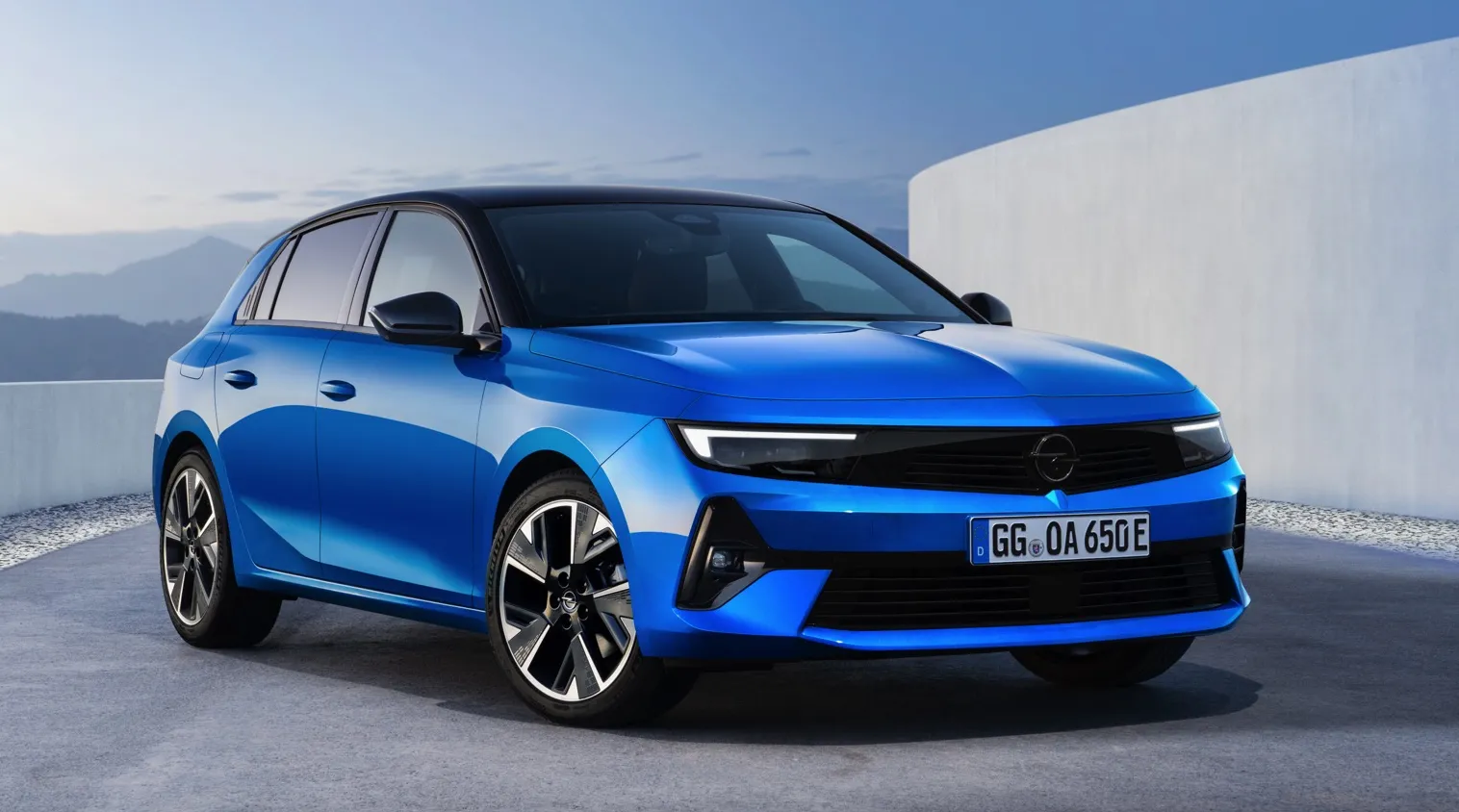
Opel Astra Electric
Key Specifications
Real Range Estimation
| City - Cold Weather * | 310 km |
| Highway - Cold Weather * | 225 km |
| Combined - Cold Weather * | 265 km |
between 225 - 475 km
| City - Mild Weather * | 475 km |
| Highway - Mild Weather * | 295 km |
| Combined - Mild Weather * | 370 km |
Battery
| Nominal Capacity | 54.0 kWh |
| Battery Type | Lithium-ion |
| Number of Cells | 102 |
| Architecture | 400 V |
| Warranty Period | 8 years |
| Warranty Mileage | 160,000 km |
| Useable Capacity | 50.8 kWh |
| Cathode Material | NCM811 |
| Pack Configuration | 102s1p |
| Nominal Voltage | 377 V |
| Form Factor | No Data |
| Name / Reference | No Data |
Performance
| Acceleration 0 - 100 km/h | 9.2 sec |
| Top Speed | 170 km/h |
| Electric Range * | 320 km |
| Total Power | 115 kW (156 PS) |
| Total Torque | 270 Nm |
| Drive | Front |
Home and Destination Charging (0 -> 100%)
Charging is possible by using a regular wall plug or a charging station. Public charging is always done through a charging station. How fast the EV can charge depends on the charging station (EVSE) used and the maximum charging capacity of the EV. The table below shows all possible options for charging the Opel Astra Electric. Each option shows how fast the battery can be charged from empty to full.
Europe
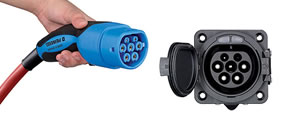
Charging an EV in Europe differs by country. Some European countries primarily use 1-phase connections to the grid, while other countries are almost exclusively using a 3-phase connection. The table below shows all possible ways the Opel Astra Electric can be charged, but some modes of charging might not be widely available in certain countries.
| Type 2 (Mennekes - IEC 62196) |
|---|
 |
| Charging Point | Max. Power | Power | Time | Rate |
|---|---|---|---|---|
| Wall Plug (2.3 kW) | 230V / 1x10A | 2.3 kW | 26 hours | 12 km/h |
| 1-phase 16A (3.7 kW) | 230V / 1x16A | 3.7 kW | 16h15m | 20 km/h |
| 1-phase 32A (7.4 kW) | 230V / 1x32A | 7.4 kW | 8h15m | 39 km/h |
| 3-phase 16A (11 kW) | 400V / 3x16A | 11 kW | 5h30m | 58 km/h |
| 3-phase 32A (22 kW) | 400V / 3x16A | 11 kW † | 5h30m | 58 km/h |
† = Limited by on-board charger, vehicle cannot charge faster.
Fast Charging (10 -> 80%)
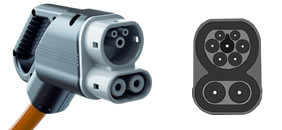
Rapid charging enables longer journeys by adding as much range as possible in the shortest amount of time. Charging power will decrease significantly after 80% state-of-charge has been reached. A typical rapid charge therefore rarely exceeds 80% SoC. The rapid charge rate of an EV depends on the charger used and the maximum charging power the EV can handle. The table below shows all details for rapid charging the Opel Astra Electric.
- Max. Power: maximum power provided by charge point
- Avg. Power: average power provided by charge point over a session from 10% to 80%
- Time: time needed to charge from 10% to 80%
- Rate: average charging speed over a session from 10% to 80%
| Combined Charging System (CCS Combo 2) |
|---|
 |
| Charging Point | Max. Power | Avg. Power | Time | Rate |
|---|---|---|---|---|
| CCS (50 kW DC) | 50 kW | 45 kW † | 50 min | 260 km/h |
| CCS (100 kW DC) | 100 kW | 85 kW † | 26 min | 510 km/h |
| CCS (150 kW DC) | 100 kW † | 85 kW † | 26 min | 510 km/h |
| This vehicle supports Autocharge |
|---|
| This vehicle does not support Plug & Charge |
† = Limited by charging capabilities of vehicle
Autocharge: allows for automatic initiation of a charging session at supported CCS charging stations.
Plug & Charge: allows for automatic initiation of a charging session at supported CCS charging stations in accordance with ISO 15118.
Actual charging rates may differ from data shown due to factors like outside temperature, state of the battery and driving style.
Opel Claimed Specifications
The table below shows the claimed specifications from the manufacturer for charging the Opel Astra Electric. The specifications can differ from the table above for a variety of reasons. If real-world charge tests are available, these differences can be signifcant. If no real-world tests are available, the table above will be based on the manufacturer specifications as per the table below.
- Max. Power: maximum charge power during charging session
- Charge From: battery percentage (% SoC) where charging session is started
- Charge To: battery percentage (% SoC) where charging session is ended
- Time: time needed for charging session
| Opel Claimed Specifications |
|---|
| Max. Power | Charge From | Charge To | Time |
|---|---|---|---|
| 100 kW | No Data | No Data | No Data |
Dimensions and Weight
| Length | 4374 mm |
| Width | 1860 mm |
| Width with mirrors | 2062 mm |
| Height | 1470 mm |
| Wheelbase | 2675 mm |
| Weight Unladen (EU) | 1736 kg |
| Gross Vehicle Weight (GVWR) | 2100 kg |
| Max. Payload | 439 kg |
| Cargo Volume | 352 L |
| Cargo Volume Max | 1268 L |
| Cargo Volume Frunk | 0 L |
| Roof Load | No Data |
| Tow Hitch Possible | Yes |
| Towing Weight Unbraked | 0 kg |
| Towing Weight Braked | 0 kg |
| Vertical Load Max | 80 kg |
About this Vehicle
Opel Astra Electric Overview
The Opel Astra Electric is a compact mainstream electric hatchback positioned as an affordable alternative to premium German EVs, while still offering grown‑up refinement and technology. As a practical Opel electric hatchback based on the Stellantis electric platform, it targets company car drivers, urban commuters, and small families who want a familiar Astra package with zero‑emission driving and competitive EV specs.
This five‑door Opel electric car combines a 54 kWh lithium‑ion battery, a 115 kW motor and a WLTP range of around 416 km in its current form, making it a strong contender in the compact EV class. The latest update announced by Opel increases battery capacity to 58 kWh and boosts the WLTP range up to 454 km, extending its appeal for longer‑distance drivers. The clean, sharp exterior design and digital cockpit carry over from the ICE Astra, but the Astra Electric adds EV‑specific graphics, drive modes and energy monitoring, giving it a modern, tech‑forward feel.
In the crowded electric hatchback space, the Opel Astra Electric matters because it brings an established European nameplate into the EV era with sensible pricing, usable electric vehicle range, and a balance of comfort and efficiency. For buyers cross‑shopping EVs like the VW ID.3 or Tesla Model 3, the Opel Astra Electric review story is about familiarity, practicality, and efficiency rather than headline‑grabbing performance.
—
Opel Astra Electric Performance and Driving Experience
On the road, the Opel Astra Electric focuses on smooth, predictable performance rather than outright speed. Its front‑mounted electric motor delivers 115 kW (156 hp) and around 270 Nm of torque, giving brisk urban response and adequate overtaking power on the motorway. 0–100 km/h takes roughly 9.0 seconds, with a top speed of 170 km/h, which is more than enough for European highway limits.
The Astra Electric’s front‑wheel‑drive setup and MacPherson strut/torsion beam suspension are tuned for stability and comfort rather than aggressive cornering. The low‑mounted battery keeps the centre of gravity down, so body roll is controlled and the car feels secure in bends. Eco, Normal, and Sport modes adjust throttle response and power delivery, letting you prioritise range or sharper responses. Noise levels are well contained, and the driving experience is easy and relaxing, especially in city traffic.
| Specification | Value |
|---|---|
| 0-60 mph (0-100 km/h) | 9.0 sec |
| Top Speed | 106 mph / 170 km/h |
| Power Output | 156 hp / 115 kW |
| Torque | 199 lb-ft / 270 Nm |
—
Opel Astra Electric Range and Battery Specifications
Official Opel Astra Electric WLTP range is quoted at around 416 km, with the updated 58 kWh version targeting up to 454 km WLTP, depending on trim and wheel size. In mixed real‑world driving, you should expect an Astra Electric real‑world range of roughly 310–360 km, varying with temperature, speed and driving style. Around town in mild weather, over 400 km on a charge is realistic.
Battery capacity is 54 kWh gross and 50.8 kWh usable in current models, using an NMC lithium‑ion chemistry. The newer version upgrades to a 58 kWh pack, slightly improving efficiency and range. Typical energy use sits between 14–17 kWh/100 km, depending on conditions, which is competitive for a compact EV hatchback. High speeds, cold weather, heavy loads and frequent use of climate control will all reduce the Opel Astra Electric’s real‑world range, so planning is still important for long trips.
| Range Metric | Value |
|---|---|
| WLTP Range | 258–282 miles / 416–454 km |
| EPA Range | n/a (EU‑focused model) |
| Real-World Range | ~193–224 miles / 310–360 km |
| Battery Capacity | 50.8–54.0 kWh usable (58 kWh gross on latest version) |
—
Opel Astra Electric Charging Times and Options
At home, the Opel Astra Electric supports up to 11 kW AC charging through its onboard charger. On a typical 7 kW wallbox, a full charge from empty to 100% takes about 8–9 hours, ideal for overnight charging. Standard domestic plugs (Level 1, 120 V equivalent) are much slower and only suitable for topping up if you cover short daily distances.
On the road, the Astra Electric offers DC fast charging up to 100 kW via a CCS port. Under ideal conditions, charging from 10–80% takes around 26–30 minutes, adding roughly 250–300 km of range in that time. The car is compatible with major public charging networks across Europe, and scheduled charging plus pre‑conditioning features help optimise charging costs and comfort. For most owners, a pattern of home charging during the week and occasional DC fast charging on longer journeys will be the most practical setup.
| Charging Method | Time | Speed |
|---|---|---|
| Level 1 (120V) | 30–40 hours (0–100%) | ~2 kW |
| Level 2 (240V/7kW) | 8–9 hours (0–100%) | ~7 kW |
| Level 2 (240V/11kW) | ~6 hours (0–100%) | ~11 kW |
| DC Fast Charge (10-80%) | 26–30 min | up to 100 kW |
—
Opel Astra Electric vs Competitors
In an Opel Astra Electric vs Tesla Model 3 comparison, the Opel trails Tesla on outright performance and fast‑charging speed but counters with a more conventional hatchback layout and often lower real‑world purchase and insurance costs. Against the VW ID.3, the Astra Electric offers similar range and power with a more traditional cabin design that some buyers prefer. Compared with the Hyundai Ioniq 5, the Opel Astra Electric is smaller and less powerful but more efficient in urban use and easier to park. Overall, the Astra Electric comparison story is about sensible efficiency, familiar ergonomics and competitive range rather than futuristic styling or extreme acceleration.
—
Frequently Asked Questions
Related Vehicles
View All Opel
Opel
Opel Grandland 73 kWh
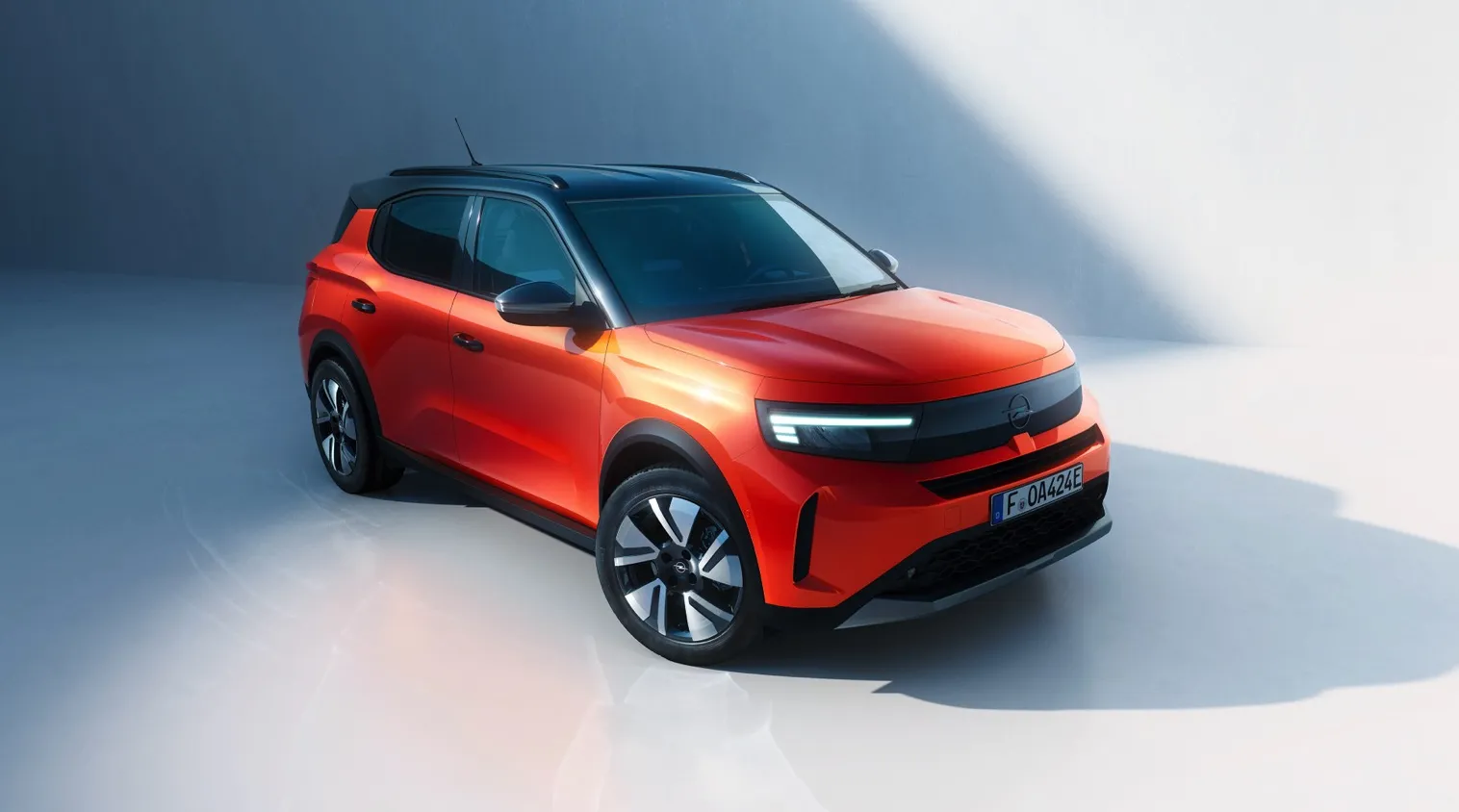 Opel
Opel
Opel Frontera 44 kWh
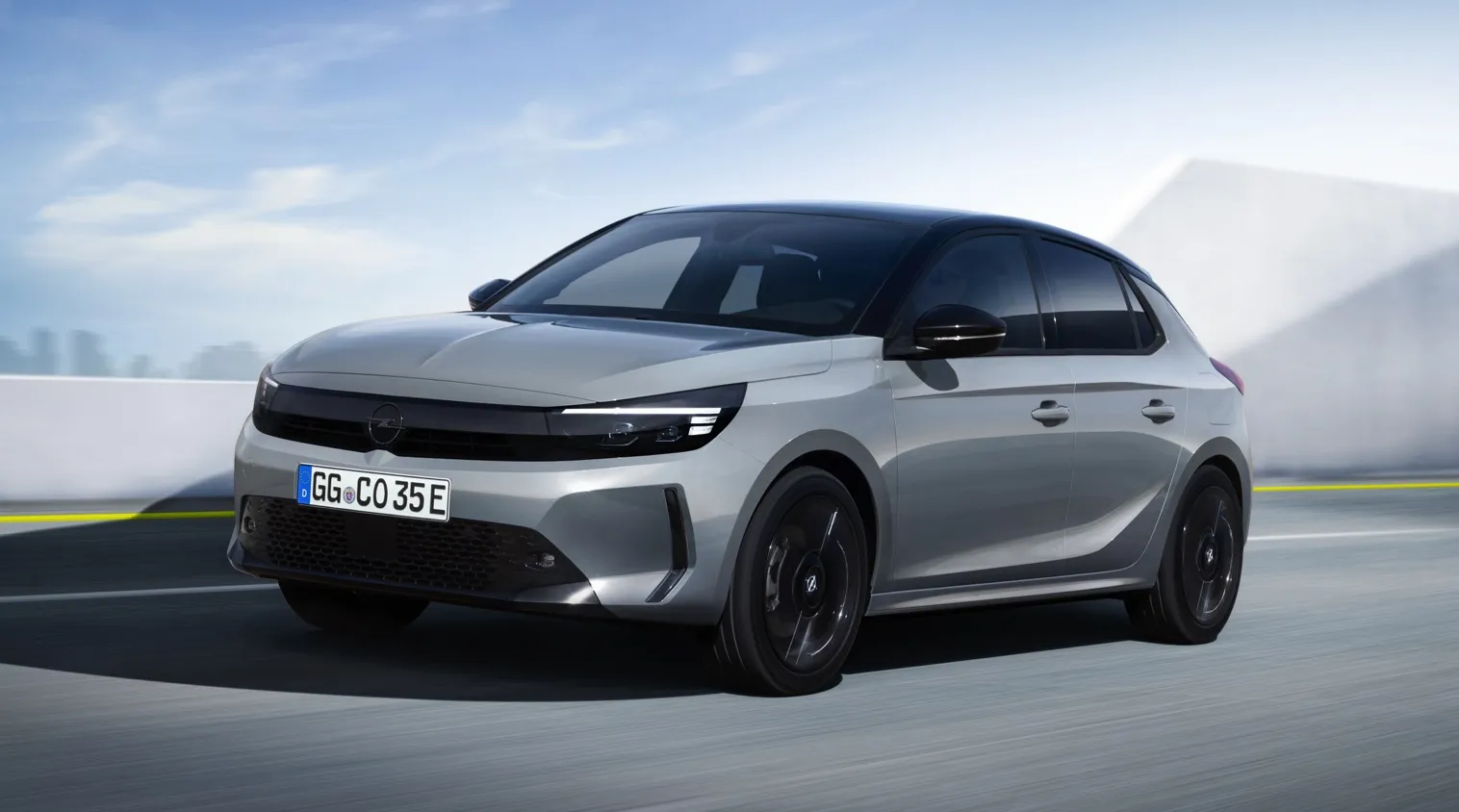 Opel
Opel
Opel Corsa Electric 51 kWh
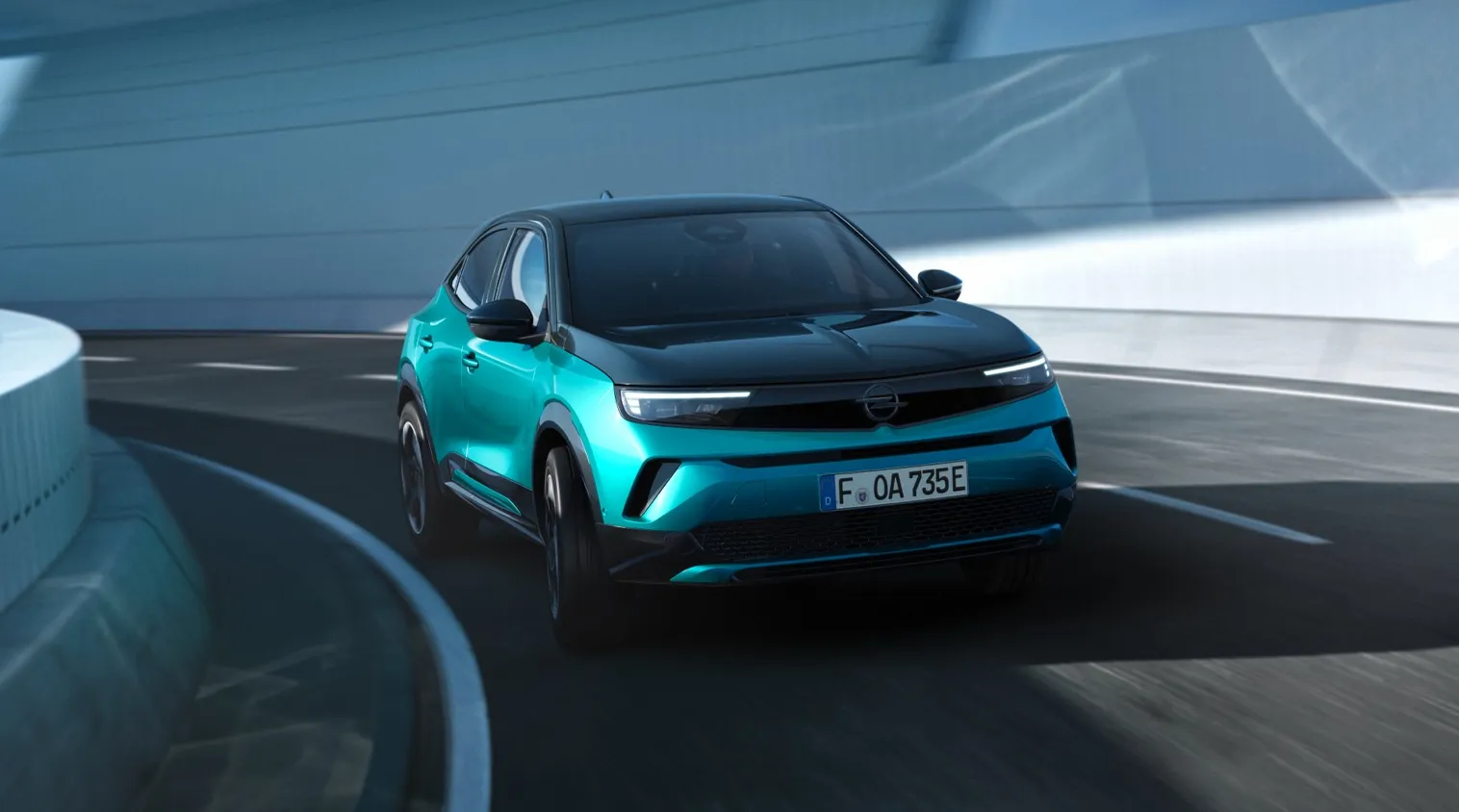 Opel
Opel