

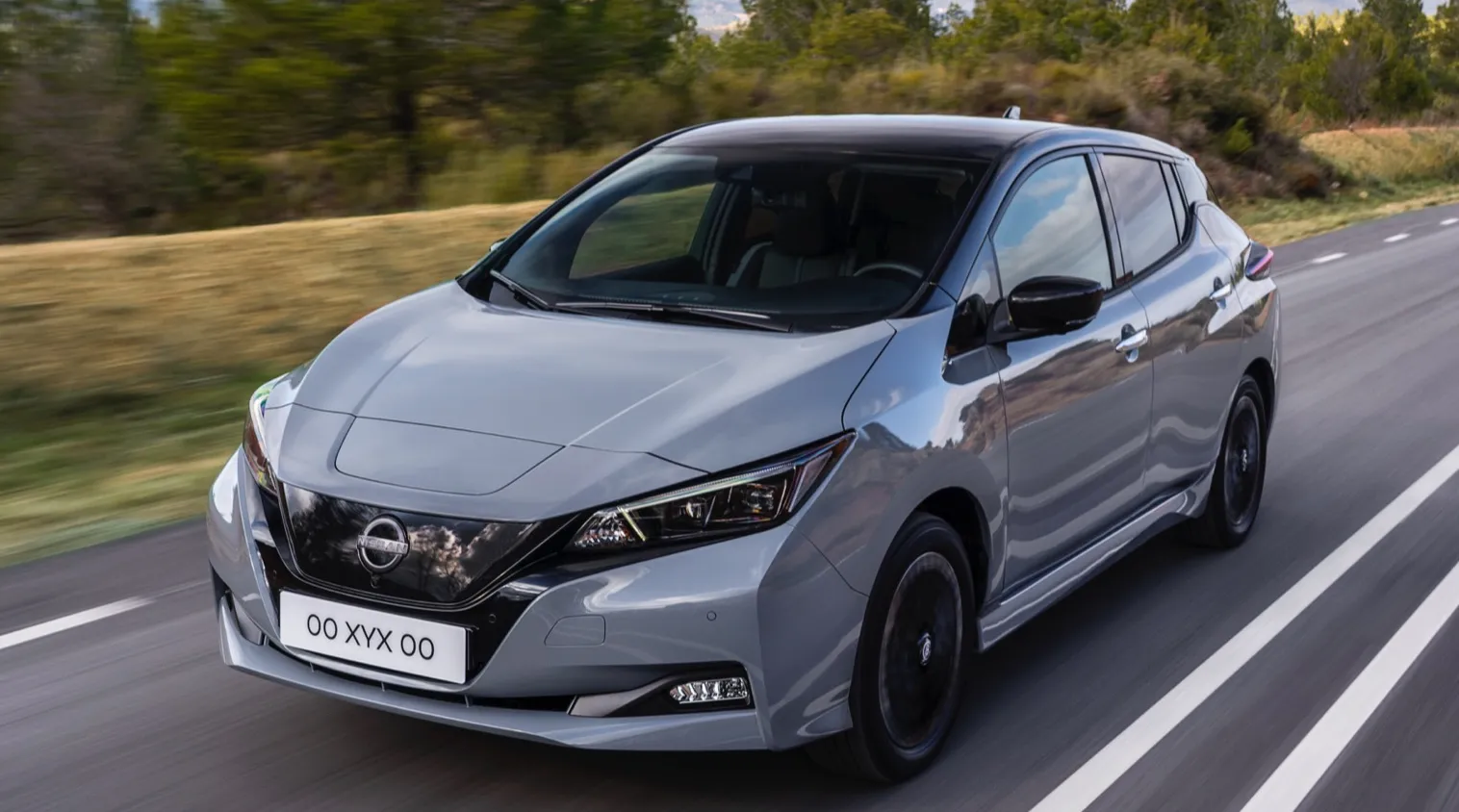
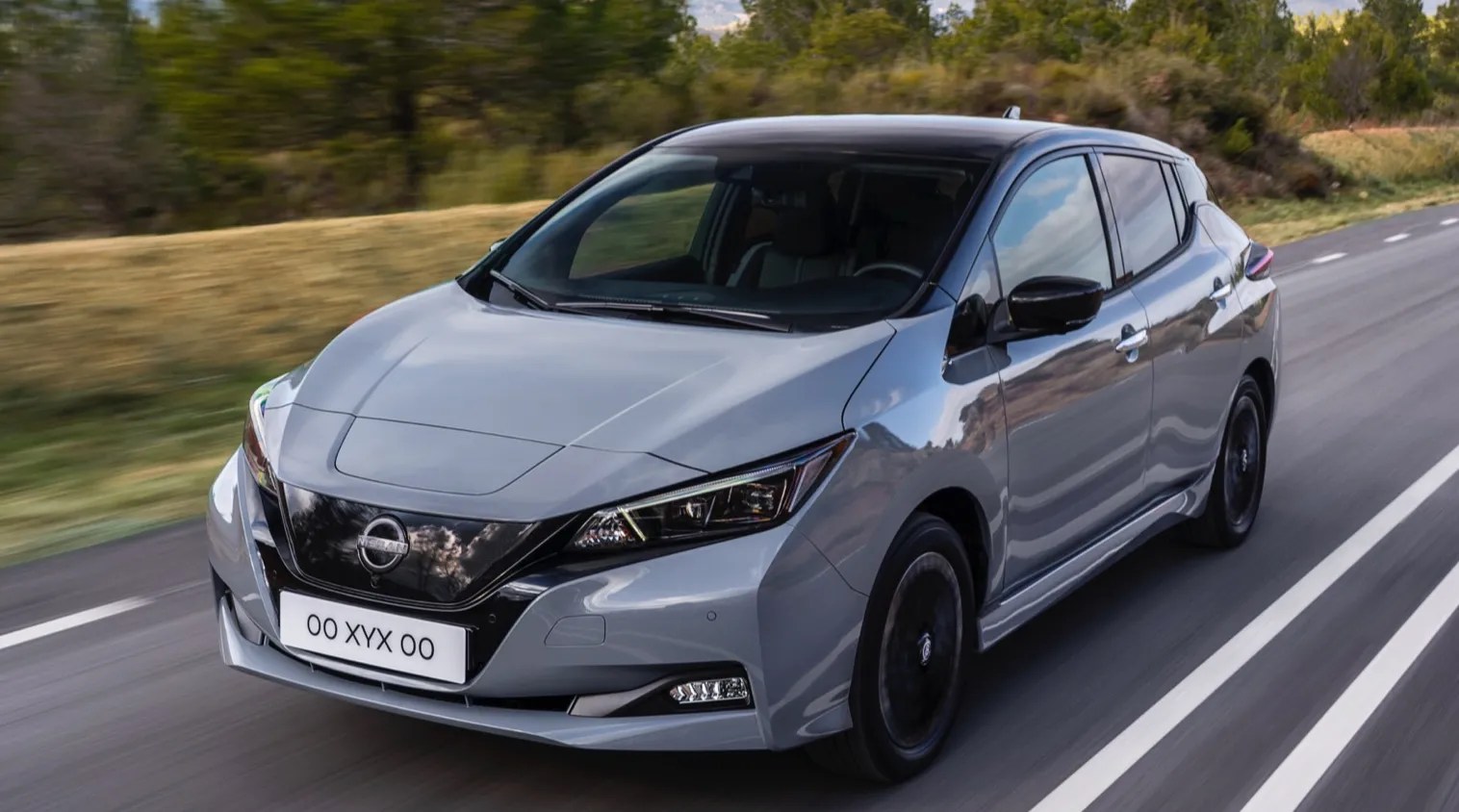
Nissan Leaf e+
Key Specifications
Real Range Estimation
| City - Cold Weather * | 335 km |
| Highway - Cold Weather * | 240 km |
| Combined - Cold Weather * | 285 km |
between 240 - 505 km
| City - Mild Weather * | 505 km |
| Highway - Mild Weather * | 310 km |
| Combined - Mild Weather * | 390 km |
Battery
| Nominal Capacity | 62.0 kWh |
| Battery Type | Lithium-ion |
| Number of Cells | 288 |
| Architecture | 400 V |
| Warranty Period | 8 years |
| Warranty Mileage | 160,000 km |
| Useable Capacity | 59.0 kWh |
| Cathode Material | NCM523 |
| Pack Configuration | 96s3p |
| Nominal Voltage | 350 V |
| Form Factor | No Data |
| Name / Reference | No Data |
Performance
| Acceleration 0 - 100 km/h | 6.9 sec |
| Top Speed | 157 km/h |
| Electric Range * | 340 km |
| Total Power | 160 kW (218 PS) |
| Total Torque | 340 Nm |
| Drive | Front |
Home and Destination Charging (0 -> 100%)
Charging is possible by using a regular wall plug or a charging station. Public charging is always done through a charging station. How fast the EV can charge depends on the charging station (EVSE) used and the maximum charging capacity of the EV. The table below shows all possible options for charging the Nissan Leaf e+. Each option shows how fast the battery can be charged from empty to full.
Europe
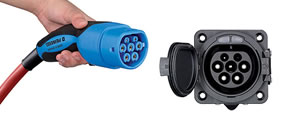
Charging an EV in Europe differs by country. Some European countries primarily use 1-phase connections to the grid, while other countries are almost exclusively using a 3-phase connection. The table below shows all possible ways the Nissan Leaf e+ can be charged, but some modes of charging might not be widely available in certain countries.
| Type 2 (Mennekes - IEC 62196) |
|---|
 |
| Charging Point | Max. Power | Power | Time | Rate |
|---|---|---|---|---|
| Wall Plug (2.3 kW) | 230V / 1x10A | 2.3 kW | 30h15m | 11 km/h |
| 1-phase 16A (3.7 kW) | 230V / 1x16A | 3.7 kW | 18h45m | 18 km/h |
| 1-phase 32A (7.4 kW) | 230V / 1x29A | 6.6 kW † | 10h45m | 32 km/h |
| 3-phase 16A (11 kW) | 230V / 1x16A | 3.7 kW † | 18h45m | 18 km/h |
| 3-phase 32A (22 kW) | 230V / 1x29A | 6.6 kW † | 10h45m | 32 km/h |
† = Limited by on-board charger, vehicle cannot charge faster.
Fast Charging (10 -> 80%)
Rapid charging enables longer journeys by adding as much range as possible in the shortest amount of time. Charging power will decrease significantly after 80% state-of-charge has been reached. A typical rapid charge therefore rarely exceeds 80% SoC. The rapid charge rate of an EV depends on the charger used and the maximum charging power the EV can handle. The table below shows all details for rapid charging the Nissan Leaf e+.
- Max. Power: maximum power provided by charge point
- Avg. Power: average power provided by charge point over a session from 10% to 80%
- Time: time needed to charge from 10% to 80%
- Rate: average charging speed over a session from 10% to 80%
| CHAdeMO |
|---|
 |
| Charging Point | Max. Power | Avg. Power | Time | Rate |
|---|---|---|---|---|
| CHAdeMO (50 kW DC) | 46 kW † | 44 kW † | 59 min | 240 km/h |
| Charge Curve |
|---|
 |
Data made available by Fastned |
| This vehicle does not support Autocharge |
|---|
| This vehicle does not support Plug & Charge |
† = Limited by charging capabilities of vehicle
Autocharge: allows for automatic initiation of a charging session at supported CCS charging stations.
Plug & Charge: allows for automatic initiation of a charging session at supported CCS charging stations in accordance with ISO 15118.
Actual charging rates may differ from data shown due to factors like outside temperature, state of the battery and driving style.
Dimensions and Weight
| Length | 4490 mm |
| Width | 1788 mm |
| Width with mirrors | 2030 mm |
| Height | 1540 mm |
| Wheelbase | 2700 mm |
| Weight Unladen (EU) | 1756 kg |
| Gross Vehicle Weight (GVWR) | 2140 kg |
| Max. Payload | 459 kg |
| Cargo Volume | 420 L |
| Cargo Volume Max | 1161 L |
| Cargo Volume Frunk | No Data |
| Roof Load | 35 kg |
| Tow Hitch Possible | No Data |
| Towing Weight Unbraked | 0 kg |
| Towing Weight Braked | 0 kg |
| Vertical Load Max | No Data |
About this Vehicle
2026 Nissan Leaf e+ Overview
The 2026 Nissan Leaf e+ positions itself as a mainstream electric hatchback with premium upgrades, blending affordability and advanced EV technology for urban commuters and families seeking reliable daily transportation. As Nissan’s flagship electric vehicle, the Leaf e+ targets budget-conscious buyers in the subcompact EV segment, offering a refreshed design on a dedicated EV platform that emphasizes efficiency, connectivity, and accessibility. Key distinguishing features include its 75 kWh liquid-cooled lithium-ion battery, e-Step regenerative braking, and four drive modes (Standard, Eco, Sport, Personal) for customizable performance.
What makes the Nissan Leaf e+ review stand out in the EV landscape is its evolution from earlier generations, now boasting up to 303-mile EPA range on the S+ trim and NACS fast-charging compatibility for Tesla Supercharger access. With 214 hp, instant torque, and enhanced aerodynamics, it delivers a quiet, smooth ride while introducing intelligent route planning via the MyNISSAN app. This Nissan electric hatchback matters as an entry-level powerhouse, undercutting pricier rivals while advancing Nissan’s zero-emission legacy with real-world practicality.
2026 Nissan Leaf e+ Performance and Driving Experience
The 2026 Nissan Leaf e+ delivers peppy acceleration with 214 horsepower and 261 lb-ft of torque from its front-wheel-drive permanent-magnet synchronous AC motor, providing instant power for city merging and highway passing. Handling shines thanks to a low center of gravity, multi-link rear suspension, and e-Step technology, which uses regenerative braking to slow the vehicle smoothly off the pedal while recapturing energy. Four drive modes let drivers tailor dynamics—Eco for efficiency, Sport for sharper response—creating engaging real-world impressions of a responsive, quiet crossover-like EV.
| Specification | Value |
|---|---|
| 0-60 mph (0-100 km/h) | 6.5 sec |
| Top Speed | 98 mph / 158 km/h |
| Power Output | <strong>214 hp</strong> / <strong>157 kW</strong> |
| Torque | <strong>261 lb-ft</strong> / <strong>354 Nm</strong> |
2026 Nissan Leaf e+ Range and Battery Specifications
Equipped with a 75 kWh usable liquid-cooled lithium-ion battery, the 2026 Nissan Leaf e+ achieves an official EPA range of 303 miles on S+ trims, with real-world figures around 270-290 miles depending on conditions. Efficiency hits 114 MPGe combined (122 city/105 highway), or about 30 kWh/100 miles, making it competitive for daily drives. Factors like cold weather, aggressive acceleration, or highway speeds can reduce range by 20-30%, but intelligent features like the Interactive EV Monitor and Route Planner optimize trips.
Nissan Leaf e+ WLTP range aligns closely with EPA at around 300 miles, while real-world range benefits from improved aerodynamics and regen braking. Leaf e+ battery specs emphasize durability with an 8-year/100,000-mile warranty.
| Range Metric | Value |
|---|---|
| WLTP Range | <strong>303 miles</strong> / <strong>488 km</strong> |
| EPA Range | <strong>303 miles</strong> / <strong>488 km</strong> |
| Real-World Range | <strong>270-290 miles</strong> / <strong>435-467 km</strong> |
| Battery Capacity | <strong>75 kWh</strong> (usable) |
2026 Nissan Leaf e+ Charging Times and Options
The 2026 Nissan Leaf e+ simplifies recharging with dual ports, including NACS for up to 150 kW DC fast charging (10-80% in ~30 minutes) and compatibility with major networks like Electrify America and Tesla Superchargers. Home Level 2 charging at 7.2 kW takes about 10-12 hours for a full charge, ideal for overnight top-ups. Level 1 suits emergencies but is slower.
Practical scenarios include quick DC stops on road trips via the Intelligent Route Planner, which locates stations and predicts arrival SOC. Winter preconditioning further speeds charging.
| Charging Method | Time | Speed |
|---|---|---|
| Level 1 (120V) | 48+ hours | ~1.4 kW |
| Level 2 (240V/7kW) | <strong>10-12 hours</strong> | ~7.2 kW |
| Level 2 (240V/11kW) | <strong>8-10 hours</strong> | ~11 kW |
| DC Fast Charge (10-80%) | <strong>30 min</strong> | up to <strong>150 kW</strong> |
2026 Nissan Leaf e+ vs Competitors
In the Nissan Leaf e+ vs Tesla Model 3 matchup, the Leaf e+ edges out on value with a longer 303-mile range at a lower ~$32,000 starting price versus the Model 3’s pricier AWD setups, though Tesla leads in software and Supercharger exclusivity. Compared to the Hyundai Ioniq 5, the Leaf offers superior efficiency (114 MPGe vs 110) and a smaller footprint for city parking, but trails in interior space. Against the Chevrolet Bolt EV, it wins with faster 150 kW charging and more power (214 hp vs 200), solidifying its spot in Leaf e+ comparisons as a range leader under $35,000.
Frequently Asked Questions
Related Vehicles
View All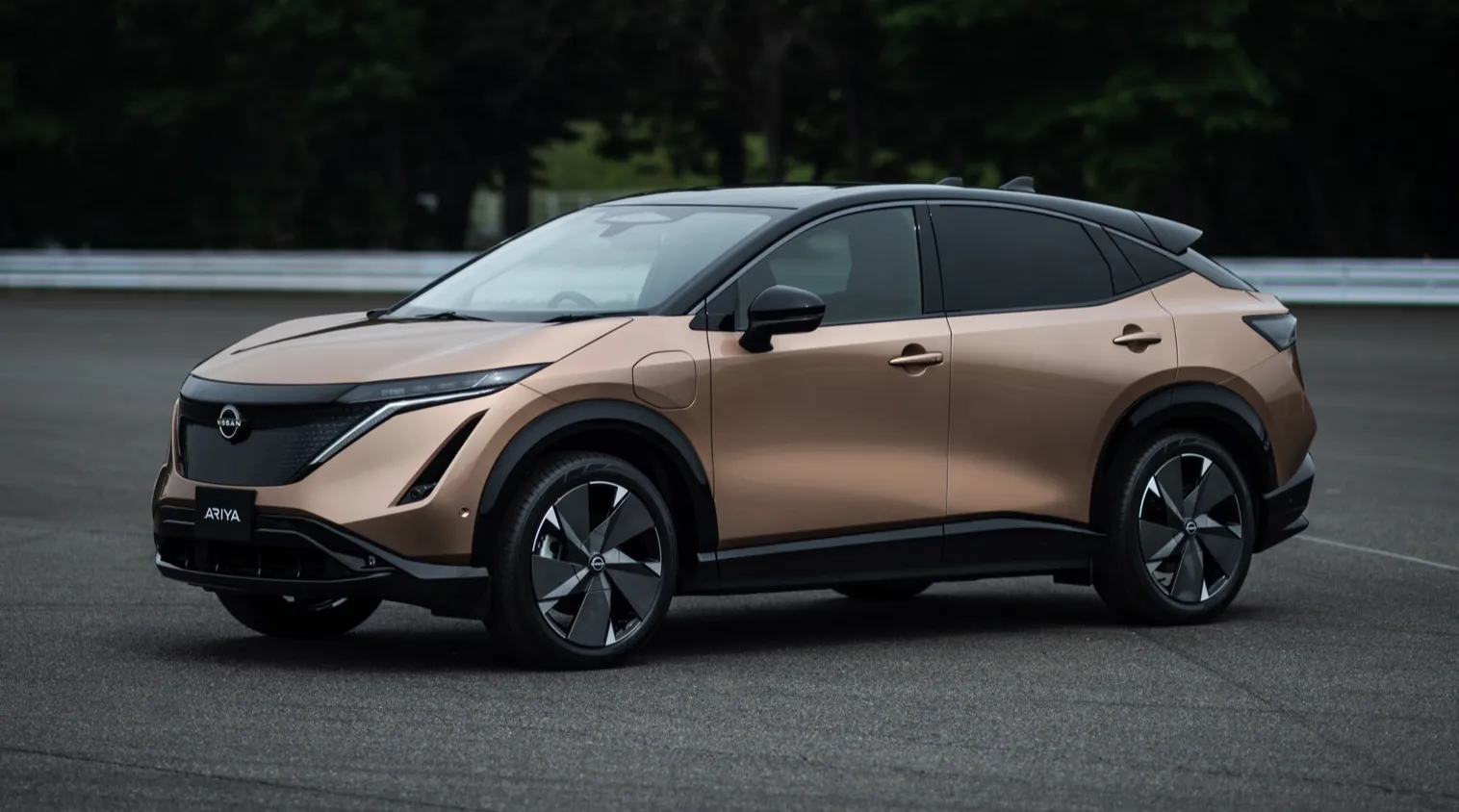 Nissan
Nissan Ariya e-4ORCE 87kWh – 225 kW
 Nissan
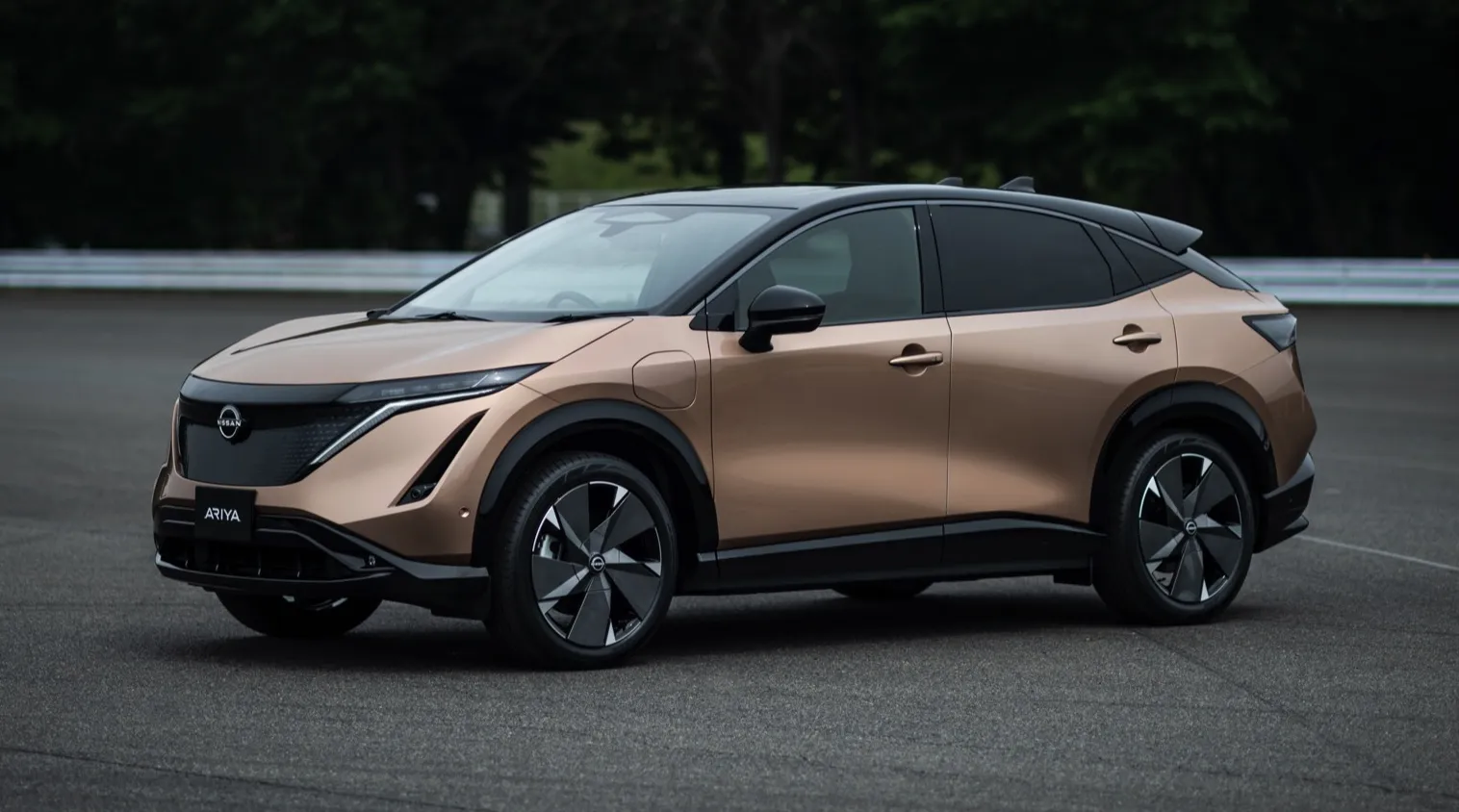
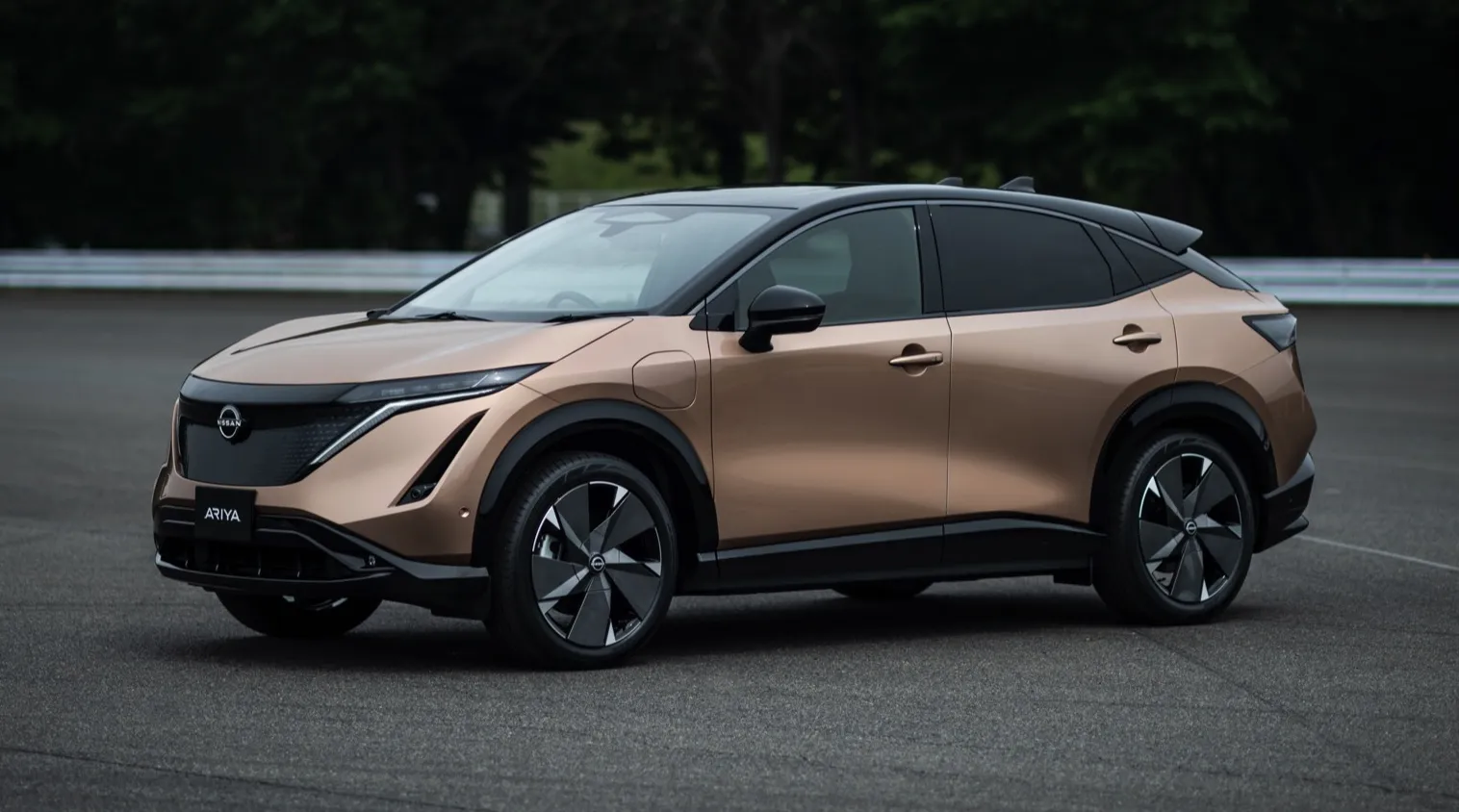
Nissan Ariya 87kWh
 Nissan
Nissan Ariya e-4ORCE 87kWh – 290 kW
 Nissan