

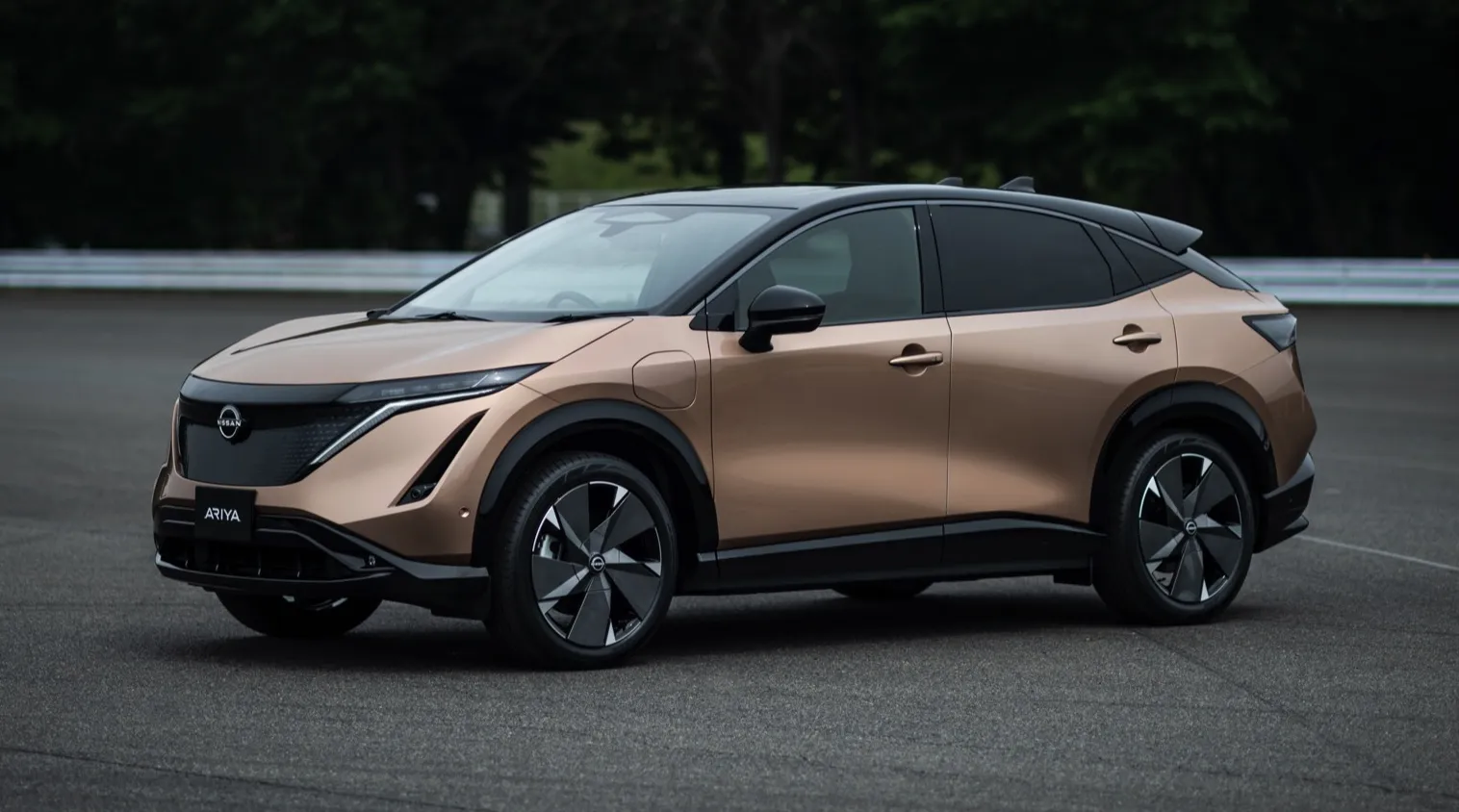
Nissan Ariya 87kWh
Key Specifications
Real Range
| City - Cold Weather | 450 km |
| Highway - Cold Weather | 320 km |
| Combined - Cold Weather | 385 km |
between 320 - 660 km
| City - Mild Weather | 660 km |
| Highway - Mild Weather | 410 km |
| Combined - Mild Weather | 515 km |
Battery
| Nominal Capacity | 91.0 kWh |
| Battery Type | Lithium-ion |
| Number of Cells | No Data |
| Architecture | 400 V |
| Warranty Period | No Data |
| Warranty Mileage | No Data |
| Useable Capacity | 87.0 kWh |
| Cathode Material | NCM |
| Pack Configuration | No Data |
| Nominal Voltage | No Data |
| Form Factor | No Data |
| Name / Reference | No Data |
Performance
| Acceleration 0 - 100 km/h | 7.6 sec |
| Top Speed | 160 km/h |
| Electric Range | 450 km |
| Total Power | 178 kW (242 PS) |
| Total Torque | 300 Nm |
| Drive | Front |
Home and Destination Charging (0 -> 100%)
Charging is possible by using a regular wall plug or a charging station. Public charging is always done through a charging station. How fast the EV can charge depends on the charging station (EVSE) used and the maximum charging capacity of the EV. The table below shows all possible options for charging the Nissan Ariya 87kWh. Each option shows how fast the battery can be charged from empty to full.
Europe
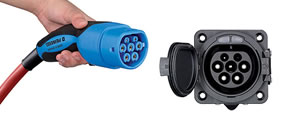
Charging an EV in Europe differs by country. Some European countries primarily use 1-phase connections to the grid, while other countries are almost exclusively using a 3-phase connection. The table below shows all possible ways the Nissan Ariya 87kWh can be charged, but some modes of charging might not be widely available in certain countries.
| Type 2 (Mennekes - IEC 62196) |
|---|
 |
| Charging Point | Max. Power | Power | Time | Rate |
|---|---|---|---|---|
| Standard 7.4 kW On-Board Charger | ||||
| Wall Plug (2.3 kW) | 230V / 1x10A | 2.3 kW | 44h30m | 10 km/h |
| 1-phase 16A (3.7 kW) | 230V / 1x16A | 3.7 kW | 27h45m | 16 km/h |
| 1-phase 32A (7.4 kW) | 230V / 1x32A | 7.4 kW | 14 hours | 32 km/h |
| 3-phase 16A (11 kW) | 230V / 1x16A | 3.7 kW † | 27h45m | 16 km/h |
| 3-phase 32A (22 kW) | 230V / 1x32A | 7.4 kW † | 14 hours | 32 km/h |
| Optional 22.0kW On-Board Charger * | ||||
| Wall Plug (2.3 kW) | 230V / 1x10A | 2.3 kW | 44h30m | 10 km/h |
| 1-phase 16A (3.7 kW) | 230V / 1x16A | 3.7 kW | 27h45m | 16 km/h |
| 1-phase 32A (7.4 kW) | 230V / 1x32A | 7.4 kW | 14 hours | 32 km/h |
| 3-phase 16A (11 kW) | 400V / 3x16A | 11 kW | 9h30m | 47 km/h |
| 3-phase 32A (22 kW) | 400V / 3x32A | 22 kW † | 4h45m | 95 km/h |
† = Limited by on-board charger, vehicle cannot charge faster.
* = Optional in some countries, standard in others. Check local specifications for details.
Fast Charging (10 -> 80%)
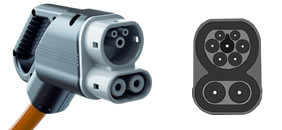
Rapid charging enables longer journeys by adding as much range as possible in the shortest amount of time. Charging power will decrease significantly after 80% state-of-charge has been reached. A typical rapid charge therefore rarely exceeds 80% SoC. The rapid charge rate of an EV depends on the charger used and the maximum charging power the EV can handle. The table below shows all details for rapid charging the Nissan Ariya 87kWh.
- Max. Power: maximum power provided by charge point
- Avg. Power: average power provided by charge point over a session from 10% to 80%
- Time: time needed to charge from 10% to 80%
- Rate: average charging speed over a session from 10% to 80%
| Combined Charging System (CCS Combo 2) |
|---|
 |
| Charging Point | Max. Power | Avg. Power | Time | Rate |
|---|---|---|---|---|
| CCS (50 kW DC) | 50 kW | 45 kW † | 85 min | 220 km/h |
| CCS (100 kW DC) | 100 kW | 85 kW † | 45 min | 420 km/h |
| CCS (150 kW DC) | 130 kW † | 110 kW † | 35 min | 540 km/h |
| This vehicle supports Autocharge |
|---|
| This vehicle does not support Plug & Charge |
† = Limited by charging capabilities of vehicle
Autocharge: allows for automatic initiation of a charging session at supported CCS charging stations.
Plug & Charge: allows for automatic initiation of a charging session at supported CCS charging stations in accordance with ISO 15118.
Actual charging rates may differ from data shown due to factors like outside temperature, state of the battery and driving style.
Nissan Claimed Specifications
The table below shows the claimed specifications from the manufacturer for charging the Nissan Ariya 87kWh. The specifications can differ from the table above for a variety of reasons. If real-world charge tests are available, these differences can be signifcant. If no real-world tests are available, the table above will be based on the manufacturer specifications as per the table below.
- Max. Power: maximum charge power during charging session
- Charge From: battery percentage (% SoC) where charging session is started
- Charge To: battery percentage (% SoC) where charging session is ended
- Time: time needed for charging session
| Nissan Claimed Specifications |
|---|
| Max. Power | Charge From | Charge To | Time |
|---|---|---|---|
| 130 kW | No Data | No Data | No Data |
Dimensions and Weight
| Length | 4595 mm |
| Width | 1850 mm |
| Width with mirrors | 2172 mm |
| Height | 1660 mm |
| Wheelbase | 2775 mm |
| Weight Unladen (EU) | 2121 kg |
| Gross Vehicle Weight (GVWR) | 2530 kg |
| Max. Payload | 484 kg |
| Cargo Volume | 468 L |
| Cargo Volume Max | No Data |
| Cargo Volume Frunk | No Data |
| Roof Load | No Data |
| Tow Hitch Possible | Yes |
| Towing Weight Unbraked | No Data |
| Towing Weight Braked | 750 kg |
| Vertical Load Max | No Data |
About this Vehicle
Nissan Ariya 87kWh Overview
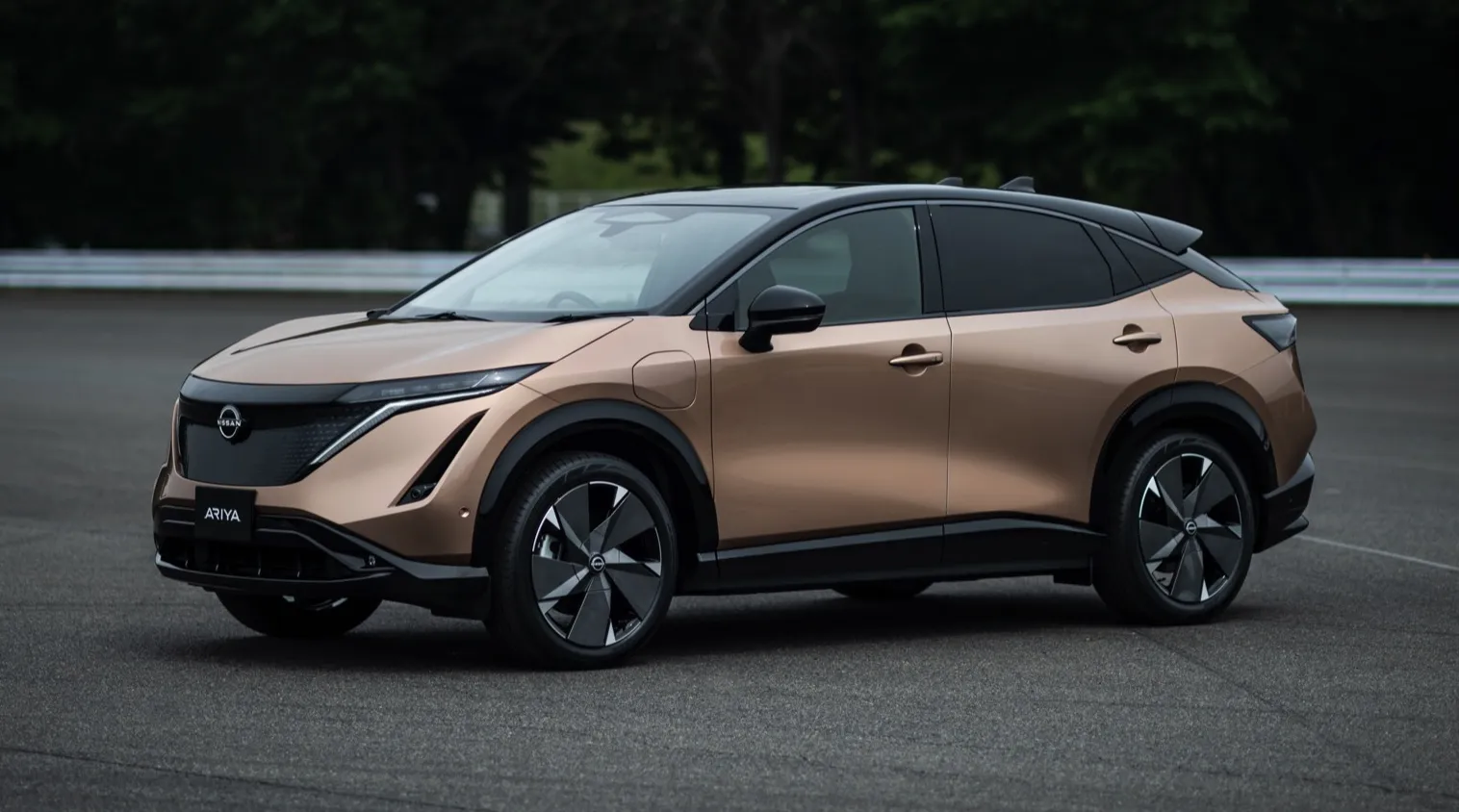
The Nissan Ariya 87kWh positions itself as a premium mainstream electric SUV, blending Japanese reliability with sophisticated crossover styling for families and urban commuters seeking comfort over raw performance. Targeted at buyers upgrading from gas-powered crossovers like the Nissan Rogue, this Ariya review highlights its role in Nissan’s EV lineup, offering a spacious cabin, advanced tech, and competitive EV specs in the mid-size segment. Built on Nissan’s CMF-EV platform, it emphasizes a minimalist design philosophy with a low drag coefficient of 0.297 for efficiency, dual 12.3-inch screens for infotainment, and e-4ORCE all-wheel drive in higher trims.
What makes the Nissan Ariya 87kWh matter in the EV landscape is its balance of electric vehicle range, refined ride, and accessibility. With up to 304 miles EPA range in front-wheel-drive form, it challenges pricier rivals while delivering real-world usability through NMC811 battery chemistry and compatibility with Tesla Superchargers via NACS adapter. Ideal for daily drives or road trips, the Nissan electric SUV stands out for its quiet cabin, optional ventilated seats, and safety suite including automatic emergency braking and traffic sign recognition.
Nissan Ariya 87kWh Performance and Driving Experience
The Nissan Ariya 87kWh delivers smooth power delivery with 242 hp and 221 lb-ft of torque in its front-wheel-drive configuration, achieving 0-60 mph in 7.5 seconds—peppy for city merging but not track-focused. Opt for the e-4ORCE AWD dual-motor setup, and output jumps to 389 hp and 442 lb-ft, slashing 0-60 to around 5 seconds with precise torque vectoring between axles for enhanced grip on slippery roads. Handling feels composed thanks to monotube dampers, coil springs, and a 10.8-meter turning circle, though its 180 mm ground clearance suits pavement over off-road.
Real-world impressions praise the Ariya’s serene highway cruising at 75 mph, where FWD models hit 240 miles of range and AWD around 210 miles, with solid 0.86 g skidpad grip and 342 ft braking from 100-0 mph.
| Specification | Value |
|---|---|
| 0-60 mph (0-100 km/h) | 7.5 sec (FWD); ~5 sec (AWD) |
| Top Speed | 99 mph / 160 km/h |
| Power Output | 242 hp / 178 kW (FWD); 389 hp / 286 kW (AWD) |
| Torque | 221 lb-ft / 300 Nm (FWD); 442 lb-ft / 600 Nm (AWD) |
Nissan Ariya 87kWh Range and Battery Specifications
Official Nissan Ariya 87kWh WLTP range reaches 331 miles (533 km) in base trim, dropping to 295 miles (475 km) in top AWD setups, while EPA range estimates 304 miles for FWD Venture+ and 267 miles for AWD Platinum+. Real-world range varies from 200-240 miles on highways per tests, influenced by cold weather (down to 450 km city-cold), aggressive driving, or terrain—expect 3.3 mi/kWh efficiency. The 87 kWh usable capacity (91 kWh gross) uses advanced NMC811 cathode in a liquid-cooled 352V pack for balanced longevity.
Factors like highway speeds or winter conditions can reduce Nissan Ariya’s real-world range by 20-30%, but its battery specs shine in mixed use.
| Range Metric | Value |
|---|---|
| WLTP Range | 331 miles / 533 km |
| EPA Range | 304 miles / 489 km (FWD) |
| Real-World Range | 240 miles / 386 km (highway) |
| Battery Capacity | 87 kWh (usable) |
Nissan Ariya 87kWh Charging Times and Options
Home charging for the Nissan Ariya 87kWh is straightforward with its 7.2 kW onboard charger: Level 2 at 240V/7 kW fills from empty in about 12 hours, ideal overnight. DC fast charging peaks at 130 kW (CCS), achieving 10-80% in 40-45 minutes with average rates around 99-100 kW; a NACS adapter unlocks Tesla Superchargers for broader access. Practical scenarios include 15-minute top-ups adding 100+ miles during road trips.
| Charging Method | Time | Speed |
|---|---|---|
| Level 1 (120V) | 80 hours | ~1.4 kW |
| Level 2 (240V/7kW) | 12 hours | ~7 kW |
| Level 2 (240V/11kW) | 8 hours | ~11 kW |
| DC Fast Charge (10-80%) | 40 min | up to 130 kW |
Nissan Ariya 87kWh vs Competitors
In the Nissan Ariya 87kWh vs Tesla Model Y matchup, the Ariya offers superior interior luxury and a smoother ride but trails in acceleration and Supercharger-native access. Against the Hyundai Ioniq 5, it matches 300-mile ranges with better AWD torque (442 lb-ft vs 413 lb-ft) yet slower 130 kW charging; the Kia EV6 edges it in speed but lacks the Ariya’s spacious frunk-free trunk (468 liters expanding to 1490).
Frequently Asked Questions
Related Vehicles
View All Nissan
Nissan Ariya e-4ORCE 87kWh – 225 kW
 Nissan
Nissan Ariya e-4ORCE 87kWh – 290 kW
 Nissan
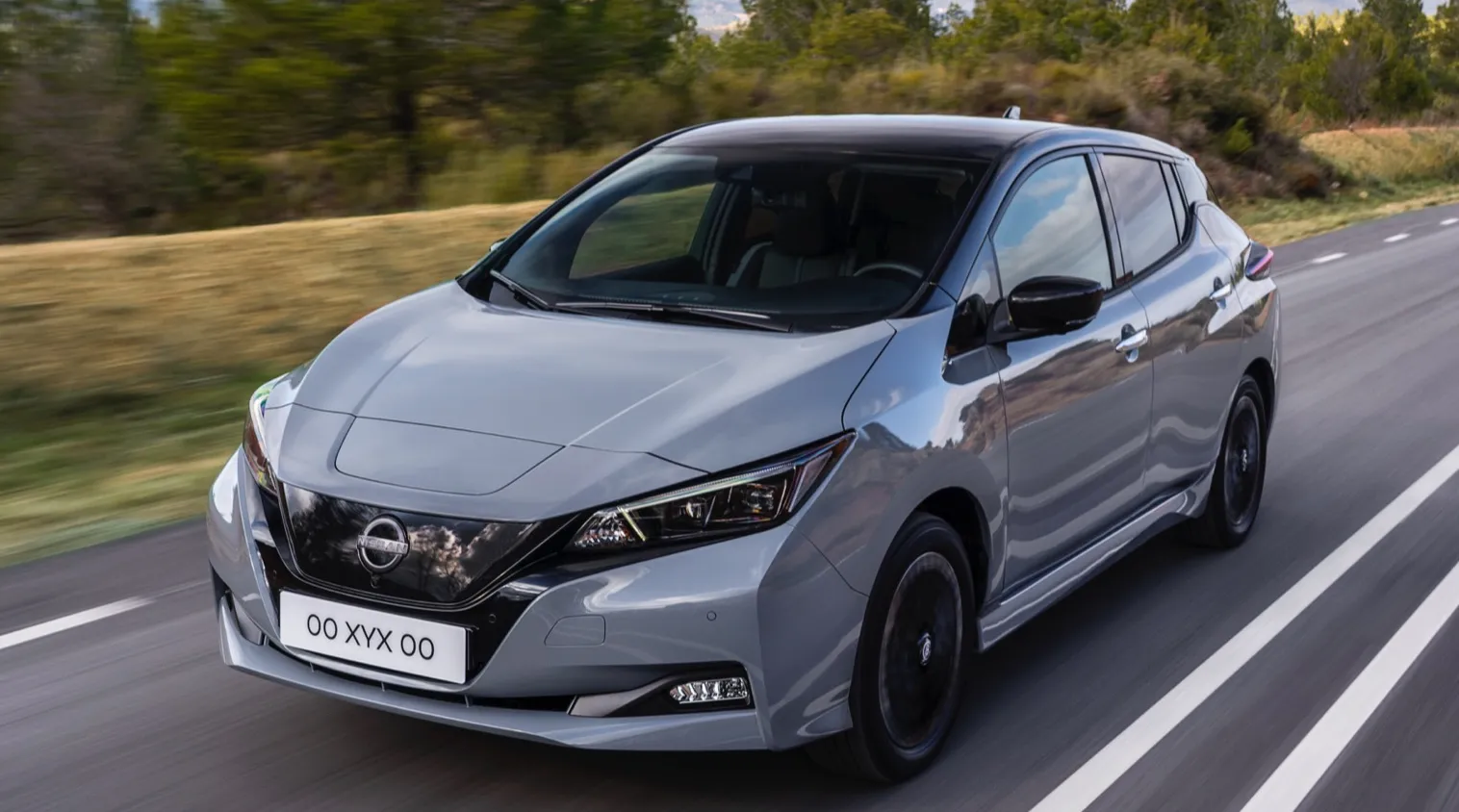
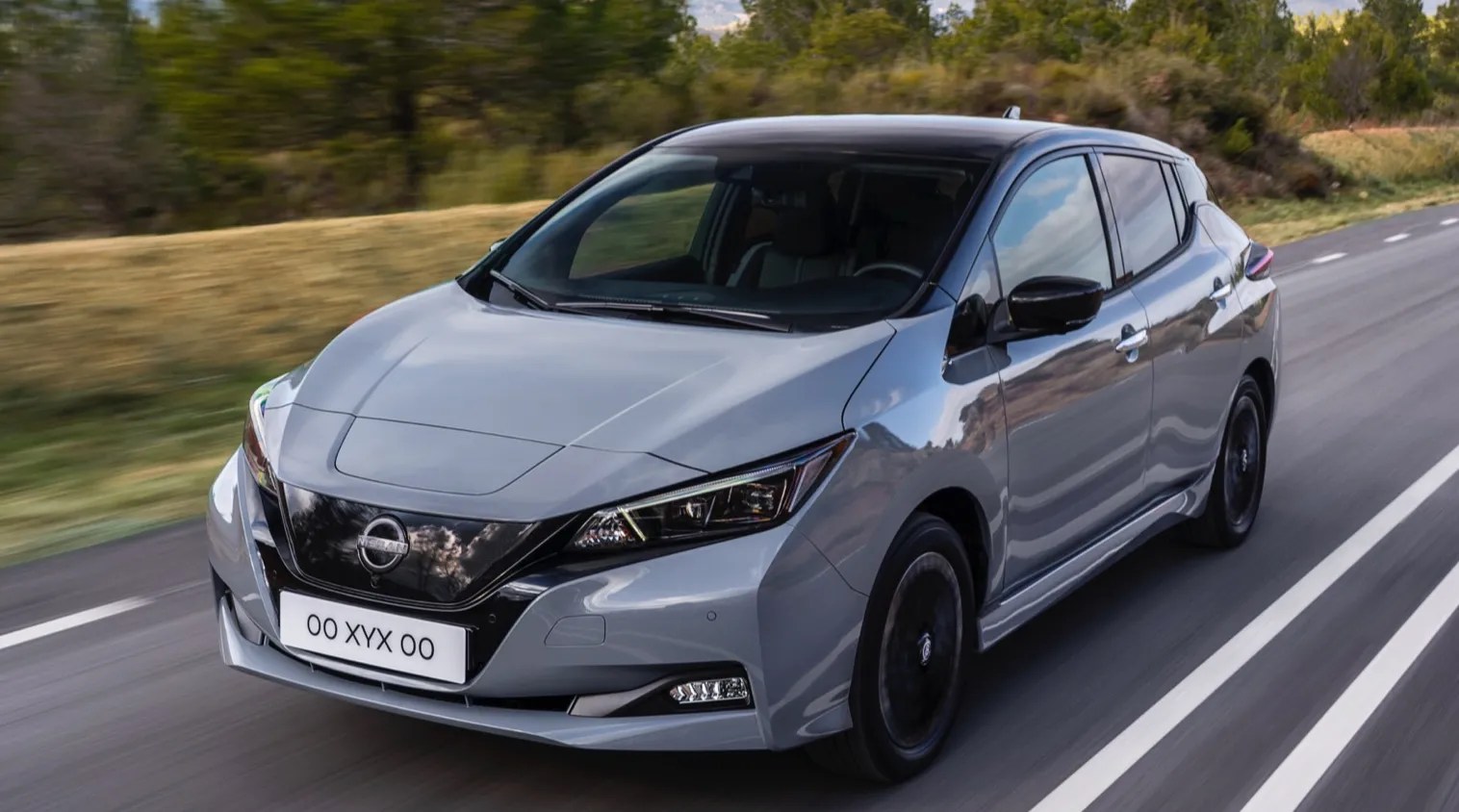
Nissan Leaf e+
 Nissan