

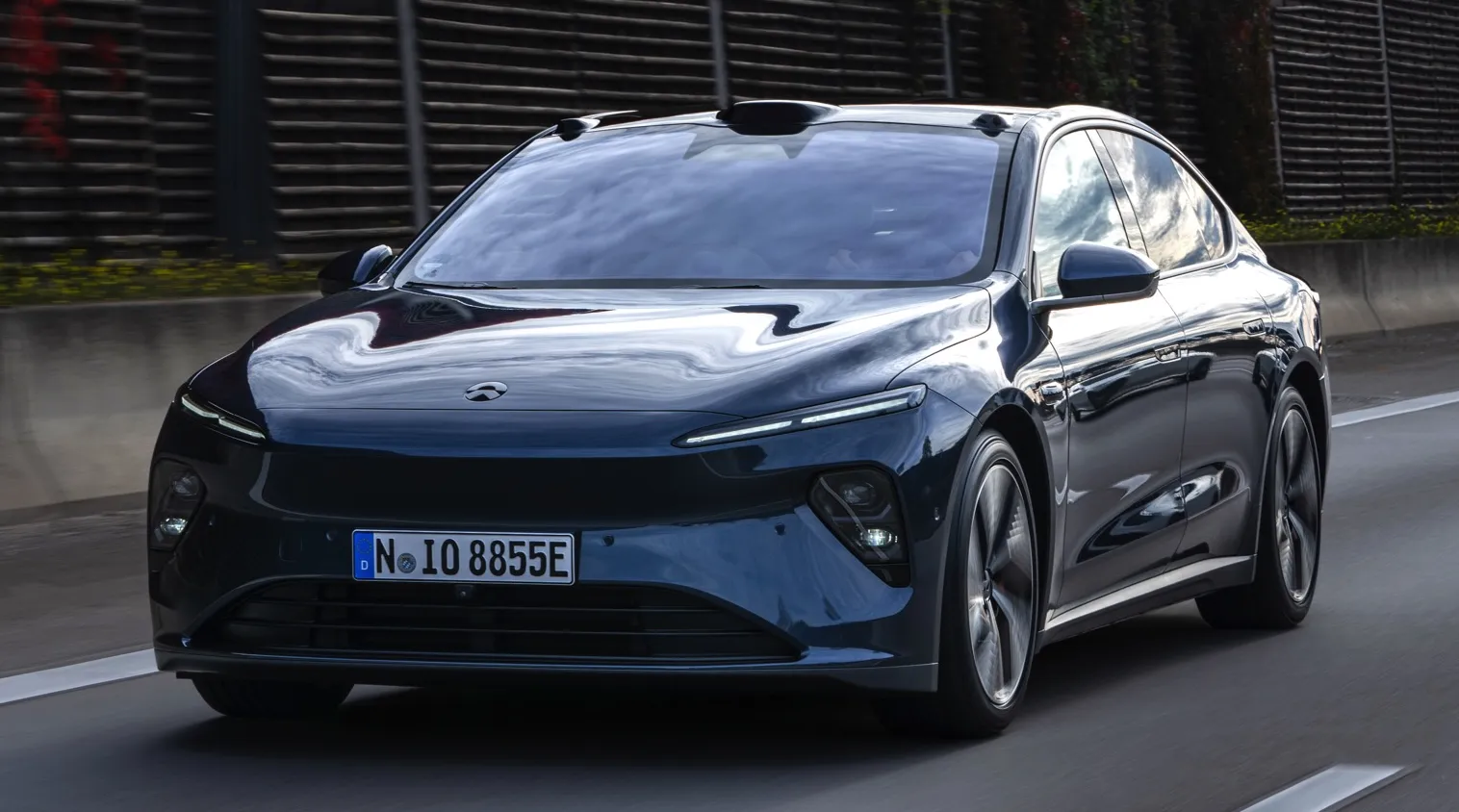
NIO ET7 Long Range
Key Specifications
Real Range Estimation
| City - Cold Weather * | 475 km |
| Highway - Cold Weather * | 370 km |
| Combined - Cold Weather * | 425 km |
between 370 - 705 km
| City - Mild Weather * | 705 km |
| Highway - Mild Weather * | 480 km |
| Combined - Mild Weather * | 580 km |
Battery
| Nominal Capacity | 100.0 kWh |
| Battery Type | Lithium-ion |
| Number of Cells | 96 |
| Architecture | 400 V |
| Warranty Period | No Data |
| Warranty Mileage | No Data |
| Useable Capacity | 90.0 kWh |
| Cathode Material | NCM |
| Pack Configuration | 96s1p |
| Nominal Voltage | No Data |
| Form Factor | No Data |
| Name / Reference | No Data |
Performance
| Acceleration 0 - 100 km/h | 3.8 sec |
| Top Speed | 200 km/h |
| Electric Range * | 505 km |
| Total Power | 480 kW (653 PS) |
| Total Torque | 850 Nm |
| Drive | AWD |
Home and Destination Charging (0 -> 100%)
Charging is possible by using a regular wall plug or a charging station. Public charging is always done through a charging station. How fast the EV can charge depends on the charging station (EVSE) used and the maximum charging capacity of the EV. The table below shows all possible options for charging the NIO ET7 Long Range. Each option shows how fast the battery can be charged from empty to full.
Europe
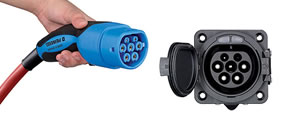
Charging an EV in Europe differs by country. Some European countries primarily use 1-phase connections to the grid, while other countries are almost exclusively using a 3-phase connection. The table below shows all possible ways the NIO ET7 Long Range can be charged, but some modes of charging might not be widely available in certain countries.
| Type 2 (Mennekes - IEC 62196) |
|---|
 |
| Charging Point | Max. Power | Power | Time | Rate |
|---|---|---|---|---|
| Wall Plug (2.3 kW) | 230V / 1x10A | 2.3 kW | 46h15m | 11 km/h |
| 1-phase 16A (3.7 kW) | 230V / 1x16A | 3.7 kW | 28h45m | 18 km/h |
| 1-phase 32A (7.4 kW) | 230V / 1x32A | 7.4 kW | 14h30m | 35 km/h |
| 3-phase 16A (11 kW) | 400V / 3x16A | 11 kW | 9h45m | 52 km/h |
| 3-phase 32A (22 kW) | 400V / 3x16A | 11 kW † | 9h45m | 52 km/h |
† = Limited by on-board charger, vehicle cannot charge faster.
Fast Charging (10 -> 80%)
Rapid charging enables longer journeys by adding as much range as possible in the shortest amount of time. Charging power will decrease significantly after 80% state-of-charge has been reached. A typical rapid charge therefore rarely exceeds 80% SoC. The rapid charge rate of an EV depends on the charger used and the maximum charging power the EV can handle. The table below shows all details for rapid charging the NIO ET7 Long Range.
- Max. Power: maximum power provided by charge point
- Avg. Power: average power provided by charge point over a session from 10% to 80%
- Time: time needed to charge from 10% to 80%
- Rate: average charging speed over a session from 10% to 80%
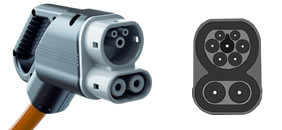
| Combined Charging System (CCS Combo 2) |
|---|
 |
| Charging Point | Max. Power | Avg. Power | Time | Rate |
|---|---|---|---|---|
| CCS (50 kW DC) | 50 kW | 45 kW † | 88 min | 240 km/h |
| CCS (100 kW DC) | 100 kW | 80 kW † | 50 min | 420 km/h |
| CCS (150 kW DC) | 127 kW † | 100 kW † | 40 min | 530 km/h |
| This vehicle supports Autocharge |
|---|
| This vehicle does not support Plug & Charge |
† = Limited by charging capabilities of vehicle
Autocharge: allows for automatic initiation of a charging session at supported CCS charging stations.
Plug & Charge: allows for automatic initiation of a charging session at supported CCS charging stations in accordance with ISO 15118.
Actual charging rates may differ from data shown due to factors like outside temperature, state of the battery and driving style.
About this Vehicle
NIO ET7 Long Range Overview
The NIO ET7 Long Range positions itself as a premium electric sedan in the luxury EV segment, rivaling high-end models with its advanced NT2.0 platform and cutting-edge AI-driven features. Targeted at tech-savvy executives and affluent buyers seeking executive comfort with autonomous capabilities, the NIO ET7 Long Range stands out through its NIO Aquila Super Sensing system—featuring 33 high-performance sensors, including a 500m-range LiDAR—and a pioneering AI intelligent chassis that anticipates road conditions for superior ride quality. Its sleek design philosophy emphasizes aerodynamics with a drag coefficient of 0.208, making it one of the most efficient executive electric sedans on the market.
What makes the NIO ET7 Long Range matter in the EV landscape is its blend of ultralong-range potential, smart air suspension with continuous damping control (500 calculations per second), and battery swap compatibility via NIO’s network. With EV specs like up to 100 kWh capacity and real-world prowess, this NIO electric sedan delivers flagship performance while pushing boundaries in intelligent driving. In a crowded field of NIO ET7 reviews, it excels for those prioritizing luxury, tech, and efficiency in an electric vehicle range leader.
NIO ET7 Long Range Performance and Driving Experience
The NIO ET7 Long Range delivers exhilarating performance with its all-wheel-drive (AWD) SiC electric drive system, offering seamless power distribution across four wheels for confident handling in complex scenarios. Acceleration is brisk at 3.8 seconds from 0-100 km/h (0-62 mph), backed by high-performance Brembo 6-piston front calipers and vented discs for stable high-speed braking. The smart air suspension and continuous damping control provide a plush yet dynamic ride, adjusting 200 times per second to smooth out potholes, bumps, and slopes—real-world impressions highlight its composure on highways and twisty roads, with a turning circle of 12.4 meters enhancing urban agility.
| Specification | Value |
|---|---|
| 0-60 mph (0-100 km/h) | 3.8 sec |
| Top Speed | 124 mph / 200 km/h |
| Power Output | 653 hp / 480 kW |
| Torque | 627 lb-ft / 850 Nm |
NIO ET7 Long Range Range and Battery Specifications
The NIO ET7 Long Range boasts impressive NIO ET7 WLTP range figures, with the 100 kWh NMC cell-to-pack battery (from CATL or CALB) delivering up to 360 miles WLTP, though real-world range typically settles around 300-340 miles depending on conditions. Energy efficiency stands at 3.3 mi/kWh WLTP (about 17.8 kWh/100km consumption), influenced by factors like cold weather, aggressive driving, or hilly terrain—heat pump integration helps mitigate winter losses. This NIO ET7 battery specs setup supports NIO’s battery-as-a-service model, allowing swaps for extended travel.
NIO ET7 real-world range shines in mixed driving, often exceeding 300 miles on highways, making it a strong contender for long-distance electric sedan duties.
| Range Metric | Value |
|---|---|
| WLTP Range | 360 miles / 580 km |
| EPA Range | N/A (est. 320 miles) |
| Real-World Range | 300-340 miles / 480-550 km |
| Battery Capacity | 90 kWh (usable) / 100 kWh total |
NIO ET7 Long Range Charging Times and Options
Charging the NIO ET7 Long Range is versatile, with Level 2 AC at 11 kW for overnight home top-ups and CCS DC fast charging up to 125 kW (170 kW on newer LFP variants). From 10-80%, expect practical scenarios like 30 minutes at a public station to add 200+ miles, compatible with major networks. Home Level 1 suits emergencies, while NIO’s swap stations offer near-instant “refueling” for battery subscribers—ideal for road trips.
| Charging Method | Time | Speed |
|---|---|---|
| Level 1 (120V) | 20+ hours | ~1.4 kW |
| Level 2 (240V/7kW) | 10-12 hours | ~7 kW |
| Level 2 (240V/11kW) | 8-10 hours | ~11 kW |
| DC Fast Charge (10-80%) | 30 min | up to 125 kW |
NIO ET7 Long Range vs Competitors
In NIO ET7 Long Range vs Tesla Model S, the NIO edges out with superior sensor suite (33 units vs Tesla’s camera-only) and battery swapping, though Model S offers better EPA range; against Hyundai Ioniq 6 and BMW i5, the ET7’s AWD torque (850 Nm) and 0.208 Cd beat Ioniq 6’s efficiency focus, while matching i5 luxury but adding LiDAR for advanced NIO ET7 comparison in autonomous tech. NIO ET7 vs competitors favors it for Chinese-market buyers valuing NIO ecosystem integration.
Frequently Asked Questions
Related Vehicles
View All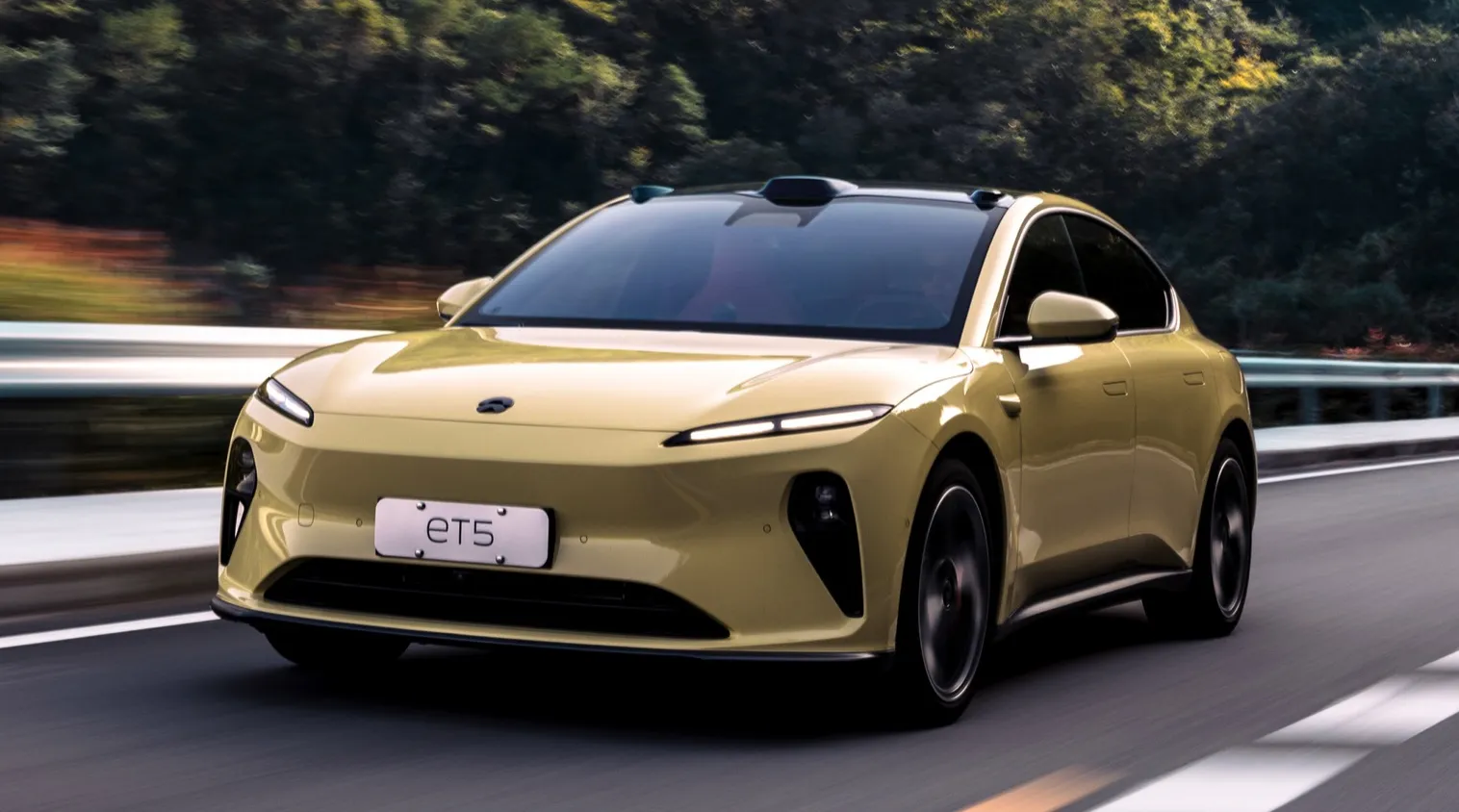 NIO
NIO
NIO ET5 Long Range
 NIO
NIO
NIO ET7 Standard Range
 NIO
NIO
NIO ET5 Standard Range
 NIO
NIO