

Mini Cooper SE
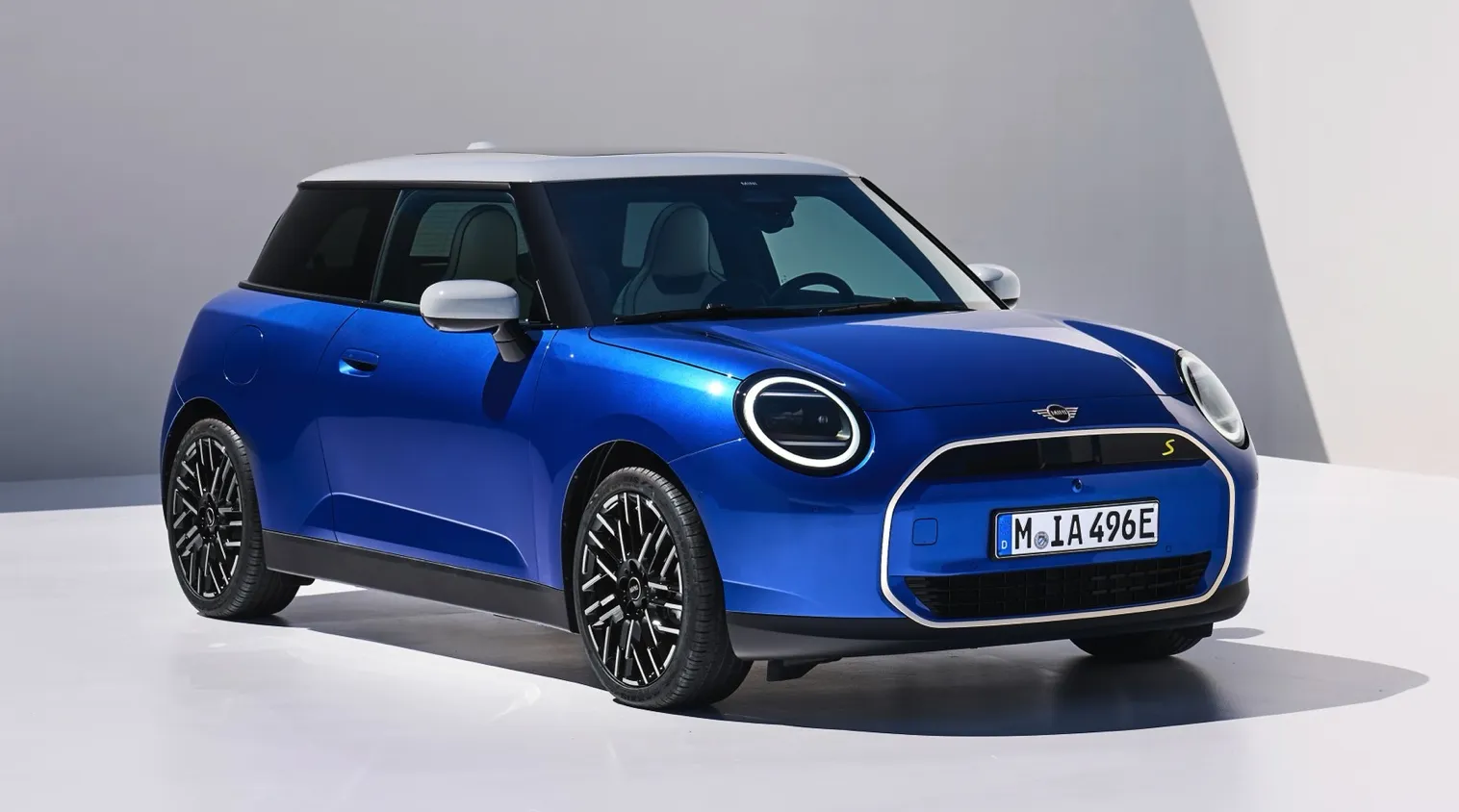
Key Specifications
Real Range
| City - Cold Weather | 320 km |
| Highway - Cold Weather | 235 km |
| Combined - Cold Weather | 275 km |
between 235 - 495 km
| City - Mild Weather | 495 km |
| Highway - Mild Weather | 310 km |
| Combined - Mild Weather | 385 km |
Battery
| Nominal Capacity | 54.2 kWh |
| Battery Type | Lithium-ion |
| Number of Cells | No Data |
| Architecture | 400 V |
| Warranty Period | 8 years |
| Warranty Mileage | 160,000 km |
| Useable Capacity | 49.2 kWh |
| Cathode Material | NCM |
| Pack Configuration | No Data |
| Nominal Voltage | No Data |
| Form Factor | No Data |
| Name / Reference | No Data |
Performance
| Acceleration 0 - 100 km/h | 6.7 sec |
| Top Speed | 170 km/h |
| Electric Range | 330 km |
| Total Power | 160 kW (218 PS) |
| Total Torque | 330 Nm |
| Drive | Front |
Home and Destination Charging (0 -> 100%)
Charging is possible by using a regular wall plug or a charging station. Public charging is always done through a charging station. How fast the EV can charge depends on the charging station (EVSE) used and the maximum charging capacity of the EV. The table below shows all possible options for charging the Mini Cooper SE. Each option shows how fast the battery can be charged from empty to full.
Europe
Charging an EV in Europe differs by country. Some European countries primarily use 1-phase connections to the grid, while other countries are almost exclusively using a 3-phase connection. The table below shows all possible ways the Mini Cooper SE can be charged, but some modes of charging might not be widely available in certain countries.
| Type 2 (Mennekes - IEC 62196) |
|---|
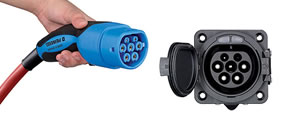 |
| Charging Point | Max. Power | Power | Time | Rate |
|---|---|---|---|---|
| Wall Plug (2.3 kW) | 230V / 1x10A | 2.3 kW | 25h15m | 13 km/h |
| 1-phase 16A (3.7 kW) | 230V / 1x16A | 3.7 kW | 15h45m | 21 km/h |
| 1-phase 32A (7.4 kW) | 230V / 1x32A | 7.4 kW | 8 hours | 41 km/h |
| 3-phase 16A (11 kW) | 400V / 3x16A | 11 kW | 5h15m | 63 km/h |
| 3-phase 32A (22 kW) | 400V / 3x16A | 11 kW † | 5h15m | 63 km/h |
† = Limited by on-board charger, vehicle cannot charge faster.
Fast Charging (10 -> 80%)
Rapid charging enables longer journeys by adding as much range as possible in the shortest amount of time. Charging power will decrease significantly after 80% state-of-charge has been reached. A typical rapid charge therefore rarely exceeds 80% SoC. The rapid charge rate of an EV depends on the charger used and the maximum charging power the EV can handle. The table below shows all details for rapid charging the Mini Cooper SE.
- Max. Power: maximum power provided by charge point
- Avg. Power: average power provided by charge point over a session from 10% to 80%
- Time: time needed to charge from 10% to 80%
- Rate: average charging speed over a session from 10% to 80%
| Combined Charging System (CCS Combo 2) |
|---|
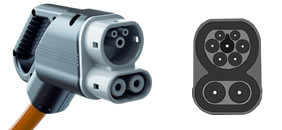 |
| Charging Point | Max. Power | Avg. Power | Time | Rate |
|---|---|---|---|---|
| CCS (50 kW DC) | 50 kW | 40 kW † | 54 min | 250 km/h |
| CCS (100 kW DC) | 95 kW † | 75 kW † | 29 min | 470 km/h |
| CCS (150 kW DC) | 95 kW † | 75 kW † | 29 min | 470 km/h |
| This vehicle supports Autocharge |
|---|
| This vehicle supports Plug & Charge |
† = Limited by charging capabilities of vehicle
Autocharge: allows for automatic initiation of a charging session at supported CCS charging stations.
Plug & Charge: allows for automatic initiation of a charging session at supported CCS charging stations in accordance with ISO 15118.
Actual charging rates may differ from data shown due to factors like outside temperature, state of the battery and driving style.
Mini Claimed Specifications
The table below shows the claimed specifications from the manufacturer for charging the Mini Cooper SE. The specifications can differ from the table above for a variety of reasons. If real-world charge tests are available, these differences can be signifcant. If no real-world tests are available, the table above will be based on the manufacturer specifications as per the table below.
- Max. Power: maximum charge power during charging session
- Charge From: battery percentage (% SoC) where charging session is started
- Charge To: battery percentage (% SoC) where charging session is ended
- Time: time needed for charging session
| Mini Claimed Specifications |
|---|
| Max. Power | Charge From | Charge To | Time |
|---|---|---|---|
| 95 kW | 10 % | 80 % | 30 min |
Dimensions and Weight
| Length | 3858 mm |
| Width | 1756 mm |
| Width with mirrors | 1967 mm |
| Height | 1460 mm |
| Wheelbase | 2526 mm |
| Weight Unladen (EU) | 1680 kg |
| Gross Vehicle Weight (GVWR) | 2055 kg |
| Max. Payload | 450 kg |
| Cargo Volume | 200 L |
| Cargo Volume Max | 800 L |
| Cargo Volume Frunk | 0 L |
| Roof Load | No Data |
| Tow Hitch Possible | No Data |
| Towing Weight Unbraked | 0 kg |
| Towing Weight Braked | 0 kg |
| Vertical Load Max | No Data |
About this Vehicle
Mini Cooper SE Overview
The Mini Cooper SE is Mini’s iconic three‑door hatchback reimagined as a premium urban electric car, aimed at drivers who value characterful design and go‑kart handling over sheer range. As a compact Mini electric hatchback, it targets city dwellers and suburban commuters who want a stylish, easy‑to‑park EV with enough real‑world range for daily use rather than long‑distance road trips.
Positioned below larger electric SUVs and sedans, the Mini Cooper SE competes as a mainstream compact EV on price but leans premium in terms of interior quality, customization, and brand cachet. Its key distinguishing features include the short‑wheelbase platform tuned for agile handling, a single front‑mounted motor, and Mini’s playful design language carried into the digital era with modern connectivity and driver‑assistance tech. For buyers comparing EV specs and reading any detailed Mini Cooper SE review, the car stands out by delivering an engaging drive and distinctive style in a segment often dominated by more rational, appliance‑like electric hatches.
In the broader electric vehicle landscape, the Mini Cooper SE matters because it proves that small EVs can be fun, desirable, and relatively affordable. It offers an accessible entry point into premium electric ownership, helping to expand EV adoption among drivers who don’t need large batteries but do care about personality, performance, and brand heritage.
—
Mini Cooper SE Performance and Driving Experience
The Mini Cooper SE uses a single electric motor driving the front wheels, delivering around 181 hp (135 kW) and about 199 lb‑ft (270 Nm) of torque in earlier versions, with newer SE variants in Europe quoted at up to 215 hp and 243 lb‑ft. That translates to brisk, linear acceleration with an official 0–100 km/h (0–62 mph) time of roughly 7.3 seconds for the original SE and around 6.7 seconds for the newer, more powerful SE. Instant torque and the low center of gravity from the battery pack preserve the classic Mini “go‑kart” feel, making it particularly enjoyable in city traffic and on twisty roads.
Steering is quick and weighty, body roll is well controlled, and the short wheelbase helps the Mini Cooper SE feel more agile than many larger electric SUVs or sedans. Front‑wheel drive is the only layout offered, but sophisticated traction and stability systems help manage torque delivery, even in wet conditions. Real‑world driving impressions highlight a playful character: firm but controlled ride, eager turn‑in, and strong regeneration modes that allow mostly one‑pedal driving in town.
| Specification | Value |
|---|---|
| 0-60 mph (0-100 km/h) | ~6.7–7.3 sec (variant dependent) |
| Top Speed | ~93 mph / 150 km/h |
| Power Output | 181–215 hp / 135–160 kW |
| Torque | 199–243 lb-ft / 270–330 Nm |
—
Mini Cooper SE Range and Battery Specifications
Official Mini Cooper SE WLTP range varies by generation and battery, but for the widely sold 32.6 kWh version, it is rated at up to about 145–185 miles (234–298 km), while newer SE models with a roughly 49.2 kWh pack are quoted up to 247 miles (398 km) WLTP. Real‑world range tends to be lower: around 120–150 miles (190–240 km) for the smaller‑battery SE and roughly 210–220 miles (338–354 km) for the latest SE in mixed driving. For many urban and suburban users, these Mini Cooper SE real‑world range figures are sufficient for several days of commuting between charges.
The earlier Mini Cooper SE uses a lithium‑ion battery with a nominal capacity of 32.6 kWh (about 28–30 kWh usable), while the newer SE steps up to around 49.2 kWh usable capacity. Energy efficiency typically falls in the 240–280 Wh/mi (150–175 Wh/km) band depending on speed, temperature, and driving style. Cold weather, sustained motorway speeds, and aggressive acceleration can significantly reduce range, while city driving with strong regeneration can get you closer to or above the WLTP figures. These Mini Cooper SE battery specs make it clear the car is optimized for daily, not long‑haul, driving.
| Range Metric | Value |
|---|---|
| WLTP Range | ~185–247 miles / 298–398 km (battery/variant dependent) |
| EPA Range | ~114–120 miles / 183–193 km (earlier US SE) |
| Real-World Range | ~120–150 miles / 190–240 km (32.6 kWh), ~210–220 miles / 338–354 km (49.2 kWh) |
| Battery Capacity | 32.6–49.2 kWh (usable varies by version) |
—
Mini Cooper SE Charging Times and Options
For home charging, the Mini Cooper SE supports AC charging up to about 7.4 kW on single‑phase (up to 11 kW three‑phase in some markets). On a typical 240V Level 2 wallbox at 7.4 kW, the 32.6 kWh version can go from empty to full in roughly 4–5 hours, while the larger‑battery SE will take closer to 7–8 hours. Level 1 (120V) charging using the included portable cable is much slower and is best kept for overnight top‑ups, adding only a few miles of range per hour.
DC fast charging is available via CCS, with the Mini Cooper SE capable of handling peak rates of around 50–75 kW, depending on model year and market. In practice, that allows a 10–80% top‑up in about 30–35 minutes on a suitable fast charger, ideal for quick stops during longer trips. The Mini Cooper SE is compatible with major public charging networks, and route planning through the onboard navigation and smartphone apps helps locate nearby chargers and estimate charging times.
| Charging Method | Time | Speed |
|---|---|---|
| Level 1 (120V) | 24–30 hours (0–100%) | ~1–1.5 kW |
| Level 2 (240V/7kW) | 4–5 hours (32.6 kWh), 7–8 hours (49.2 kWh) | ~7.4 kW |
| Level 2 (240V/11kW) | ~3–4 hours (where available) | ~11 kW (3-phase) |
| DC Fast Charge (10-80%) | ~30–35 min | up to ~50–75 kW |
—
Mini Cooper SE vs Competitors
In a Mini Cooper SE vs Tesla Model 3 comparison, the Tesla offers far more range and space but lacks the Mini’s compact footprint and fun, city‑focused personality. Against the Hyundai Ioniq 5 or Kia EV6, the Mini Cooper SE is smaller with a shorter range, yet it’s easier to park and more engaging to drive in tight urban environments. Compared with premium German rivals like the BMW i4 or Audi Q4 e‑tron, the Mini Cooper SE undercuts them on price while still offering a premium cabin, though it cannot match their long‑distance comfort or battery capacity. For drivers prioritizing characterful design and agile handling over maximum range, the Mini Cooper SE carves out a unique niche.
—
Frequently Asked Questions
Related Vehicles
View All Mini
Mini
Mini Countryman E 2026
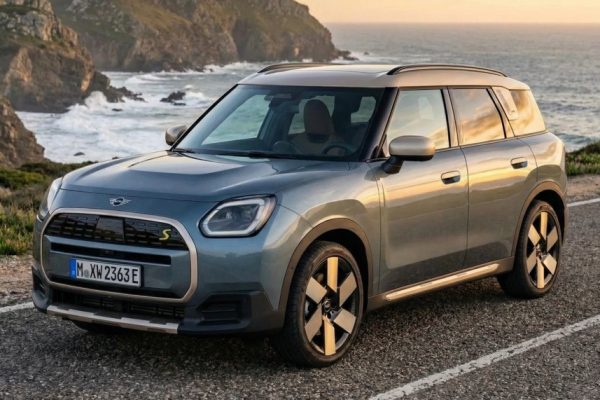 Mini
Mini
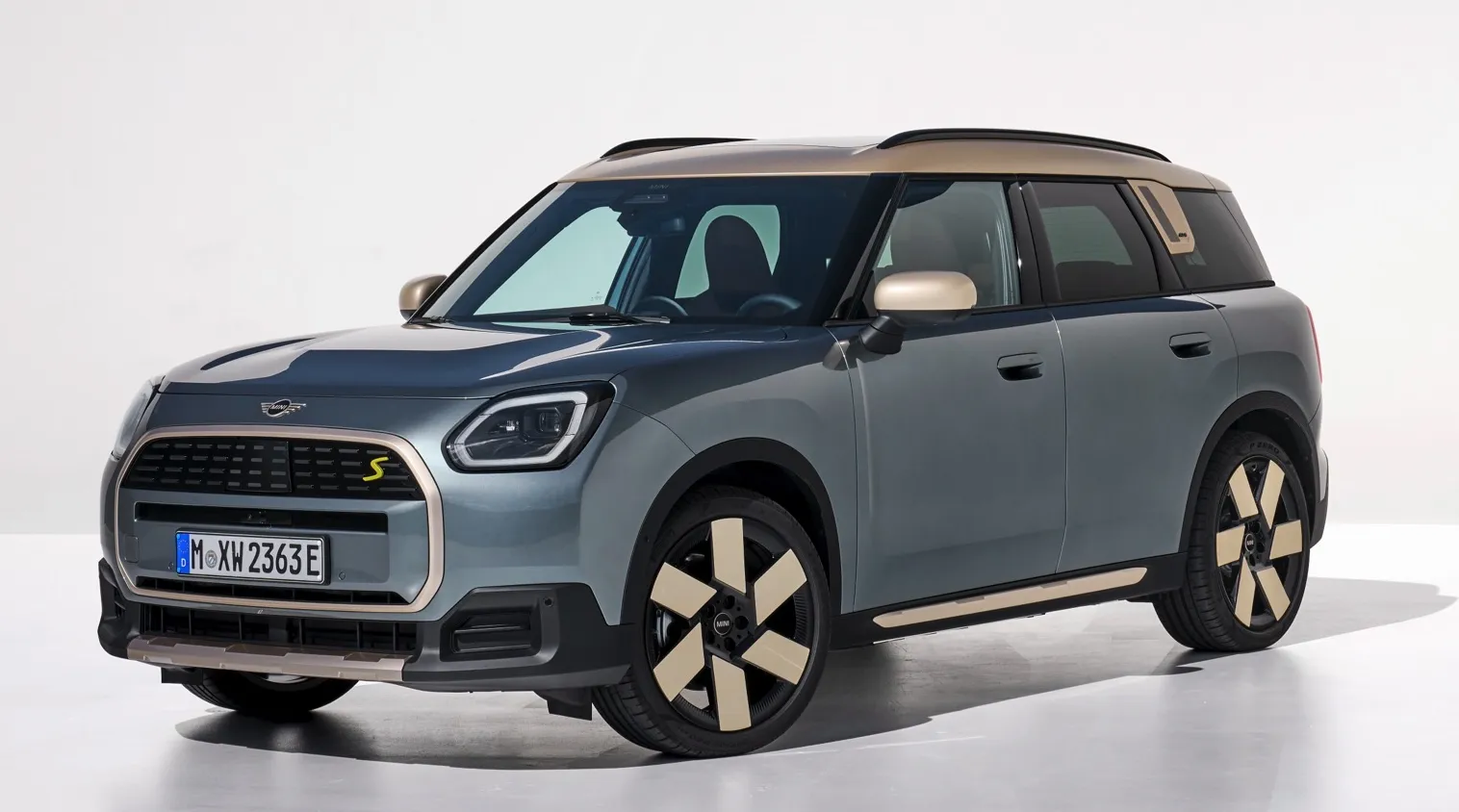
Mini Countryman SE ALL4 2026
 Mini
Mini
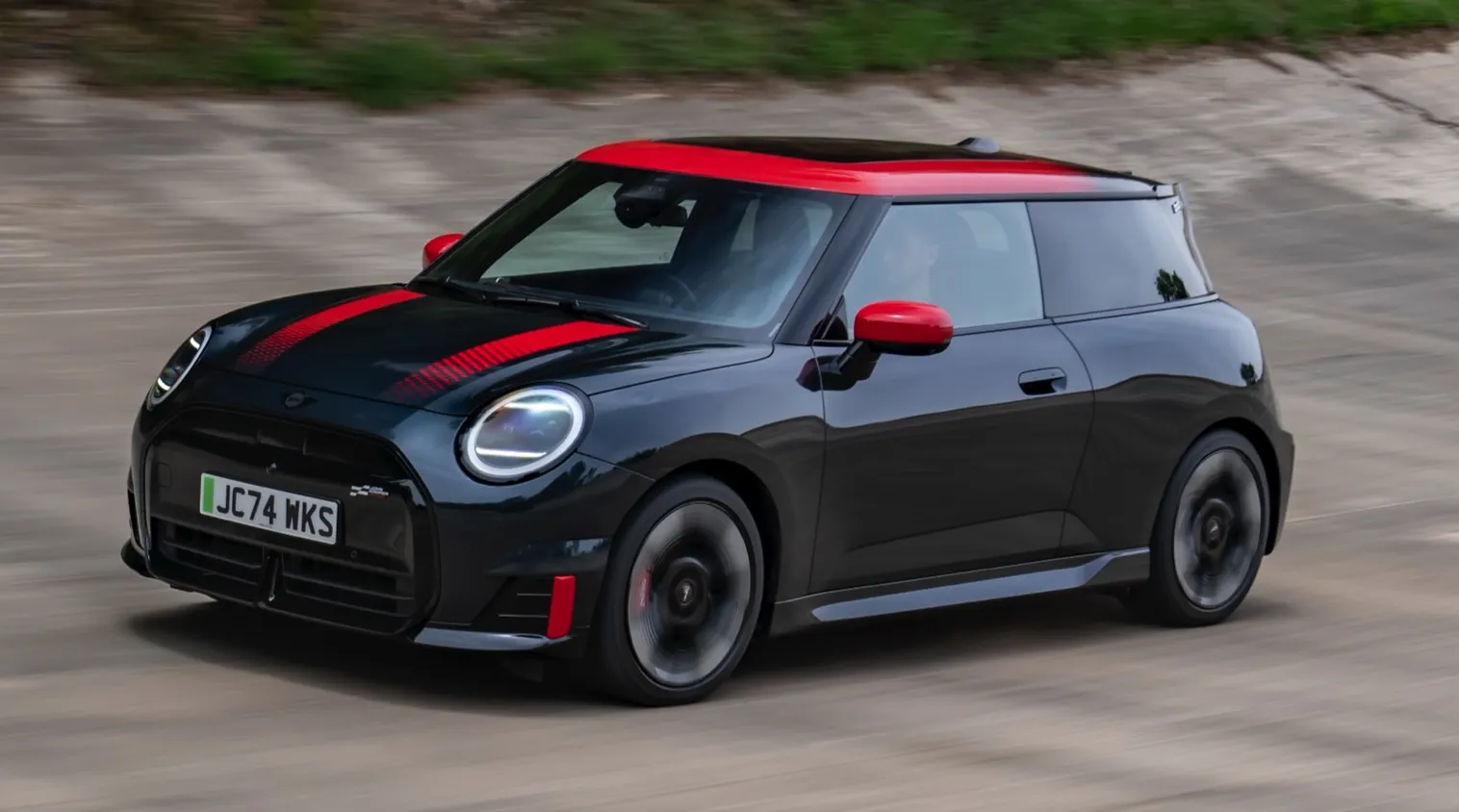
Mini Cooper JCW
 Mini
Mini