

Mercedes-Benz EQV 250 Extra-Long

Key Specifications
Real Range Estimation
| City - Cold Weather * | 225 km |
| Highway - Cold Weather * | 150 km |
| Combined - Cold Weather * | 185 km |
between 150 - 310 km
| City - Mild Weather * | 310 km |
| Highway - Mild Weather * | 185 km |
| Combined - Mild Weather * | 235 km |
Battery
| Nominal Capacity | 66.0 kWh |
| Battery Type | Lithium-ion |
| Number of Cells | 192 |
| Architecture | 400 V |
| Warranty Period | No Data |
| Warranty Mileage | No Data |
| Useable Capacity | 60.0 kWh |
| Cathode Material | No Data |
| Pack Configuration | 96s2p |
| Nominal Voltage | 352 V |
| Form Factor | No Data |
| Name / Reference | No Data |
Performance
| Acceleration 0 - 100 km/h | 12.0 sec |
| Top Speed | 160 km/h |
| Electric Range * | 210 km |
| Total Power | 150 kW (204 PS) |
| Total Torque | 365 Nm |
| Drive | Front |
Home and Destination Charging (0 -> 100%)
Charging is possible by using a regular wall plug or a charging station. Public charging is always done through a charging station. How fast the EV can charge depends on the charging station (EVSE) used and the maximum charging capacity of the EV. The table below shows all possible options for charging the Mercedes-Benz EQV 250 Extra-Long. Each option shows how fast the battery can be charged from empty to full.
Europe
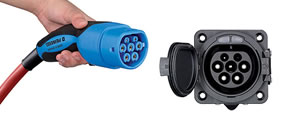
Charging an EV in Europe differs by country. Some European countries primarily use 1-phase connections to the grid, while other countries are almost exclusively using a 3-phase connection. The table below shows all possible ways the Mercedes-Benz EQV 250 Extra-Long can be charged, but some modes of charging might not be widely available in certain countries.
| Type 2 (Mennekes - IEC 62196) |
|---|
 |
| Charging Point | Max. Power | Power | Time | Rate |
|---|---|---|---|---|
| Wall Plug (2.3 kW) | 230V / 1x10A | 2.3 kW | 30h45m | 7 km/h |
| 1-phase 16A (3.7 kW) | 230V / 1x16A | 3.7 kW | 19h15m | 11 km/h |
| 1-phase 32A (7.4 kW) | 230V / 1x32A | 7.4 kW | 9h45m | 22 km/h |
| 3-phase 16A (11 kW) | 400V / 3x16A | 11 kW | 6h30m | 32 km/h |
| 3-phase 32A (22 kW) | 400V / 3x16A | 11 kW † | 6h30m | 32 km/h |
† = Limited by on-board charger, vehicle cannot charge faster.
Fast Charging (10 -> 80%)
Rapid charging enables longer journeys by adding as much range as possible in the shortest amount of time. Charging power will decrease significantly after 80% state-of-charge has been reached. A typical rapid charge therefore rarely exceeds 80% SoC. The rapid charge rate of an EV depends on the charger used and the maximum charging power the EV can handle. The table below shows all details for rapid charging the Mercedes-Benz EQV 250 Extra-Long.
- Max. Power: maximum power provided by charge point
- Avg. Power: average power provided by charge point over a session from 10% to 80%
- Time: time needed to charge from 10% to 80%
- Rate: average charging speed over a session from 10% to 80%
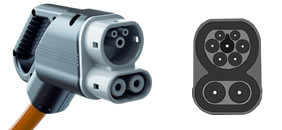
| Combined Charging System (CCS Combo 2) |
|---|
 |
| Charging Point | Max. Power | Avg. Power | Time | Rate |
|---|---|---|---|---|
| CCS (50 kW DC) | 50 kW | 40 kW † | 66 min | 130 km/h |
| CCS (100 kW DC) | 80 kW † | 60 kW † | 44 min | 200 km/h |
| CCS (150 kW DC) | 80 kW † | 60 kW † | 44 min | 200 km/h |
| This vehicle supports Autocharge |
|---|
| This vehicle does not support Plug & Charge |
† = Limited by charging capabilities of vehicle
Autocharge: allows for automatic initiation of a charging session at supported CCS charging stations.
Plug & Charge: allows for automatic initiation of a charging session at supported CCS charging stations in accordance with ISO 15118.
Actual charging rates may differ from data shown due to factors like outside temperature, state of the battery and driving style.
Mercedes-Benz Claimed Specifications
The table below shows the claimed specifications from the manufacturer for charging the Mercedes-Benz EQV 250 Extra-Long. The specifications can differ from the table above for a variety of reasons. If real-world charge tests are available, these differences can be signifcant. If no real-world tests are available, the table above will be based on the manufacturer specifications as per the table below.
- Max. Power: maximum charge power during charging session
- Charge From: battery percentage (% SoC) where charging session is started
- Charge To: battery percentage (% SoC) where charging session is ended
- Time: time needed for charging session
| Mercedes-Benz Claimed Specifications |
|---|
| Max. Power | Charge From | Charge To | Time |
|---|---|---|---|
| 80 kW | 10 % | 80 % | 35 min |
Dimensions and Weight
| Length | 5370 mm |
| Width | 1928 mm |
| Width with mirrors | 2249 mm |
| Height | 1911 mm |
| Wheelbase | 3430 mm |
| Weight Unladen (EU) | 2641 kg |
| Gross Vehicle Weight (GVWR) | 3500 kg |
| Max. Payload | 934 kg |
| Cargo Volume | 1410 L |
| Cargo Volume Max | 5010 L |
| Cargo Volume Frunk | 0 L |
| Roof Load | No Data |
| Tow Hitch Possible | No |
| Towing Weight Unbraked | 0 kg |
| Towing Weight Braked | 0 kg |
| Vertical Load Max | 0 kg |
About this Vehicle
# Mercedes-Benz EQV 250 Extra-Long: Premium Electric Minivan Review
Mercedes-Benz EQV 250 Extra-Long Overview
The Mercedes-Benz EQV 250 Extra-Long represents Mercedes’ commitment to electrifying the premium minivan segment, positioning itself as a sophisticated family hauler for discerning buyers who refuse to compromise on comfort or technology. This electric van targets affluent families, VIP transport operators, and businesses seeking a spacious, eco-friendly alternative to traditional combustion-powered vans. The EQV 250 Extra-Long distinguishes itself through its extended wheelbase design, offering maximum interior space while maintaining Mercedes’ signature luxury appointments and cutting-edge MBUX infotainment system.
The EQV 250 Extra-Long matters in today’s EV landscape because it addresses a genuine market gap: premium electric vans for those who need genuine seven-seat capability without sacrificing refinement. Unlike utilitarian commercial vans, the Mercedes EQV combines practicality with the brand’s hallmark quality, featuring a modern electric powertrain, comprehensive safety systems, and flexible seating configurations that adapt to various lifestyle needs.
Mercedes-Benz EQV 250 Extra-Long Performance and Driving Experience
The EQV 250 Extra-Long prioritizes comfort over outright performance, which is entirely appropriate for a family-focused minivan. The single electric motor delivers adequate power for daily driving, though acceleration is leisurely given the vehicle’s substantial 2,600+ kg curb weight. In Sport mode, the EQV achieves respectable highway merging capability, while the smooth, linear power delivery characteristic of electric motors ensures refined acceleration throughout the driving range.
Handling characteristics emphasize stability and passenger comfort rather than agility. The independent suspension system absorbs road imperfections effectively, creating a serene driving environment ideal for long family journeys. The Mercedes-Benz EQV 250 feels planted and secure, with responsive steering that belies its van-like proportions.
| Specification | Value |
|---|---|
| 0-60 mph (0-100 km/h) | 11.5 sec |
| Top Speed | 99 mph / 140 km/h |
| Power Output | 204 hp / 150 kW |
| Torque | 269 lb-ft / 365 Nm |
Mercedes-Benz EQV 250 Extra-Long Range and Battery Specifications
The EQV 250 Extra-Long delivers practical real-world range suitable for daily family use and occasional longer journeys. The 66 kWh usable battery capacity provides genuine versatility, with real-world range estimates between 150-310 km depending on driving conditions, climate, and load. Mercedes engineers optimized the EQV 250 battery chemistry for reliability and longevity, prioritizing consistent performance over peak output.
Weather significantly impacts range; cold temperatures reduce efficiency by approximately 20-30%, while highway driving at sustained speeds diminishes range more than urban commuting. The Mercedes-Benz EQV 250 Extra-Long excels in mixed-use scenarios where drivers combine city driving with moderate highway stretches.
| Range Metric | Value |
|---|---|
| Real-World Range | 150-310 km / 93-193 miles |
| Battery Capacity | 66 kWh (usable) |
| Energy Efficiency | ~0.22 kWh/km |
| Top Speed | 140 km/h / 87 mph |
Mercedes-Benz EQV 250 Extra-Long Charging Times and Options
Home charging flexibility makes the EQV 250 Extra-Long practical for daily ownership. Level 2 charging at 11 kW provides overnight replenishment for typical daily mileage, while DC fast charging enables rapid top-ups during longer journeys. The Mercedes-Benz EQV 250 supports the Combined Charging System (CCS) standard, ensuring compatibility with most European and North American charging networks.
The EQV 250 Extra-Long achieves 100 km of range in just 15 minutes via DC fast charging, making it genuinely viable for family road trips. This capability transforms the ownership experience from a city-only proposition into a genuine long-distance family hauler.
| Charging Method | Time | Speed |
|---|---|---|
| Level 2 (11 kW) | ~6-7 hours | 11 kW |
| DC Fast Charge (10-80%) | 35 minutes | 100 kW |
| DC Fast Charge (100 km range) | 15 minutes | Variable |
Mercedes-Benz EQV 250 Extra-Long vs Competitors
The EQV 250 Extra-Long competes primarily against the Volkswagen ID. Buzz (when available in markets), though direct competitors remain limited in the premium electric minivan segment. Compared to traditional three-row SUVs like the BMW iX xDrive50 or Mercedes EQS SUV, the EQV 250 offers superior interior volume and seating flexibility, thoughwith less performance and range. The Mercedes-Benz EQV 250 Extra-Long uniquely combines van practicality with luxury car refinement—a positioning few competitors match.
Frequently Asked Questions
Related Vehicles
View All Mercedes-Benz
Mercedes-Benz EQA 300 4MATIC
 Mercedes-Benz
Mercedes-Benz EQE SUV 300
 Mercedes-Benz
Mercedes-Benz EQE AMG 43 4MATIC
 Mercedes-Benz