Charging is possible by using a regular wall plug or a charging station. Public charging is always done through a charging station. How fast the EV can charge depends on the charging station (EVSE) used and the maximum charging capacity of the EV. The table below shows all possible options for charging the Mercedes-Benz EQT 200 Standard. Each option shows how fast the battery can be charged from empty to full.
Europe
Charging an EV in Europe differs by country. Some European countries primarily use 1-phase connections to the grid, while other countries are almost exclusively using a 3-phase connection. The table below shows all possible ways the Mercedes-Benz EQT 200 Standard can be charged, but some modes of charging might not be widely available in certain countries.
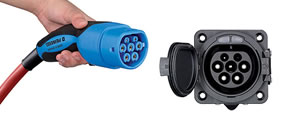
Type 2 (Mennekes - IEC 62196)
Charging Point
Max. Power
Power
Time
Rate
Wall Plug (2.3 kW)
230V / 1x10A
2.3 kW
23h15m
10 km/h
1-phase 16A (3.7 kW)
230V / 1x16A
3.7 kW
14h30m
16 km/h
1-phase 32A (7.4 kW)
230V / 1x32A
7.4 kW
7h15m
31 km/h
3-phase 16A (11 kW)
400V / 3x16A
11 kW
5 hours
45 km/h
3-phase 32A (22 kW)
400V / 3x32A
22 kW †
2h30m
90 km/h
† = Limited by on-board charger, vehicle cannot charge faster.
Fast Charging (10 -> 80%)
Rapid charging enables longer journeys by adding as much range as possible in the shortest amount of time. Charging power will decrease significantly after 80% state-of-charge has been reached. A typical rapid charge therefore rarely exceeds 80% SoC. The rapid charge rate of an EV depends on the charger used and the maximum charging power the EV can handle. The table below shows all details for rapid charging the Mercedes-Benz EQT 200 Standard.
Max. Power: maximum power provided by charge point
Avg. Power: average power provided by charge point over a session from 10% to 80%
Time: time needed to charge from 10% to 80%
Rate: average charging speed over a session from 10% to 80%
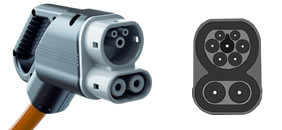
Combined Charging System (CCS Combo 2)
Charging Point
Max. Power
Avg. Power
Time
Rate
CCS (50 kW DC)
50 kW
35 kW †
57 min
160 km/h
CCS (100 kW DC)
80 kW †
50 kW †
40 min
230 km/h
CCS (150 kW DC)
80 kW †
50 kW †
40 min
230 km/h
This vehicle supports Autocharge
This vehicle does not support Plug & Charge
† = Limited by charging capabilities of vehicle
Autocharge: allows for automatic initiation of a charging session at supported CCS charging stations.
Plug & Charge: allows for automatic initiation of a charging session at supported CCS charging stations in accordance with ISO 15118.
Actual charging rates may differ from data shown due to factors like outside temperature, state of the battery and driving style.
Mercedes-Benz Claimed Specifications
The table below shows the claimed specifications from the manufacturer for charging the Mercedes-Benz EQT 200 Standard. The specifications can differ from the table above for a variety of reasons. If real-world charge tests are available, these differences can be signifcant. If no real-world tests are available, the table above will be based on the manufacturer specifications as per the table below.
Max. Power: maximum charge power during charging session
Charge From: battery percentage (% SoC) where charging session is started
Charge To: battery percentage (% SoC) where charging session is ended
Time: time needed for charging session
Mercedes-Benz Claimed Specifications
Max. Power
Charge From
Charge To
Time
80 kW
10 %
80 %
38 min
Dimensions and Weight
Length
4498 mm
Width
1859 mm
Width with mirrors
2159 mm
Height
1819 mm
Wheelbase
2716 mm
Weight Unladen (EU)
1874 kg
Gross Vehicle Weight (GVWR)
2390 kg
Max. Payload
591 kg
Cargo Volume
551 L
Cargo Volume Max
1979 L
Cargo Volume Frunk
0 L
Roof Load
80 kg
Tow Hitch Possible
Yes
Towing Weight Unbraked
750 kg
Towing Weight Braked
1500 kg
Vertical Load Max
75 kg
About this Vehicle
Mercedes-Benz EQT 200 Standard Overview
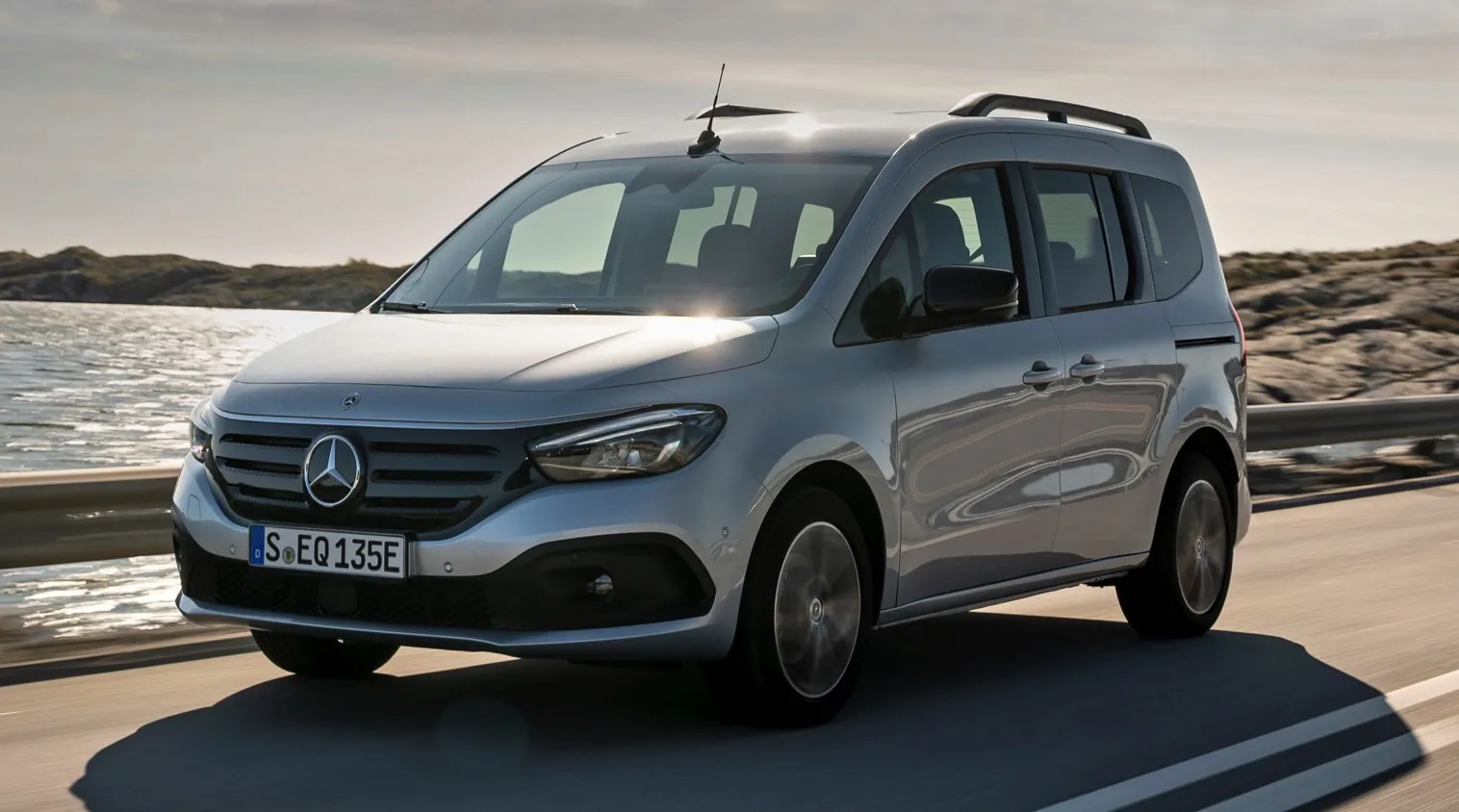
The Mercedes-Benz EQT 200 Standard positions itself as a premium electric minivan in the compact EV segment, blending luxury van practicality with Mercedes-Benz’s renowned build quality. Targeted at urban families, small business owners, and city dwellers needing versatile transport, this five-seater excels in everyday leisure and school runs. Built on the Mercedes-Benz VAN. The EA platform, it features a distinctive boxy design with a signature grille, smart LED lighting, and city-friendly dimensions of 4,498 x 1,859 x 1,819 mm, offering agile maneuverability in tight spaces. Key distinguishing features include the liquid-cooled 48 kWh Li-ion battery, MBUX infotainment with wireless Apple CarPlay and Android Auto, and an advanced safety suite with seven airbags and Active Brake Assist.
In the EV landscape, the Mercedes EQT 200 Standard matters as an upscale alternative to basic electric vans, prioritizing refinement over raw performance. Its EV specs deliver smooth urban driving with a WLTP range of 232 km (144 miles), a heat pump for efficiency, and up to 1,979 liters of cargo space. This Mercedes-Benz electric minivan appeals to buyers seeking premium touches like ambient lighting, height-adjustable seats, and a reversing camera in an EQT 200 Standard review context, setting it apart from mainstream rivals with superior interior quality and connectivity.
Mercedes-Benz EQT 200 Standard Performance and Driving Experience
The Mercedes-Benz EQT 200 Standard delivers composed, urban-focused performance from its front-wheel-drive setup with a single permanent magnet synchronous motor producing 122 hp (90 kW) and 181 lb-ft (245 Nm) of torque. Acceleration from 0-60 mph takes 12.6 seconds, with a top speed of 82 mph (132 km/h), emphasizing comfort over speed. Handling is stable thanks to a 2,716 mm wheelbase and selectable regenerative braking modes that enhance efficiency through one-pedal driving. Real-world impressions highlight a quiet, refined ride ideal for city duties, with strong recuperation clawing back energy on stop-start traffic, plus up to 3,307 lbs braked towing capacity.
Specification
Value
0-60 mph (0-100 km/h)
12.6 sec
Top Speed
82 mph / 132 km/h
Power Output
122 hp / 90 kW
Torque
181 lb-ft / 245 Nm
Mercedes-Benz EQT 200 Standard Range and Battery Specifications
Equipped with a 48 kWh total (45 kWh usable) liquid-cooled Li-ion 400V battery, the Mercedes-Benz EQT 200 Standard boasts a WLTP range of 144 miles (232 km), though real-world range estimates vary from 100-152 miles (160-245 km) depending on conditions. Energy efficiency stands at 19.0 kWh/100 km (about 298 Wh/mi), aided by a heat pump and recuperation system. Factors like cold weather can drop range to 143 miles in city driving, while highway use or aggressive styles reduce it further; mild conditions and eco modes maximize output for daily commutes.
EQT 200 Standard battery specs shine in urban efficiency, making it suitable for short trips with 551-1,979 liters of cargo flexibility.
Range Metric
Value
WLTP Range
144 miles / 232 km
EPA Range
N/A
Real-World Range
100-152 miles / 160-245 km
Battery Capacity
45 kWh (usable)
Mercedes-Benz EQT 200 Standard Charging Times and Options
The Mercedes-Benz EQT 200 Standard supports versatile charging with a Type 2 AC onboard charger up to 22 kW for home use and CCS DC fast charging at 80 kW peak. Level 2 setups at 11 kW fully charge in about 4-5 hours, while DC fast charging from 10-80% takes around 50 minutes. Compatible with major networks, it’s practical for urban top-ups; Level 1 suffices for overnight charging. Real scenarios include quick DC sessions for longer days or home Level 2 for daily routines, with average charge time around 2 hours for partial fills.
Charging Method
Time
Speed
Level 1 (120V)
20+ hours
~1.4 kW
Level 2 (240V/7kW)
7 hours
~7 kW
Level 2 (240V/11kW)
4.5 hours
~11 kW
DC Fast Charge (10-80%)
50 min
up to 80 kW
Mercedes-Benz EQT 200 Standard vs Competitors
The Mercedes-Benz EQT 200 Standard stands out against rivals like the Hyundai Ioniq 5, Kia EV6, and Tesla Model Y in the premium electric minivan space. Versus the Ioniq 5’s sportier 225-mile range and faster charging, the EQT prioritizes van utility with more cargo (up to 69.9 cu ft) and luxury finishes at a similar price point. It edges the Kia EV6 in refinement and safety (seven airbags vs fewer), though the EV6 offers quicker acceleration. Compared to the Tesla Model Y, the EQT 200 Standard vs Tesla Model Y favors family hauling over long-range prowess, with superior build quality but a shorter 144-mile WLTP range.
Frequently Asked Questions
Real-world range for the Mercedes-Benz EQT 200 Standard is estimated at 100-152 miles (160-245 km), varying by weather, driving style, and terrain; city cold weather yields about 143 miles, with efficiency at 298 Wh/mi.
Home Level 2 (11 kW) takes 4.5 hours for a full charge, while DC fast charging (80 kW) achieves 10-80% in 50 minutes; Level 1 is 20+ hours for overnight use.
The Mercedes-Benz EQT 200 Standard is front-wheel drive (FWD) only, powered by a single PMSM motor for efficient urban handling without AWD complexity.
MBUX (Mercedes-Benz User Experience) is the intuitive infotainment with a responsive touchscreen, wireless Android Auto/Apple CarPlay, head-up display, and Mercedes me connectivity for navigation and remote features.
The EQT offers more cargo (69.9 cu ft max) and premium safety like seven airbags versus Ioniq 5’s sportier drive and 225-mile range, but trails in acceleration and fast-charging speed.
Yes for urban families—pros include luxury interior, 144-mile WLTP range, and versatile space; cons are modest 12.6-sec 0-60 and limited highway range versus sportier EVs.> The Mercedes-Benz EQT 200 Standard is a premium electric minivan with 122 hp, 144-mile WLTP range, and 45 kWh battery, ideal for city families seeking luxury utility. It excels in cargo versatility (up to 69.9 cu ft), MBUX tech, and efficient FWD performance, outshining rivals in refinement for everyday drives. Perfect for urban EV buyers prioritizing comfort over speed.


 Mercedes-Benz
 Mercedes-Benz
 Mercedes-Benz
 Mercedes-Benz