Charging is possible by using a regular wall plug or a charging station. Public charging is always done through a charging station. How fast the EV can charge depends on the charging station (EVSE) used and the maximum charging capacity of the EV. The table below shows all possible options for charging the Mercedes-Benz EQS 450+. Each option shows how fast the battery can be charged from empty to full.
Europe
Charging an EV in Europe differs by country. Some European countries primarily use 1-phase connections to the grid, while other countries are almost exclusively using a 3-phase connection. The table below shows all possible ways the Mercedes-Benz EQS 450+ can be charged, but some modes of charging might not be widely available in certain countries.
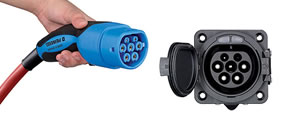
Type 2 (Mennekes - IEC 62196)
Charging Point
Max. Power
Power
Time
Rate
Standard 11.0 kW On-Board Charger
Wall Plug (2.3 kW)
230V / 1x10A
2.3 kW
60h30m
11 km/h
1-phase 16A (3.7 kW)
230V / 1x16A
3.7 kW
37h45m
18 km/h
1-phase 32A (7.4 kW)
230V / 1x32A
7.4 kW
18h45m
37 km/h
3-phase 16A (11 kW)
400V / 3x16A
11 kW
12h45m
54 km/h
3-phase 32A (22 kW)
400V / 3x16A
11 kW †
12h45m
54 km/h
Optional 22.0kW On-Board Charger
Wall Plug (2.3 kW)
230V / 1x10A
2.3 kW
60h30m
11 km/h
1-phase 16A (3.7 kW)
230V / 1x16A
3.7 kW
37h45m
18 km/h
1-phase 32A (7.4 kW)
230V / 1x32A
7.4 kW
18h45m
37 km/h
3-phase 16A (11 kW)
400V / 3x16A
11 kW
12h45m
54 km/h
3-phase 32A (22 kW)
400V / 3x32A
22 kW †
6h30m
100 km/h
† = Limited by on-board charger, vehicle cannot charge faster.
Fast Charging (10 -> 80%)
Rapid charging enables longer journeys by adding as much range as possible in the shortest amount of time. Charging power will decrease significantly after 80% state-of-charge has been reached. A typical rapid charge therefore rarely exceeds 80% SoC. The rapid charge rate of an EV depends on the charger used and the maximum charging power the EV can handle. The table below shows all details for rapid charging the Mercedes-Benz EQS 450+.
Max. Power: maximum power provided by charge point
Avg. Power: average power provided by charge point over a session from 10% to 80%
Time: time needed to charge from 10% to 80%
Rate: average charging speed over a session from 10% to 80%
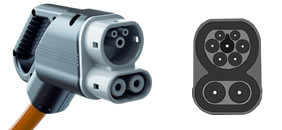
Combined Charging System (CCS Combo 2)
Charging Point
Max. Power
Avg. Power
Time
Rate
CCS (50 kW DC)
50 kW
50 kW
104 min
270 km/h
CCS (100 kW DC)
100 kW
95 kW †
55 min
520 km/h
CCS (150 kW DC)
150 kW
125 kW †
42 min
690 km/h
CCS (175 kW DC)
175 kW
140 kW †
37 min
780 km/h
CCS (350 kW DC)
200 kW †
160 kW †
33 min
870 km/h
This vehicle supports Autocharge
This vehicle supports Plug & Charge
† = Limited by charging capabilities of vehicle
Autocharge: allows for automatic initiation of a charging session at supported CCS charging stations.
Plug & Charge: allows for automatic initiation of a charging session at supported CCS charging stations in accordance with ISO 15118.
Actual charging rates may differ from data shown due to factors like outside temperature, state of the battery and driving style.
Mercedes-Benz Claimed Specifications
The table below shows the claimed specifications from the manufacturer for charging the Mercedes-Benz EQS 450+. The specifications can differ from the table above for a variety of reasons. If real-world charge tests are available, these differences can be signifcant. If no real-world tests are available, the table above will be based on the manufacturer specifications as per the table below.
Max. Power: maximum charge power during charging session
Charge From: battery percentage (% SoC) where charging session is started
Charge To: battery percentage (% SoC) where charging session is ended
Time: time needed for charging session
Mercedes-Benz Claimed Specifications
Max. Power
Charge From
Charge To
Time
200 kW
10 %
80 %
31 min
Dimensions and Weight
Length
5223 mm
Width
1926 mm
Width with mirrors
2125 mm
Height
1518 mm
Wheelbase
3210 mm
Weight Unladen (EU)
2515 kg
Gross Vehicle Weight (GVWR)
2945 kg
Max. Payload
505 kg
Cargo Volume
620 L
Cargo Volume Max
1700 L
Cargo Volume Frunk
0 L
Roof Load
100 kg
Tow Hitch Possible
Yes
Towing Weight Unbraked
750 kg
Towing Weight Braked
750 kg
Vertical Load Max
100 kg
About this Vehicle
Mercedes-Benz EQS 450+ Overview
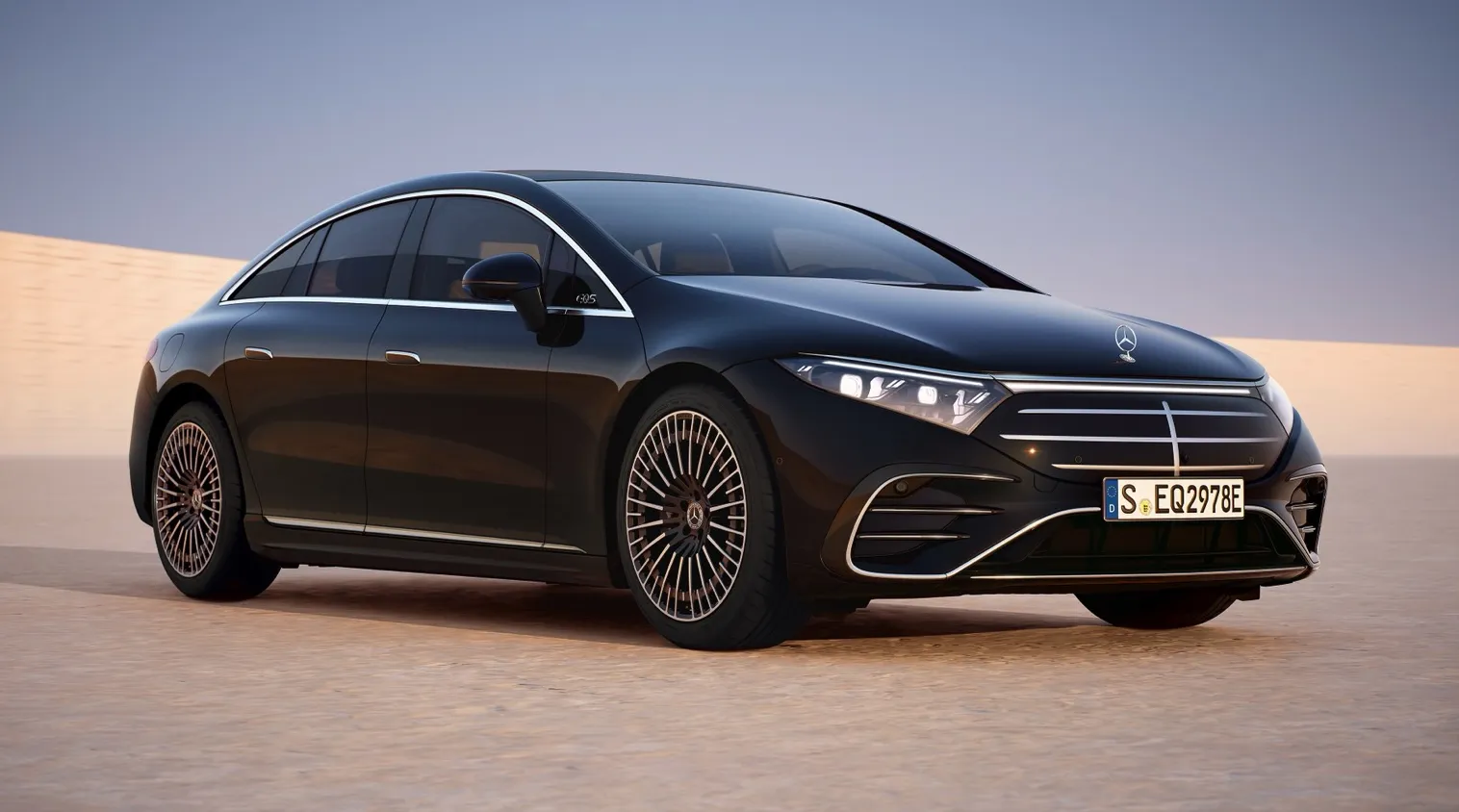
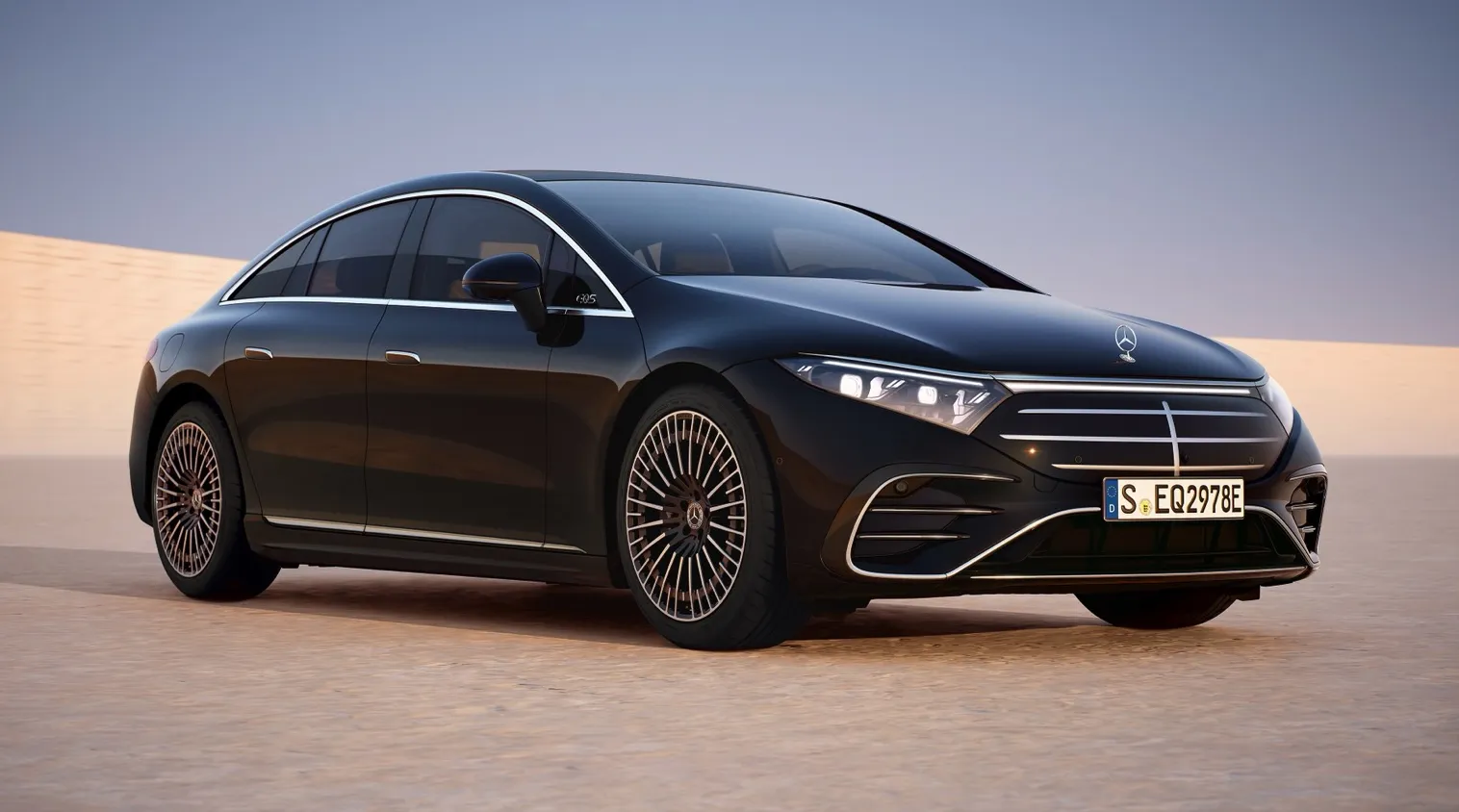
The Mercedes-Benz EQS 450+ stands as a flagship premium electric sedan, blending the opulence of the iconic S-Class with cutting-edge EV technology. Priced starting at $104,400 MSRP, this Mercedes-Benz electric sedan targets luxury buyers seeking effortless sophistication, long-distance comfort, and advanced driver aids in the ultra-premium EV segment. Built on Mercedes’ dedicated EVA2 platform, it features a sleek, aerodynamic ovoid design with a low drag coefficient, a hyperscreen dashboard, and the MBUX infotainment system enhanced by 5G and augmented reality navigation. Key distinguishing elements include its massive 118 kWh lithium-ion battery, rear-wheel-drive efficiency focus, and E-Active Body Control suspension for supreme ride quality.
In the evolving EV landscape, the Mercedes-Benz EQS 450+ matters as a benchmark for luxury electrification, offering up to 390 miles of range while prioritizing serenity over raw sportiness. It’s ideal for executives and families who value whisper-quiet cabins, massaging seats, and over-the-air updates. With EQS 450+ review highlights praising its real-world refinement, this model elevates electric vehicle range expectations, competing directly in the high-end electric sedan market against Tesla and BMW rivals.
Mercedes-Benz EQS 450+ Performance and Driving Experience
The Mercedes-Benz EQS 450+ delivers smooth, composed power through its single rear-mounted 265 kW permanent synchronous electric motor, emphasizing efficiency over aggression. Acceleration feels brisk yet refined, with instant torque providing seamless overtaking. Handling benefits from air suspension, rear-axle steering, and a low center of gravity, ensuring planted dynamics on highways and twisty roads. Real-world impressions highlight its pillow-like ride, minimal noise, and regenerative braking that feels natural via steering wheel paddles. Unlike AWD variants, the 450+ sticks to RWD for optimal range, though 4MATIC options add grip.
Specification
Value
0-60 mph (0-100 km/h)
6.2 sec
Top Speed
130 mph / 210 km/h
Power Output
355 hp / 265 kW
Torque
419 lb-ft / 569 Nm
Mercedes-Benz EQS 450+ Range and Battery Specifications
Official Mercedes-Benz EQS 450+ WLTP range reaches up to 390 miles, with EPA estimates around 367 miles for similar trims, though real-world range typically falls to 300-350 miles depending on conditions. Its 118 kWh usable lithium-ion battery (from a 125 kWh nominal pack) employs advanced chemistry for high density and longevity, paired with exceptional energy efficiency of about 250-300 Wh/mi. Cold weather can reduce range by 20-30%, while highway driving at 70 mph optimizes it; aggressive acceleration or loads diminish figures further.
Range Metric
Value
WLTP Range
390 miles / 627 km
EPA Range
367 miles / 590 km
Real-World Range
320 miles / 515 km
Battery Capacity
118 kWh (usable)
Mercedes-Benz EQS 450+ Charging Times and Options
Home charging for the Mercedes-Benz EQS 450+ is straightforward with its 9.6 kW onboard charger: Level 1 takes about 48 hours for a full top-up, while Level 2 at 240V/11 kW completes in roughly 12-14 hours. DC fast charging peaks at up to 200 kW, achieving 10-80% in 30-35 minutes on compatible networks like Electrify America or Ionity. It supports CCS connectors and integrates seamlessly with Mercedes’ public charger mapping via MBUX. Practical scenarios include overnight Level 2 for daily commutes or quick DC stops for road trips, with preconditioning to maximize speeds.
Charging Method
Time
Speed
Level 1 (120V)
48 hours
~1.4 kW
Level 2 (240V/7kW)
17 hours
~7 kW
Level 2 (240V/11kW)
12.75 hours
~11 kW
DC Fast Charge (10-80%)
32 min
up to 200 kW
Mercedes-Benz EQS 450+ vs Competitors
In Mercedes-Benz EQS 450+ vs Tesla Model S, the EQS excels in luxury and ride comfort with superior interior tech like the Hyperscreen, though Tesla edges out in raw acceleration and Supercharger access. Compared to the BMW i7, the EQS 450+ offers better EV range and efficiency but trails in sporty handling; versus the Lucid Air, it prioritizes opulence over the Air’s superior 400+ mile range. Overall, the EQS 450+ comparison shines for buyers valuing Mercedes refinement in the premium electric sedan arena.
Frequently Asked Questions
The Mercedes-Benz EQS 450+ real-world range averages 320 miles on mixed driving, dropping to 250-280 miles in cold weather or highway use, thanks to its efficient 118 kWh battery and aerodynamic design.
Level 2 charging (11 kW) takes 12.75 hours for a full charge, while DC fast charging (up to 200 kW) delivers 10-80% in 32 minutes, making it practical for both home and road-trip scenarios.
The Mercedes-Benz EQS 450+ is rear-wheel drive (RWD) with a single 265 kW rear motor for maximum efficiency; AWD is available on the EQS 450 4MATIC variant with dual motors.
The MBUX Hyperscreen is a 56-inch glass-spanning display across the dashboard, integrating a 17.7-inch OLED central screen, driver display, and passenger screen with AI voice control, AR navigation, and fingerprint authentication.
The EQS 450+ outperforms the Model S in luxury seating, air suspension comfort, and interior ambiance, with a comparable 350+ mile range, but Tesla leads in faster charging and autopilot features.
Yes, with pros like exceptional 390-mile WLTP range, plush ride, and premium tech; cons include high price and polarizing styling, making it ideal for luxury EV enthusiasts.> The Mercedes-Benz EQS 450+ is a premium electric sedan with 355 hp, up to 390 miles WLTP range, and a 118 kWh battery, redefining luxury EVs through its Hyperscreen tech and serene driving dynamics. Starting at $104,400, it outshines rivals in comfort and efficiency for long-haul refinement. Perfect for those prioritizing S-Class opulence in an electric vehicle.


 Mercedes-Benz
 Mercedes-Benz
 Mercedes-Benz
 Mercedes-Benz