Charging is possible by using a regular wall plug or a charging station. Public charging is always done through a charging station. How fast the EV can charge depends on the charging station (EVSE) used and the maximum charging capacity of the EV. The table below shows all possible options for charging the Mercedes-Benz EQA 250. Each option shows how fast the battery can be charged from empty to full.
Europe
Charging an EV in Europe differs by country. Some European countries primarily use 1-phase connections to the grid, while other countries are almost exclusively using a 3-phase connection. The table below shows all possible ways the Mercedes-Benz EQA 250 can be charged, but some modes of charging might not be widely available in certain countries.
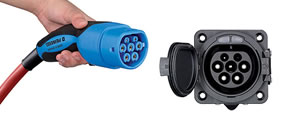
Type 2 (Mennekes - IEC 62196)
Charging Point
Max. Power
Power
Time
Rate
Standard 11.0 kW On-Board Charger
Wall Plug (2.3 kW)
230V / 1x10A
2.3 kW
34 hours
12 km/h
1-phase 16A (3.7 kW)
230V / 1x16A
3.7 kW
21h15m
19 km/h
1-phase 32A (7.4 kW)
230V / 1x32A
7.4 kW
10h45m
37 km/h
3-phase 16A (11 kW)
400V / 3x16A
11 kW
7h15m
54 km/h
3-phase 32A (22 kW)
400V / 3x16A
11 kW †
7h15m
54 km/h
Optional 22.0kW On-Board Charger
Wall Plug (2.3 kW)
230V / 1x10A
2.3 kW
34 hours
12 km/h
1-phase 16A (3.7 kW)
230V / 1x16A
3.7 kW
21h15m
19 km/h
1-phase 32A (7.4 kW)
230V / 1x32A
7.4 kW
10h45m
37 km/h
3-phase 16A (11 kW)
400V / 3x16A
11 kW
7h15m
54 km/h
3-phase 32A (22 kW)
400V / 3x32A
22 kW †
3h45m
100 km/h
† = Limited by on-board charger, vehicle cannot charge faster.
Fast Charging (10 -> 80%)
Rapid charging enables longer journeys by adding as much range as possible in the shortest amount of time. Charging power will decrease significantly after 80% state-of-charge has been reached. A typical rapid charge therefore rarely exceeds 80% SoC. The rapid charge rate of an EV depends on the charger used and the maximum charging power the EV can handle. The table below shows all details for rapid charging the Mercedes-Benz EQA 250.
Mercedes-Benz has not released details about rapid charging the EQA. The information below is based on estimated values of the most likely rapid charging capabilities.
Max. Power: maximum power provided by charge point
Avg. Power: average power provided by charge point over a session from 10% to 80%
Time: time needed to charge from 10% to 80%
Rate: average charging speed over a session from 10% to 80%
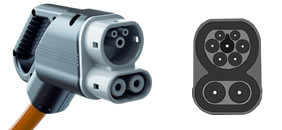
Combined Charging System (CCS Combo 2)
Charging Point
Max. Power
Avg. Power
Time
Rate
CCS (50 kW DC)
50 kW
45 kW †
65 min
250 km/h
CCS (100 kW DC)
100 kW
90 kW †
33 min
500 km/h
CCS (150 kW DC)
112 kW †
100 kW †
29 min
570 km/h
This vehicle supports Autocharge
This vehicle supports Plug & Charge
† = Limited by charging capabilities of vehicle
Autocharge: allows for automatic initiation of a charging session at supported CCS charging stations.
Plug & Charge: allows for automatic initiation of a charging session at supported CCS charging stations in accordance with ISO 15118.
Actual charging rates may differ from data shown due to factors like outside temperature, state of the battery and driving style.
Mercedes-Benz Claimed Specifications
The table below shows the claimed specifications from the manufacturer for charging the Mercedes-Benz EQA 250. The specifications can differ from the table above for a variety of reasons. If real-world charge tests are available, these differences can be signifcant. If no real-world tests are available, the table above will be based on the manufacturer specifications as per the table below.
Max. Power: maximum charge power during charging session
Charge From: battery percentage (% SoC) where charging session is started
Charge To: battery percentage (% SoC) where charging session is ended
Time: time needed for charging session
Mercedes-Benz Claimed Specifications
Max. Power
Charge From
Charge To
Time
100 kW
10 %
80 %
32 min
Dimensions and Weight
Length
4463 mm
Width
1834 mm
Width with mirrors
2020 mm
Height
1620 mm
Wheelbase
2729 mm
Weight Unladen (EU)
2045 kg
Gross Vehicle Weight (GVWR)
2470 kg
Max. Payload
500 kg
Cargo Volume
340 L
Cargo Volume Max
1320 L
Cargo Volume Frunk
0 L
Roof Load
75 kg
Tow Hitch Possible
Yes
Towing Weight Unbraked
750 kg
Towing Weight Braked
1500 kg
Vertical Load Max
80 kg
About this Vehicle
Mercedes-Benz EQA 250 Overview
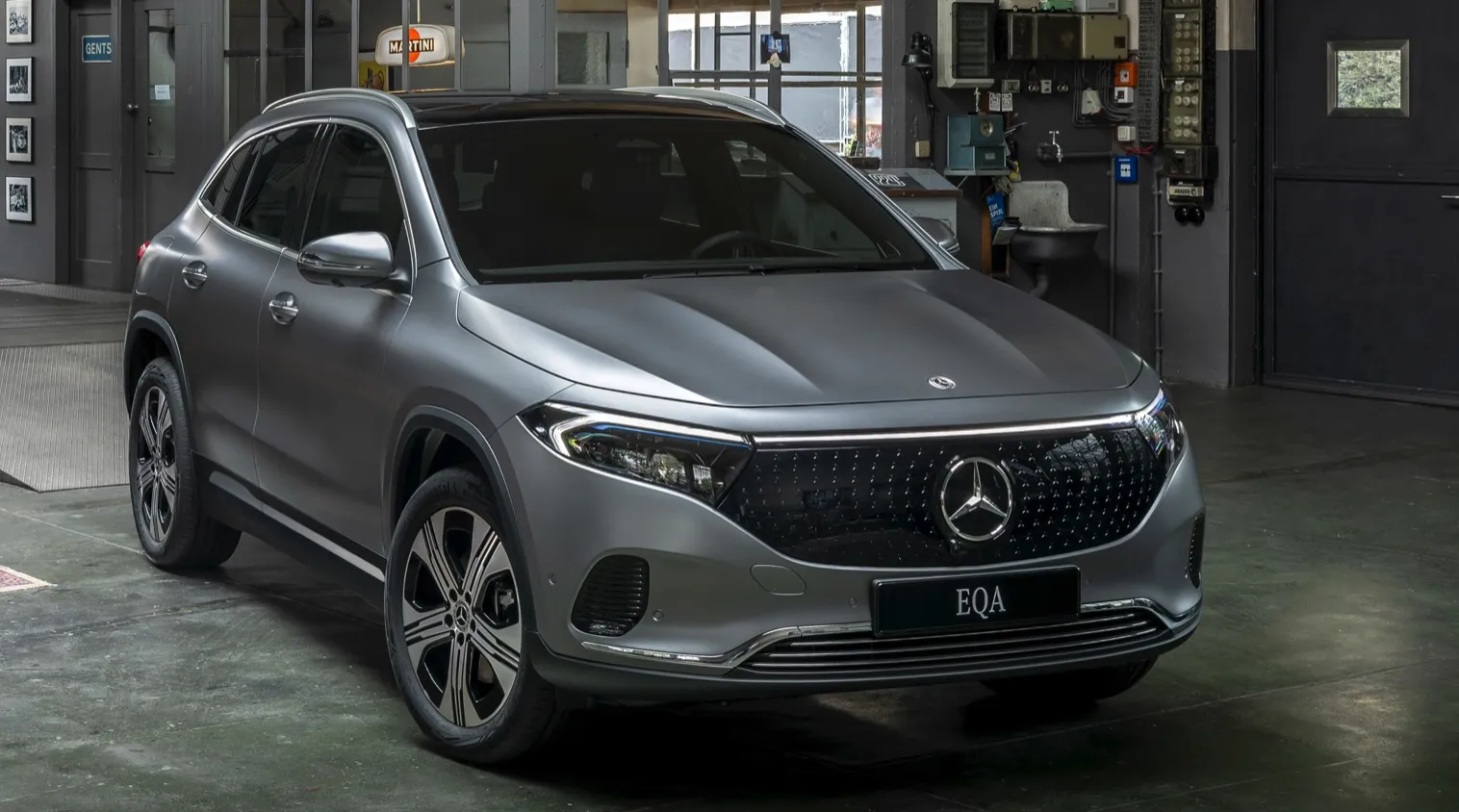
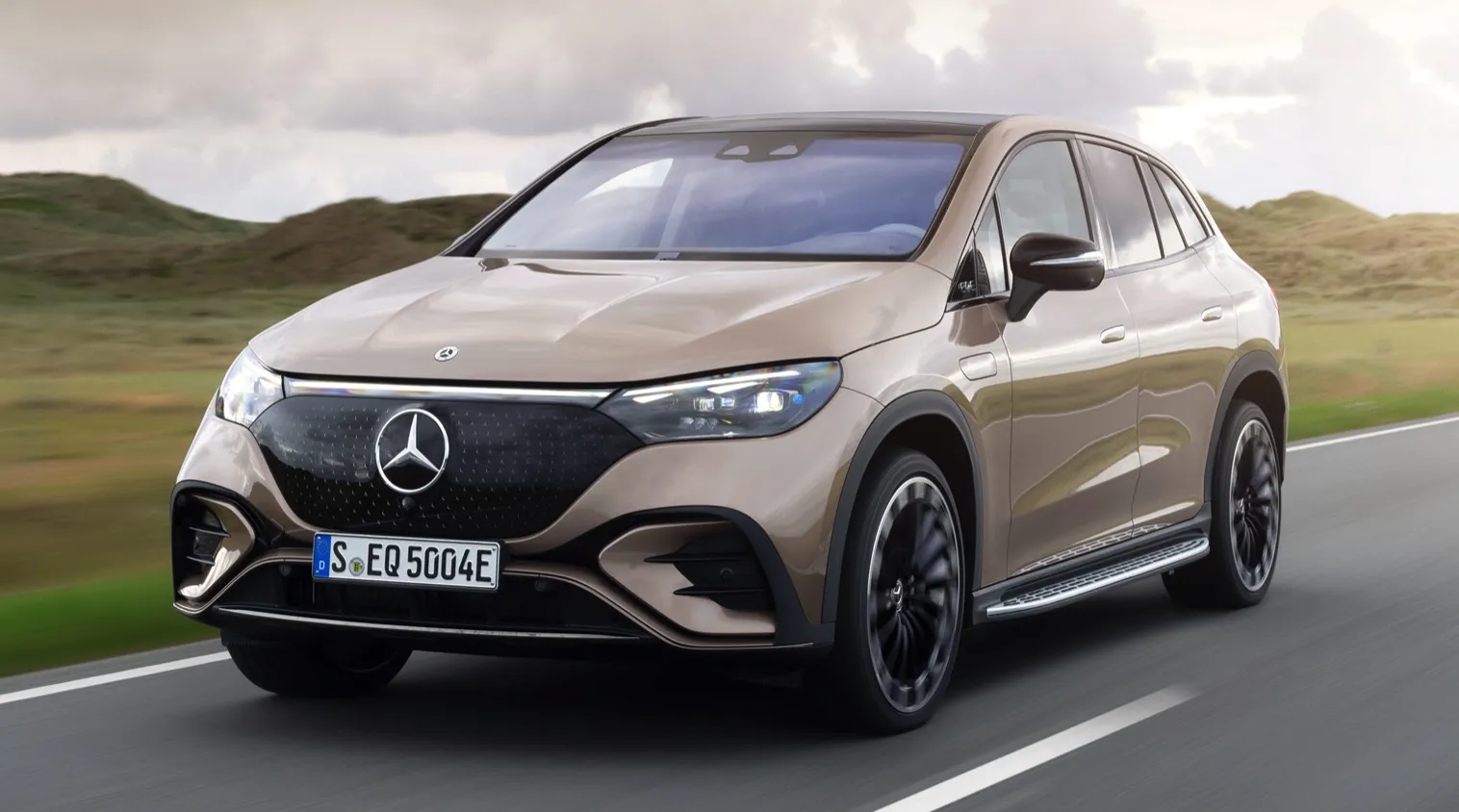
The Mercedes-Benz EQA 250 positions itself as a premium compact electric SUV, blending luxury branding with accessible EV technology for urban drivers seeking sophistication without compromise. As part of Mercedes’ EQ lineup, this Mercedes-Benz electric SUV targets affluent professionals and families who prioritize refined design, advanced safety features, and seamless integration into daily life. Built on the MFA2 platform—not a dedicated EV architecture but adapted for efficiency—it features a sleek coupé-like profile with a low drag coefficient of 0.28, harmonized proportions, and short overhangs that emphasize dynamic styling.
Key distinguishing features include its front-wheel-drive setup, lithium nickel manganese cobalt (NMC) battery, and Mercedes’ MBUX infotainment with smart assistants for voice control and augmented reality navigation. In the EV landscape, the Mercedes-Benz EQA 250 matters as an entry point to premium electrification, offering EV specs like up to 346 miles WLTP range in base form, competing in a market dominated by Tesla while upholding German engineering standards. This EQA 250 review highlights its balance of performance, efficiency, and luxury, making it ideal for city commutes and weekend getaways.
Mercedes-Benz EQA 250 Performance and Driving Experience
The Mercedes-Benz EQA 250 delivers smooth, composed power with 188 hp from its front-mounted electric motor, paired to 284 lb-ft of torque for instant acceleration. It sprints from 0-60 mph in 8.4 seconds, feeling responsive in urban settings thanks to single-speed automatic transmission and radar-based recuperation that adjusts braking energy recovery. Handling is agile for an SUV, with comfort suspension and a 52/48% weight distribution providing stable cornering, though its 4,497 lbs curb weight limits sportiness. Real-world impressions praise its quiet cabin, acoustic ambient protection for pedestrian alerts, and precise steering, ideal for refined daily drives rather than track thrills.
Specification
Value
0-60 mph (0-100 km/h)
8.4 sec (8.6 sec)
Top Speed
99 mph / 160 km/h
Power Output
188 hp / 140 kW
Torque
284 lb-ft / 385 Nm
Mercedes-Benz EQA 250 Range and Battery Specifications
Official Mercedes-Benz EQA 250 WLTP range spans 283-346 miles depending on wheel size and load, with TEL at 328 miles and TEH at 283 miles, while real-world estimates fall around 280-350 miles based on efficiency. Its 70 kWh gross (66.5 kWh usable) NMC battery achieves 23.2-26.9 kWh/100 miles consumption, influenced by weather, driving style, and terrain—colder conditions or highways can drop range by 20%. Energy efficiency shines at 163-185 Wh/km combined, supported by features like pre-entry climate control.
Mercedes-Benz EQA 250 battery specs emphasize durability and fast recuperation, making it suitable for mixed-use scenarios.
Range Metric
Value
WLTP Range
283-346 miles / 456-528 km
EPA Range
Not specified
Real-World Range
280-350 miles / 450-565 km
Battery Capacity
66.5 kWh (usable)
Mercedes-Benz EQA 250 Charging Times and Options
Home charging for the Mercedes-Benz EQA 250 is straightforward with its 11 kW AC onboard charger and CCS port at the rear left, compatible with public networks. Level 2 at 11 kW fully charges in about 7-8 hours from empty, while Level 1 suits overnight top-ups. DC fast charging peaks at 100 kW, achieving 10-80% in roughly 35 minutes under optimal conditions, though real speeds taper with temperature. Practical scenarios include wallbox setups for daily use or Electrify America-style stations for road trips.
Charging Method
Time
Speed
Level 1 (120V)
24-30 hours
~1.4 kW
Level 2 (240V/7kW)
10-11 hours
~7 kW
Level 2 (240V/11kW)
7-8 hours
~11 kW
DC Fast Charge (10-80%)
35 min
up to 100 kW
Mercedes-Benz EQA 250 vs Competitors
In Mercedes-Benz EQA 250 vs competitors matchups, it edges the Hyundai Ioniq 5 with superior luxury interiors and build quality, though the Ioniq offers faster 350 kW charging and a similar 300-mile range at a lower price. Against the Tesla Model Y, the EQA 250 provides a more premium cabin and advanced driver aids like acoustic protection, but trails in acceleration and Supercharger access. The BMW iX1 is a closer rival, matching refinement yet surpassing in AWD options, while the EQA’s efficiency and styling give it an edge in compact premium segments.
Frequently Asked Questions
The Mercedes-Benz EQA 250 real-world range averages 280-350 miles (450-565 km), depending on conditions; expect 300+ miles in mild weather with conservative driving, dropping to 250 miles in cold or highway use.
Home Level 2 (11 kW) takes 7-8 hours for a full charge; DC fast charging (100 kW) reaches 10-80% in 35 minutes, ideal for quick top-ups on longer trips.
The Mercedes-Benz EQA 250 is front-wheel drive (FWD) only, prioritizing efficiency over all-wheel traction; AWD variants like EQA 300 4MATIC add a rear motor for 228 hp.
MBUX is Mercedes’ advanced infotainment with “Hey Mercedes” voice control, augmented reality navigation, and over-the-air updates, enhancing the EQA 250’s premium user experience.
The EQA 250 offers luxury materials and a quieter ride versus the Model Y’s superior range (up to 330 miles) and acceleration, but wins on styling and safety tech at a similar price point.
Yes, with pros like a 340-liter boot, 346-mile WLTP range, and premium features, cons include hefty weight and no frunk, best for luxury seekers over performance enthusiasts.> The Mercedes-Benz EQA 250 is a premium compact electric SUV with 188 hp, up to 346 miles WLTP range, and a 66.5 kWh battery, excelling in refined driving and efficiency. Its FWD setup and 100 kW fast charging make it ideal for urban luxury, outperforming rivals like Ioniq 5 in sophistication while delivering real-world usability.


 Mercedes-Benz
 Mercedes-Benz
 Mercedes-Benz
 Mercedes-Benz