

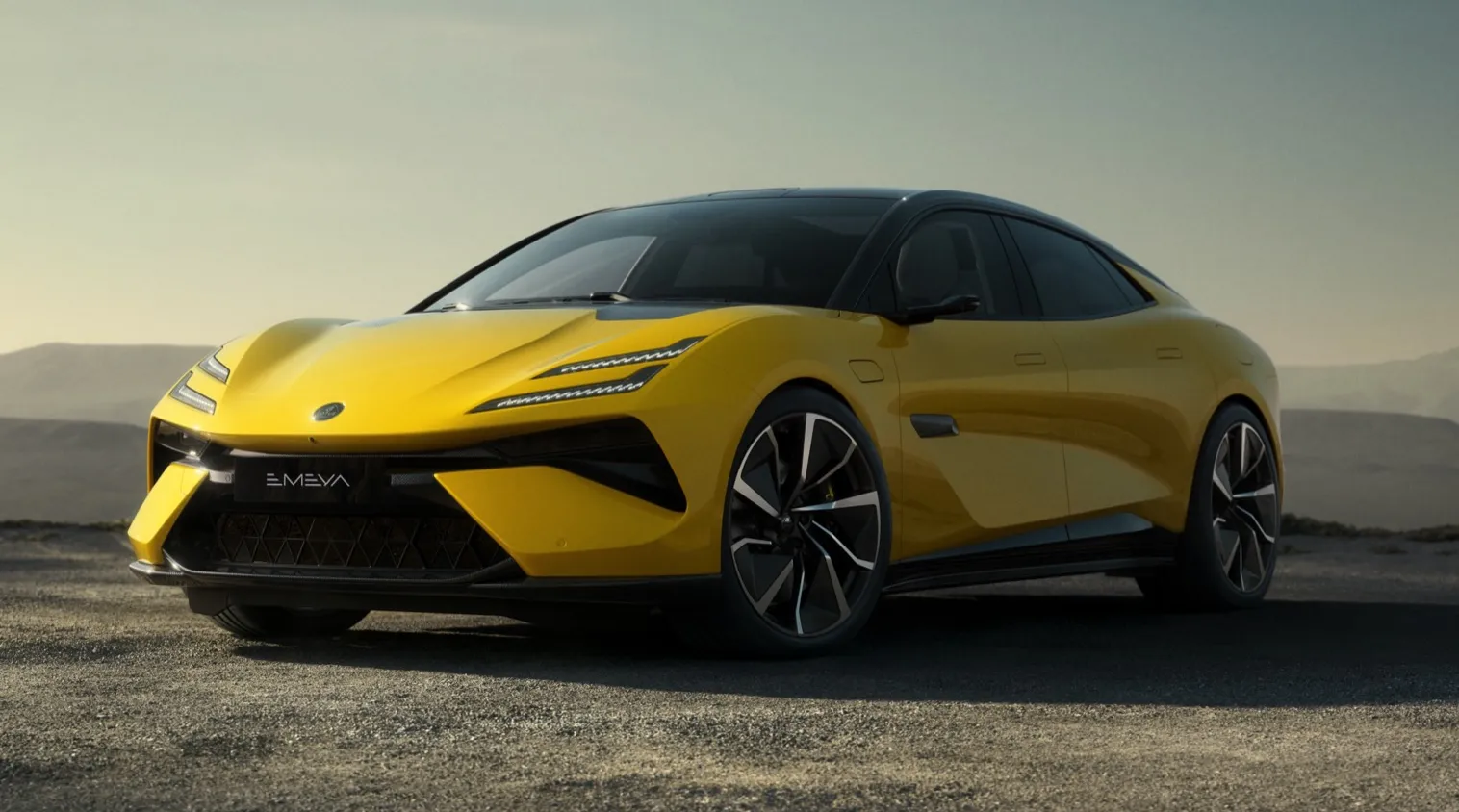
Lotus Emeya
Key Specifications
Real Range Estimation
| City - Cold Weather * | 495 km |
| Highway - Cold Weather * | 385 km |
| Combined - Cold Weather * | 440 km |
between 385 - 725 km
| City - Mild Weather * | 725 km |
| Highway - Mild Weather * | 495 km |
| Combined - Mild Weather * | 595 km |
Battery
| Nominal Capacity | 102.0 kWh |
| Battery Type | Lithium-ion |
| Number of Cells | No Data |
| Architecture | 800 V |
| Warranty Period | 8 years |
| Warranty Mileage | 200,000 km |
| Useable Capacity | 98.9 kWh |
| Cathode Material | No Data |
| Pack Configuration | No Data |
| Nominal Voltage | 705 V |
| Form Factor | No Data |
| Name / Reference | No Data |
Performance
| Acceleration 0 - 100 km/h | 4.2 sec |
| Top Speed | 250 km/h |
| Electric Range * | 520 km |
| Total Power | 450 kW (612 PS) |
| Total Torque | 710 Nm |
| Drive | AWD |
Home and Destination Charging (0 -> 100%)
Charging is possible by using a regular wall plug or a charging station. Public charging is always done through a charging station. How fast the EV can charge depends on the charging station (EVSE) used and the maximum charging capacity of the EV. The table below shows all possible options for charging the Lotus Emeya. Each option shows how fast the battery can be charged from empty to full.
NOTE: Lotus has not released details about the on-board charger of the Emeya. The information below is based on estimatation of the most likely on-board charger.
Europe
Charging an EV in Europe differs by country. Some European countries primarily use 1-phase connections to the grid, while other countries are almost exclusively using a 3-phase connection. The table below shows all possible ways the Lotus Emeya can be charged, but some modes of charging might not be widely available in certain countries.
| Type 2 (Mennekes - IEC 62196) |
|---|
 |
| Charging Point | Max. Power | Power | Time | Rate |
|---|---|---|---|---|
| Wall Plug (2.3 kW) | 230V / 1x10A | 2.3 kW | 50h45m | 10 km/h |
| 1-phase 16A (3.7 kW) | 230V / 1x16A | 3.7 kW | 31h30m | 17 km/h |
| 1-phase 32A (7.4 kW) | 230V / 1x32A | 7.4 kW | 15h45m | 33 km/h |
| 3-phase 16A (11 kW) | 400V / 3x16A | 11 kW | 10h45m | 48 km/h |
| 3-phase 32A (22 kW) | 400V / 3x32A | 22 kW † | 5h15m | 99 km/h |
† = Limited by on-board charger, vehicle cannot charge faster.
Fast Charging (10 -> 80%)
Rapid charging enables longer journeys by adding as much range as possible in the shortest amount of time. Charging power will decrease significantly after 80% state-of-charge has been reached. A typical rapid charge therefore rarely exceeds 80% SoC. The rapid charge rate of an EV depends on the charger used and the maximum charging power the EV can handle. The table below shows all details for rapid charging the Lotus Emeya.
- Max. Power: maximum power provided by charge point
- Avg. Power: average power provided by charge point over a session from 10% to 80%
- Time: time needed to charge from 10% to 80%
- Rate: average charging speed over a session from 10% to 80%
| Combined Charging System (CCS Combo 2) |
|---|
 |
| Charging Point | Max. Power | Avg. Power | Time | Rate |
|---|---|---|---|---|
| CCS (50 kW DC) | 50 kW | 50 kW | 87 min | 250 km/h |
| CCS (100 kW DC) | 100 kW | 95 kW † | 46 min | 470 km/h |
| CCS (150 kW DC) | 150 kW | 125 kW † | 35 min | 620 km/h |
| CCS (175 kW DC) | 175 kW | 145 kW † | 30 min | 720 km/h |
| CCS (350 kW DC) | 350 kW | 240 kW † | 18 min | 1210 km/h |
| This vehicle does not support Plug & Charge |
|---|
† = Limited by charging capabilities of vehicle
Plug & Charge: allows for automatic initiation of a charging session at supported CCS charging stations in accordance with ISO 15118.
Actual charging rates may differ from data shown due to factors like outside temperature, state of the battery and driving style.
Lotus Claimed Specifications
The table below shows the claimed specifications from the manufacturer for charging the Lotus Emeya. The specifications can differ from the table above for a variety of reasons. If real-world charge tests are available, these differences can be signifcant. If no real-world tests are available, the table above will be based on the manufacturer specifications as per the table below.
- Max. Power: maximum charge power during charging session
- Charge From: battery percentage (% SoC) where charging session is started
- Charge To: battery percentage (% SoC) where charging session is ended
- Time: time needed for charging session
| Lotus Claimed Specifications |
|---|
| Max. Power | Charge From | Charge To | Time |
|---|---|---|---|
| 350 kW | 10 % | 80 % | 18 min |
Dimensions and Weight
| Length | 5139 mm |
| Width | 2005 mm |
| Width with mirrors | No Data |
| Height | 1464 mm |
| Wheelbase | 3069 mm |
| Weight Unladen (EU) | 2550 kg |
| Gross Vehicle Weight (GVWR) | 3100 kg |
| Max. Payload | 625 kg |
| Cargo Volume | 509 L |
| Cargo Volume Max | 1388 L |
| Cargo Volume Frunk | 34 L |
| Roof Load | No Data |
| Tow Hitch Possible | Yes |
| Towing Weight Unbraked | No Data |
| Towing Weight Braked | 2250 kg |
| Vertical Load Max | No Data |
About this Vehicle
Lotus Emeya Overview
The Lotus Emeya is a premium all-electric “hyper-GT” positioned as a high-performance alternative to mainstream luxury EV sedans like the Tesla Model S and Porsche Taycan. As a flagship Lotus electric sedan, it targets drivers who want supercar-level acceleration, long-distance comfort, and cutting-edge tech in a sleek four-door liftback body. With pricing starting around £89,500 in key markets and higher for Emeya S and Emeya R variants, it clearly aims at the upper end of the EV market.
Built on Geely’s EPA 800V dedicated EV platform, the Lotus Emeya blends classic Lotus handling DNA with modern electric performance, advanced driver assistance, and an intelligent, connected cabin. The design focuses on aero efficiency with a drag coefficient of just 0.21, helping both performance and electric vehicle range. Inside, the Emeya showcases sustainable materials, KEF premium audio, and high-resolution digital displays, positioning it as a technology-forward luxury GT. For buyers researching “Lotus Emeya review” or “Emeya EV specs,” this model stands out as one of the most exciting performance-focused electric vehicles currently available.
Lotus Emeya Performance and Driving Experience
In Emeya S form, the car uses a dual-motor AWD setup delivering 450 kW (603 hp) and 710 Nm of torque, while the range-topping Emeya R pushes up to about 675 kW (905–918 hp) and 985 Nm. This translates to instant, seamless acceleration, with the Emeya S sprinting from 0–60 mph in 4.1 seconds and on to a 155 mph (250 km/h) top speed. The Emeya R is even quicker, targeting supercar-rivalling times.
True to Lotus heritage, the Emeya focuses on agility as much as straight-line pace. The low center of gravity, near 50:50 weight distribution, sophisticated suspension, and rear-biased AWD calibration give it sharp turn-in and strong grip while maintaining GT-level refinement on the highway. Steering is precise and communicative for an EV, making the Emeya feel more like a sports car than a traditional large luxury sedan in real-world driving.
| Specification | Value |
|---|---|
| 0-60 mph (0-100 km/h) | 4.1 / 4.2 sec (Emeya S) |
| Top Speed | 155 mph / 250 km/h (Emeya S) |
| Power Output | 603 hp / 450 kW (Emeya S) |
| Torque | 524 lb-ft / 710 Nm (Emeya S) |
Lotus Emeya Range and Battery Specifications
The Lotus Emeya WLTP range varies by configuration, but the Emeya S with its 102 kWh battery (100 kWh usable) is rated up to 610 km (379 miles) on the WLTP cycle in its most efficient TEL specification, with 499 km (310 miles) in TEH trim. Real-world range will depend heavily on driving style and conditions, but you can reasonably expect around 280–320 miles (450–515 km) in mixed use for the Emeya S. The broader Emeya lineup is quoted between roughly 610 km and 435 km of WLTP range depending on power level and wheels.
The Lotus Emeya battery specs include a 102 kWh lithium-ion pack and 800V electrical architecture, enabling both strong performance and high-efficiency long-distance cruising. WLTP consumption for the Emeya S is as low as 16.5 kWh/100 km under optimal conditions, reflecting its aerodynamic design. Weather, high-speed driving, mountainous terrain, and heavy loads will all reduce the Lotus Emeya’s real-world range, but its efficient drivetrain and large battery make it an excellent GT for long journeys.
| Range Metric | Value |
|---|---|
| WLTP Range | 379 miles / 610 km (TEL, Emeya S) |
| EPA Range | TBC (not yet officially published) |
| Real-World Range | ~280–320 miles / 450–515 km (estimate, Emeya S) |
| Battery Capacity | 100 kWh (usable) |
Lotus Emeya Charging Times and Options
The Lotus Emeya supports up to 22 kW AC charging via its onboard charger, making it ideal for faster home or workplace charging on three-phase power. On a typical 7 kW home wallbox, a full charge from near empty will take roughly 14–15 hours, while a 22 kW AC charger can cut that to around 6–7 hours.
On the road, the Emeya’s 800V system enables DC fast charging at up to 350 kW, branded as Lotus Hyper Charging. Under optimal conditions, this allows a 10–80% charge in around 18–20 minutes when connected to a capable ultra-rapid charger, making it highly practical for long-distance travel. It uses the CCS connector and is compatible with most major fast-charging networks across Europe and other supported markets. For typical owners, that means overnight home charging for daily use and quick DC top-ups on longer trips.
| Charging Method | Time | Speed |
|---|---|---|
| Level 1 (120V) | ~40–48 hours (0–100%) | ~2 kW |
| Level 2 (240V/7kW) | ~14–15 hours (0–100%) | ~7 kW |
| Level 2 (240V/11kW) | ~9–10 hours (0–100%) | ~11 kW |
| DC Fast Charge (10-80%) | ~18–20 min | up to 350 kW |
Lotus Emeya vs Competitors
In a Lotus Emeya vs Tesla Model S comparison, the Emeya focuses more on driver involvement and chassis feel, while the Model S emphasizes efficiency and software. Against the Porsche Taycan and Audi e-tron GT, the Emeya often undercuts on price while offering competitive or superior power and range, plus 800V charging like the Taycan. Compared with the BMW i5 or Mercedes EQE, the Lotus Emeya is significantly sportier, with more aggressive acceleration and sharper dynamics, making it the enthusiast’s choice among premium electric GT sedans.
Frequently Asked Questions
Related Vehicles
View All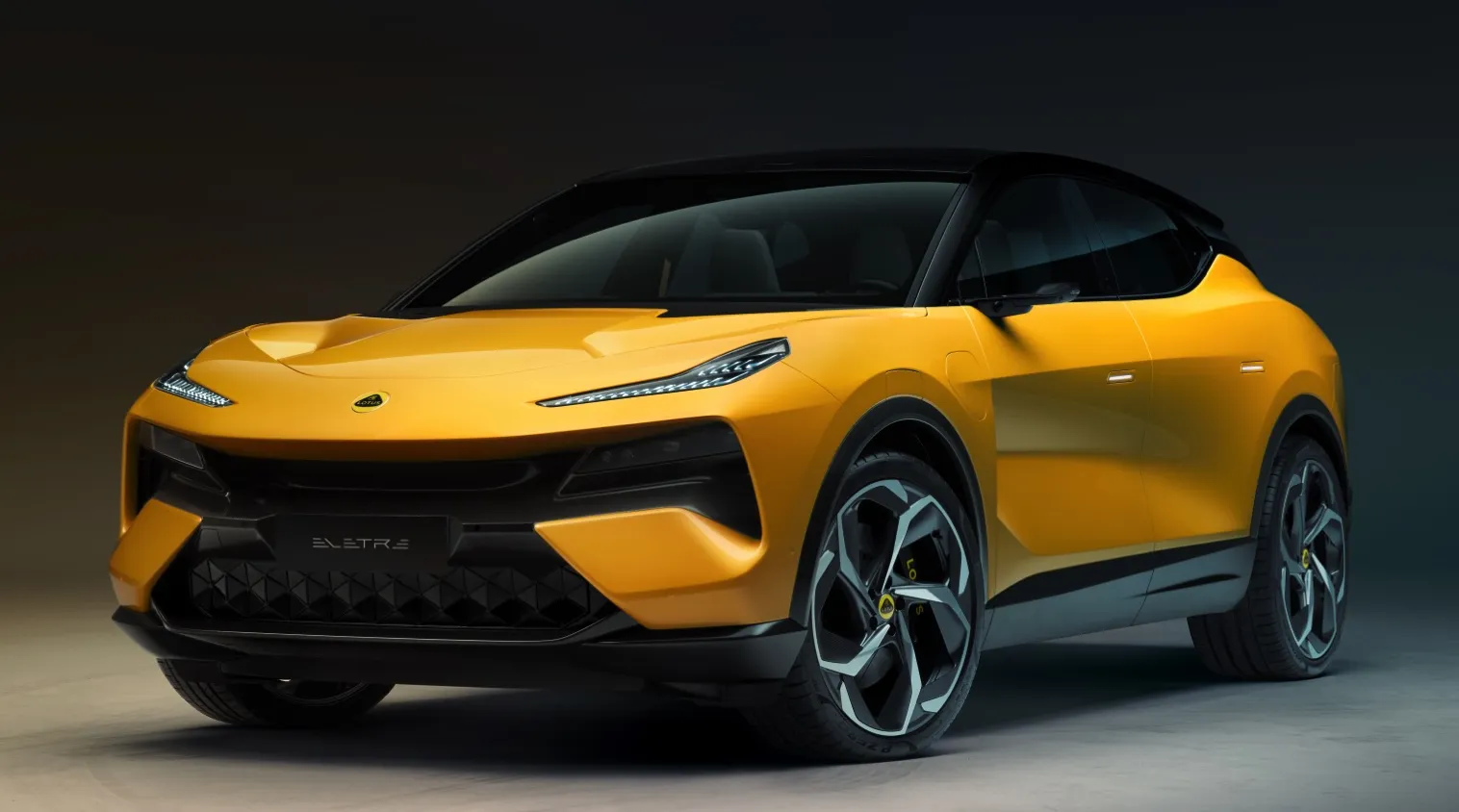 Lotus
Lotus
Lotus Eletre
 Lotus
Lotus
Lotus Eletre R
 Lotus
Lotus
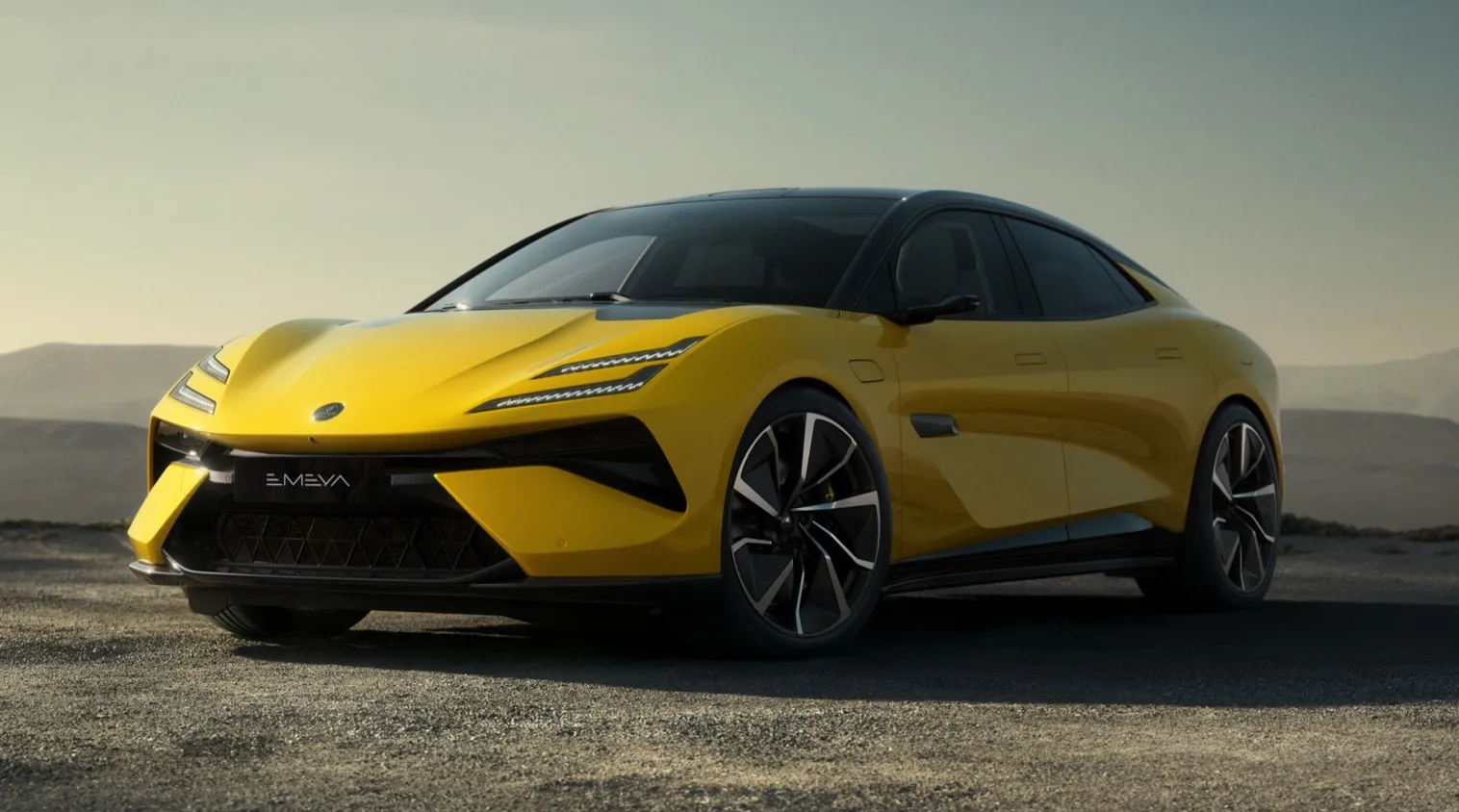
Lotus Emeya R
 Lotus
Lotus