

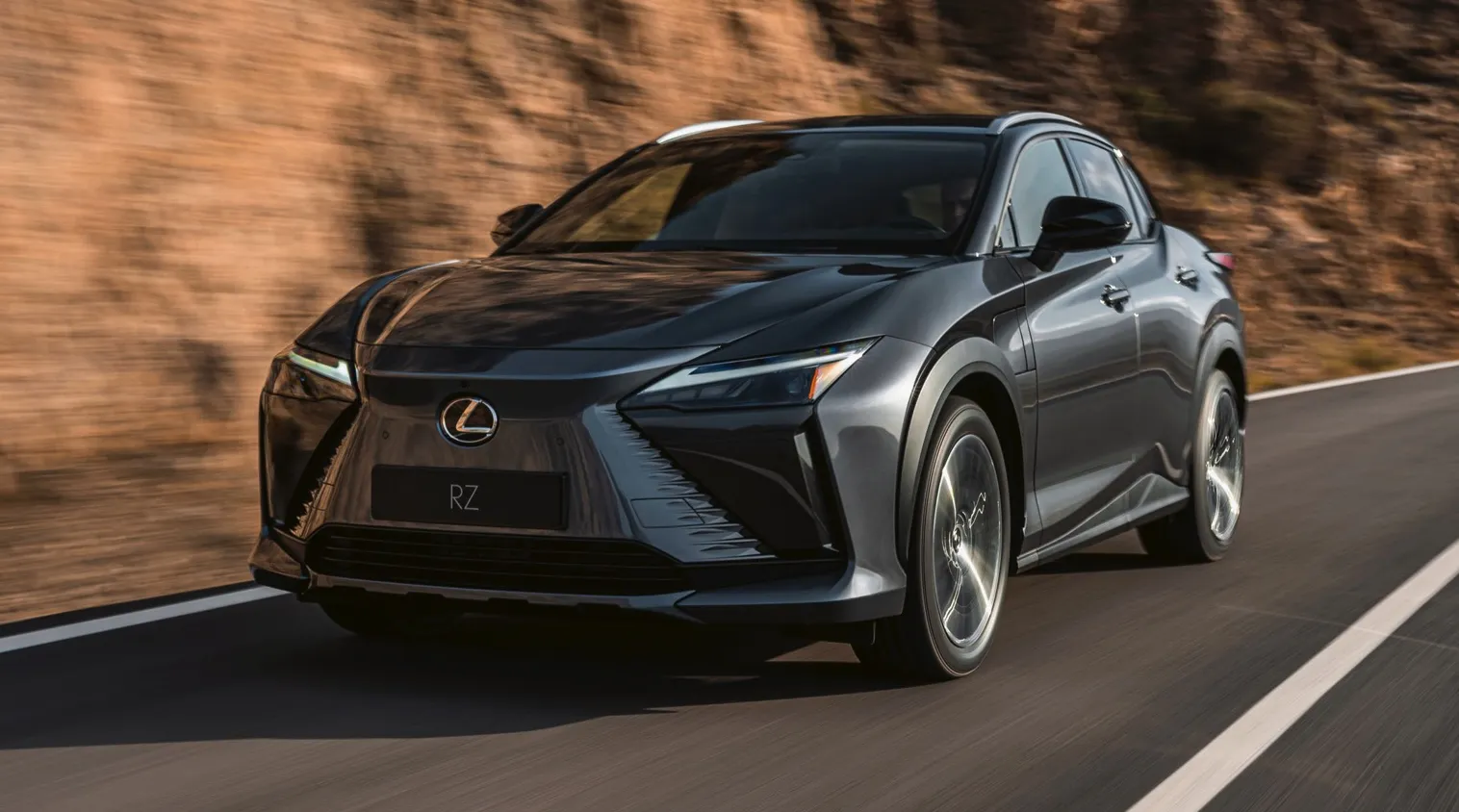
Lexus RZ 300e
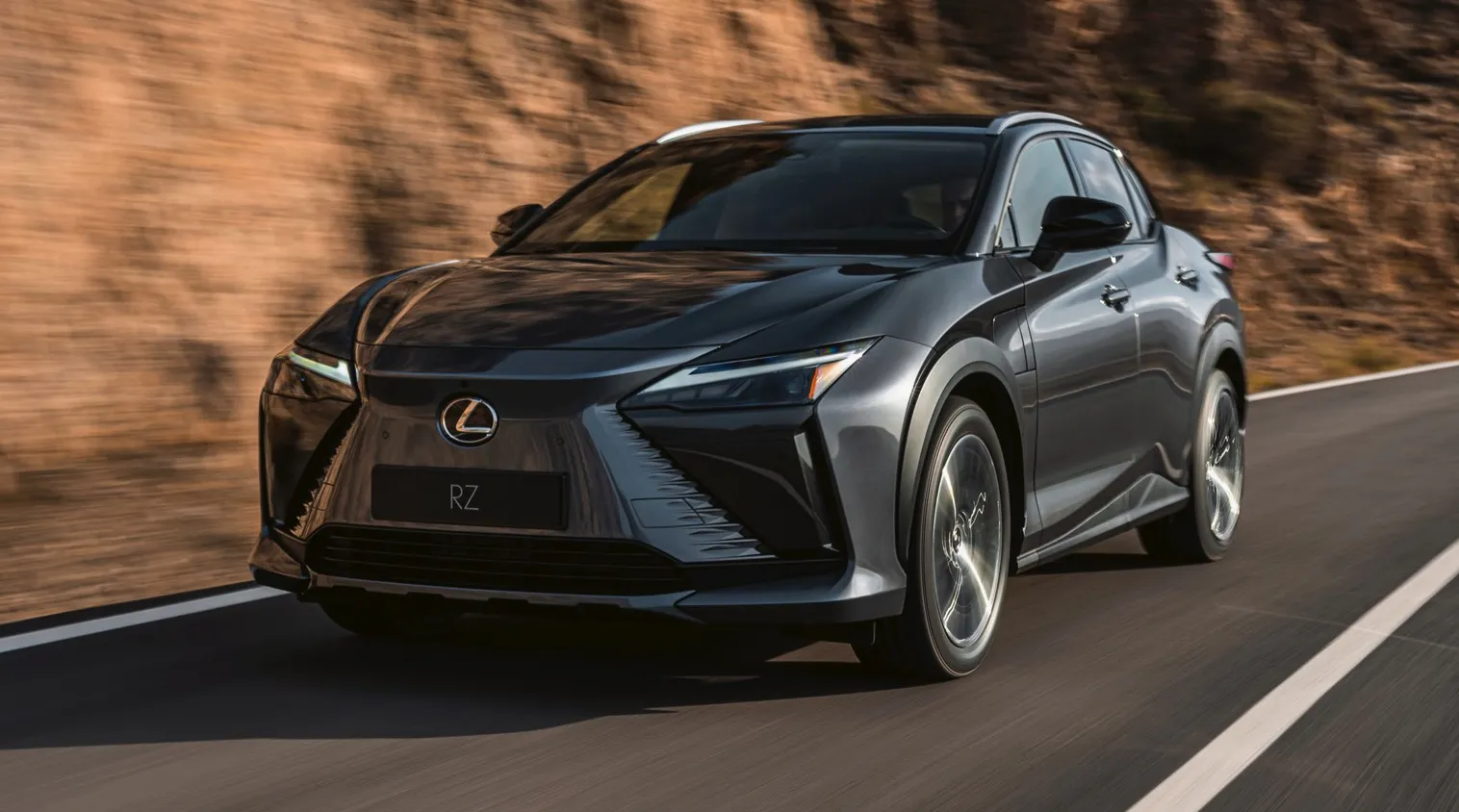
Key Specifications
Real Range
| City - Cold Weather | 355 km |
| Highway - Cold Weather | 260 km |
| Combined - Cold Weather | 305 km |
between 260 - 530 km
| City - Mild Weather | 530 km |
| Highway - Mild Weather | 335 km |
| Combined - Mild Weather | 415 km |
Battery
| Nominal Capacity | 71.4 kWh |
| Battery Type | Lithium-ion |
| Number of Cells | 96 |
| Architecture | 400 V |
| Warranty Period | 8 years |
| Warranty Mileage | 160,000 km |
| Useable Capacity | 64.0 kWh |
| Cathode Material | No Data |
| Pack Configuration | 96s1p |
| Nominal Voltage | 355 V |
| Form Factor | No Data |
| Name / Reference | No Data |
Performance
| Acceleration 0 - 100 km/h | 8.0 sec |
| Top Speed | 160 km/h |
| Electric Range | 365 km |
| Total Power | 150 kW (204 PS) |
| Total Torque | 266 Nm |
| Drive | Front |
Home and Destination Charging (0 -> 100%)
Charging is possible by using a regular wall plug or a charging station. Public charging is always done through a charging station. How fast the EV can charge depends on the charging station (EVSE) used and the maximum charging capacity of the EV. The table below shows all possible options for charging the Lexus RZ 300e. Each option shows how fast the battery can be charged from empty to full.
Europe
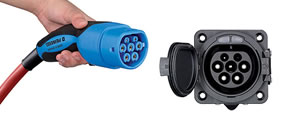
Charging an EV in Europe differs by country. Some European countries primarily use 1-phase connections to the grid, while other countries are almost exclusively using a 3-phase connection. The table below shows all possible ways the Lexus RZ 300e can be charged, but some modes of charging might not be widely available in certain countries.
| Type 2 (Mennekes - IEC 62196) |
|---|
 |
| Charging Point | Max. Power | Power | Time | Rate |
|---|---|---|---|---|
| Standard 6.6 kW On-Board Charger | ||||
| Wall Plug (2.3 kW) | 230V / 1x10A | 2.3 kW | 32h45m | 11 km/h |
| 1-phase 16A (3.7 kW) | 230V / 1x16A | 3.7 kW | 20h30m | 18 km/h |
| 1-phase 32A (7.4 kW) | 230V / 1x29A | 6.6 kW † | 11h30m | 32 km/h |
| 3-phase 16A (11 kW) | 230V / 1x16A | 3.7 kW † | 20h30m | 18 km/h |
| 3-phase 32A (22 kW) | 230V / 1x29A | 6.6 kW † | 11h30m | 32 km/h |
| Optional 11.0kW On-Board Charger * | ||||
| Wall Plug (2.3 kW) | 230V / 1x10A | 2.3 kW | 32h45m | 11 km/h |
| 1-phase 16A (3.7 kW) | 230V / 1x16A | 3.7 kW | 20h30m | 18 km/h |
| 1-phase 32A (7.4 kW) | 230V / 1x32A | 7.4 kW | 10h15m | 36 km/h |
| 3-phase 16A (11 kW) | 400V / 3x16A | 11 kW | 7 hours | 52 km/h |
| 3-phase 32A (22 kW) | 400V / 3x16A | 11 kW † | 7 hours | 52 km/h |
† = Limited by on-board charger, vehicle cannot charge faster.
* = Optional in some countries, standard in others. Check local specifications for details.
Fast Charging (10 -> 80%)
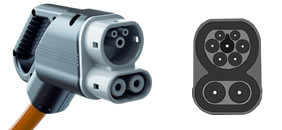
Rapid charging enables longer journeys by adding as much range as possible in the shortest amount of time. Charging power will decrease significantly after 80% state-of-charge has been reached. A typical rapid charge therefore rarely exceeds 80% SoC. The rapid charge rate of an EV depends on the charger used and the maximum charging power the EV can handle. The table below shows all details for rapid charging the Lexus RZ 300e.
- Max. Power: maximum power provided by charge point
- Avg. Power: average power provided by charge point over a session from 10% to 80%
- Time: time needed to charge from 10% to 80%
- Rate: average charging speed over a session from 10% to 80%
| Combined Charging System (CCS Combo 2) |
|---|
 |
| Charging Point | Max. Power | Avg. Power | Time | Rate |
|---|---|---|---|---|
| CCS (50 kW DC) | 50 kW | 40 kW † | 71 min | 210 km/h |
| CCS (100 kW DC) | 100 kW | 75 kW † | 38 min | 400 km/h |
| CCS (150 kW DC) | 147 kW † | 100 kW † | 28 min | 540 km/h |
| This vehicle supports Autocharge |
|---|
| This vehicle does not support Plug & Charge |
† = Limited by charging capabilities of vehicle
Autocharge: allows for automatic initiation of a charging session at supported CCS charging stations.
Plug & Charge: allows for automatic initiation of a charging session at supported CCS charging stations in accordance with ISO 15118.
Actual charging rates may differ from data shown due to factors like outside temperature, state of the battery and driving style.
Lexus Claimed Specifications
The table below shows the claimed specifications from the manufacturer for charging the Lexus RZ 300e. The specifications can differ from the table above for a variety of reasons. If real-world charge tests are available, these differences can be signifcant. If no real-world tests are available, the table above will be based on the manufacturer specifications as per the table below.
- Max. Power: maximum charge power during charging session
- Charge From: battery percentage (% SoC) where charging session is started
- Charge To: battery percentage (% SoC) where charging session is ended
- Time: time needed for charging session
| Lexus Claimed Specifications |
|---|
| Max. Power | Charge From | Charge To | Time |
|---|---|---|---|
| 150 kW | No Data | No Data | No Data |
Dimensions and Weight
| Length | 4690 mm |
| Width | 1860 mm |
| Width with mirrors | No Data |
| Height | 1600 mm |
| Wheelbase | 2850 mm |
| Weight Unladen (EU) | 2030 kg |
| Gross Vehicle Weight (GVWR) | 2520 kg |
| Max. Payload | 565 kg |
| Cargo Volume | 522 L |
| Cargo Volume Max | No Data |
| Cargo Volume Frunk | No Data |
| Roof Load | 80 kg |
| Tow Hitch Possible | Yes |
| Towing Weight Unbraked | 750 kg |
| Towing Weight Braked | 750 kg |
| Vertical Load Max | 75 kg |
About this Vehicle
# 2026 Lexus RZ 350e: Premium Electric SUV with Enhanced Range and Performance
Lexus RZ 350e Overview
The Lexus RZ 350e represents Lexus’s commitment to the premium electric vehicle segment, positioning itself as a sophisticated alternative to mainstream EV competitors. Previously badged as the RZ 300e, the 2026 Lexus RZ 350e has undergone significant improvements that address previous criticisms about range and power delivery. This compact electric SUV targets affluent buyers seeking luxury, reliability, and practicality in an electric package, combining Lexus’s renowned build quality with modern EV technology.
The Lexus RZ 350e sits on a dedicated electric platform shared with Toyota’s bZ4X and Subaru’s Solterra, ensuring engineering excellence and component reliability. The 2026 model year marks a turning point for the RZ lineup, with Lexus introducing a more powerful base model, extended range capabilities, and a new high-performance F SPORT variant. The Lexus RZ now offers three distinct powertrains—the efficient 350e, the balanced 450e AWD, and the spirited 550e F SPORT—allowing buyers to choose their ideal balance of efficiency, performance, and capability.
What distinguishes the Lexus RZ 350e in the competitive EV landscape is its emphasis on refined driving dynamics, premium interior materials, and advanced technology features like steer-by-wire steering and an electrochromic panoramic glass roof. For buyers prioritizing a luxury electric SUV experience over raw performance, the Lexus RZ delivers compelling value with improved specifications that finally make it genuinely competitive against established EV rivals.
Lexus RZ 350e Performance and Driving Experience
The Lexus RZ 350e delivers a noticeable performance upgrade for 2026, with its single front-mounted electric motor now producing 221 horsepower—a 20-horsepower increase over the previous generation. This translates to more responsive acceleration and confident highway merging, though the Lexus RZ 350e prioritizes smooth, refined power delivery over aggressive performance. The front-wheel-drive configuration provides predictable handling characteristics ideal for daily driving, with the electric motor’s instant torque delivery creating a seamless driving experience.
The Lexus RZ 350e exhibits composed handling through corners, benefiting from its low center of gravity thanks to floor-mounted battery placement. While not a performance-focused vehicle, the Lexus RZ offers an engaging steering feel enhanced by the new steer-by-wire system, which eliminates mechanical linkage for a more responsive connection between driver input and wheel movement. Real-world driving impressions highlight the Lexus RZ 350e’s quiet cabin, smooth acceleration, and comfortable ride quality that appeals to luxury-focused buyers.
| Specification | Value |
|---|---|
| 0-60 mph (0-100 km/h) | 7.0 sec |
| Top Speed | 103 mph / 166 km/h |
| Power Output | 221 hp / 165 kW |
| Torque | 196 lb-ft / 265 Nm |
Lexus RZ 350e Range and Battery Specifications
The Lexus RZ 350e achieves an estimated EPA range of 300 miles, a significant 36-mile improvement over the previous model year. This breakthrough range addresses one of the primary criticisms of earlier RZ models and positions the Lexus RZ 350e as a genuinely practical daily driver for most American households. The battery capacity remains at approximately 71.4 kWh (usable), with improved chemistry and thermal management enabling the extended range without substantial weight penalties.
Real-world range for the Lexus RZ 350e typically falls between 280-295 miles depending on driving conditions, weather, and driving style. Cold temperatures can reduce range by 10-15%, while highway driving at consistent speeds yields better efficiency than city driving. The Lexus RZ 350e achieves approximately 3.5-4.0 miles per kWh under normal conditions, demonstrating respectable energy efficiency for a premium compact SUV.
| Range Metric | Value |
|---|---|
| EPA Range | 300 miles / 483 km |
| Real-World Range | 280-295 miles / 451-475 km |
| Battery Capacity | 71.4 kWh (usable) |
| Energy Efficiency | 3.5-4.0 mi/kWh |
Lexus RZ 350e Charging Times and Options
The Lexus RZ 350e supports multiple charging scenarios for maximum convenience. Home charging via a Level 2 charger (240V/11kW) adds approximately 30-35 miles of range per hour, making overnight charging practical for most daily commutes. The Lexus RZ 350e features an 11-kW onboard charger that maximizes AC charging speed, reducing home charging time compared to previous models.
DC fast charging represents the Lexus RZ 350e’s strongest advantage for road trips, with peak charging speeds reaching 150 kW. Lexus claims the Lexus RZ 350e can charge from 10-80% in approximately 30 minutes on compatible DC fast chargers, enabling practical long-distance travel. The Lexus RZ 350e is compatible with major charging networks including Tesla Superchargers (with adapter), Electrify America, and EVgo stations.
| Charging Method | Time | Speed |
|---|---|---|
| Level 1 (120V) | 28-32 hours | ~1.4 kW |
| Level 2 (240V/7kW) | 12-14 hours | ~7 kW |
| Level 2 (240V/11kW) | 8-9 hours | ~11 kW |
| DC Fast Charge (10-80%) | ~30 min | up to 150 kW |
Lexus RZ 350e vs Competitors
The Lexus RZ 350e competes directly with the Tesla Model Y (base RWD), BMW iX xDrive40, and Audi Q4 e-tron. Compared to the Tesla Model Y, the Lexus RZ 350e offers superior interior quality and luxury appointments, though the Model Y provides slightly better acceleration and charging infrastructure. Against the BMW iX xDrive40, the Lexus RZ 350e delivers comparable range and performance at a lower price point, with the Lexus RZ emphasizing reliability and traditional luxury features. The Lexus RZ 350e undercuts the Audi Q4 e-tron on price while matching its range and efficiency, making the Lexus RZ an excellent value proposition in the premium compact EV SUV segment.
Frequently Asked Questions
Related Vehicles
View All Lexus
Lexus
Lexus UX 300e
 Lexus
Lexus