

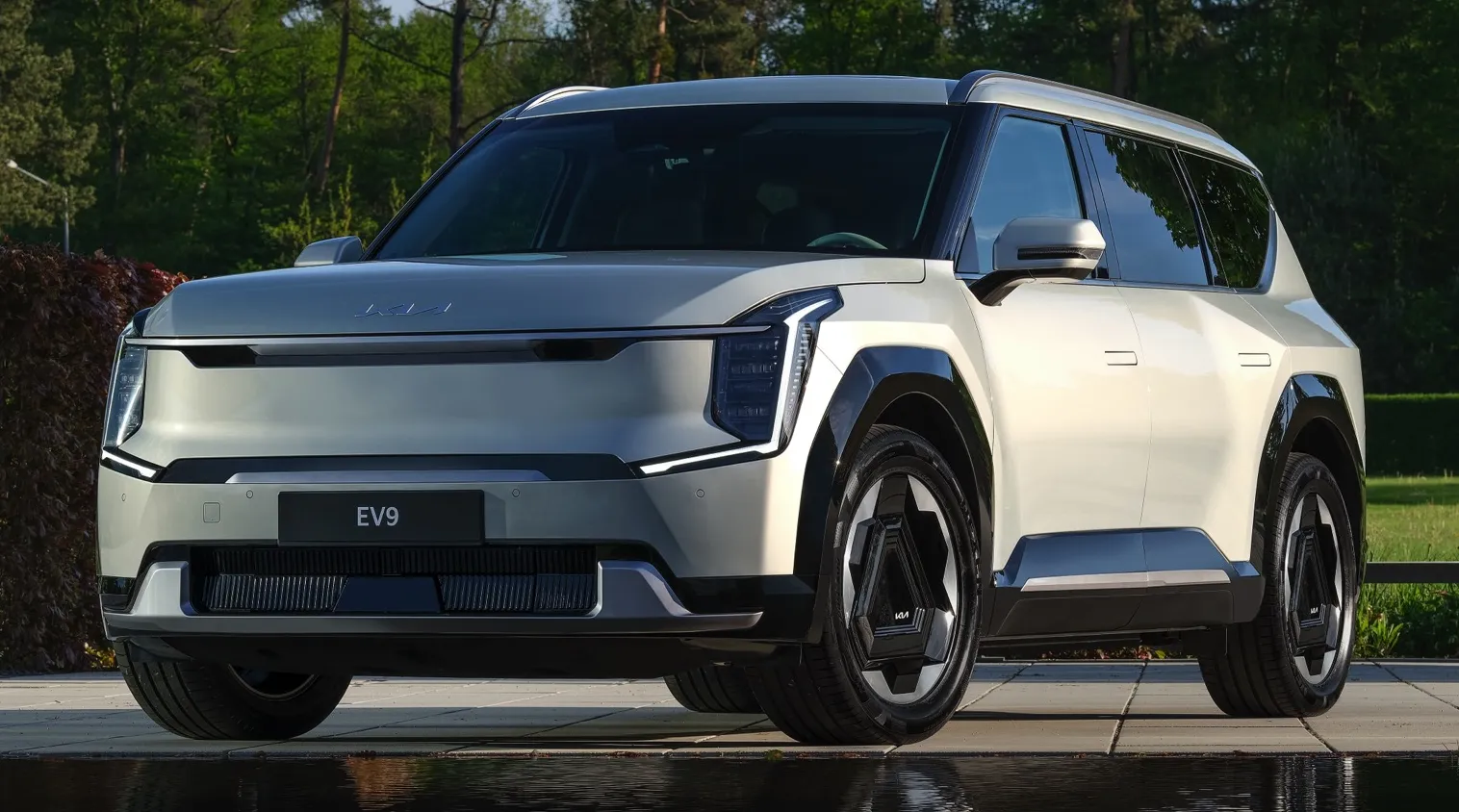
Kia EV9 76.1 kWh RWD
Key Specifications
Real Range Estimation
| City - Cold Weather * | 355 km |
| Highway - Cold Weather * | 250 km |
| Combined - Cold Weather * | 300 km |
between 250 - 515 km
| City - Mild Weather * | 515 km |
| Highway - Mild Weather * | 320 km |
| Combined - Mild Weather * | 400 km |
Battery
| Nominal Capacity | 76.1 kWh |
| Battery Type | Lithium-ion |
| Number of Cells | No Data |
| Architecture | 800 V |
| Warranty Period | 7 years |
| Warranty Mileage | 150,000 km |
| Useable Capacity* | 73.0 kWh |
| Cathode Material | No Data |
| Pack Configuration | No Data |
| Nominal Voltage | 632 V |
| Form Factor | No Data |
| Name / Reference | No Data |
Performance
| Acceleration 0 - 100 km/h | 8.5 sec |
| Top Speed | 190 km/h |
| Electric Range * | 355 km |
| Total Power | 160 kW (218 PS) |
| Total Torque | 350 Nm |
| Drive | Rear |
Home and Destination Charging (0 -> 100%)
Charging is possible by using a regular wall plug or a charging station. Public charging is always done through a charging station. How fast the EV can charge depends on the charging station (EVSE) used and the maximum charging capacity of the EV. The table below shows all possible options for charging the Kia EV9 76.1 kWh RWD. Each option shows how fast the battery can be charged from empty to full.
Europe
Charging an EV in Europe differs by country. Some European countries primarily use 1-phase connections to the grid, while other countries are almost exclusively using a 3-phase connection. The table below shows all possible ways the Kia EV9 76.1 kWh RWD can be charged, but some modes of charging might not be widely available in certain countries.
| Type 2 (Mennekes - IEC 62196) |
|---|
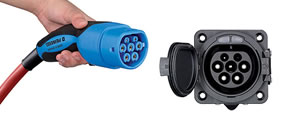 |
| Charging Point | Max. Power | Power | Time | Rate |
|---|---|---|---|---|
| Wall Plug (2.3 kW) | 230V / 1x10A | 2.3 kW | 37h30m | 9 km/h |
| 1-phase 16A (3.7 kW) | 230V / 1x16A | 3.7 kW | 23h15m | 15 km/h |
| 1-phase 32A (7.4 kW) | 230V / 1x32A | 7.4 kW | 11h45m | 30 km/h |
| 3-phase 16A (11 kW) | 400V / 3x16A | 11 kW | 8 hours | 44 km/h |
| 3-phase 32A (22 kW) | 400V / 3x16A | 11 kW † | 8 hours | 44 km/h |
† = Limited by on-board charger, vehicle cannot charge faster.
Fast Charging (10 -> 80%)
Rapid charging enables longer journeys by adding as much range as possible in the shortest amount of time. Charging power will decrease significantly after 80% state-of-charge has been reached. A typical rapid charge therefore rarely exceeds 80% SoC. The rapid charge rate of an EV depends on the charger used and the maximum charging power the EV can handle. The table below shows all details for rapid charging the Kia EV9 76.1 kWh RWD.
- Max. Power: maximum power provided by charge point
- Avg. Power: average power provided by charge point over a session from 10% to 80%
- Time: time needed to charge from 10% to 80%
- Rate: average charging speed over a session from 10% to 80%
| Combined Charging System (CCS Combo 2) |
|---|
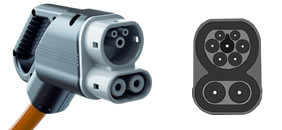 |
| Charging Point | Max. Power | Avg. Power | Time | Rate |
|---|---|---|---|---|
| CCS (50 kW DC) | 50 kW | 50 kW | 65 min | 220 km/h |
| CCS (100 kW DC) | 100 kW | 90 kW † | 36 min | 410 km/h |
| CCS (150 kW DC) | 150 kW | 120 kW † | 27 min | 550 km/h |
| CCS (175 kW DC) | 175 kW | 140 kW † | 23 min | 640 km/h |
| CCS (350 kW DC) | 210 kW † | 160 kW † | 20 min | 740 km/h |
| This vehicle supports Autocharge |
|---|
| This vehicle supports Plug & Charge |
† = Limited by charging capabilities of vehicle
Autocharge: allows for automatic initiation of a charging session at supported CCS charging stations.
Plug & Charge: allows for automatic initiation of a charging session at supported CCS charging stations in accordance with ISO 15118.
Actual charging rates may differ from data shown due to factors like outside temperature, state of the battery and driving style.
Kia Claimed Specifications
The table below shows the claimed specifications from the manufacturer for charging the Kia EV9 76.1 kWh RWD. The specifications can differ from the table above for a variety of reasons. If real-world charge tests are available, these differences can be signifcant. If no real-world tests are available, the table above will be based on the manufacturer specifications as per the table below.
- Max. Power: maximum charge power during charging session
- Charge From: battery percentage (% SoC) where charging session is started
- Charge To: battery percentage (% SoC) where charging session is ended
- Time: time needed for charging session
| Kia Claimed Specifications |
|---|
| Max. Power | Charge From | Charge To | Time |
|---|---|---|---|
| 210 kW | 10 % | 80 % | 20 min |
Dimensions and Weight
| Length | 5010 mm |
| Width | 1980 mm |
| Width with mirrors | 2263 mm |
| Height | 1755 mm |
| Wheelbase | 3100 mm |
| Weight Unladen (EU) | 2312 kg |
| Gross Vehicle Weight (GVWR) | 2960 kg |
| Max. Payload | 723 kg |
| Cargo Volume | 333 L |
| Cargo Volume Max | 2393 L |
| Cargo Volume Frunk | 90 L |
| Roof Load | 65 kg |
| Tow Hitch Possible | Yes |
| Towing Weight Unbraked | 450 kg |
| Towing Weight Braked | 900 kg |
| Vertical Load Max | 45 kg |
About this Vehicle
Kia EV9 76.1 kWh RWD Overview
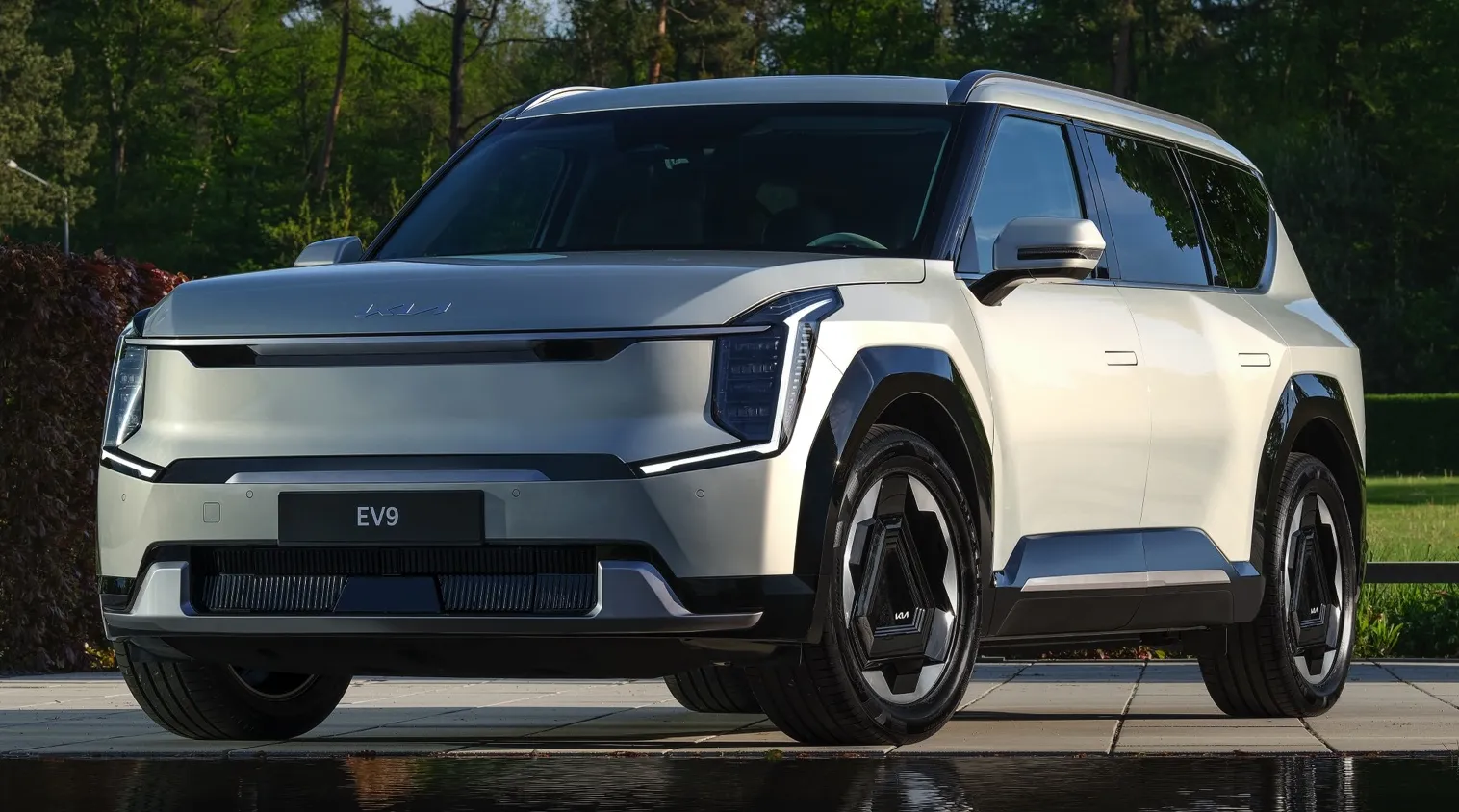
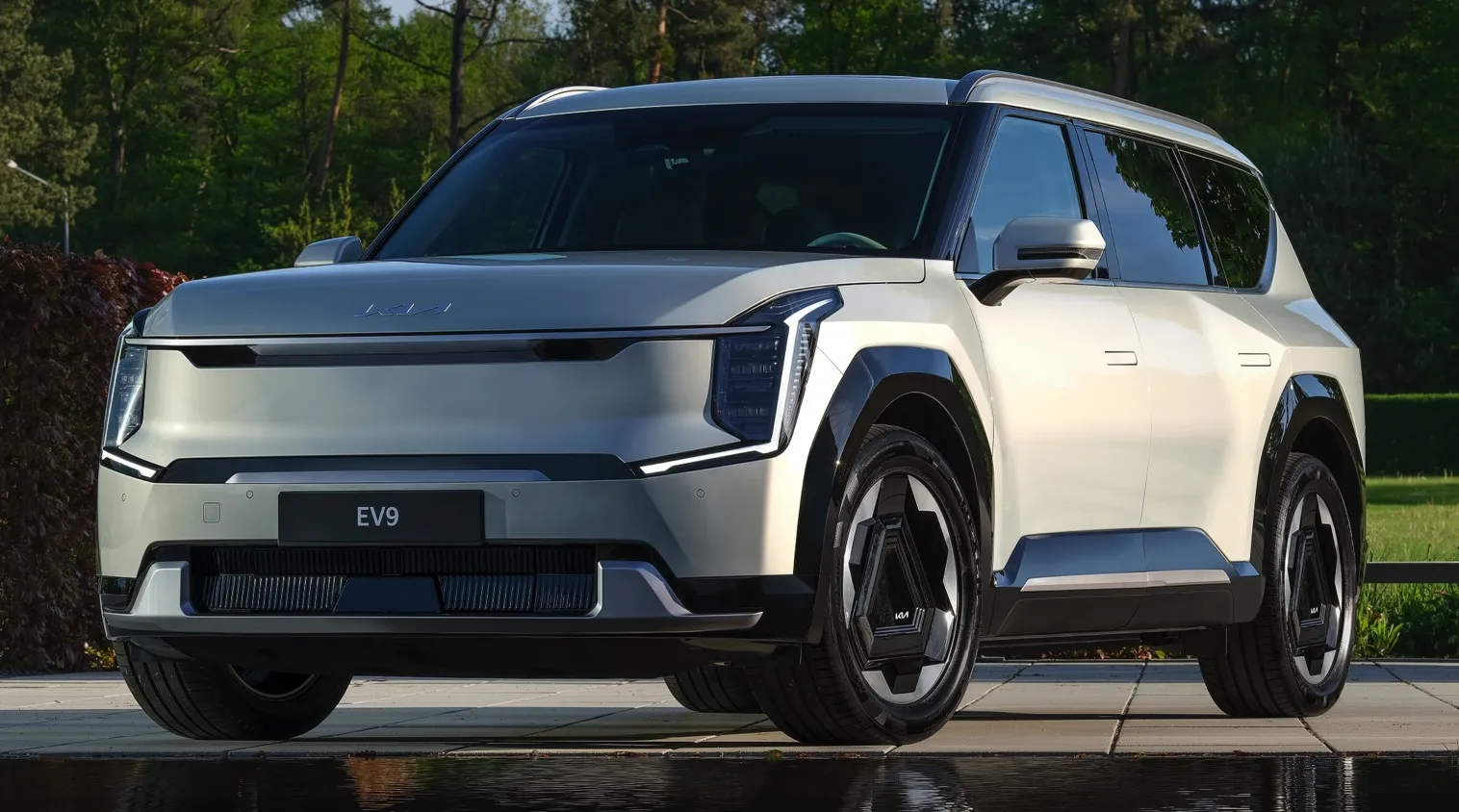
The Kia EV9 76.1 kWh RWD (Light RWD) is positioned as a mainstream three-row electric SUV, offering big-family practicality at a more attainable price point than most premium rivals. As a core Kia electric SUV, it targets drivers who want seven-seat flexibility, modern tech, and everyday usability without stepping up to the larger battery or dual‑motor trims. With an EPA-estimated range of 230 miles from its 76.1 kWh battery, it suits suburban families, commuters, and road‑trip users with access to home or workplace charging.
Built on Kia’s advanced E-GMP 800‑volt platform, the EV9 RWD emphasizes efficiency and charging speed while delivering a calm, comfortable drive rather than outright performance. It features a single rear-mounted motor, rear-wheel drive, and a spacious cabin with 7-passenger seating, a panoramic display, and a strong suite of driver-assistance systems. This model matters in the EV landscape because it brings genuine three-row space, competitive EV specs, and high-speed DC charging to a price class where many alternatives are still smaller two-row crossovers. For shoppers researching a detailed Kia EV9 review, the 76.1 kWh RWD trim is the most affordable gateway into Kia’s flagship electric SUV lineup.
—
Kia EV9 76.1 kWh RWD Performance and Driving Experience
The Kia EV9 76.1 kWh RWD uses a single rear-mounted electric motor rated at 215 hp and around 258 lb-ft of torque, giving it adequate acceleration for everyday use rather than sports-SUV thrills. Power delivery is smooth and linear, with the instant response typical of electric vehicles, and performance feels strongest at city and suburban speeds. Rear-wheel drive helps deliver a balanced, natural steering feel, and the long wheelbase contributes to a stable, relaxed highway ride.
While Kia has not focused this trim on high-performance figures, the EV9 RWD still offers confident merging and passing when driven within its comfort zone. Regenerative braking can be adjusted through drive modes, allowing one-pedal‑style driving in traffic. Overall, the driving experience prioritizes refinement, quietness, and comfort over outright speed, making this electric SUV feel like a family-oriented highway cruiser.
| Specification | Value |
|---|---|
| 0-60 mph (0-100 km/h) | ~8,0–8,5 sec (est.) |
| Top Speed | 118 mph / 190 km/h |
| Power Output | 215 hp / 160 kW |
| Torque | 258 lb-ft / 350 Nm |
—
Kia EV9 76.1 kWh RWD Range and Battery Specifications
The Kia EV9 76.1 kWh RWD WLTP range is not the key figure for U.S. buyers; instead, Kia quotes an EPA-estimated range of 230 miles on a full charge for this lightest battery pack. In real-world mixed driving, expect roughly 200–220 miles depending on speed, temperature, and load. This makes the Kia EV9’s real-world range sufficient for daily commuting, school runs, and moderate weekend trips, especially with frequent overnight charging.
The Kia EV9 battery specs for this trim include a 76.1 kWh lithium-ion pack integrated into the E-GMP platform, supporting 800‑V architecture for ultra-fast DC charging. Efficiency for the RWD model typically falls in the 80–89 MPGe band, translating to roughly 340–380 Wh/mi, with higher consumption at sustained freeway speeds or in cold weather. Factors such as use of climate control, roof cargo boxes, and aggressive driving can all reduce the practical range.
| Range Metric | Value |
|---|---|
| WLTP Range | n/a (focus on EPA) |
| EPA Range | 230 miles / 370 km |
| Real-World Range | ~200–220 miles / ~320–355 km |
| Battery Capacity | 76.1 kWh (usable) |
—
Kia EV9 76.1 kWh RWD Charging Times and Options
The Kia EV9 76.1 kWh RWD supports multiple charging options, from slow overnight top-ups to ultra-fast DC sessions on road trips. On Level 1 (120V) at home, charging is very slow and best used only for emergency top-ups. A Level 2 (240V) home wallbox is the ideal solution, typically adding enough range overnight to cover a full week of commuting for many drivers.
Thanks to its 800‑V charging architecture, the EV9 can take advantage of high‑power DC fast chargers, going from 10–80% in about 24 minutes under optimal conditions. Peak charging speed can reach around 210–215 kW, making it one of the quicker‑charging three-row SUVs on the market. The model uses the NACS (Tesla-style) charging port with a CCS adapter included, improving public charging flexibility at a wide range of networks.
| Charging Method | Time | Speed |
|---|---|---|
| Level 1 (120V) | ~60–70 hours (0–100%) | ~1–1.4 kW |
| Level 2 (240V/7kW) | ~12–13 hours (0–100%) | ~7 kW |
| Level 2 (240V/11kW) | ~8–9 hours (0–100%) | ~11 kW |
| DC Fast Charge (10-80%) | ~24 min | up to ~215 kW |
—
Kia EV9 76.1 kWh RWD vs Competitors
In a Kia EV9 vs Tesla Model Y comparison, the EV9 offers far more interior space and three-row seating, but the Model Y generally delivers longer range and sharper efficiency. Versus the Hyundai Ioniq 5 and Kia EV6, the EV9 76.1 kWh RWD trades some range and agility for significantly more seats and cargo room. Against premium rivals like the Audi Q4 e-tron or Mercedes EQE SUV, the Kia EV9 76.1 kWh RWD undercuts them on price while delivering competitive tech and a stronger value story for families prioritizing space over luxury badges.
—
Frequently Asked Questions
Related Vehicles
View All Kia
Kia
Kia e-Soul 64 kWh
 Kia
Kia
Kia EV9 99.8 kWh AWD
 Kia
Kia
Kia EV9 99.8 kWh RWD
 Kia
Kia