

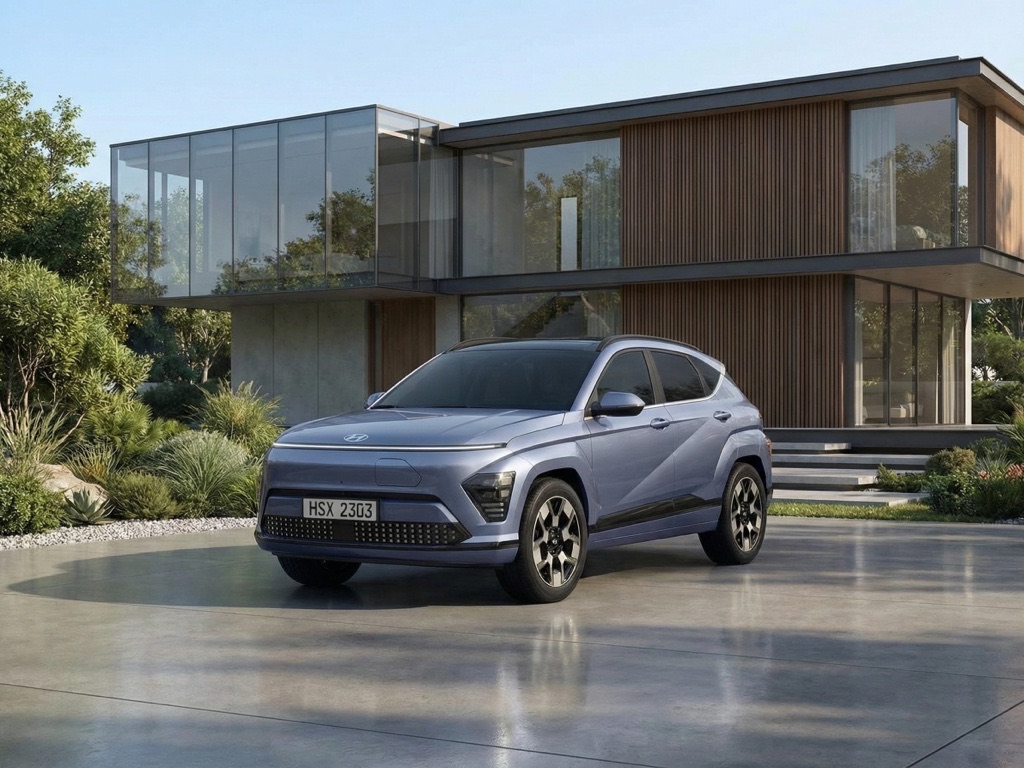
Hyundai Kona Electric 64.8 kWh 2026
Key Specifications
Real Range Estimation
| City - Cold Weather * | 380 km |
| Highway - Cold Weather * | 275 km |
| Combined - Cold Weather * | 325 km |
| City - Mild Weather * | 570 km |
| Highway - Mild Weather * | 355 km |
| Combined - Mild Weather * | 445 km |
Battery
| Nominal Capacity * | 68.0 kWh |
| Battery Type | Lithium-ion |
| Number of Cells | 96 |
| Architecture | 400 V |
| Warranty Period | 8 years |
| Warranty Mileage | 160,000 km |
| Useable Capacity | 64.8 kWh |
| Cathode Material | No Data |
| Pack Configuration | 96s1p |
| Nominal Voltage | 358 V |
| Form Factor | No Data |
| Name / Reference | No Data |
Performance
| Acceleration 0 - 100 km/h | 8.1 sec |
| Top Speed | 172 km/h |
| Electric Range * | 385 km |
| Total Power | 150 kW (204 PS) |
| Total Torque | 255 Nm |
| Drive | Front |
Home and Destination Charging (0 -> 100%)
Charging is possible by using a regular wall plug or a charging station. Public charging is always done through a charging station. How fast the EV can charge depends on the charging station (EVSE) used and the maximum charging capacity of the EV. The table below shows all possible options for charging the Hyundai Kona Electric 64.8 kWh. Each option shows how fast the battery can be charged from empty to full.
Europe
Charging an EV in Europe differs by country. Some European countries primarily use 1-phase connections to the grid, while other countries are almost exclusively using a 3-phase connection. The table below shows all possible ways the Hyundai Kona Electric 64.8 kWh can be charged, but some modes of charging might not be widely available in certain countries.
Type 2 (Mennekes - IEC 62196)

| Charging Point | Max. Power | Power | Time | Rate |
|---|---|---|---|---|
| Wall Plug (2.3 kW) | 230V / 1x10A | 2.3 kW | 33h15m | 12 km/h |
| 1-phase 16A (3.7 kW) | 230V / 1x16A | 3.7 kW | 20h45m | 19 km/h |
| 1-phase 32A (7.4 kW) | 230V / 1x32A | 7.4 kW | 10h30m | 37 km/h |
| 3-phase 16A (11 kW) | 400V / 3x16A | 11 kW | 7 hours | 55 km/h |
| 3-phase 32A (22 kW) | 400V / 3x16A | 11 kW † | 7 hours | 55 km/h |
† = Limited by on-board charger, vehicle cannot charge faster.
Fast Charging (10 -> 80%)
Rapid charging enables longer journeys by adding as much range as possible in the shortest amount of time. Charging power will decrease significantly after 80% state-of-charge has been reached. A typical rapid charge therefore rarely exceeds 80% SoC. The rapid charge rate of an EV depends on the charger used and the maximum charging power the EV can handle. The table below shows all details for rapid charging the Hyundai Kona Electric 64.8 kWh.
- Max. Power: maximum power provided by charge point
- Avg. Power: average power provided by charge point over a session from 10% to 80%
- Time: time needed to charge from 10% to 80%
- Rate: average charging speed over a session from 10% to 80%
Combined Charging System (CCS Combo 2)

| Charging Point | Max. Power | Avg. Power | Time | Rate |
|---|---|---|---|---|
| CCS (50 kW DC) | 50 kW | 40 kW † | 72 min | 220 km/h |
| CCS (100 kW DC) | 94 kW † | 70 kW † | 41 min | 390 km/h |
| CCS (150 kW DC) | 94 kW † | 70 kW † | 41 min | 390 km/h |
This vehicle supports Autocharge
This vehicle supports Plug & Charge
† = Limited by charging capabilities of vehicle
Autocharge: allows for automatic initiation of a charging session at supported CCS charging stations.
Plug & Charge: allows for automatic initiation of a charging session at supported CCS charging stations in accordance with ISO 15118.
Actual charging rates may differ from data shown due to factors like outside temperature, state of the battery and driving style.
Hyundai Claimed Specifications
The table below shows the claimed specifications from the manufacturer for charging the Hyundai Kona Electric 64.8 kWh. The specifications can differ from the table above for a variety of reasons. If real-world charge tests are available, these differences can be significant. If no real-world tests are available, the table above will be based on the manufacturer specifications as per the table below.
- Max. Power: maximum charge power during charging session
- Charge From: battery percentage (% SoC) where charging session is started
- Charge To: battery percentage (% SoC) where charging session is ended
- Time: time needed for charging session
Hyundai Claimed Specifications
| Max. Power | Charge From | Charge To | Time |
|---|---|---|---|
| 94 kW | 10 % | 80 % | 39 min |
Dimensions and Weight
| Length | 4355 mm |
| Width | 1825 mm |
| Width with mirrors | No Data |
| Height | 1575 mm |
| Wheelbase | 2660 mm |
| Weight Unladen (EU) | 1790 kg |
| Gross Vehicle Weight (GVWR) | 2220 kg |
| Max. Payload | 505 kg |
| Cargo Volume | 466 L |
| Cargo Volume Max | 1300 L |
| Cargo Volume Frunk | 27 L |
| Roof Load | 100 kg |
| Tow Hitch Possible | Yes |
| Towing Weight Unbraked | 300 kg |
| Towing Weight Braked | 750 kg |
| Vertical Load Max | 100 kg |
About this Vehicle
# 2026 Hyundai Kona Electric 64.8 kWh Overview
The 2026 Hyundai Kona Electric represents Hyundai’s commitment to affordable, practical electric mobility in the competitive subcompact SUV segment. This front-wheel-drive EV targets budget-conscious buyers seeking a reliable daily commuter with genuine range capability, positioning itself as an accessible entry point to electric vehicle ownership without compromising on essential features. The Kona Electric distinguishes itself through its combination of competitive pricing, proven reliability, and a spacious interior that punches above its weight class. Available with a 64.8 kWh battery pack, the 2026 model delivers an impressive 420 km (261 miles) of EPA-estimated range, making it a practical choice for both urban commuting and weekend getaways. The vehicle’s appeal lies in its balance of affordability, functionality, and modern EV technology, offering heated seats, a sunroof, and comprehensive safety features as standard equipment.
The Kona Electric 64.8 kWh matters in today’s EV landscape because it democratizes electric vehicle ownership. While premium brands focus on luxury and performance, Hyundai delivers genuine value with a well-engineered platform, proven battery technology, and a warranty that backs the investment. The 2026 generation benefits from refined interior design with improved fit and finish compared to previous iterations, creating a more premium cabin experience than competitors at similar price points.
2026 Hyundai Kona Electric Performance and Driving Experience
The 2026 Kona Electric with the 64.8 kWh battery delivers responsive acceleration suitable for daily driving, though it prioritizes comfort and efficiency over outright performance thrills. The 201-horsepower electric motor provides adequate power for highway merging and city driving, with smooth, linear power delivery characteristic of electric motors. The vehicle’s tuning emphasizes a comfortable, easygoing driving experience rather than sporty handling, making it ideal for commuters who value refinement and quiet operation over dynamic engagement. The isolated cabin and whisper-quiet electric powertrain create a serene driving environment, while the front-wheel-drive configuration provides predictable handling and good traction in various weather conditions.
Real-world driving impressions highlight the Kona Electric’s practicality and user-friendliness. The responsive steering and competent suspension deliver confident handling through corners, though the vehicle clearly prioritizes comfort over sportiness. Acceleration feels brisk enough for everyday driving, with the electric motor providing immediate torque response that makes city driving effortless. The regenerative braking system works seamlessly in the background, extending range while providing smooth deceleration.
| Specification | Value |
|---|---|
| 0-60 mph (0-100 km/h) | 7.0 sec |
| Top Speed | 107 mph / 172 km/h |
| Power Output | 201 hp / 150 kW |
| Torque | 188 lb-ft / 255 Nm |
2026 Hyundai Kona Electric Range and Battery Specifications
The 2026 Kona Electric with its 64.8 kWh battery achieves an EPA-estimated range of 261 miles (420 km), with real-world testing confirming approximately 230 miles under highway conditions at 75 mph. This range capability makes the Kona Electric genuinely practical for most daily driving scenarios, with enough reserve for longer trips when charging infrastructure is available. The battery utilizes liquid-cooled lithium-ion polymer technology, which helps maintain optimal operating temperatures and extends battery longevity. Energy efficiency metrics show the vehicle consumes approximately 18.1 kWh per 100 km in combined driving, with city driving at 16.3 kWh/100km and highway driving at 20.3 kWh/100km.
Real-world range varies based on driving conditions, with highway driving at consistent speeds consuming more energy than mixed city driving. Cold weather can reduce range by 10-15%, while aggressive acceleration and high-speed driving will decrease efficiency. The Kona Electric’s aerodynamic design and efficient electric motor help maximize range, making it competitive with other vehicles in its class. The 64.8 kWh usable capacity provides a substantial buffer for daily driving without range anxiety, and the battery’s thermal management system ensures consistent performance across temperature extremes.
| Range Metric | Value |
|---|---|
| EPA Range | 261 miles / 420 km |
| Real-World Range (75 mph highway) | 230 miles / 370 km |
| Battery Capacity | 64.8 kWh (usable) |
| Energy Efficiency (combined) | 18.1 kWh/100km |
2026 Hyundai Kona Electric Charging Times and Options
The 2026 Kona Electric supports multiple charging options to accommodate different ownership scenarios and lifestyle needs. Home charging via a Level 2 (240V) connection takes approximately 6.1 hours to fully charge the 64.8 kWh battery, making overnight charging practical for daily use. The vehicle’s onboard charger supports up to 10.8 kW, allowing efficient use of higher-capacity home charging installations. For road trips and longer journeys, DC fast charging capability reaches 100 kW peak power, enabling a 10-80% charge in approximately 43 minutes according to Hyundai’s specifications.
Practical charging scenarios make the Kona Electric highly versatile. Daily commuters can rely on Level 2 home charging overnight, arriving each morning with a full battery. For workplace charging, a Level 2 charger provides meaningful range recovery during an 8-hour workday. DC fast charging networks enable longer road trips, with 43-minute charging stops providing sufficient range for 200+ mile legs. The vehicle’s compatibility with standard charging networks across North America ensures access to charging infrastructure in most regions.
| Charging Method | Time | Speed |
|---|---|---|
| Level 1 (120V) | Not specified | ~1.4 kW |
| Level 2 (240V/7kW) | ~9 hours | ~7 kW |
| Level 2 (240V/10.8kW) | 6.1 hours | ~10.8 kW |
| DC Fast Charge (10-80%) | 43 minutes | up to 100 kW |
2026 Hyundai Kona Electric vs Competitors
The 2026 Kona Electric competes directly with the Tesla Model Y (base RWD), Hyundai Ioniq 5, and Kia EV6 in the affordable electric SUV segment. Compared to the Tesla Model Y, the Kona Electric offers significantly lower pricing while sacrificing some performance and advanced technology features; the Model Y accelerates faster and offers superior range, but costs substantially more. Against the Hyundai Ioniq 5 and Kia EV6, the Kona Electric provides a more traditional SUV driving experience and lower entry price, though those vehicles offer faster charging speeds and more advanced battery technology. The Kona Electric’s primary advantage lies in its affordability, proven reliability, and practical interior space, making it ideal for budget-conscious buyers prioritizing value over cutting-edge performance or technology.
Frequently Asked Questions
Related Vehicles
View All Hyundai
Hyundai Kona Electric 48.6 kWh 2026
 Hyundai
Hyundai INSTER Standard Range
 Hyundai
Hyundai INSTER Long Range
 Hyundai