

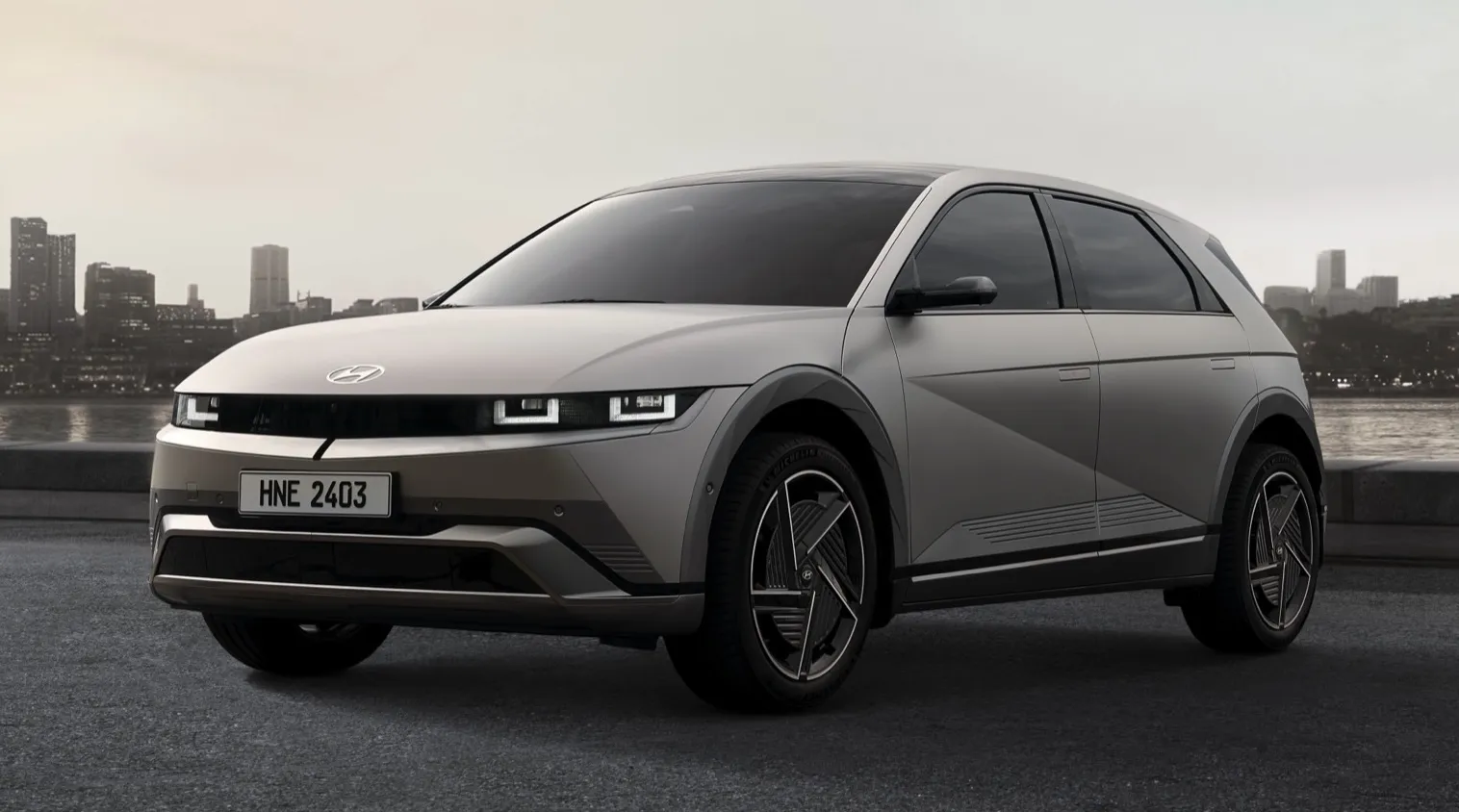
Hyundai IONIQ 5 84 kWh RWD
Key Specifications
Real Range Estimation
| City - Cold Weather * | 445 km |
| Highway - Cold Weather * | 320 km |
| Combined - Cold Weather * | 380 km |
between 320 - 660 km
| City - Mild Weather * | 660 km |
| Highway - Mild Weather * | 415 km |
| Combined - Mild Weather * | 520 km |
Battery
| Nominal Capacity | 84.0 kWh |
| Battery Type | Lithium-ion |
| Number of Cells | 384 |
| Architecture | 800 V |
| Warranty Period | 8 years |
| Warranty Mileage | 160,000 km |
| Useable Capacity* | 80.0 kWh |
| Cathode Material | No Data |
| Pack Configuration | 192s2p |
| Nominal Voltage | 697 V |
| Form Factor | No Data |
| Name / Reference | No Data |
Performance
| Acceleration 0 - 100 km/h | 7.5 sec |
| Top Speed | 185 km/h |
| Electric Range * | 450 km |
| Total Power | 168 kW (228 PS) |
| Total Torque | 350 Nm |
| Drive | Rear |
Home and Destination Charging (0 -> 100%)
Charging is possible by using a regular wall plug or a charging station. Public charging is always done through a charging station. How fast the EV can charge depends on the charging station (EVSE) used and the maximum charging capacity of the EV. The table below shows all possible options for charging the Hyundai IONIQ 5 84 kWh RWD. Each option shows how fast the battery can be charged from empty to full.
Europe
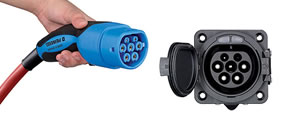
Charging an EV in Europe differs by country. Some European countries primarily use 1-phase connections to the grid, while other countries are almost exclusively using a 3-phase connection. The table below shows all possible ways the Hyundai IONIQ 5 84 kWh RWD can be charged, but some modes of charging might not be widely available in certain countries.
| Type 2 (Mennekes - IEC 62196) |
|---|
 |
| Charging Point | Max. Power | Power | Time | Rate |
|---|---|---|---|---|
| Wall Plug (2.3 kW) | 230V / 1x10A | 2.3 kW | 41 hours | 11 km/h |
| 1-phase 16A (3.7 kW) | 230V / 1x16A | 3.7 kW | 25h30m | 18 km/h |
| 1-phase 32A (7.4 kW) | 230V / 1x32A | 7.4 kW | 12h45m | 35 km/h |
| 3-phase 16A (11 kW) | 400V / 3x16A | 11 kW | 8h45m | 51 km/h |
| 3-phase 32A (22 kW) | 400V / 3x16A | 11 kW † | 8h45m | 51 km/h |
† = Limited by on-board charger, vehicle cannot charge faster.
Fast Charging (10 -> 80%)
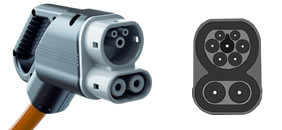
Rapid charging enables longer journeys by adding as much range as possible in the shortest amount of time. Charging power will decrease significantly after 80% state-of-charge has been reached. A typical rapid charge therefore rarely exceeds 80% SoC. The rapid charge rate of an EV depends on the charger used and the maximum charging power the EV can handle. The table below shows all details for rapid charging the Hyundai IONIQ 5 84 kWh RWD.
- Max. Power: maximum power provided by charge point
- Avg. Power: average power provided by charge point over a session from 10% to 80%
- Time: time needed to charge from 10% to 80%
- Rate: average charging speed over a session from 10% to 80%
| Combined Charging System (CCS Combo 2) |
|---|
 |
| Charging Point | Max. Power | Avg. Power | Time | Rate |
|---|---|---|---|---|
| CCS (50 kW DC) | 50 kW | 49 kW † | 72 min | 260 km/h |
| CCS (150 kW DC) | 150 kW | 144 kW † | 25 min | 750 km/h |
| CCS (350 kW DC) | 263 kW † | 205 kW † | 17 min | 1110 km/h |
| Charge Curve |
|---|
 |
Data made available by Fastned |
| This vehicle supports Autocharge |
|---|
| This vehicle supports Plug & Charge |
† = Limited by charging capabilities of vehicle
Autocharge: allows for automatic initiation of a charging session at supported CCS charging stations.
Plug & Charge: allows for automatic initiation of a charging session at supported CCS charging stations in accordance with ISO 15118.
Actual charging rates may differ from data shown due to factors like outside temperature, state of the battery and driving style.
Dimensions and Weight
| Length | 4655 mm |
| Width | 1890 mm |
| Width with mirrors | 2152 mm |
| Height | 1605 mm |
| Wheelbase | 3000 mm |
| Weight Unladen (EU) | 2060 kg |
| Gross Vehicle Weight (GVWR) | 2590 kg |
| Max. Payload | 605 kg |
| Cargo Volume | 520 L |
| Cargo Volume Max | 1580 L |
| Cargo Volume Frunk | 57 L |
| Roof Load | 80 kg |
| Tow Hitch Possible | Yes |
| Towing Weight Unbraked | 750 kg |
| Towing Weight Braked | 1600 kg |
| Vertical Load Max | 100 kg |
About this Vehicle
Hyundai IONIQ 5 84 kWh RWD Overview
The Hyundai IONIQ 5 84 kWh RWD is positioned as a premium yet attainable Hyundai electric SUV, sitting at the heart of the family EV market. Built on Hyundai’s dedicated E-GMP platform, it targets buyers who want a spacious, futuristic crossover with long range, rapid charging, and everyday usability that rivals or beats many legacy premium brands. As more shoppers search for detailed EV specs and real-world usability, the IONIQ 5 84 kWh RWD stands out as one of the most rounded options in its class.
For drivers cross-shopping Tesla, Kia and European alternatives, this Hyundai IONIQ 5 review highlights its blend of generous interior space, sliding rear bench, flat floor and clever storage that make it a compelling family car. The sharp, pixel-inspired design gives it a distinctive identity, while advanced safety tech and driver assistance underline its modern character. This model matters in the EV landscape because it combines long electric vehicle range, ultra-fast charging and a competitive price, helping to push mainstream adoption of larger battery electric SUVs without premium-brand pricing.
—
Hyundai IONIQ 5 84 kWh RWD Performance and Driving Experience
The IONIQ 5 84 kWh RWD uses a single rear-mounted motor producing 168 kW (225 hp) and 350 Nm (258 lb-ft) of torque, delivering smooth, instant acceleration that feels stronger than the numbers suggest in daily driving. It reaches 0–60 mph in about 7.4 seconds (0–100 km/h in 7.5 s), which is more than enough for confident overtakes and highway on-ramps while still prioritizing efficiency over outright performance. The rear-wheel-drive layout gives it a natural, balanced feel and a tight turning circle for city use.
On the road, the long 3,000 mm wheelbase and relatively soft suspension tuning make the Hyundai IONIQ 5 84 kWh RWD comfortable and composed, especially on the highway. Steering is light but accurate, and the low center of gravity from the underfloor battery helps reduce body roll. Multiple regen levels and one-pedal driving add to the refined, electric-first driving experience.
| Specification | Value |
|---|---|
| 0-60 mph (0-100 km/h) | 7.4 sec / 7.5 sec |
| Top Speed | 115 mph / 185 km/h |
| Power Output | 225 hp / 168 kW |
| Torque | 258 lb-ft / 350 Nm |
—
Hyundai IONIQ 5 84 kWh RWD Range and Battery Specifications
The Hyundai IONIQ 5 84 kWh RWD is built around a lithium-ion polymer battery with 84 kWh gross and 80 kWh usable capacity. On the WLTP cycle, it is rated between 515–570 km (320–354 miles) depending on equipment, making it one of the longest-range options in the midsize electric SUV class. In U.S. EPA testing with the big pack and rear-wheel drive, the IONIQ 5 achieves an estimated 318 miles of range, aligning closely with the higher WLTP figure.
Real-world range for the Hyundai IONIQ 5 84 kWh RWD typically falls between 320 and 400 km (200–250 miles) in mixed driving, but can exceed 500 km in efficient, mild-weather motorway use according to independent EV range tests. Energy consumption is rated around 16–17.2 kWh/100 km on WLTP, equating to strong efficiency for a spacious crossover. As with any EV, actual range varies with speed, temperature, use of climate control, driving style and terrain.
| Range Metric | Value |
|---|---|
| WLTP Range | 320–354 miles / 515–570 km |
| EPA Range (RWD long range) | 318 miles / ~512 km |
| Real-World Range | ~200–250 miles / ~320–400 km (typical mixed) |
| Battery Capacity | 80.0 kWh (usable) |
—
Hyundai IONIQ 5 84 kWh RWD Charging Times and Options
At home, the Hyundai IONIQ 5 84 kWh RWD supports up to 11 kW AC via its onboard charger. On a typical 7 kW residential wallbox, a full charge from near empty takes roughly 11–12 hours, while an 11 kW three-phase setup can complete a full charge in about 8 hours. Level 1 (120V) charging is possible but very slow, best reserved for emergencies or overnight top-ups when other options aren’t available.
Where the Hyundai IONIQ 5 84 kWh RWD really shines is DC fast charging. On an 800-volt capable high-power charger, it can accept up to 240–260 kW, enabling a 10–80% charge in roughly 18–20 minutes in optimal conditions. Hyundai quotes up to 178 miles of range added in about 15 minutes on a 350 kW charger for RWD trims. The car uses the CCS standard, making it compatible with major fast-charging networks and well suited for long-distance travel.
| Charging Method | Time | Speed |
|---|---|---|
| Level 1 (120V) | ~60–70 hours (0–100%) | ~1–1.4 kW |
| Level 2 (240V/7kW) | ~11–12 hours (0–100%) | ~7 kW |
| Level 2 (240V/11kW) | ~8 hours (0–100%) | ~11 kW |
| DC Fast Charge (10-80%) | ~18–20 min | up to 240–260 kW |
—
Hyundai IONIQ 5 84 kWh RWD vs Competitors
In a Hyundai IONIQ 5 vs Tesla Model Y comparison, the Hyundai undercuts many Model Y trims on price while offering comparable range, faster peak DC charging and a more refined ride, though Tesla still leads in software ecosystem and Supercharger network. Against the Kia EV6, which shares the E-GMP platform, the Hyundai IONIQ 5 84 kWh RWD focuses more on comfort and space, while the EV6 skews sportier. Versus the Volkswagen ID.4 or Audi Q4 e-tron, Hyundai’s 800V architecture, ultra-fast charging and distinctive design give it a clear technology edge, making this IONIQ 5 84 kWh RWD one of the most compelling electric SUVs in the segment.
—
Frequently Asked Questions
Related Vehicles
View All Hyundai
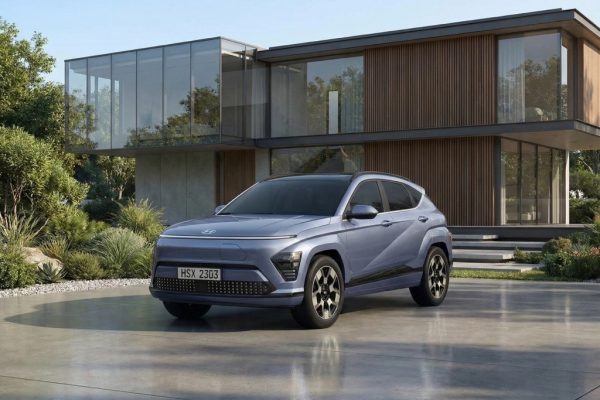
Hyundai Kona Electric 48.6 kWh 2026
 Hyundai
Hyundai Kona Electric 64.8 kWh 2026
 Hyundai
Hyundai INSTER Standard Range
 Hyundai