

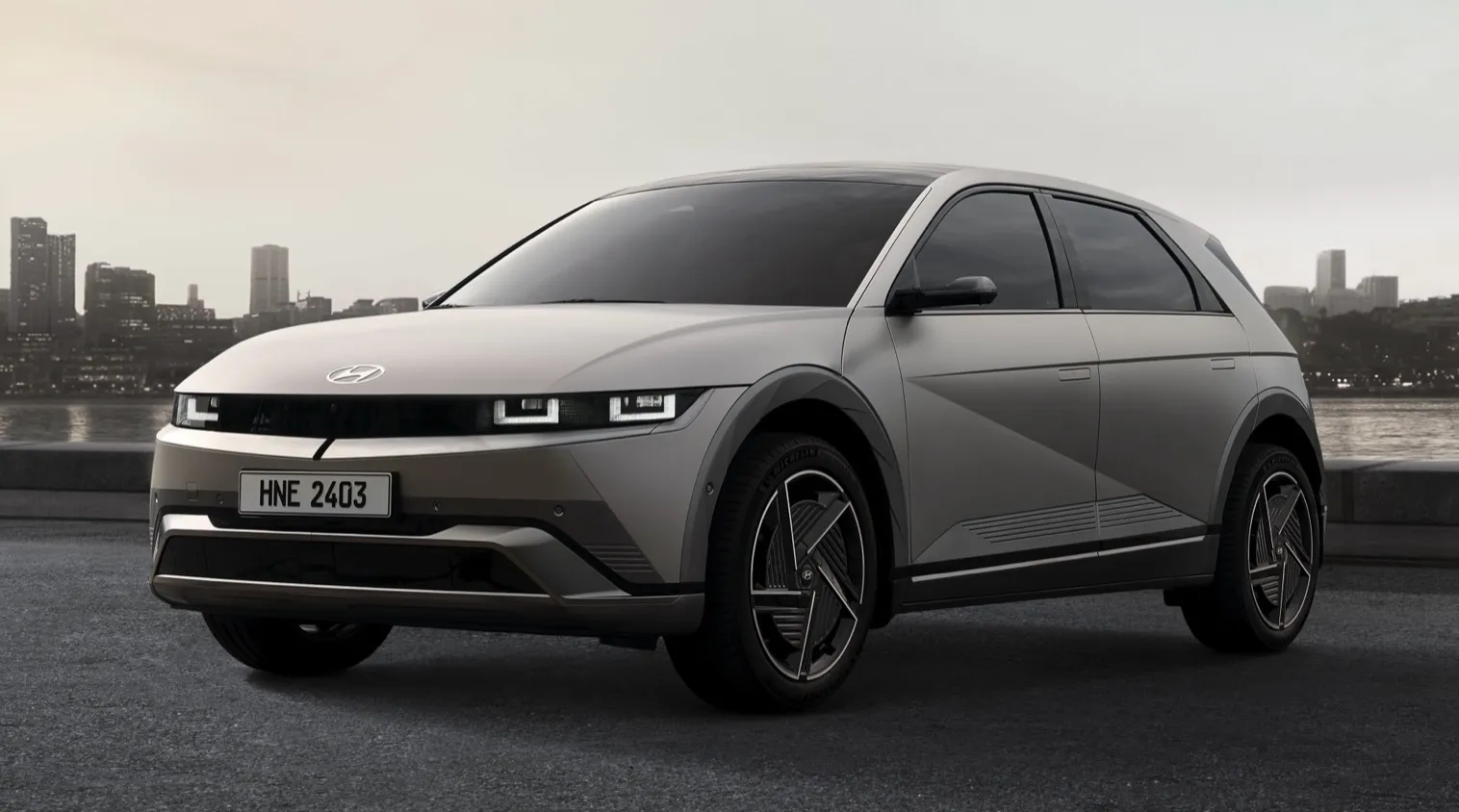
Hyundai IONIQ 5 84 kWh AWD
Key Specifications
Real Range
| City - Cold Weather | 435 km |
| Highway - Cold Weather | 315 km |
| Combined - Cold Weather | 375 km |
between 315 - 645 km
| City - Mild Weather | 645 km |
| Highway - Mild Weather | 405 km |
| Combined - Mild Weather | 505 km |
Battery
| Nominal Capacity | 84.0 kWh |
| Battery Type | Lithium-ion |
| Number of Cells | 384 |
| Architecture | 800 V |
| Warranty Period | 8 years |
| Warranty Mileage | 160,000 km |
| Useable Capacity* | 80.0 kWh |
| Cathode Material | No Data |
| Pack Configuration | 192s2p |
| Nominal Voltage | 697 V |
| Form Factor | No Data |
| Name / Reference | No Data |
Performance
| Acceleration 0 - 100 km/h | 5.3 sec |
| Top Speed | 185 km/h |
| Electric Range | 440 km |
| Total Power | 239 kW (325 PS) |
| Total Torque | 605 Nm |
| Drive | AWD |
Home and Destination Charging (0 -> 100%)
Charging is possible by using a regular wall plug or a charging station. Public charging is always done through a charging station. How fast the EV can charge depends on the charging station (EVSE) used and the maximum charging capacity of the EV. The table below shows all possible options for charging the Hyundai IONIQ 5 84 kWh AWD. Each option shows how fast the battery can be charged from empty to full.
Europe
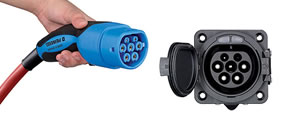
Charging an EV in Europe differs by country. Some European countries primarily use 1-phase connections to the grid, while other countries are almost exclusively using a 3-phase connection. The table below shows all possible ways the Hyundai IONIQ 5 84 kWh AWD can be charged, but some modes of charging might not be widely available in certain countries.
| Type 2 (Mennekes - IEC 62196) |
|---|
 |
| Charging Point | Max. Power | Power | Time | Rate |
|---|---|---|---|---|
| Wall Plug (2.3 kW) | 230V / 1x10A | 2.3 kW | 41 hours | 11 km/h |
| 1-phase 16A (3.7 kW) | 230V / 1x16A | 3.7 kW | 25h30m | 17 km/h |
| 1-phase 32A (7.4 kW) | 230V / 1x32A | 7.4 kW | 12h45m | 35 km/h |
| 3-phase 16A (11 kW) | 400V / 3x16A | 11 kW | 8h45m | 50 km/h |
| 3-phase 32A (22 kW) | 400V / 3x16A | 11 kW † | 8h45m | 50 km/h |
† = Limited by on-board charger, vehicle cannot charge faster.
Fast Charging (10 -> 80%)
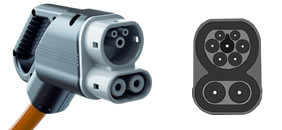
Rapid charging enables longer journeys by adding as much range as possible in the shortest amount of time. Charging power will decrease significantly after 80% state-of-charge has been reached. A typical rapid charge therefore rarely exceeds 80% SoC. The rapid charge rate of an EV depends on the charger used and the maximum charging power the EV can handle. The table below shows all details for rapid charging the Hyundai IONIQ 5 84 kWh AWD.
- Max. Power: maximum power provided by charge point
- Avg. Power: average power provided by charge point over a session from 10% to 80%
- Time: time needed to charge from 10% to 80%
- Rate: average charging speed over a session from 10% to 80%
| Combined Charging System (CCS Combo 2) |
|---|
 |
| Charging Point | Max. Power | Avg. Power | Time | Rate |
|---|---|---|---|---|
| CCS (50 kW DC) | 50 kW | 49 kW † | 72 min | 250 km/h |
| CCS (150 kW DC) | 150 kW | 144 kW † | 25 min | 730 km/h |
| CCS (350 kW DC) | 263 kW † | 205 kW † | 17 min | 1080 km/h |
| Charge Curve |
|---|
 |
Data made available by Fastned |
| This vehicle supports Autocharge |
|---|
| This vehicle supports Plug & Charge |
† = Limited by charging capabilities of vehicle
Autocharge: allows for automatic initiation of a charging session at supported CCS charging stations.
Plug & Charge: allows for automatic initiation of a charging session at supported CCS charging stations in accordance with ISO 15118.
Actual charging rates may differ from data shown due to factors like outside temperature, state of the battery and driving style.
Dimensions and Weight
| Length | 4655 mm |
| Width | 1890 mm |
| Width with mirrors | 2152 mm |
| Height | 1605 mm |
| Wheelbase | 3000 mm |
| Weight Unladen (EU) | 2175 kg |
| Gross Vehicle Weight (GVWR) | 2685 kg |
| Max. Payload | 585 kg |
| Cargo Volume | 520 L |
| Cargo Volume Max | 1580 L |
| Cargo Volume Frunk | 24 L |
| Roof Load | 80 kg |
| Tow Hitch Possible | Yes |
| Towing Weight Unbraked | 750 kg |
| Towing Weight Braked | 1600 kg |
| Vertical Load Max | 100 kg |
About this Vehicle
Hyundai IONIQ 5 84 kWh AWD Overview
The Hyundai IONIQ 5 84 kWh AWD stands out as a premium mainstream electric SUV, blending futuristic design with cutting-edge E-GMP platform technology for exceptional everyday usability. Priced around £50,900 or €59,400, it targets families and tech-savvy drivers seeking a spacious, versatile EV with all-weather capability. Its retro-futuristic styling, pixelated LED lights, and innovative features like Vehicle-to-Load (V2L) power outlets set it apart in the Hyundai electric SUV segment, earning top Euro NCAP 5-star safety ratings.
Built on Hyundai’s dedicated E-GMP architecture, the IONIQ 5 84 kWh AWD delivers dual-motor all-wheel drive, a flat floor for roomy interiors, and ultra-fast charging. With EV specs including up to 320 hp and a Hyundai IONIQ 5 review favorite for its 339-mile WLTP range potential, it matters in the EV landscape by challenging pricier rivals with superior value, efficiency, and real-world practicality. This model redefines accessible premium EVs for urban commuters and long-haul adventurers alike.
Hyundai IONIQ 5 84 kWh AWD Performance and Driving Experience
The Hyundai IONIQ 5 84 kWh AWD unleashes 320 hp from its dual electric motors, paired with 446 lb-ft of instant torque for thrilling acceleration. It sprints from 0-60 mph in 5.2 seconds, offering smooth power delivery ideal for highway merges and overtakes. Handling shines with a low center of gravity from the E-GMP platform, precise steering, and HTRAC AWD that enhances traction in rain or snow without sacrificing efficiency.
Real-world driving impressions highlight its composed ride, agile cornering (0.80 g skidpad), and quiet cabin, though the 4,773-lb curb weight demands firm brakes (100-0 mph in 416 ft). The AWD system intelligently distributes power between front and rear axles for dynamic confidence.
| Specification | Value |
|---|---|
| 0-60 mph (0-100 km/h) | 5.2 sec (5.3 sec) |
| Top Speed | 115 mph / 185 km/h |
| Power Output | 320 hp / 239 kW |
| Torque | 446 lb-ft / 605 Nm |
Hyundai IONIQ 5 84 kWh AWD Range and Battery Specifications
Official Hyundai IONIQ 5 WLTP range reaches 339 miles (TEL) or 308 miles (TEH) for the 84 kWh AWD variant, with EPA range estimated at 290 miles for similar AWD trims. Real-world range averages 250-300 miles, dipping to 200 miles on highways per tests (74 MPGe observed). Energy efficiency stands at 27 kWh/100 mi (WLTP TEL), influenced by cold weather, aggressive driving, or hilly terrain.
The liquid-cooled lithium-ion polymer battery offers 84 kWh gross (80 kWh usable) capacity at 697V, enabling high efficiency and longevity. Factors like battery preconditioning optimize IONIQ 5 real-world range, making it reliable for cross-country trips.
| Range Metric | Value |
|---|---|
| WLTP Range | 339 miles / 546 km (TEL) |
| EPA Range | 290 miles / 467 km |
| Real-World Range | 250-300 miles / 402-483 km |
| Battery Capacity | 84 kWh (80 kWh usable) |
Hyundai IONIQ 5 84 kWh AWD Charging Times and Options
Home charging for the Hyundai IONIQ 5 84 kWh AWD uses an 11 kW onboard AC charger, fully replenishing from 10-100% in about 7 hours 20 minutes on a 240V Level 2 setup. Level 1 (120V) takes longer at around 2-3 kW. DC fast charging peaks at 260 kW via CCS port (rear right), achieving 10-80% in 18-20 minutes, adding 137-178 miles in 15 minutes with optimal conditions.
Compatible with major networks and NACS adapters, it suits road trips or daily top-ups. Practical scenarios include overnight Level 2 at home or 30-minute DC stops for 200+ miles of range.
| Charging Method | Time | Speed |
|---|---|---|
| Level 1 (120V) | 30+ hours | ~2 kW |
| Level 2 (240V/7kW) | 12 hours | ~7 kW |
| Level 2 (240V/11kW) | 7 hr 20 min | ~11 kW |
| DC Fast Charge (10-80%) | 18-20 min | up to 260 kW |
Hyundai IONIQ 5 84 kWh AWD vs Competitors
The Hyundai IONIQ 5 84 kWh AWD edges the Tesla Model Y with faster 260 kW charging (vs. 250 kW) and a more spacious interior, though Model Y offers slightly better EPA range (up to 320 miles). Against the Kia EV6 (sibling with similar specs), it provides superior cargo space (52 cu ft) and V2L utility. The Hyundai IONIQ 5 vs BMW iX favors IONIQ 5 for value (£50,900 vs. £100k+), quicker acceleration, and efficiency, making it a smarter IONIQ 5 comparison pick.
Frequently Asked Questions
Related Vehicles
View All Hyundai
Hyundai Kona Electric 48.6 kWh 2026
 Hyundai
Hyundai Kona Electric 64.8 kWh 2026
 Hyundai
Hyundai INSTER Standard Range
 Hyundai